

Document of the week26 June 1979
The Afghan program begins: the Special Coordination Committee, 26 June 1979
Special Coordination Committee, National Security Council (chaired by Zbigniew Brzezinski; summary drafted by Donald Gregg)
It is CIA’s judgment that monetary support for food, clothing, and medical supplies is critical if opposition to the Taraki regime is to be sustained throughout the winter.
This week's document · All 74 documents
Declassified
Notable files
All 80 operations →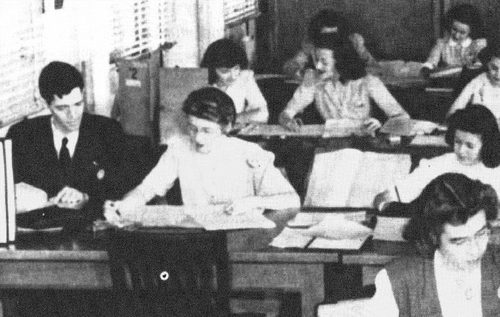 1 February 1943 – 1 October 1980
The Venona project
The US Army codebreaking program that, from 1943 to 1980, read parts of some 2,900 wartime Soviet intelligence cables and exposed Fuchs, the Rosenbergs and Donald Maclean.
 December 1953 – 22 April 1956
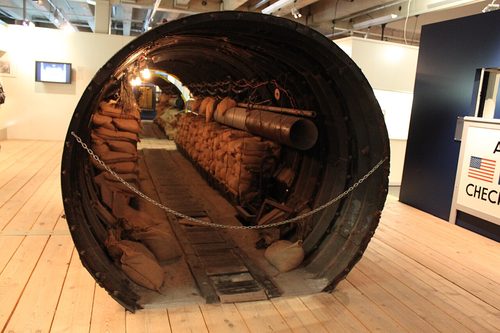
Operation Gold (the Berlin Tunnel)
From 1955 to 1956 the CIA and British SIS tapped Soviet military phone and teleprinter cables in East Berlin from a 1,476-foot tunnel, unaware that a KGB mole had betrayed the plan before digging began.
 4 February – 14 May 1943
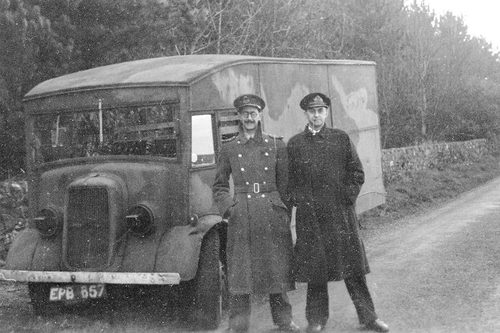
Operation Mincemeat
In 1943 British intelligence floated a dead man dressed as a Royal Marines officer ashore in Spain with forged letters pointing at Greece and Sardinia, to hide the coming invasion of Sicily.
 1 July 1969 – 16 June 1975
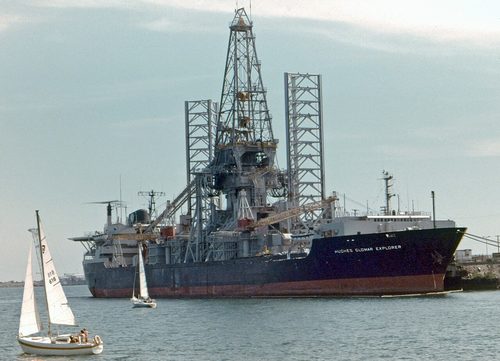
Project Azorian (the Glomar Explorer)
In 1974 the CIA used a purpose-built ship, passed off as Howard Hughes's deep-sea mining vessel, to lift part of the sunken Soviet submarine K-129 from 16,500 feet down in the Pacific.
 24 November 1954 – 16 May 1960
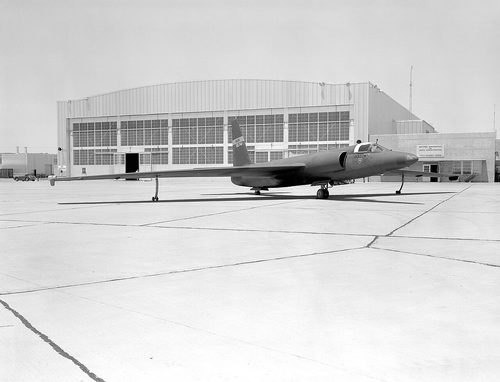
The U-2 program and the 1960 shoot-down
From 1956 the CIA's U-2 photographed the Soviet Union from 70,000 feet. On 1 May 1960 a missile brought down Francis Gary Powers near Sverdlovsk, the cover story collapsed and the Paris summit failed.
 March – 19 August 1953
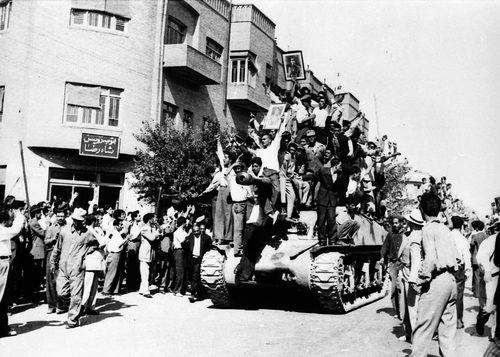
Operation Ajax (TPAJAX)
The 1953 Anglo-American covert operation that removed Iran's prime minister Mohammad Mosaddeq, as reconstructed from the CIA and State Department records published in 2017.
1934 – 23 January 1963
The Cambridge Five
Five Cambridge graduates recruited by Soviet intelligence in the 1930s reached MI6, MI5, the Foreign Office and Bletchley Park, and were exposed one by one between 1951 and 1990.
 17 March 1960 – 19 April 1961
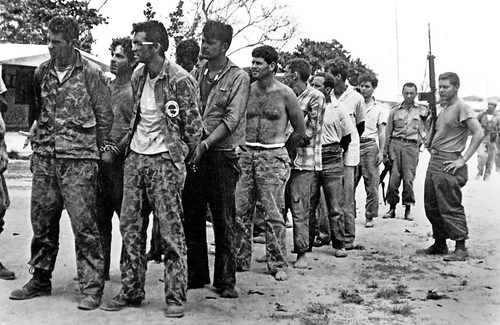
The Bay of Pigs invasion
In April 1961 a CIA-trained brigade of Cuban exiles landed at the Bay of Pigs to topple Fidel Castro and was defeated within three days. The records show how a covert plan outgrew its cover.
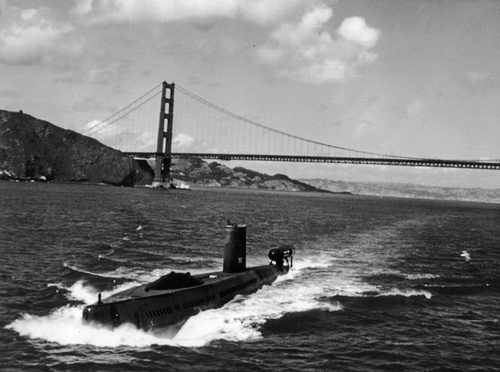 October 1971 – 1981
Operation Ivy Bells
From 1971 US Navy divers working from submarines tapped a Soviet military cable on the floor of the Sea of Okhotsk. Former NSA analyst Ronald Pelton sold the secret to the KGB, and the Soviets removed the tap in 1981.
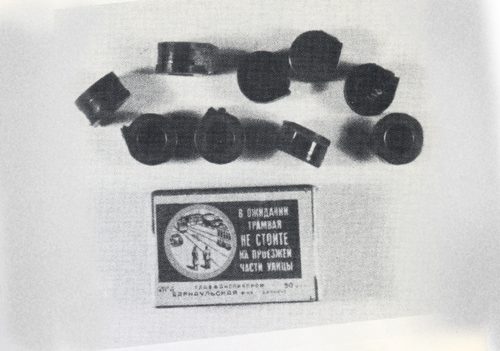 20 April 1961 – 22 October 1962
IRONBARK: the Penkovsky case
How a disaffected GRU colonel, Oleg Penkovsky, fed the CIA and MI6 Soviet missile manuals in 1961–62, and how his IRONBARK material shaped US judgments in the Cuban Missile Crisis.
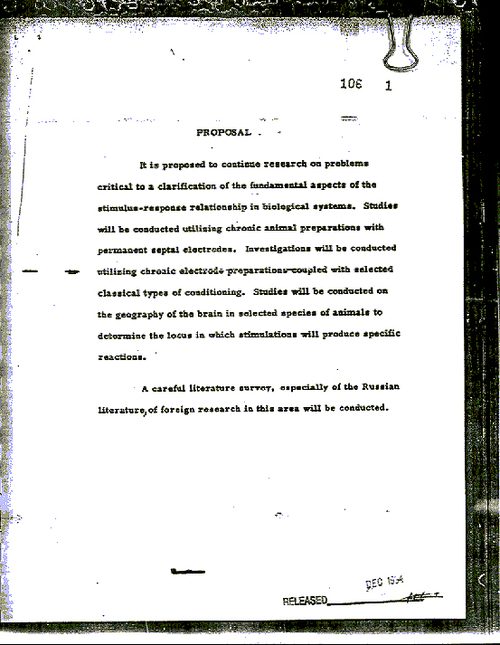 13 April 1953 – 1964
Project MKUltra
The CIA's umbrella program, approved in 1953, for secret research on drugs and behavior control. It included LSD tests on unwitting Americans; most records were destroyed in 1973, and a surviving cache surfaced in 1977.
February 1981 – 23 January 1985
The Farewell Dossier
In 1981–82 a disaffected KGB officer, Vladimir Vetrov, gave French counterintelligence thousands of documents on Soviet technology theft. The West expelled scores of Soviet officers and fed Moscow doctored technology.
By era
1909–1938 Before the war
1939–1945 The Second World War
1946–1962 The early Cold War
1963–1979 Crisis and détente
1980–2001 The last decade of the Cold War
The services
All 18 agencies →- FBIUnited States, 1908
- MI6United Kingdom, 1909
- MI5United Kingdom, 1909
- Cheka–NKVDSoviet Union, 1917–1946
- GRUSoviet Union, 1918–1992
- GCHQUnited Kingdom, 1919
- AbwehrGermany, 1920–1944
- SOEUnited Kingdom, 1940–1946
- OSSUnited States, 1942–1945
- StBCzechoslovakia, 1945–1990
- SDECEFrance, 1946–1982
- BNDWest Germany, 1946
- CIAUnited States, 1947
- MossadIsrael, 1949
- StasiEast Germany, 1950–1990
- NSAUnited States, 1952
- KGBSoviet Union, 1954–1991
- NROUnited States, 1961
Tradecraft
How it was done, historically →People
All 51 →- Morris and Lona Cohen 1910–1995
- Yuri Andropov 1914–1984
- James Jesus Angleton 1917–1987
- George Blake 1922–2020
- Elizabeth Bentley 1908–1963
- Anthony Blunt 1907–1983
- Guy Burgess 1911–1963
- John Cairncross 1913–1995
- Wilhelm Canaris 1887–1945
- Whittaker Chambers 1901–1961
- Eli Cohen 1924–1965
- William Colby 1920–1996
- William J. Donovan 1883–1959
- Allen Dulles 1893–1969
- Felix Dzerzhinsky 1877–1926
- Rudolf Abel (William Fisher) 1903–1971
- Klaus Fuchs 1911–1988
- Juan Pujol García (GARBO) 1912–1988
- Reinhard Gehlen 1902–1979
- Harry Gold 1910–1972
- Igor Gouzenko 1919–1982
- Günter Guillaume 1927–1995
- Theodore Hall 1925–1999
- Virginia Hall 1906–1982
- Robert Hanssen 1944–2023
- Isser Harel 1912–2003
- Richard Helms 1913–2002
- Alger Hiss 1904–1996
- J. Edgar Hoover 1895–1972
- Frank Church 1924–1984
- John Anthony Walker 1937–2014
- Noor Inayat Khan 1914–1944
- Donald Maclean 1913–1983
- Erich Mielke 1907–2000
- Vasili Mitrokhin 1922–2004
- Konon Molody (Gordon Lonsdale) 1922–1970
- Oleg Penkovsky 1919–1963
- Kim Philby 1912–1988
- Dmitri Polyakov 1921–1988
- Duško Popov (TRICYCLE) 1912–1981
- Francis Gary Powers 1929–1977
- Sidney Reilly 1874–1925
- Ethel Rosenberg 1915–1953
- Julius Rosenberg 1918–1953
- Melita Norwood 1912–2005
- Richard Sorge 1895–1944
- Adolf Tolkachev 1927–1986
- Alan Turing 1912–1954
- Vladimir Vetrov (FAREWELL) 1932–1985
- Ruth Werner (SONYA) 1907–2000
- Markus Wolf 1923–2006
How these files are written
Each page is built from primary sources first: the State Department's Foreign Relations of the United States, CIA, NSA and FBI releases, congressional investigations and court records, all public domain, quoted briefly and linked. For 80 operations we compare the dates and outcome in a government source with Wikipedia and publish the result. Contested claims are labelled. Read the methodology.