
Portrait: Theodore Hall's Los Alamos identity badge photograph. Unknown author. Wikimedia Commons, Public domain.

Theodore Alvin Holtzberg was born in Far Rockaway, Queens, the son of a furrier who had emigrated from the Russian Empire; his elder brother changed the family name to Hall in 19365. A precocious student, he entered Queens College at fourteen, transferred to Harvard and graduated in physics at eighteen in 19445. On a professor's recommendation he was hired that year for the Manhattan Project and became the youngest physicist at Los Alamos, where he worked on the critical mass for the uranium bomb and then on experiments for the implosion design of the plutonium bomb5.
The walk-in
In October 1944, home in New York on leave, Hall sought out Soviet contacts on his own initiative. Through the Soviet trading agency Amtorg he reached Sergei Kurnakov, a writer for Soviet publications who worked with the KGB, and gave him a report on Los Alamos and its staff5. His Harvard friend Saville Sax took a copy to the Soviet consulate1.
The KGB residency reported the approach to Moscow in a cable of 12 November 1944, decrypted years later by the Venona codebreakers. It names him outright, "Theodore HALL, 19 years old, the son of a furrier", and continues:
According to BEK's account HALL has an exceptionally keen mind and a broad outlook, and is politically developed. At the present time H. is in charge of a group at "CAMP-2" (SANTA-FE).1
The cable records that he handed over a report on the camp and named key personnel, and proposes keeping contact through Sax "and not to bring in anybody else"1. Hall received the covername MLAD, Russian for "youngster"2,3.
What he passed
Hall's information on implosion overlapped with what Klaus Fuchs was supplying, and neither man knew of the other3,5. The Department of Energy's history judges that his material, "although not as detailed or voluminous as that provided by Fuchs", served as "an important supplement and confirmation" of it3. Benson and Warner list him among at least four Soviet sources at Los Alamos2. From spring 1945 his courier was Lona Cohen5. A Moscow cable of 5 July 1945, also decrypted, concerns MLAD1.
Identified but not charged
The Army revoked Hall's security clearance in 1946 for unrelated reasons, and he went to the University of Chicago, where he took a doctorate and turned to biophysics5. Some time in 1949–50, Meredith Gardner translated the cable describing his recruitment, and the FBI matched MLAD to him2. The Moynihan Commission recorded that "by 1950 both the Army and the FBI knew that Hall was the 'MLAD' referenced in several VENONA messages"4. Agents questioned him in March 1951; he admitted nothing3,5.
He was never prosecuted. Benson and Warner say this was "probably because a case could not have been made without revealing" the codebreaking program2. The Commission added that most FBI files on him remained classified4. Hall moved to England in 1962 to work in Vernon Cosslett's electron microscopy laboratory at Cambridge, where he developed an X-ray microanalysis method for biological tissue that bears his name; he retired in 19845.
After Venona
The July 1995 release made Hall's name public. He never gave a full account. In a 1997 written statement he said that he had feared an American atomic monopoly and "contemplated a brief encounter with a Soviet agent, just to inform them of the existence of the A-bomb project"; in a 1998 television interview he said he had decided "to give atomic secrets to the Russians" to break that monopoly5. He died in Cambridge on 1 November 19995.
Key dates
- 1944 Joins the Manhattan Project at Los Alamos at eighteen.
- October 1944 Approaches Soviet contacts in New York and hands over a report on Los Alamos.
- 12 November 1944 KGB New York cable reports his recruitment by name.
- March 1951 Questioned by the FBI; not charged.
- July 1995 Venona release makes his identification public.
Sources
- NSA Venona, Part II: Selected Messages (New York 1585 to Moscow, 12 November 1944), Central Intelligence Agency and National Security Agency (1944-11-12).
- CIA Venona: Soviet Espionage and the American Response, 1939–1957 (Introduction), Central Intelligence Agency and National Security Agency (1996).
- Official history Espionage and the Manhattan Project, 1940–1945, US Department of Energy, Office of History and Heritage Resources.
- Congress Report of the Commission on Protecting and Reducing Government Secrecy, Appendix A, US Government Printing Office (1997).
- Wikipedia Theodore Hall, Wikipedia.
- Wikipedia English Wikipedia article (used for cross-checking).
Elsewhere in the files
Read next
 September 1941 – June 1950
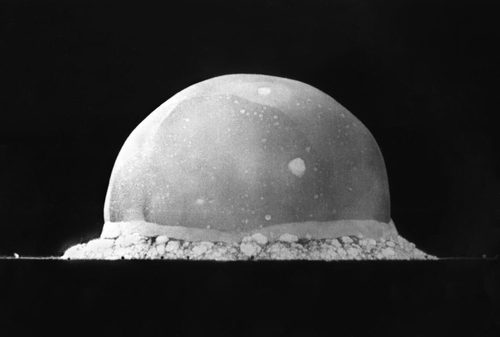
Soviet atomic espionage (Enormoz)
How Soviet intelligence penetrated the Manhattan Project under the codename ENORMOZ, who its sources were, how Venona and confessions exposed them, and what the stolen secrets were worth.
 1 February 1943 – 1 October 1980
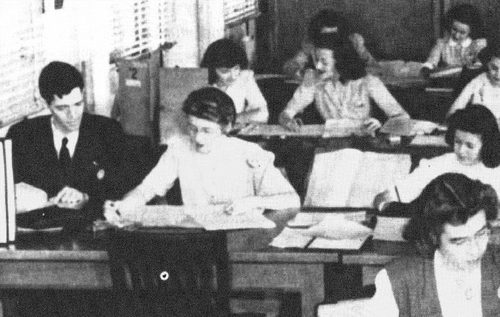
The Venona project
The US Army codebreaking program that, from 1943 to 1980, read parts of some 2,900 wartime Soviet intelligence cables and exposed Fuchs, the Rosenbergs and Donald Maclean.
 1910–1995
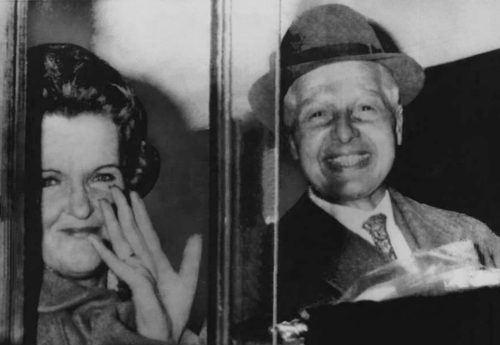
Morris and Lona Cohen
New York communists who worked for Soviet intelligence in the 1940s, vanished in 1950, and resurfaced in a London suburb as the booksellers Peter and Helen Kroger, radio hub of the Portland spy ring.
 1903–1971
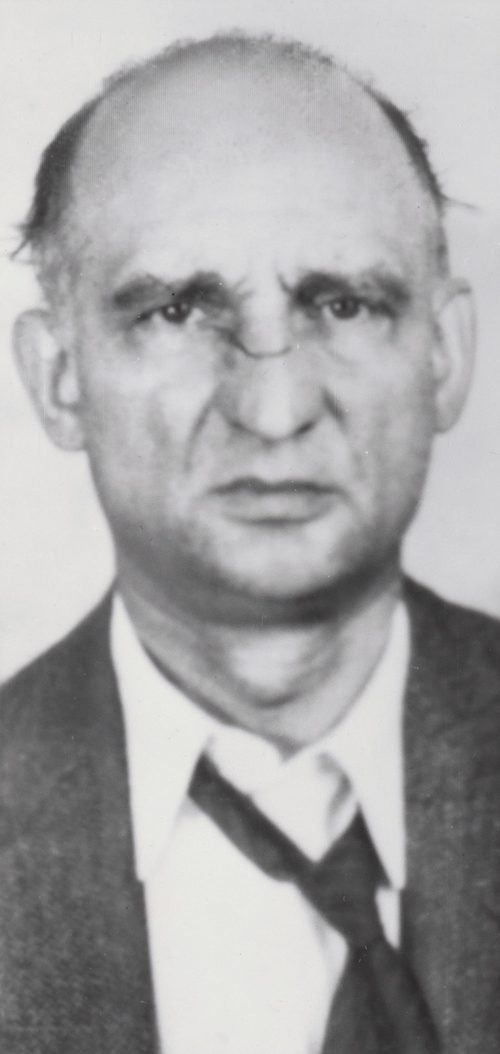
Rudolf Abel (William Fisher)
British-born KGB illegal who lived in Brooklyn as an artist, was arrested in 1957 under the name Rudolf Abel, and was exchanged for U-2 pilot Francis Gary Powers in 1962.