
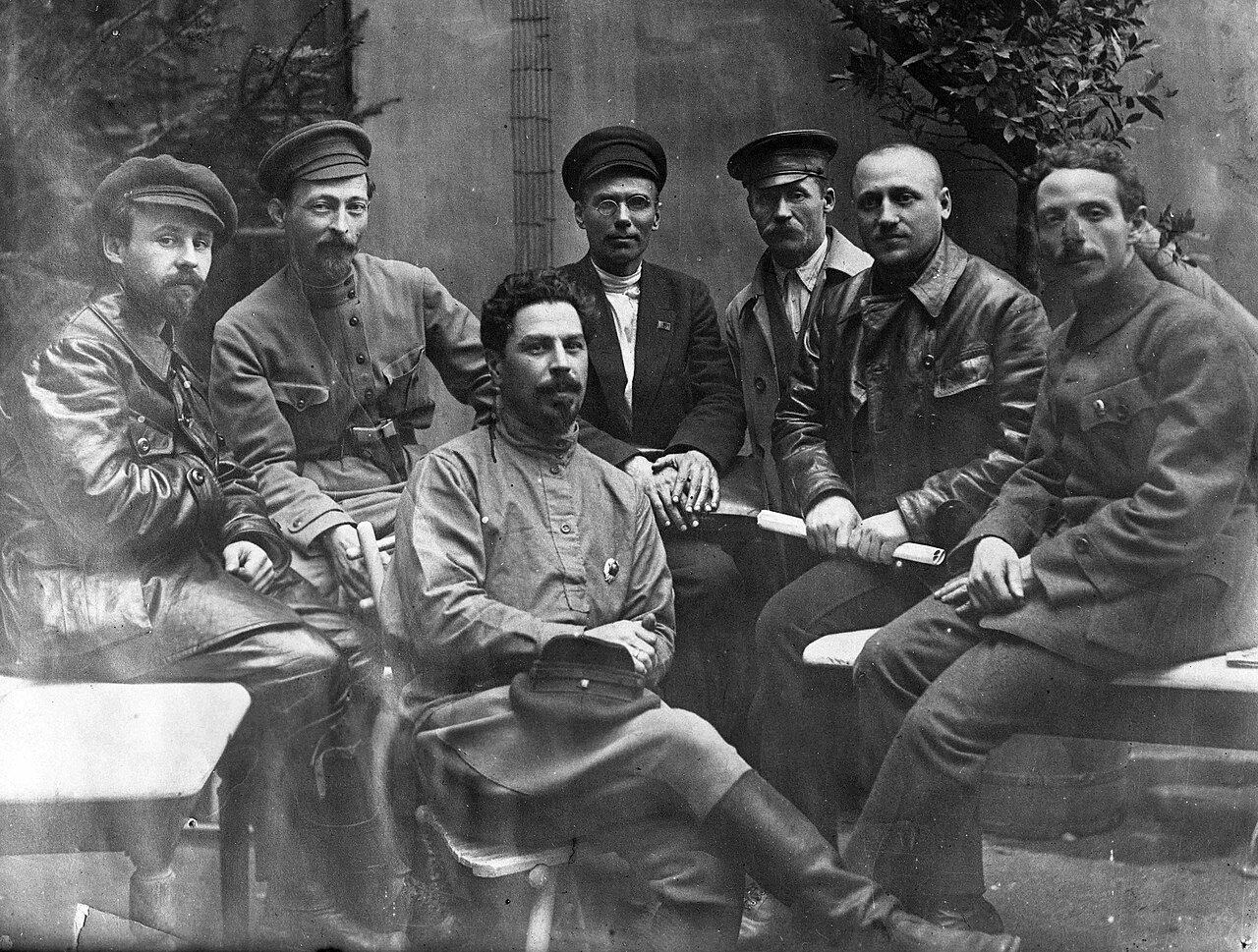
Soviet citizens never stopped calling their secret policemen Chekists, whatever the organization's letterhead said. The name came from the first of the line, the All-Russian Extraordinary Commission for Combating Counter-Revolution and Sabotage, created by Lenin's government on 20 December 1917 and known by its Russian initials as the VChK, or Cheka. Over the next three decades it was renamed the GPU, the OGPU and the NKVD, and in 1954 its state security functions settled into the KGB1,6,7.
The Cheka, 1917–1922
The Cheka was meant to be temporary, and at first it was only to investigate. Under Felix Dzerzhinsky it quickly took the power to arrest, judge and shoot. In the Library of Congress's summary, it "soon acquired powers of summary justice and began a campaign of terror against the propertied classes and enemies of Bolshevism"1,6.
The turning point came after the killing of the Petrograd Cheka chief Moisei Uritsky and the shooting of Lenin on 30 August 1918. On 5 September the Council of People's Commissars decreed the Red Terror6. The American consul in Moscow, DeWitt Clinton Poole, forwarded the interior commissar's instructions to local soviets: take hostages from the bourgeoisie and officer classes, and shoot them "without fail" at the first sign of resistance2. On 9 September he reported about 150 shootings a night in Moscow and more than 1,000 people shot in retaliation for the attempt on Lenin, and wrote that the foreign commissariat had little influence over the "extraordinary commission which is carrying on the carnage"3.
The Cheka also ran the first forced-labor camps, put down peasant and worker revolts, and by 1921 commanded internal troops numbering at least 200,0001,6.
GPU and OGPU, 1922–1934
On 6 February 1922 the Cheka was dissolved and its functions given to the State Political Directorate (GPU), reorganized for the whole Soviet Union in November 1923 as the OGPU6,7. The Library of Congress notes that repression at first eased under the GPU; under Stalin its powers grew again1.
Abroad, the OGPU waged what a CIA reviewer in 1970 called "a ruthless campaign by the Soviet services to destroy the Russian emigré groups abroad"4. Its counterintelligence department invented resistance movements to deceive its enemies: Sindikat-2 brought the terrorist Boris Savinkov home to trial in 1924, and the Trust, a fake monarchist underground, fooled émigré leaders and Western services until 1927 and drew Sidney Reilly to his death4. The same reviewer credited the OGPU and its successors with the kidnappings of the émigré generals Alexander Kutepov in Paris in 1930 and Yevgeny Miller in 19374,7.
At home the OGPU ran the deportations of collectivization and expanded the Gulag1,7.
NKVD, 1934–1946
On 10 July 1934 the OGPU was folded into a new all-Union People's Commissariat for Internal Affairs, the NKVD, as its Main Directorate of State Security. The NKVD now controlled the ordinary police, border troops and the camps as well as the political police1,7. In the Library of Congress's words, it became "a direct instrument of Stalin for use against the party and the country during the Great Terror of the 1930s"1.
The Great Terror peaked under Nikolai Yezhov, who headed the NKVD from 1936 to 1938. Mass operations such as those launched by NKVD Order No. 00447 were judged by extrajudicial troikas, and in 1937 and 1938 alone at least 1.3 million people were arrested and 681,692 executed, by the NKVD's own records7. Yezhov's predecessor Genrikh Yagoda and Yezhov himself were in turn arrested and shot; Lavrentiy Beria took over in 19387.
The NKVD's foreign department hunted Stalin's enemies abroad. Leon Trotsky was attacked with an ice axe in Mexico City by the NKVD agent Ramón Mercader on 20 August 1940 and died the next day7. In March 1940 the Politburo approved Beria's proposal to shoot Polish officers, police and others held since the Soviet invasion of 1939; about 22,000 were killed at Katyn and other sites8. A US House select committee concluded in 1952 that the evidence "proves conclusively and irrevocably the Soviet NKVD" committed the Katyn massacre5. The Soviet government admitted it on 13 April 19908.
In wartime, NKVD state security was split off in 1941 and again from 1943 as a separate commissariat, the NKGB. Its officers ran radio games against German intelligence such as Operation Monastery, while its foreign intelligence service, alongside the military GRU, obtained nuclear weapons information from the Manhattan Project (atomic espionage)7. In March 1946 the commissariats became ministries, the MVD and the MGB7.
A note on names
Western writers have often lumped every Soviet service together. The CIA reviewer of 1970 complained of exactly this, pointing out that operations against émigrés were the business of the Cheka, OGPU and NKVD, while military intelligence, the GRU, was a separate service with separate networks4.
Key dates
- 20 December 1917 Council of People's Commissars creates the Cheka under Felix Dzerzhinsky.
- 5 September 1918 Decree 'On Red Terror' follows the shooting of Lenin.
- 6 February 1922 Cheka dissolved; its functions pass to the State Political Directorate (GPU).
- 15 November 1923 GPU becomes the all-Union OGPU.
- August 1924 Boris Savinkov captured through the deception Sindikat-2.
- 13 April 1927 The Trust deception is exposed when Eduard Opperput flees to Finland.
- 10 July 1934 OGPU absorbed into the all-Union NKVD as its Main Directorate of State Security.
- 30 July 1937 NKVD Order No. 00447 launches the mass operations of the Great Terror.
- 5 March 1940 Politburo approves the NKVD's execution of Polish prisoners, carried out at Katyn and other sites.
- March 1946 People's commissariats renamed ministries: the NKVD becomes the MVD and state security the MGB.
Operations in these files
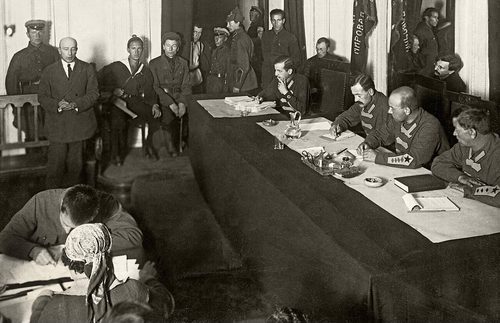 12 May 1922 – 29 August 1924
Operation Sindikat-2
An OGPU deception of 1922–1924 that invented an underground party inside Soviet Russia to draw the old terrorist Boris Savinkov home. He crossed the border in August 1924 and walked into a trap.
1934 – 23 January 1963
The Cambridge Five
Five Cambridge graduates recruited by Soviet intelligence in the 1930s reached MI6, MI5, the Foreign Office and Bletchley Park, and were exposed one by one between 1951 and 1990.
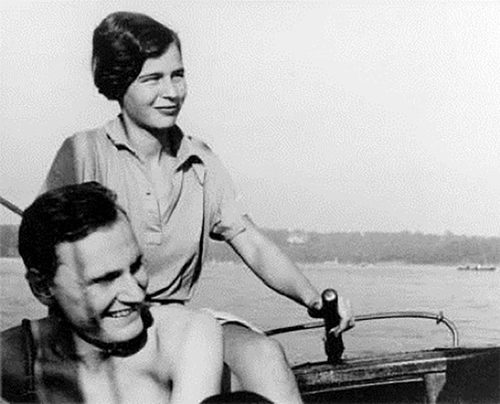 1938 – 3 May 1945
The Red Orchestra (Rote Kapelle)
Rote Kapelle was the German counterintelligence name for Soviet radio networks in Belgium, France and the Netherlands and for a Berlin resistance circle that passed secrets to Moscow. Most were rounded up in 1942.
July 1941 – August 1944
Operation Monastery
An NKVD radio game of 1941–1944 in which the agent Alexander Demyanov, 'Heine', posed as the Abwehr's man in Moscow, fed German intelligence disinformation and drew its couriers into arrest.
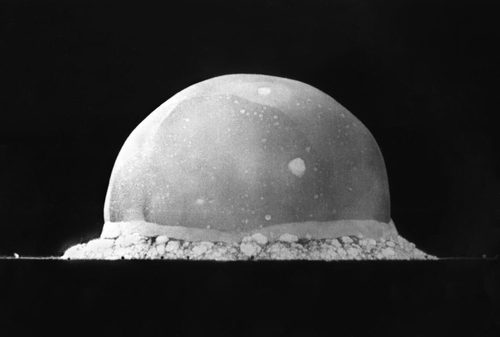 September 1941 – June 1950
Soviet atomic espionage (Enormoz)
How Soviet intelligence penetrated the Manhattan Project under the codename ENORMOZ, who its sources were, how Venona and confessions exposed them, and what the stolen secrets were worth.
Operations against the Cheka–NKVD

People
- Morris and Lona Cohen 1910–1995
- Elizabeth Bentley 1908–1963
- Anthony Blunt 1907–1983
- Guy Burgess 1911–1963
- John Cairncross 1913–1995
- Felix Dzerzhinsky 1877–1926
- Rudolf Abel (William Fisher) 1903–1971
- Klaus Fuchs 1911–1988
- Harry Gold 1910–1972
- Theodore Hall 1925–1999
- Donald Maclean 1913–1983
- Konon Molody (Gordon Lonsdale) 1922–1970
- Kim Philby 1912–1988
- Julius Rosenberg 1918–1953
- Melita Norwood 1912–2005
Sources
- Other Revelations from the Russian Archives: Internal Workings of the Soviet System (Secret Police), Library of Congress (1992).
- FRUS Foreign Relations of the United States, 1918, Russia, Volume I, Document 627 (Consul Poole to the Secretary of State, 5 September 1918), US Department of State, Office of the Historian (1918-09-05).
- FRUS Foreign Relations of the United States, 1918, Russia, Volume I, Document 611 (Consul Poole to the Secretary of State, 9 September 1918), US Department of State, Office of the Historian (1918-09-09).
- CIA Book review of The Secret Road to World War Two: Soviet Versus Western Intelligence, 1921–1939, by Paul W. Blackstock (Studies in Intelligence, vol. 14, no. 1), Central Intelligence Agency, Center for the Study of Intelligence (1970).
- Congress The Katyn Forest Massacre: Final Report of the Select Committee to Conduct an Investigation and Study of the Facts, Evidence, and Circumstances of the Katyn Forest Massacre (H. Rept. 82-2505), US House of Representatives (via GovInfo) (1952-12-22).
- Wikipedia Cheka, Wikipedia.
- Wikipedia NKVD, Wikipedia.
- Wikipedia Katyn massacre, Wikipedia.
Elsewhere in the files
- Agency GRU (Soviet military intelligence)
- Agency KGB
- Agency StB (Czechoslovak State Security)
- Document 'The Trust': the CIA's unpublished study of the OGPU's great deception (c. 1969)
- Document The OSS interrogation of Richard Kauder, alias Klatt (August 1945)
- Operation Operation Monastery
- Operation Operation Sindikat-2
- Operation Operation Trust
- Operation Soviet atomic espionage (Enormoz)
- Operation The Cambridge Five
- Operation The Red Orchestra (Rote Kapelle)
- Operation The Venona project
- Person Anthony Blunt
- Person Donald Maclean
- Person Elizabeth Bentley
- Person Erich Mielke
- Person Felix Dzerzhinsky
- Person Guy Burgess
- Person Harry Gold
- Person John Cairncross
- Person Julius Rosenberg
- Person Kim Philby
- Person Klaus Fuchs
- Person Konon Molody (Gordon Lonsdale)
- Person Melita Norwood
- Person Morris and Lona Cohen
- Person Rudolf Abel (William Fisher)
- Person Sidney Reilly
- Person Theodore Hall
- Tradecraft Double agents
- Tradecraft Illegals and legends