
The FBI affidavit in the Hanssen case defines a double agent as "an agent engaged in clandestine activity for two or more intelligence services who provides information about one service to another." In the same list it gives a separate term, agent-in-place: "a person who remains in a position while acting under the direction of a hostile intelligence service."1
The distinction matters. Robert Hanssen and Aldrich Ames were agents-in-place, sometimes loosely called moles: insiders who secretly worked for the other side. A double agent in the strict sense is a spy whom his own service believes it controls, but who is in fact controlled, wholly or partly, by its opponent. A triple agent pretends to have been turned while remaining loyal to the original side.1,7 The craft lay in running such people convincingly, and in knowing which kind one had.
The Trust: a whole fake underground
The most ambitious early operation was Soviet. From 1921 to 1927 the Cheka and its successors, the GPU and OGPU, ran a sham anti-Bolshevik organization, the Monarchist Union of Central Russia, whose apparent leaders traveled abroad to meet White émigrés and Western intelligence officers (see Operation Trust).5 In effect the entire "resistance" was a double agent. It persuaded the émigré general Alexander Kutepov to hold back from armed action while the supposed internal movement matured, and helped lure the British agent Sidney Reilly into the Soviet Union, where he was captured; the parallel Syndicate-2 did the same to Boris Savinkov.5
Double Cross
The Second World War produced the classic Western case. When MI5 identified the Abwehr's agents in Britain, it chose to run many of them rather than prosecute. The first, a Welsh-born electrical engineer codenamed SNOW, was turned shortly after the outbreak of war; by MI5's own count he was "the first in a series of 120 wartime German agents who were turned by MI5 into double agents."2
From January 1941 their traffic was coordinated by the Twenty Committee, named for the Roman numeral XX, a double cross. Its chairman, the Oxford historian J. C. Masterman, later wrote that "we actively ran and controlled the German espionage system in this country."2 MI5 credits the codebreakers of Bletchley Park (Ultra and the breaking of Enigma) with "indispensable support for the Double Cross System."2 The system's greatest product was the deception before D-Day, in which Juan Pujol García (GARBO) and others persuaded German commanders that the Normandy landings were a diversion (see The Double-Cross System and Operation Fortitude).2
Double agents also had limits. Dusko Popov (TRICYCLE) arrived in the United States in August 1941 carrying an Abwehr questionnaire that included a page on the defenses of Pearl Harbor. A CIA review notes that "no warning of this interest was ever passed to the US military."4
Sebold and the Duquesne ring
The FBI's best-known wartime double agent was William Sebold, a naturalized American whom German intelligence pressured into its service while he was visiting Germany in 1939 and secretly told the US consulate in Cologne that he wanted to cooperate.3 When he returned to New York in February 1940 as "Harry Sawyer," the Bureau built him a shortwave station on Long Island, run by FBI agents, which exchanged some 500 messages with Germany over 16 months, and an office in Manhattan fitted with hidden microphones and a two-way mirror where German agents came to report.3 The case ended with the conviction of 33 members of the Duquesne ring, sentenced in January 1942.3
The Cold War: who is controlling whom
In the Cold War the same question, whether a source was genuine, consumed counterintelligence. The GRU officer Dmitri Polyakov approached the FBI in New York around 1961 and went on to supply the FBI and CIA for nearly two decades, under codenames including TOPHAT (see TOPHAT: the Polyakov case). He was recalled to Moscow in 1980, arrested in 1986 and executed in 1988.6
The Hanssen affidavit records that three American sources were betrayed by both Hanssen and Ames, two of whom were executed, and that among the documents Hanssen passed to the KGB were material on "the United States Double Agent Program" and "the FBI Double Agent Program."1 Penetrations of that kind were the double agent's natural enemy: a single insider could reveal which of a service's agents were real and which were being run against it. (See also The Hanssen case.)
Sources
- Court record USA v. Robert Philip Hanssen: Affidavit in Support of Criminal Complaint, Arrest Warrant and Search Warrants, US District Court, Eastern District of Virginia (text hosted by the Federation of American Scientists) (2001-02).
- Official history MI5 in World War II, MI5 (Security Service), archived by the Internet Archive.
- FBI Duquesne Spy Ring, Federal Bureau of Investigation, History (archived by the Internet Archive).
- CIA Review of Into the Lion's Mouth: The True Story of Dusko Popov (David A. Foy), Studies in Intelligence 62, no. 1, Central Intelligence Agency, Center for the Study of Intelligence (2018-03).
- Wikipedia Operation Trust, Wikipedia.
- Wikipedia Dmitri Polyakov, Wikipedia.
- Wikipedia Double agent, Wikipedia.
- Wikipedia English Wikipedia article (used for cross-checking).
Elsewhere in the files
- Agency StB (Czechoslovak State Security)
- Document 'The Trust': the CIA's unpublished study of the OGPU's great deception (c. 1969)
- Document The FBI's case write-up on the Duquesne spy ring (1985)
- Operation Operation Fortitude
- Operation Operation Monastery
- Operation Operation Sindikat-2
- Operation Operation Trust
- Operation The Cambridge Five
- Operation The Cicero affair
- Operation The Double-Cross System
- Operation The Duquesne spy ring
- Operation The Gouzenko affair
- Operation The Red Orchestra (Rote Kapelle)
- Person Anthony Blunt
- Person Duško Popov (TRICYCLE)
- Person George Blake
- Person Igor Gouzenko
- Person James Jesus Angleton
- Person Juan Pujol García (GARBO)
- Person Kim Philby
Read next
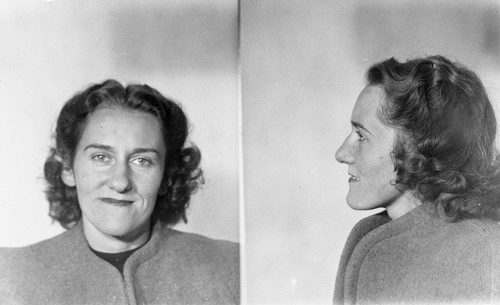 September 1939 – May 1945
The Double-Cross System
How MI5 caught or recruited Germany's wartime spies in Britain and ran them as double agents, steered by the Twenty Committee, until their reports could carry the D-Day deception.
1921 – 13 April 1927
Operation Trust
For six years the Soviet secret police ran a fake monarchist underground, the 'Trust', that fed émigrés and Western services disinformation and lured Boris Savinkov and Sidney Reilly to their deaths.
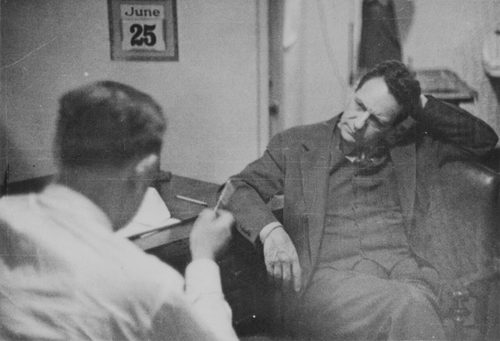 8 February 1940 – 2 January 1942
The Duquesne spy ring
Thirty-three German agents convicted in 1941–42 after the FBI turned an Abwehr recruit, William Sebold, ran his radio link to Hamburg for 16 months and filmed spies in a wired Manhattan office.
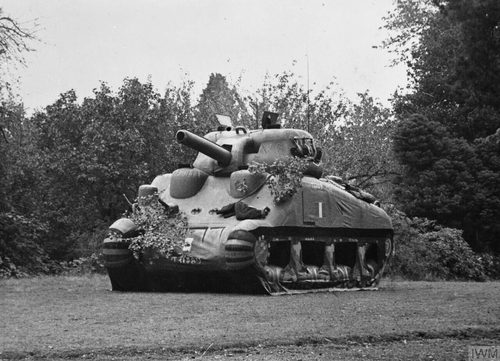 January – September 1944
Operation Fortitude
The Allied deception that invented armies in Scotland and southeast England in 1944 to make Germany expect landings in Norway and the Pas-de-Calais, and to see Normandy as a feint.
November 1961 – 15 March 1988
TOPHAT: the Polyakov case
From 1961 to 1980 GRU officer Dmitri Polyakov, later a major general, spied for the FBI and CIA. Betrayed by Robert Hanssen and Aldrich Ames, he was arrested in 1986 and shot in 1988.
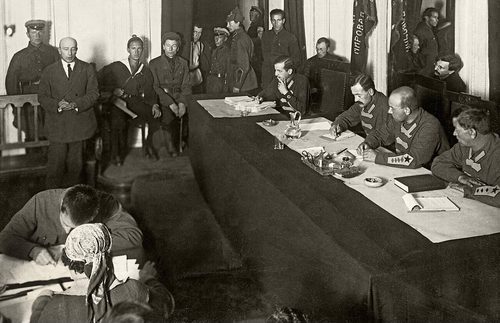 12 May 1922 – 29 August 1924
Operation Sindikat-2
An OGPU deception of 1922–1924 that invented an underground party inside Soviet Russia to draw the old terrorist Boris Savinkov home. He crossed the border in August 1924 and walked into a trap.