
Portrait: George Blake in an Associated Press photograph, 1953. Unknown (Associated Press). Wikimedia Commons, Public domain.

When Harold Macmillan told the Commons about "the grave case of George Blake" on 4 May 1961, he could not say who Blake's employer had been. In 1961 the British government did not acknowledge that the Secret Intelligence Service existed. So the Prime Minister described a man "temporarily employed as Vice-Consul, Seoul," later "attached for a time to the Foreign Office," who "was never an established member of the Foreign Service."1,5
From Rotterdam to SIS
Blake was born George Behar in Rotterdam on 11 November 1922, the son of a naturalized British subject from Constantinople and a Dutch mother. After his father's death he spent part of his adolescence in Cairo.4 As a teenager in occupied Holland he carried messages for the Dutch resistance, then escaped through Spain and Gibraltar to reach London in January 1943. His mother changed the family name to Blake that year.4 He served in the Royal Navy and in 1944 joined SIS, working on Dutch operations and then in Hamburg; in 1947 he studied Russian at Cambridge.4
Korea
SIS sent him to Seoul under diplomatic cover, and he arrived on 6 November 1948. When North Korean forces captured the city in 1950 he and other British diplomats were interned, and he spent nearly three years in captivity.1,4 During that time, in his own words quoted by Macmillan, he decided "to join the Communist side" and agreed "to make available to the Soviet Intelligence such information as came his way in the course of his duties."1 Macmillan stressed that Blake had not been brainwashed or coerced; he had volunteered.1
Inside SIS for Moscow
Blake returned to Britain in 1953 and resumed his SIS career.4 His most damaging early betrayal concerned the joint SIS–CIA plan to tap Soviet military telephone lines in Berlin from a tunnel dug under the sector border. Blake passed details of it to the Soviets; to protect him, they allowed the tunnel to operate for nearly a year before "discovering" it in 1956 (see Operation Gold (the Berlin Tunnel)). He also reported the similar British operation in Vienna.4 SIS posted him to Berlin in 1955, where his job was recruiting Soviet officers; he reported British and American operations to his KGB contacts.4
Arrest and sentence
Information from the Polish intelligence officer Michał Goleniewski, the same source who led MI5 to the Portland spy ring, pointed toward Blake.4 He was recalled from Lebanon, where he had been studying Arabic, and confessed under questioning.1,4
On 3 May 1961 he pleaded guilty at the Old Bailey to five counts under Section 1 of the Official Secrets Act.1 Because the maximum for each count was 14 years, the court imposed three consecutive 14-year terms, with two concurrent, for a total of 42 years, among the longest sentences ever passed by a British court.4
Escape
At 7 p.m. on Saturday, 22 October 1966, Blake was found to be missing from Wormwood Scrubs. The Home Secretary, Roy Jenkins, told the Commons two days later that Blake had broken out of his wing through a landing window, a bar of which had been broken, and had gone over the outer wall by a ladder "which appears to have been supplied from outside."2 In the same statement Jenkins announced an independent inquiry into prison security under Lord Mountbatten.2 The prison's own report on the escape is now at The National Archives.3
Blake was helped by a former fellow prisoner and two peace campaigners, who hid him in London and then drove him across the Channel and through West Germany, hidden in a camper van, to the East German border.4 He lived in the Soviet Union, and then Russia, for the rest of his life, and in 2007 was awarded the Russian Order of Friendship. He died in Moscow on 26 December 2020, aged 98.4
Unlike the The Cambridge Five, Blake was an outsider to the British establishment, and unlike Philby he was caught, tried and convicted.1,4 See also Double agents and Kim Philby.
Key dates
- 1944 Joins the Secret Intelligence Service.
- 6 November 1948 Arrives in Seoul under cover as vice-consul.
- 1950 Interned after North Korean forces take Seoul; offers his services to Soviet intelligence during captivity.
- 1955 Posted to Berlin by SIS.
- 3 May 1961 Pleads guilty at the Old Bailey to five Official Secrets Act counts; sentenced to 42 years.
- 22 October 1966 Escapes from Wormwood Scrubs prison and reaches the Soviet Union.
Sources
- Other Security Procedures (Case of George Blake), HC Deb 4 May 1961 vol 639 cc1609–18, UK Parliament, Hansard (1961-05-04).
- Other George Blake (Escape from Prison), HC Deb 24 October 1966 vol 734 cc649–56, UK Parliament, Hansard (1966-10-24).
- Other HO 391/680: HMP Wormwood Scrubs: report on the escape of George Blake 22 October 1966 and associated papers, The National Archives (UK), Discovery catalogue (1966).
- Wikipedia George Blake, Wikipedia.
- Wikipedia Secret Intelligence Service, Wikipedia.
- Wikipedia English Wikipedia article (used for cross-checking).
Elsewhere in the files
Read next
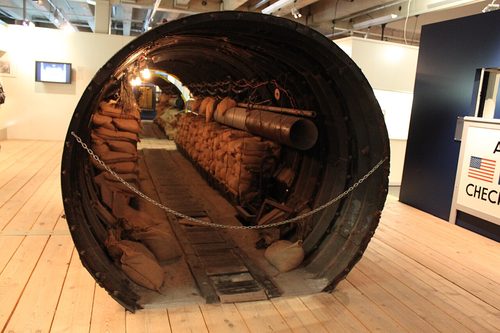 December 1953 – 22 April 1956
Operation Gold (the Berlin Tunnel)
From 1955 to 1956 the CIA and British SIS tapped Soviet military phone and teleprinter cables in East Berlin from a 1,476-foot tunnel, unaware that a KGB mole had betrayed the plan before digging began.
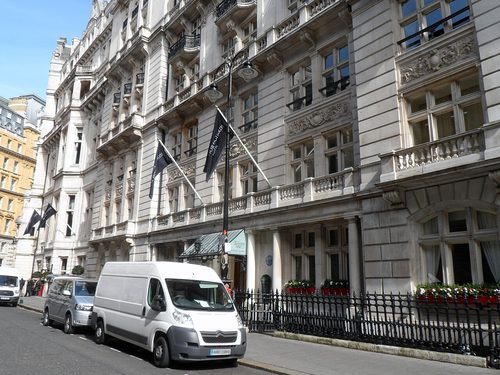 United Kingdom · 1909
Secret Intelligence Service (MI6)
Britain's foreign intelligence service, founded in 1909 as the foreign section of the Secret Service Bureau, run by a chief known as 'C', and not placed on a statutory footing until the Intelligence Services Act 1994.
1920s–1990s
Double agents
Agents who seem to serve one service while controlled by another. From the OGPU's Trust to MI5's Double Cross system and the FBI's Duquesne case, the best of them turned an enemy network into a channel for deception.
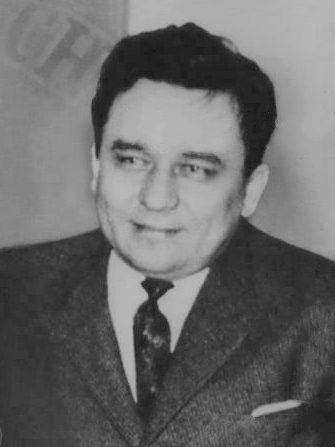 1951 – 22 March 1961
The Portland spy ring
A Soviet network that took naval secrets from the Admiralty's underwater research establishment at Portland, run by the KGB illegal 'Gordon Lonsdale' and broken up by MI5 in January 1961.
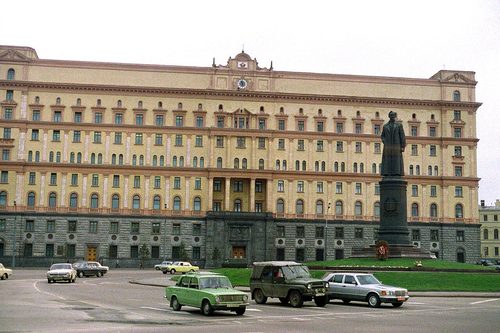 Soviet Union · 1954–1991
KGB
The Soviet Committee for State Security, 1954–1991: foreign intelligence, counter-intelligence, border troops and political police under one roof, from Khrushchev's reforms to the failed coup of August 1991.