
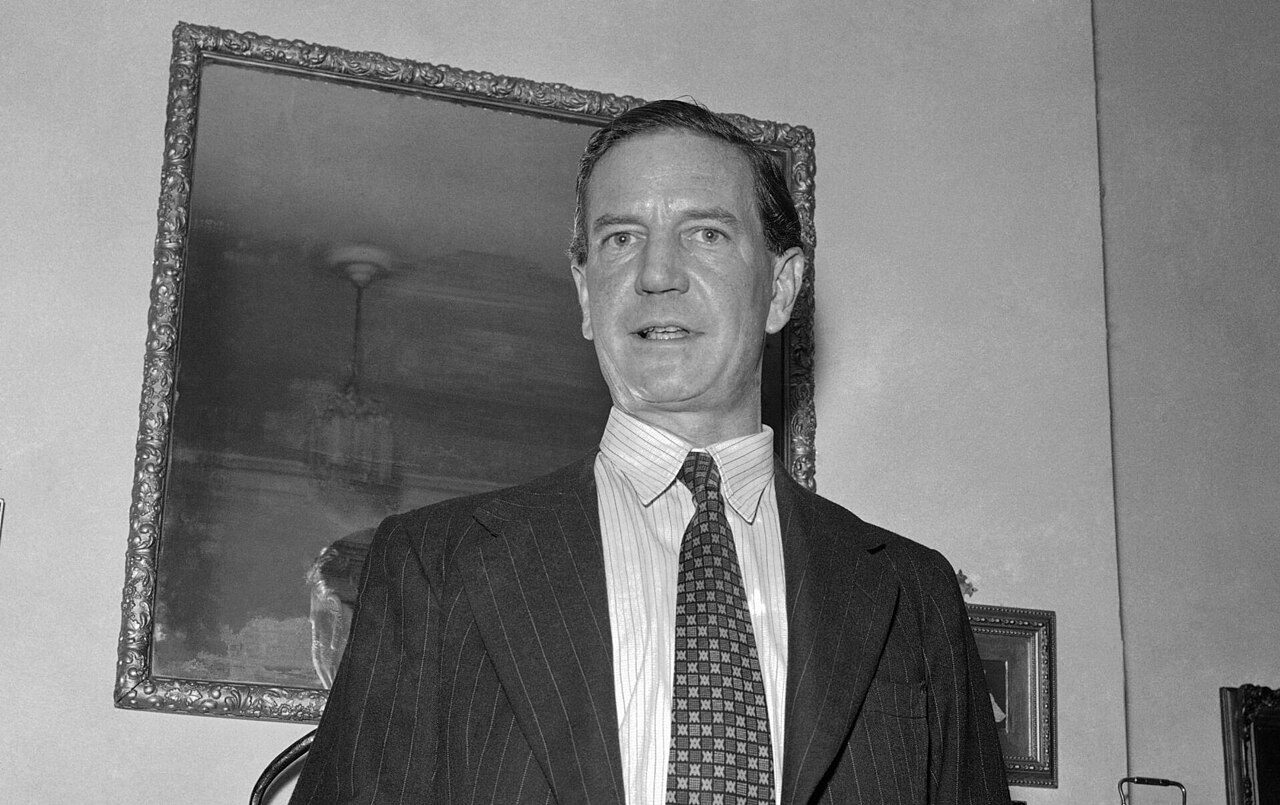

Kim Philby spent almost thirty years as a Soviet agent, more than ten of them inside the Secret Intelligence Service, and the British government defended his loyalty in Parliament eight years before he fled to Moscow. MI5's own catalogue summary of his file is blunt about why: suspicion from 1951, but no conclusive evidence until 1963.1
From Cambridge to SIS
He was born Harold Adrian Russell Philby at Ambala in the Punjab on 1 January 1912, the son of the Indian civil servant and Arabist St John Philby, and was educated at Westminster School and Trinity College, Cambridge.6 MI5 later concluded that he became a committed communist at Cambridge and that in 1934 he was recruited by Arnold Deutsch, the Soviet illegal who led the recruitment of the group now called the Cambridge Five.1,5
After Cambridge he worked as a journalist, including in Spain during the civil war and with the British Expeditionary Force in France in 1939–40.6 He joined SIS in 1940 and rose to a senior position.1 From 1944 he worked in the section responsible for countering Soviet espionage, a post that put Moscow's agent inside the British effort against Moscow.6 In 1949 he was posted to Washington, where he served until 1951 as SIS representative and liaison with American intelligence.1
Washington and the 1951 warning
Washington gave Philby access to the joint work on the The Venona project decrypts and to Anglo-American planning, including the covert operations against Albania (Operation Valuable (Albania)).6 By early 1951 the search for the wartime embassy source codenamed HOMER had narrowed to Donald Maclean. Maclean fled with Guy Burgess on 25 May 1951.6
Philby came under immediate suspicion; Burgess had lodged at his house in Washington. MI5 investigated him intensively, and in July 1951 he was asked to resign from the Foreign Service.1,2
Cleared, then exposed
The case became public in 1955. On 25 October the Labour MP Marcus Lipton asked the Prime Minister whether he meant to cover up "the dubious third man activities of Mr. Harold Philby."3 On 7 November Harold Macmillan, as Foreign Secretary, replied in debate that "no evidence has been found to show that he was responsible for warning Burgess or Maclean" and that he had no reason to identify Philby with the "third man," if there was one.2 Philby held a press conference denying everything.6
He moved to Beirut in 1956 as a correspondent for The Observer and The Economist and, by then, again worked for SIS.6 New information reached the British in the early 1960s. In January 1963 an old SIS colleague, Nicholas Elliott, confronted him in Beirut, and Philby made what the MI5 catalogue calls a partial confession.1,6 On the evening of 23 January 1963 he failed to arrive at a dinner party and disappeared.6
On 1 July 1963 Edward Heath, the Lord Privy Seal, told the Commons that the security services now knew, "partly as a result of an admission by Mr. Philby himself," that he had worked for the Soviet authorities before 1946 and had warned Maclean through Burgess in 1951. Heath added that Philby had had no access to official information since July 1951.4
Moscow
Philby lived in Moscow for the rest of his life. His memoir, My Silent War, appeared in Britain in 1968 and in the Soviet Union only in 1980. Written from Moscow by a serving Soviet agent, it is a source on what he wanted known, not a neutral record.6 In 1990 the Soviet Union issued a postage stamp in his honour, two years after his death in Moscow on 11 May 1988.6
Key dates
- 1934 Recruited by Soviet intelligence officer Arnold Deutsch.
- 1940 Joins the Secret Intelligence Service.
- 1949 Posted to Washington as SIS liaison with American intelligence.
- July 1951 Asked to resign from the Foreign Service after the flight of Burgess and Maclean.
- 7 November 1955 Cleared in the Commons by Foreign Secretary Harold Macmillan.
- 23 January 1963 Disappears from Beirut and reaches the Soviet Union.
- 1 July 1963 Government tells Parliament that Philby worked for the Soviets and warned Maclean in 1951.
Sources
- Other KV 2/4723: Harold Adrian Russell (Kim) PHILBY (catalogue description), The National Archives (UK), Discovery catalogue (1933–1951).
- Other Former Foreign Office Officials, HC Deb 7 November 1955 vol 545 cc1483–611, UK Parliament, Hansard (1955-11-07).
- Other Burgess and Maclean, HC Deb 25 October 1955 vol 545 cc28–9, UK Parliament, Hansard (1955-10-25).
- Other Mr. Harold Philby, HC Deb 1 July 1963 vol 680 cc33–5, UK Parliament, Hansard (1963-07-01).
- Other KV 2/4428: Arnold DEUTSCH (catalogue description), The National Archives (UK), Discovery catalogue.
- Wikipedia Kim Philby, Wikipedia.
- Wikipedia English Wikipedia article (used for cross-checking).
Elsewhere in the files
- Agency Secret Intelligence Service (MI6)
- Agency Security Service (MI5)
- Document OPC's revaluation of the Albanian operation (29 November 1949)
- Operation Operation Valuable (Albania)
- Operation The Cambridge Five
- Operation The Gouzenko affair
- Operation The Venona project
- Person Anthony Blunt
- Person Donald Maclean
- Person Elizabeth Bentley
- Person George Blake
- Person Guy Burgess
- Person James Jesus Angleton
- Person John Cairncross
- Person Konon Molody (Gordon Lonsdale)
Read next
 1 February 1943 – 1 October 1980
The Venona project
The US Army codebreaking program that, from 1943 to 1980, read parts of some 2,900 wartime Soviet intelligence cables and exposed Fuchs, the Rosenbergs and Donald Maclean.
 United Kingdom · 1909
Secret Intelligence Service (MI6)
Britain's foreign intelligence service, founded in 1909 as the foreign section of the Secret Service Bureau, run by a chief known as 'C', and not placed on a statutory footing until the Intelligence Services Act 1994.
1920s–1990s
Double agents
Agents who seem to serve one service while controlled by another. From the OGPU's Trust to MI5's Double Cross system and the FBI's Duquesne case, the best of them turned an enemy network into a channel for deception.