
Portrait: James Jesus Angleton, chief of CIA counterintelligence. unknown employee of US federal government. Wikimedia Commons, Public domain.

James Angleton took his signature phrase for counterintelligence, "a wilderness of mirrors," from his favorite poem, T. S. Eliot's "Gerontion," and he spent twenty years inside it. As chief of the CIA's Counterintelligence Staff from 1954 until December 1974 he was, in the words of the Agency's chief historian, "one of the most influential and divisive intelligence officers in US history"1.
Poetry and X-2
Angleton was born in Boise, Idaho, on 9 December 1917 and grew up mostly in Italy, where his father owned the National Cash Register subsidiary. After an English preparatory school he entered Yale in 1937, studied English literature and edited a poetry magazine, Furioso, that published Ezra Pound and others. He was at Harvard Law School when he joined the Army in 19431,5.
The Office of Strategic Services sent him to its counterintelligence branch, X-2, in London. X-2 was the only OSS component cleared for raw Ultra decrypts, and there he learned of the Double-Cross and Fortitude deceptions, an experience the CIA's historian connects with his later belief in Soviet "strategic deception." In London his British liaison was Kim Philby, who became a friend. By the end of the war Angleton ran all X-2 operations in Italy1,5.
Chief of counterintelligence
He joined the CIA's clandestine service in 1947, handled liaison with allied services, and in 1954 Allen Dulles gave him the new Counterintelligence Staff. He kept it for the rest of his career, along with an unusual hold on the Agency's relationship with Israel1,5.
Two programs that later embarrassed the CIA ran through his staff. In November 1955 he proposed to Richard Helms an expansion of the Agency's opening of mail between the United States and the Soviet Union in New York. Under the cryptonym HTLINGUAL, more than 215,000 letters were opened and photographed before the project ended in February 1973, despite internal reviews that found it of doubtful legality3. In August 1967 he chose Richard Ober to run the Special Operations Group that became Operation CHAOS, though he told the Senate that Ober's unit sat in his staff only "for rations and quarters"2,3.
The molehunt
Philby's flight to Moscow in January 1963, and a string of other Western compromises in 1959–63, convinced Angleton that the CIA itself must be penetrated. His guide was the KGB defector Anatoliy Golitsyn, who came over in Helsinki in December 19611,5. When another KGB officer, Yuri Nosenko, defected in 1964, Angleton and his allies judged him a plant. Nosenko was held from 13 August 1965 to 27 October 1967 in a specially constructed "jail," a cell with nothing but a cot in it, an episode the CIA's Office of Security later listed among its "Family Jewels"1,4,5.
Fall
William Colby, Director from September 1973, had long disagreed with Angleton and began trimming his staff. Seymour Hersh's report on CIA domestic spying appeared in the New York Times on 22 December 1974, and Angleton's resignation was announced on Christmas Eve. Robarge writes that "it was more than time for him to go," as even Helms came to admit1,5.
On 24 September 1975 he testified in public before Frank Church's committee. Senator Richard Schweiker read back his earlier deposition about the CIA's retention of shellfish toxin: "It is inconceivable that a secret intelligence arm of the government has to comply with all the overt orders of the government." Angleton called the remark "imprudent," then, pressed by Church, said: "I withdraw that statement"2.
He died of lung cancer in Washington on 11 May 1987 and is buried in Boise's Morris Hill Cemetery, the same cemetery as Frank Church5.
Key dates
- 1943 Joins the Army and the OSS counterintelligence branch, X-2, in London.
- 1945 Chief of X-2 operations in Italy by the war's end.
- 1947 Joins the CIA's clandestine service; becomes liaison to allied services.
- 1954 Named chief of the new Counterintelligence Staff.
- November 1955 Proposes expanding the CIA's New York mail-opening program, HTLINGUAL, which his staff runs until 1973.
- August 1967 Chooses the officer to run the Special Operations Group, later Operation CHAOS.
- December 1974 Forced out after the New York Times reports CIA domestic spying.
- 24 September 1975 Withdraws, before the Church Committee, his statement that a secret service need not obey 'all the overt orders of the government'.
Sources
- CIA 'Cunning Passages, Contrived Corridors': Wandering in the Angletonian Wilderness (David Robarge), Studies in Intelligence 53, no. 4, Central Intelligence Agency, Center for the Study of Intelligence (2009-12).
- Congress Intelligence Activities, Senate Resolution 21: Hearings, Volume 2, Huston Plan (Church Committee), US Senate, digitized by the Internet Archive (1975-09).
- Congress Final Report of the Select Committee to Study Governmental Operations with Respect to Intelligence Activities, Book III (S. Rep. 94-755): 'Domestic CIA and FBI Mail Opening Programs' and 'CIA Intelligence Collection About Americans', US Senate, digitized by the Internet Archive (1976-04).
- CIA 'Family Jewels' compilation (MORI DocID 1451843), Central Intelligence Agency, full text posted by the National Security Archive (1973-05-16).
- Wikipedia James Jesus Angleton, Wikipedia.
- Wikipedia English Wikipedia article (used for cross-checking).
Elsewhere in the files
Read next
 15 August 1967 – 5 March 1974
Operation CHAOS
Pressed by two presidents to prove that foreign communists were behind the antiwar movement, the CIA built files on 7,200 Americans from 1967 to 1974 and kept finding no such proof.
 May 1973
The "Family Jewels" (1973)
The CIA's own 1973 inventory of activities that might have broken its charter, from mail opening and wiretaps on reporters to plots against Castro. Kept secret for 34 years, it was released in June 2007.
1934 – 23 January 1963
The Cambridge Five
Five Cambridge graduates recruited by Soviet intelligence in the 1930s reached MI6, MI5, the Foreign Office and Bletchley Park, and were exposed one by one between 1951 and 1990.
1920s–1990s
Double agents
Agents who seem to serve one service while controlled by another. From the OGPU's Trust to MI5's Double Cross system and the FBI's Duquesne case, the best of them turned an enemy network into a channel for deception.
 United States · 1947
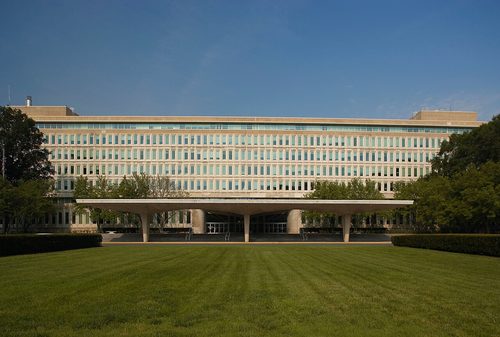
Central Intelligence Agency (CIA)
The US civilian intelligence service, created by the National Security Act of 1947 to coordinate foreign intelligence, which within a year also became Washington's instrument for covert action.
 United States · 1942–1945
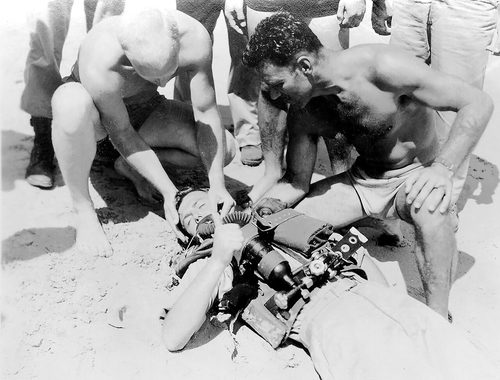
Office of Strategic Services (OSS)
America's wartime intelligence service, 1942–1945: William Donovan's mix of scholars, spies, saboteurs and propagandists, abolished by Truman and reborn in parts as the CIA.