
Portrait: FBI Director J. Edgar Hoover, about 1953. Unknown authorUnknown author or not provided. Wikimedia Commons, Public domain.

When he died in his sleep on 2 May 1972, J. Edgar Hoover had run the FBI for 48 years, under eight presidents. His body lay in state in the Capitol Rotunda. Four years later a Senate committee, reading his Bureau's files, concluded that under his direction the FBI had conducted "a sophisticated vigilante operation" against American citizens. Both verdicts describe the same career1,3,5.
Clerk, lawyer, hunter of radicals
John Edgar Hoover was born in Washington, D.C., on 1 January 1895. He worked as a messenger at the Library of Congress while studying law at night at George Washington University, which gave him a law degree in 1916 and a master's in law in 1917. He joined the Department of Justice on 26 July 19171,5.
In August 1919, at 24, he became head of the new General Intelligence Division, set up to track radicals during the Red Scare. He compiled the files behind Attorney General A. Mitchell Palmer's raids of 1919–20 against suspected anarchists and communists. The FBI's own history now calls the raids "poorly planned and executed and heavily criticized for infringing on the civil liberties of the thousands of people swept up"4,5.
Director
On 10 May 1924, after the Teapot Dome scandals, Attorney General Harlan Fiske Stone made the 29-year-old Hoover acting director of the Bureau of Investigation, and he was confirmed as Director by the end of the year. He fired agents he considered political appointees, required background checks and legal or accounting training for new agents, and built the fingerprint files and, in 1932, the Technical Laboratory. The Bureau's pursuit of the gangsters of the early 1930s made its "G-Men" famous, and in July 1935 it became the Federal Bureau of Investigation1,2.
The secret side of the job began in August 1936, when President Roosevelt confidentially asked the Bureau to gather intelligence on fascist and communist activity. In 1938 Hoover advised that the expansion proceed "with the utmost degree of secrecy in order to avoid criticism," and that it would be "undesirable to seek any special legislation"3. During the Second World War the FBI led domestic counterintelligence, rolled up German networks such as the Duquesne spy ring and the Pastorius saboteurs, and ran its own foreign intelligence service in Latin America1.
The Bureau's lists of people to be detained in an emergency show Hoover's habits plainly. When Attorney General Francis Biddle ordered the Custodial Detention List abolished in 1943, calling it "inherently unreliable" and "dangerous," Hoover did not abolish it. He renamed it the Security Index and told the field that its existence should "at no time be mentioned" outside the Bureau and military intelligence3.
The Cold War Bureau
After 1945 Hoover's FBI pursued Soviet espionage, helped by the Army's Venona decrypts, and ran the loyalty investigations of federal employees. It also widened the definition of subversion. In August 1956 the Bureau began its first counterintelligence program against the Communist Party, and four more followed, against the Socialist Workers Party, the Ku Klux Klan, "Black Nationalist" groups and the New Left. Hoover's personal campaign against Martin Luther King Jr. included wiretaps, hotel microphones and, in November 1964, an anonymous package mailed to King; William Sullivan testified that the order came from Hoover and his deputy Clyde Tolson1,3.
He also asked the National Security Agency for intercepts on the same targets. In June 1970 he told NSA that the Bureau had "a continuing interest" in material obtained under Minaret3.
Death and judgment
Hoover ended COINTELPRO in April 1971, weeks after burglars took files from the FBI office in Media, Pennsylvania. He remained Director until his death at 77. Under the Freedom of Information Act and the Church Committee's inquiry, the record of his Bureau's domestic operations became public within four years1,3.
Key dates
- 26 July 1917 Enters the Department of Justice.
- August 1919 Heads the new General Intelligence (Radical) Division during the Red Scare.
- 10 May 1924 Appointed acting director of the Bureau of Investigation by Attorney General Harlan Fiske Stone.
- July 1935 The Bureau is renamed the Federal Bureau of Investigation.
- August 1936 Receives President Roosevelt's confidential instructions to gather domestic intelligence on fascist and communist groups.
- August 1956 FBI begins its first counterintelligence program, against the Communist Party.
- November 1964 FBI mails Martin Luther King Jr. a tape and anonymous letter.
- 28 April 1971 FBI ends COINTELPRO after the Media, Pennsylvania, burglary.
- 2 May 1972 Dies in office; lies in state in the Capitol Rotunda.
Sources
- FBI J. Edgar Hoover, May 10, 1924 – May 2, 1972 (Directors, Then and Now), Federal Bureau of Investigation, archived by the Wayback Machine.
- FBI The FBI and the American Gangster, 1924–1938 (A Brief History of the FBI), Federal Bureau of Investigation, archived by the Wayback Machine.
- Congress Final Report of the Select Committee to Study Governmental Operations with Respect to Intelligence Activities, Book III (S. Rep. 94-755): 'The Development of FBI Domestic Intelligence Investigations' and 'COINTELPRO', US Senate, digitized by the Internet Archive (1976-04).
- FBI The Nation Calls, 1908–1923 (A Brief History of the FBI), Federal Bureau of Investigation, archived by the Wayback Machine.
- Wikipedia J. Edgar Hoover, Wikipedia.
- Wikipedia English Wikipedia article (used for cross-checking).
Elsewhere in the files
- Agency Federal Bureau of Investigation (FBI)
- Agency Office of Strategic Services (OSS)
- Document After the U-2: the President and his advisers (May 1960)
- Document Ex parte Quirin (1942): the Supreme Court and the Nazi saboteurs
- Document FBI file: 'Stay-Behind Special Agent Program in Alaska', the 1950 papers (Part 1, opening pages)
- Document Hoover tells the White House about Gouzenko (September 1945)
- Document The FBI letter that opened COINTELPRO against black nationalist groups (1967)
- Operation COINTELPRO
- Operation Operation Pastorius
- Operation Operation Washtub
- Operation Project Minaret
- Operation The Duquesne spy ring
- Operation The Gouzenko affair
- Operation The Venona project
- Person Alger Hiss
- Person Duško Popov (TRICYCLE)
- Person Elizabeth Bentley
- Person Ethel Rosenberg
- Person Frank Church
- Person Igor Gouzenko
- Person Julius Rosenberg
- Person William J. Donovan
- Tradecraft Microdots
Read next
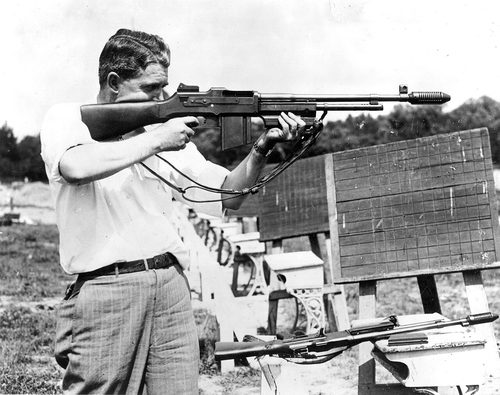 United States · 1908
Federal Bureau of Investigation (FBI)
The US Justice Department's investigative service, founded in 1908: chief hunter of foreign spies at home from the 1930s, and under J. Edgar Hoover the author of secret domestic programs exposed in the 1970s.
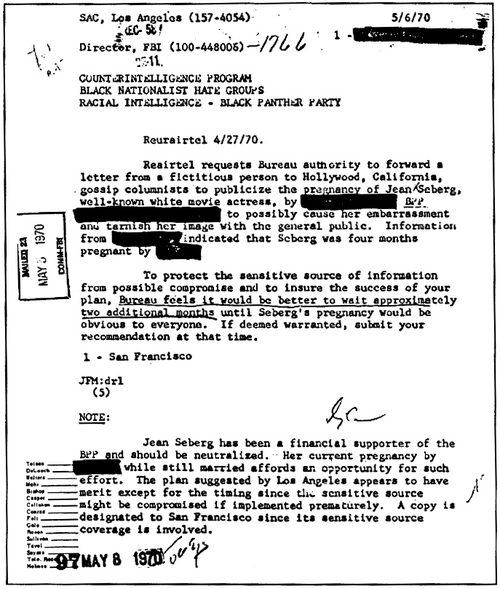 August 1956 – 28 April 1971
COINTELPRO
From 1956 to 1971 the FBI ran secret programs to 'disrupt' and 'neutralize' American political groups, from the Communist Party and the Klan to civil rights and antiwar organizations. A burglary in 1971 exposed them.
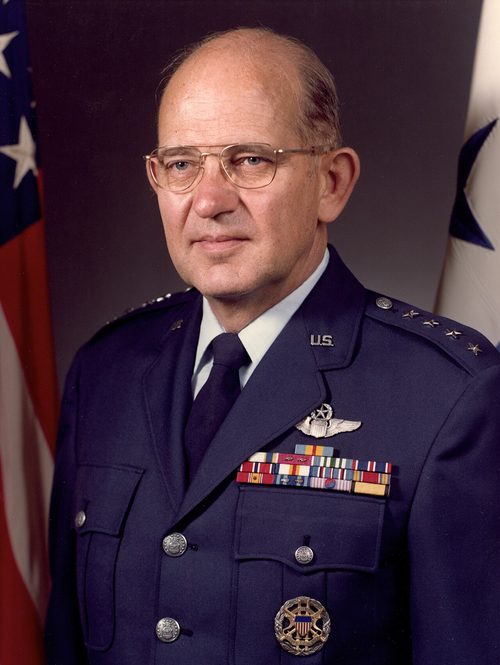 20 October 1967 – October 1973
Project Minaret
From 1967 to 1973 the NSA searched international communications for the names of Americans supplied by the FBI, CIA and Secret Service, among them Martin Luther King Jr., Muhammad Ali and two sitting senators.
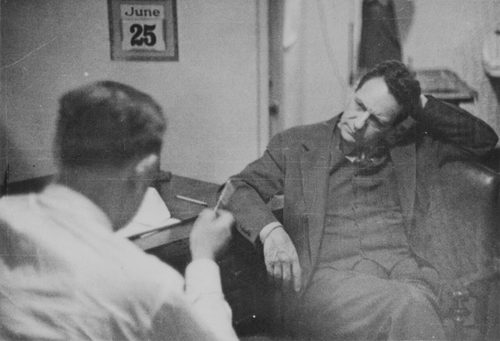 8 February 1940 – 2 January 1942
The Duquesne spy ring
Thirty-three German agents convicted in 1941–42 after the FBI turned an Abwehr recruit, William Sebold, ran his radio link to Hamburg for 16 months and filmed spies in a wired Manhattan office.
 1 February 1943 – 1 October 1980
The Venona project
The US Army codebreaking program that, from 1943 to 1980, read parts of some 2,900 wartime Soviet intelligence cables and exposed Fuchs, the Rosenbergs and Donald Maclean.
 13 June – 8 August 1942
Operation Pastorius
In June 1942 U-boats landed eight Abwehr saboteurs on Long Island and in Florida. One turned himself in, all were caught within two weeks, and the Supreme Court upheld their trial by military commission.