
Portrait: Julius Rosenberg's arrest photograph, 17 July 1950. Unknown authorUnknown author or not provided. Wikimedia Commons, Public domain.

Julius Rosenberg grew up on Manhattan's Lower East Side, the son of immigrants from the Russian Empire, and joined the Young Communist League as a teenager2. He studied electrical engineering at a New York college, graduating in February 1939, and that June married Ethel Greenglass, whom he had known since about 19322. From 1940 he worked for the Army Signal Corps as a civilian engineer-inspector; the War Department learned of his Communist Party membership in 1944 and ended his employment in 19452,5.
The engineers' ring
The decrypted Soviet cables, released in 1995, show Rosenberg as an active KGB agent, first under the covername ANTENNA and from September 1944 as LIBERAL3,4. A cable of 21 September 1944 reports that LIBERAL had recommended his brother-in-law's wife, Ruth Greenglass, and that her husband was working at the "ENORMOUS" plant in New Mexico3. Another, of 27 November 1944, describes his wife Ethel3. In March 1945 Moscow approved a bonus for him3. The cables also name members of what the KGB called "LIBERAL's group", among them the aeronautical engineer William Perl (GNOME)3.
Two prosecution witnesses tied him to wider espionage. Max Elitcher, a college classmate in the Navy's Bureau of Ordnance, testified that Rosenberg asked him for military information from 1944 to 1948 and that Morton Sobell drove film to Rosenberg's building in 19481,2. Elizabeth Bentley testified that she had taken phone calls in 1942–43 from an engineer called "Julius" who lived in Knickerbocker Village and dealt with the Soviet agent Jacob Golos; she could not positively identify him1,2. David Greenglass testified that Rosenberg admitted taking a proximity fuze from his employer, Emerson Radio, and giving it to the Russians1.
Los Alamos
The core of the trial was the Greenglass testimony. Ruth Greenglass said that in November 1944 Julius and Ethel asked her to recruit her husband, then an Army machinist at Los Alamos2. David testified that in January 1945 he wrote out information for Julius, and that the side panel of a Jello box was cut in two as a recognition signal, one half kept by Ruth and the other by Julius; in June 1945 Harry Gold arrived in Albuquerque with the matching half and the words "I come from Julius"1,2. Greenglass said he gave Rosenberg a sketch of a cross-section of the bomb in September 19451,2.
When Klaus Fuchs was arrested in February 1950, Rosenberg warned Greenglass he would have to leave the country, and after Gold's arrest in May he gave him $4,000 and instructions for an escape through Mexico, according to Greenglass2. Greenglass confessed on 15 June 1950; Rosenberg was arrested on 17 July2,4.
Trial and execution
The trial of the Rosenbergs and Sobell opened on 6 March 1951 in New York. All three were convicted on 29 March, and on 5 April Judge Irving Kaufman sentenced the Rosenbergs to death and Sobell to thirty years2. The Second Circuit affirmed on 25 February 1952. Judge Jerome Frank wrote that "doubtless, if that testimony were disregarded, the conviction could not stand," but that the credibility of the Greenglasses was for the jury, and that the court had no power to reduce a lawful sentence1. President Eisenhower refused clemency on 11 February 1953 and again on 19 June2. Julius Rosenberg was executed at Sing Sing that evening at 8:05 p.m.2.
Rosenberg denied everything on the stand and refused to name anyone2. His guilt as an organizer of espionage is no longer seriously disputed: the Venona cables, Sobell's admission in 2008 that he passed military information through Rosenberg, and KGB archival notes published in 2009 all point the same way5.
Key dates
- February 1939 Graduates in electrical engineering from a New York college.
- 21 September 1944 KGB cable reports that LIBERAL has recommended his wife's sister-in-law, Ruth Greenglass.
- January 1945 Collects David Greenglass's first written report on Los Alamos.
- 17 July 1950 Arrested at his home in Knickerbocker Village, New York.
- 29 March 1951 Convicted of conspiracy to commit espionage.
- 5 April 1951 Sentenced to death.
- 19 June 1953 Executed at Sing Sing prison.
Sources
- Court record United States v. Rosenberg, 195 F.2d 583 (2d Cir. 1952), Caselaw Access Project, Harvard Law School (1952-02-25).
- FBI Atom Spy Case/Rosenbergs, Federal Bureau of Investigation (archived copy).
- NSA Venona, Part II: Selected Messages, 1939–1957, Central Intelligence Agency and National Security Agency (1996).
- CIA Venona: Soviet Espionage and the American Response, 1939–1957 (Introduction), Central Intelligence Agency and National Security Agency (1996).
- Wikipedia Julius and Ethel Rosenberg, Wikipedia.
- Wikipedia English Wikipedia article (used for cross-checking).
Elsewhere in the files
- Agency Federal Bureau of Investigation (FBI)
- Document A Venona decrypt: New York 1657, 27 November 1944
- Document Meredith Gardner's first Venona report: "Covernames in Diplomatic Traffic" (1947)
- Operation Soviet atomic espionage (Enormoz)
- Operation The Venona project
- Person Elizabeth Bentley
- Person Ethel Rosenberg
- Person Harry Gold
- Person Klaus Fuchs
- Person Morris and Lona Cohen
- Tradecraft One-time pads
Read next
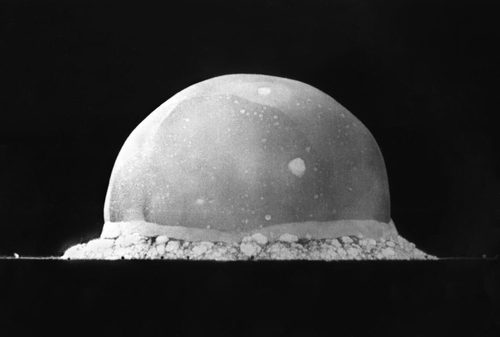 September 1941 – June 1950
Soviet atomic espionage (Enormoz)
How Soviet intelligence penetrated the Manhattan Project under the codename ENORMOZ, who its sources were, how Venona and confessions exposed them, and what the stolen secrets were worth.
 1 February 1943 – 1 October 1980
The Venona project
The US Army codebreaking program that, from 1943 to 1980, read parts of some 2,900 wartime Soviet intelligence cables and exposed Fuchs, the Rosenbergs and Donald Maclean.
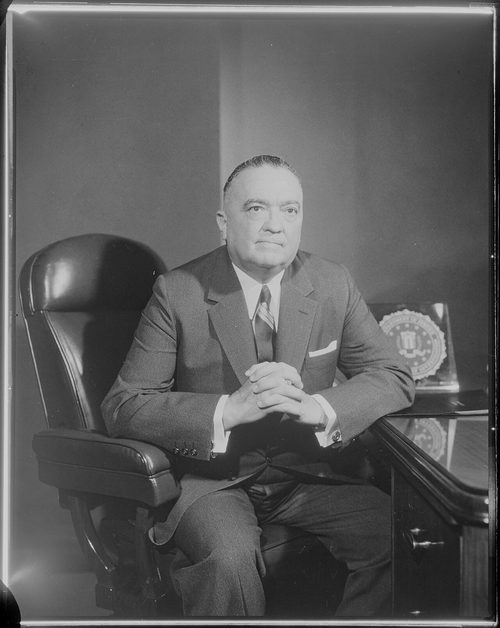 1895–1972
J. Edgar Hoover
Director of the Bureau of Investigation and then the FBI for 48 years, from 1924 until his death in 1972. He built a modern police agency and a secret domestic intelligence apparatus that the Senate later condemned.
 United States · 1908
Federal Bureau of Investigation (FBI)
The US Justice Department's investigative service, founded in 1908: chief hunter of foreign spies at home from the 1930s, and under J. Edgar Hoover the author of secret domestic programs exposed in the 1970s.