
Portrait: Elizabeth Bentley, photographed for the New York World-Telegram, 1948. C.M. Stieglitz, World Telegram staff photographer. Wikimedia Commons, Public domain.

Elizabeth Terrill Bentley came from a strait-laced New England family, graduated from Vassar in 1930 and studied in Italy on a fellowship5. Back in New York during the Depression she was drawn in through the American League Against War and Fascism and joined the Communist Party in March 19355. At the Rosenberg trial she described herself as a member of the party's Harlem section from 1935 to 19383.
Golos and the Washington groups
In 1938 she met Jacob Golos, a Russian-born party official who ran a travel agency, World Tourist, as a front, and who worked for Soviet intelligence; they became lovers3,5. After Golos was forced to register as a foreign agent in 1940, she took over his contacts and the running of a shipping company used as cover5. Golos died in November 19433. Bentley carried on, collecting documents and information from Communists in federal agencies, chiefly the circle around the economist Nathan Gregory Silvermaster and a group led by Victor Perlo5. Her Soviet contacts pressed her through 1944 to hand her sources over to KGB officers, and she resented it5.
Defection
Bentley went to the FBI in New Haven in August 1945 and on 7 November began telling her full story5. The next day J. Edgar Hoover wrote to the White House that information "from a highly confidential source" indicated that government employees were passing data to people outside government "who are in turn transmitting this information to espionage agents of the Soviet Government"1. His list began with Silvermaster, Harry Dexter White of the Treasury, George Silverman and Lauchlin Currie, a former administrative assistant to President Roosevelt, and continued with Perlo, Donald Wheeler and Duncan Lee of the OSS1.
The FBI hoped to run her back against the KGB, but Kim Philby, then in charge of anti-Soviet counterintelligence in London, learned of her defection and warned Moscow, which shut down her networks5. Hundreds of agents followed her leads, but the "Gregory" investigation, as the Bureau called it, produced no espionage prosecutions: wiretap evidence could not be used, and no suspect was caught passing secrets2. A 1947 federal grand jury heard her and dozens of the people she named2.
Public witness
In July 1948 the New York World-Telegram ran front-page stories about an unnamed "blond spy queen", and on 31 July she testified in public before the House Committee on Un-American Activities5. Her appearance led the committee to call Whittaker Chambers days later, which began the Alger Hiss case2,5. She testified at the trials of William Remington, Abraham Brothman and the Rosenbergs5. At the Rosenberg trial she told the jury about the Communist Party's subordination to Moscow and said she had taken calls in 1942–43 from an engineer named "Julius" who lived in Knickerbocker Village; she could not identify him3,4. The appeals court held that testimony admissible4.
From 1952 the FBI paid her as an informant, and she supported herself by lecturing and teaching5. She died in New Haven on 3 December 1963 after surgery for abdominal cancer5.
Key dates
- March 1935 Joins the Communist Party USA in New York.
- 1938 Begins working with the Soviet agent Jacob Golos.
- November 1943 Golos dies; she takes over his sources.
- 7 November 1945 Begins full debriefing by the FBI.
- 8 November 1945 Hoover reports her allegations to the White House.
- 31 July 1948 Testifies in public before the House Committee on Un-American Activities.
- March 1951 Testifies at the Rosenberg trial.
Sources
- FBI Venona, Part I: The American Response to Soviet Espionage (Document 15: Hoover to Brig. Gen. Harry Hawkins Vaughan, 8 November 1945), Central Intelligence Agency and National Security Agency (1945-11-08).
- CIA Venona: Soviet Espionage and the American Response, 1939–1957 (Introduction), Central Intelligence Agency and National Security Agency (1996).
- FBI Atom Spy Case/Rosenbergs, Federal Bureau of Investigation (archived copy).
- Court record United States v. Rosenberg, 195 F.2d 583 (2d Cir. 1952), Caselaw Access Project, Harvard Law School (1952-02-25).
- Wikipedia Elizabeth Bentley, Wikipedia.
- Wikipedia English Wikipedia article (used for cross-checking).
Elsewhere in the files
Read next
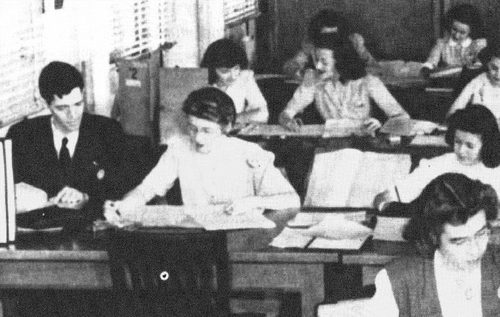 1 February 1943 – 1 October 1980
The Venona project
The US Army codebreaking program that, from 1943 to 1980, read parts of some 2,900 wartime Soviet intelligence cables and exposed Fuchs, the Rosenbergs and Donald Maclean.
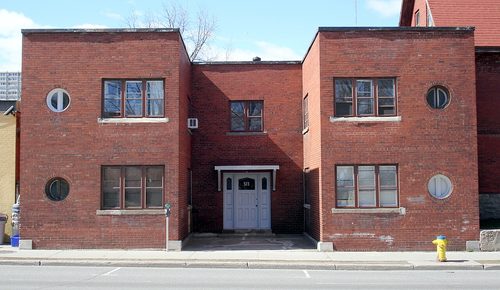 5 September 1945 – 27 June 1946
The Gouzenko affair
In September 1945 a GRU cipher clerk walked out of the Soviet embassy in Ottawa with over a hundred documents, exposing a Soviet spy network in Canada and a British atomic scientist.
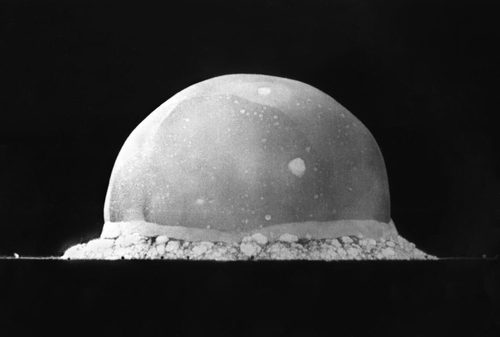 September 1941 – June 1950
Soviet atomic espionage (Enormoz)
How Soviet intelligence penetrated the Manhattan Project under the codename ENORMOZ, who its sources were, how Venona and confessions exposed them, and what the stolen secrets were worth.