
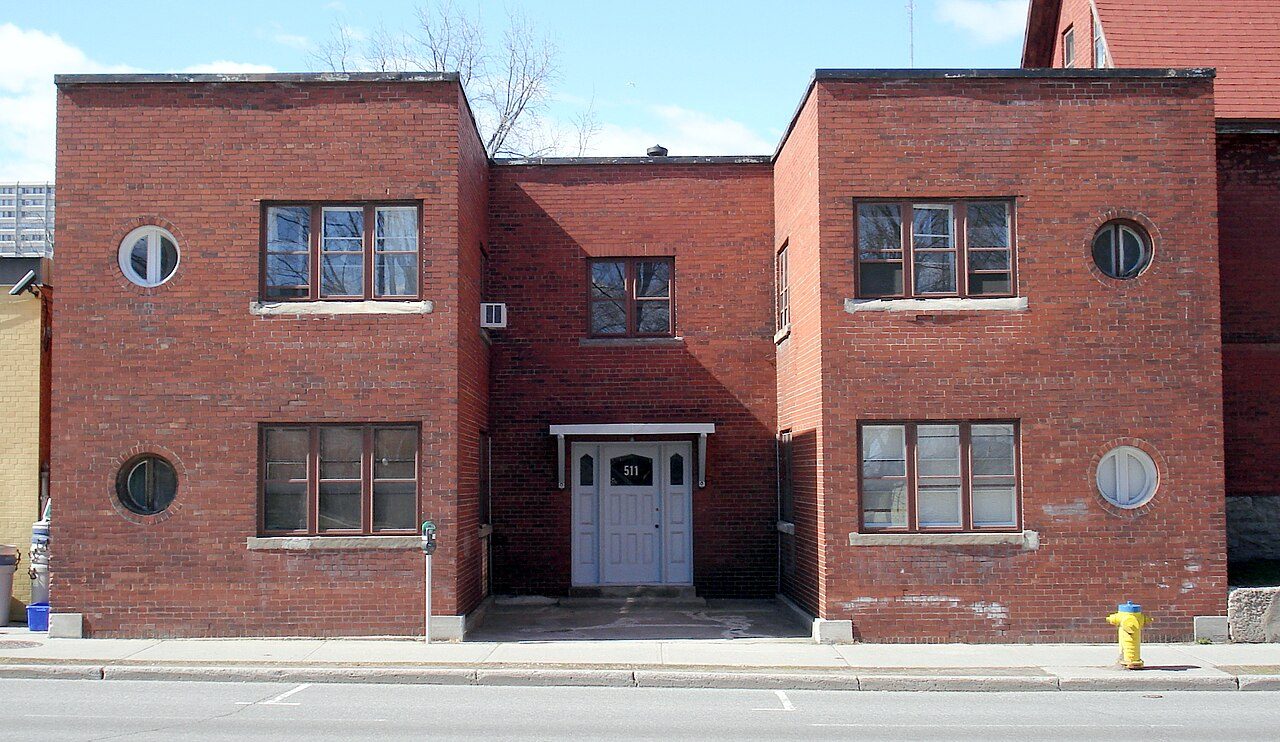
The Second World War had been over for three days. On the night of 5 September 1945, Igor Gouzenko, the cipher clerk on the staff of the Soviet military attaché in Ottawa, left the embassy with a bundle of documents taken from his own office: telegrams to and from Moscow that he had enciphered and deciphered, and papers written by Soviet officers and by Canadians working for them1. He had arrived in June 1943 with the title "civilian employee" and had learned in 1944 that he was to be recalled1,6.
Thirty-six hours
Defecting proved harder than walking out. Gouzenko tried the Ottawa Journal and the Department of Justice that night and again the next morning, and was turned away or put off6. Prime Minister Mackenzie King, told on 6 September, at first wanted nothing to do with him, fearing a rupture with a wartime ally6. That night men from the Soviet embassy broke into Gouzenko's apartment on Somerset Street while he and his family hid with a neighbor; the Ottawa police arrived, and the next day the Royal Canadian Mounted Police took Gouzenko and his documents into protection6. Accounts put the number of documents at 1096.
The papers were explosive. They described a network run by the military attaché, Colonel Nikolai Zabotin (covername GRANT), for the Red Army's intelligence directorate, the GRU, parallel to and separate from the NKVD's own networks1. Its targets included radar, explosives and, above all, the atomic bomb.
Washington and London are told
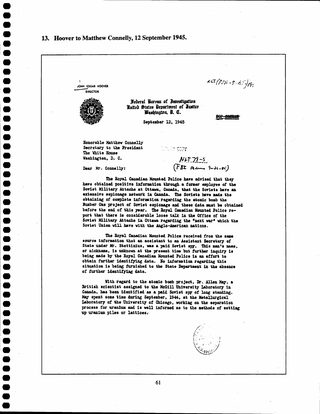
J. Edgar Hoover reported the defection to the White House on 12 September 1945. His letter, declassified decades later, passes on the RCMP's account:
The Soviets have made the obtaining of complete information regarding the atomic bomb the Number One project of Soviet espionage and these data must be obtained before the end of this year.3
The letter named "Dr. Allen May", a British scientist at the McGill University laboratory, as "a paid Soviet spy of long standing" and reported that an assistant to an Assistant Secretary of State was said to be a paid Soviet agent3. MI5 and the FBI interviewed Gouzenko in Canada6. The British physicist Alan Nunn May, who had worked on the Anglo-Canadian atomic project in Montreal, was arrested in London on 4 March 1946, pleaded guilty and on 1 May 1946 was sentenced to ten years' hard labor5.
The Royal Commission
For five months the government said nothing. On 5 February 1946 an order in council, P.C. 411, appointed two Supreme Court justices, Robert Taschereau and Roy Kellock, as a Royal Commission1,2. Before they sat, they studied "the original documents brought by Igor Gouzenko from the Russian Embassy"1. They began hearing evidence on 13 February 1946 and heard their last witness on 27 June; they examined 116 witnesses and about 1,000 exhibits1.
On 15 February the RCMP detained suspects in dawn raids. Under an earlier wartime order, P.C. 6444, they were held incommunicado at the RCMP barracks in Rockcliffe and questioned by the commission before seeing lawyers5. The commission published three interim reports in March 1946, the first on 4 March, each naming detainees, who were then formally charged1,5. Its final report, published in July 1946, concluded that the Soviet effort was "the result of a long preparation by trained and experienced men" and not the work of "over-zealous Soviet employees"1,4.
Trials and verdicts
The prosecutions ran into 1949. Fred Rose, the only Communist member of the House of Commons, was convicted in June 1946 and sentenced to six years; he later lost his seat5. Others convicted included the National Research Council engineer Philip Durnford Smith, the chemist Raymond Boyer, the Wartime Information Board editor Gordon Lunan and the party organizer Sam Carr, who fled to the United States and was not arrested until 19495. Several defendants were acquitted, among them the economist Agatha Chapman. By one count, 21 people were arrested; ten of the twenty Canadians among them were convicted5.
Consequences
Gouzenko gave Western governments their first documentary proof of Soviet espionage against an ally in wartime. The CIA and NSA history of Venona notes that his information, together with Elizabeth Bentley's statements to the FBI a few weeks later, galvanized American counterintelligence, and that the Canadian report of July 1946 "gave the Western public its first official account of the extent of the problem"4. He helped Western analysts understand Soviet communications procedures, but he brought out no codebooks or one-time pads and did not contribute directly to the Venona breakthrough4.
Gouzenko and his family were resettled under a new identity. He wrote a memoir and a prize-winning novel, appeared on television with a hood over his head, and died in 19826.
The documents
Declassified records of this operation, with the scans and their full text hosted here.

Checking the record
Dates and outcome compared in two independent sources: they agree.
- Official history
- Gouzenko left the embassy on the night of 5 September 1945; Commission appointed by P.C. 411 of 5 February 1946; hearings 13 February to 27 June 1946. Commission found an organized Soviet military-intelligence espionage network in Canada using Canadian officials and scientists.
- Wikipedia
- Defection 5 September 1945; detentions 15 February 1946; final report 27 June 1946. 21 people arrested; ten of twenty Canadians convicted; Nunn May convicted in Britain.
Dates and findings agree. The Commission's report does not give final trial outcomes, which came later; conviction counts on this page follow Wikipedia's tally, which draws on the court records of 1946–49.
Sources
- Official history Report of the Royal Commission Appointed Under Order in Council P.C. 411 of February 5, 1946 (Sections I–III, part 4), Privy Council Office, Canada (Library and Archives Canada web archive) (1946).
- Official history Royal Commission to Investigate ... the Communication ... of Secret and Confidential Information to Agents of a Foreign Power (report index), Privy Council Office, Canada (Library and Archives Canada web archive) (1946).
- FBI Venona, Part I: The American Response to Soviet Espionage (Document 13: Hoover to Matthew Connelly, 12 September 1945), Central Intelligence Agency and National Security Agency (1945-09-12).
- CIA Venona: Soviet Espionage and the American Response, 1939–1957 (Introduction), Central Intelligence Agency and National Security Agency (1996).
- Wikipedia Gouzenko Affair, Wikipedia.
- Wikipedia Igor Gouzenko, Wikipedia.
- Wikipedia English Wikipedia article (used for cross-checking).
Elsewhere in the files
- Agency GRU (Soviet military intelligence)
- Document Hoover tells the White House about Gouzenko (September 1945)
- Document The Long Telegram (1946)
- Operation Operation Paperclip
- Operation Soviet atomic espionage (Enormoz)
- Operation The Venona project
- Person Alger Hiss
- Person Elizabeth Bentley
- Person Igor Gouzenko
Read next
 September 1941 – June 1950
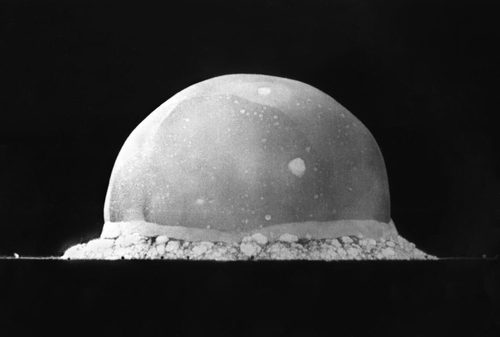
Soviet atomic espionage (Enormoz)
How Soviet intelligence penetrated the Manhattan Project under the codename ENORMOZ, who its sources were, how Venona and confessions exposed them, and what the stolen secrets were worth.
 1 February 1943 – 1 October 1980
The Venona project
The US Army codebreaking program that, from 1943 to 1980, read parts of some 2,900 wartime Soviet intelligence cables and exposed Fuchs, the Rosenbergs and Donald Maclean.
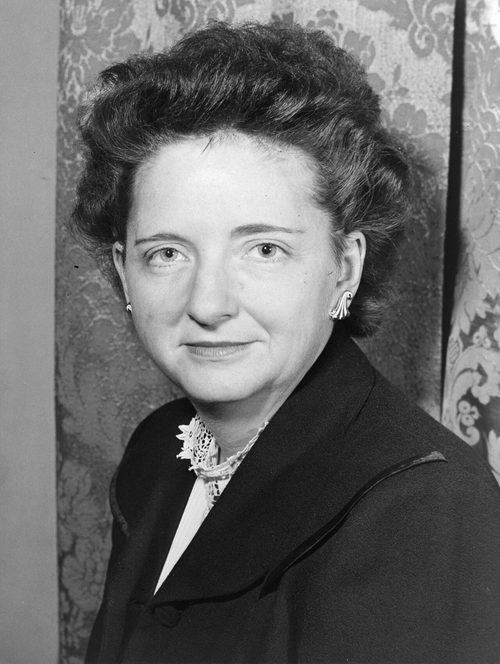 1908–1963
Elizabeth Bentley
Vassar graduate who ran Soviet espionage contacts in wartime Washington, defected to the FBI in November 1945 and became the most prominent and most disputed witness of the early Cold War.
1920s–1990s
Double agents
Agents who seem to serve one service while controlled by another. From the OGPU's Trust to MI5's Double Cross system and the FBI's Duquesne case, the best of them turned an enemy network into a channel for deception.
 1920s–1980s
Illegals and legends
Soviet officers who lived abroad as private citizens under borrowed identities, with no diplomatic protection. The Abel and Portland court records show how their legends were built and how they came apart.