

Most Cold War intelligence officers abroad worked from embassies under diplomatic cover. If caught, they were expelled, not imprisoned. Soviet intelligence also maintained a second, much smaller service that worked without that protection. Its officers lived in the target country as private people, with false nationalities, invented life stories and ordinary jobs. Western services called them illegals, and the invented biography each one carried was known as his legend.1,3
The FBI's affidavit in the Hanssen case gives a working definition: an illegal is "an intelligence officer or a recruited agent who operates in a foreign country in the guise of a private person, and is often present under false identity." Within the KGB's foreign intelligence directorate, illegals operations were the business of a specialist line, Line N, whose officers also served in Soviet embassies to support them.3
Building a legend
A good legend borrowed a real life. The FBI reconstructed one in detail. Eugene Nicolai Maki was born in Enaville, Idaho, in 1919; in the 1920s his parents took the family to Soviet-run Estonia, and he was largely forgotten at home.1 The KGB gave his identity to Reino Häyhänen, a Finnish-speaking officer, who lived in Finland as Maki from 1949 to 1952 to make the story solid. In 1951 he presented an Idaho birth certificate to the US legation in Helsinki and swore an affidavit explaining his long absence; in July 1952 he received an American passport, and that October he sailed for New York.1
The man who became known as Gordon Lonsdale did the same in Canada. A real Gordon Arnold Lonsdale had been born in Cobalt, Ontario, in 1924, taken to Finland as a boy and was believed to have died around 1943; Soviet intelligence obtained his papers. Konon Molody, a KGB officer who had spent part of his childhood in California, assumed the identity and settled in London as a Canadian businessman (see Konon Molody (Gordon Lonsdale)).5
Legends were often layered. When the FBI arrested the man it knew as "Mark" in June 1957, he carried a forged birth certificate for a Martin Collins and a genuine one for an Emil Goldfus, born in New York in 1902, who had died in infancy. He had entered North America in 1948 on the passport of Andrew Kayotis, a Lithuanian-born naturalized American who had apparently died on a visit to Europe.1,2
What they did
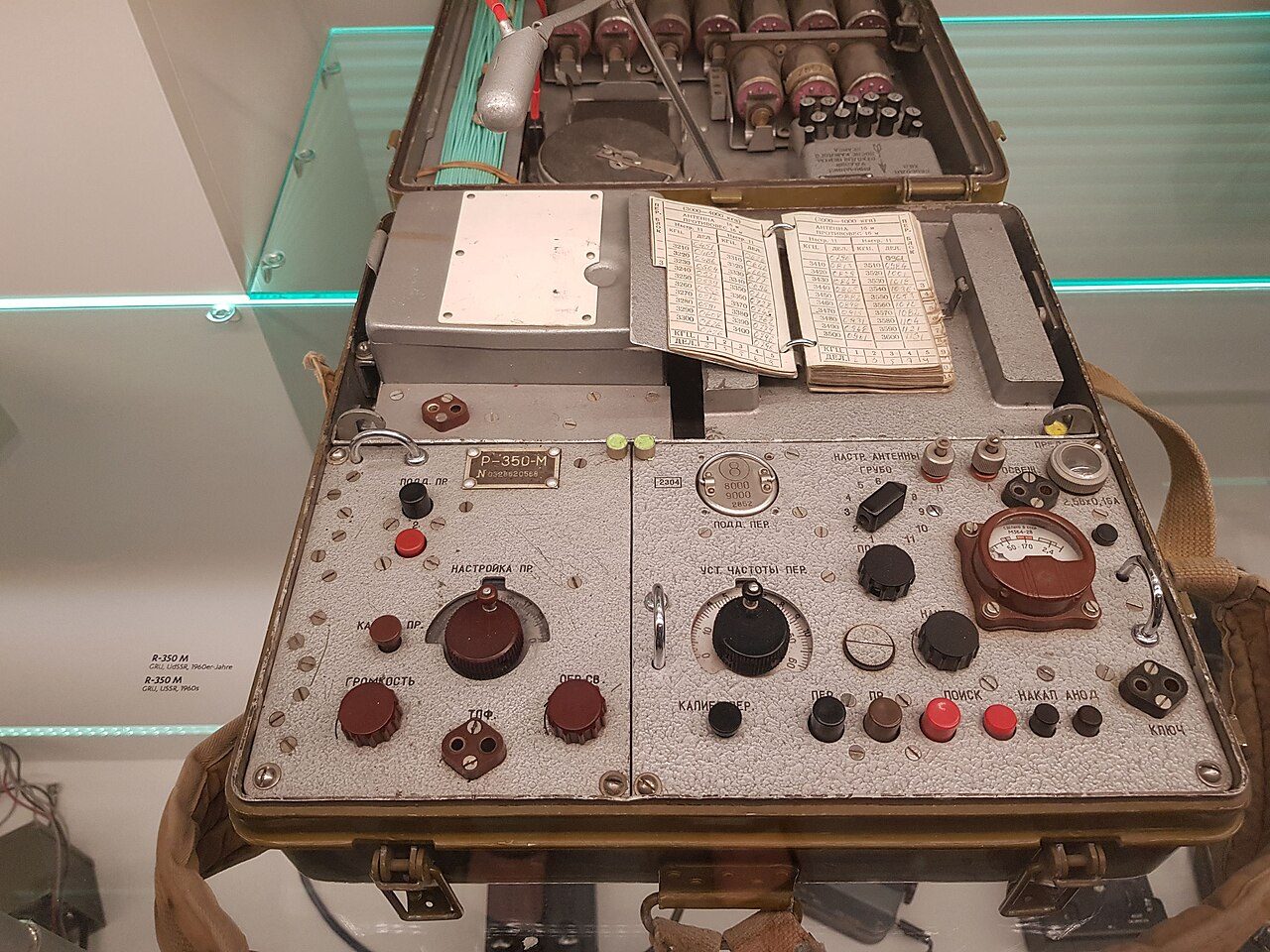
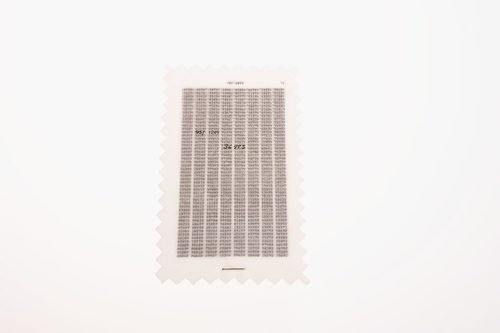
Illegals were built for staying power. They could recruit and run agents, receive instructions by shortwave radio and one-time pads, and communicate through dead drops and microdots, with no official presence that a host government could expel.1,3
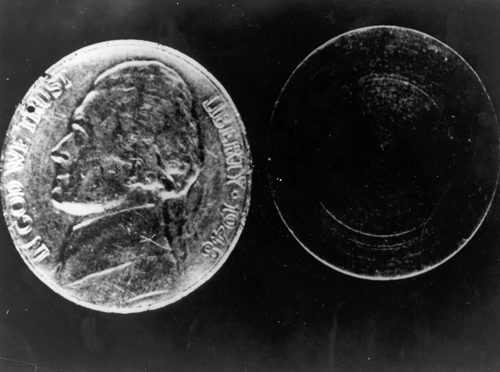
The two best-documented networks in the West were small. In New York, the colonel who called himself Rudolf Abel ran agents and couriers from a Brooklyn photography studio (see Rudolf Abel (William Fisher) and The Hollow Nickel case).1 In London, Lonsdale handled two Admiralty clerks at Portland, while two American-born Soviet agents, Morris and Lona Cohen, posed as the antiquarian booksellers Peter and Helen Kroger and ran the network's communications from their bungalow in Ruislip. MI5 later described all three as "illegals living in London under deep cover."4 (See The Portland spy ring.)
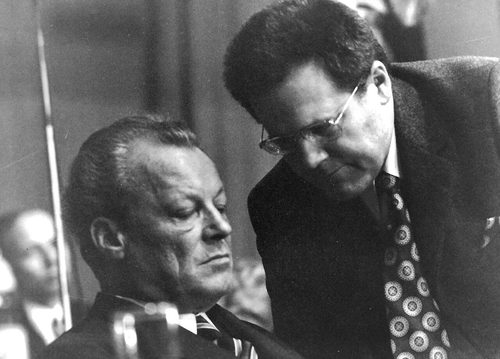
East Germany's foreign intelligence service practiced a related method on a larger scale: it sent agents west as apparent refugees, under their own names, to build careers. The most damaging, Günter Guillaume, became a close aide to Chancellor Willy Brandt; his exposure in 1974 forced Brandt's resignation (see The Guillaume affair).7
How they were caught
The weakness of an illegal was the people around him. Abel was found because Häyhänen, ordered home in 1957, defected to the US embassy in Paris and described his superior; the FBI traced "Mark" to a studio at 252 Fulton Street in Brooklyn and watched him for a week before his arrest on 21 June 1957.1 The Portland network unraveled from a tip given to the CIA by a Polish intelligence officer about a British naval spy, which led MI5 to the Admiralty clerk Harry Houghton and from him to Lonsdale and the Krogers.4,5
Legends also failed under scrutiny. Abel's searched belongings, listed in the Supreme Court's 1960 opinion upholding his conviction, included the two birth certificates, a hollowed-out pencil containing 18 microfilms, and a "cipher pad" hidden in a block of wood wrapped in sandpaper.2 British investigators could not establish Lonsdale's true identity at his 1961 trial; one detail that had not fit was that the real Lonsdale's records said he had been circumcised, and the impostor was not.5
Endings
Captured illegals were valuable currency. Abel was exchanged for the U-2 pilot Francis Gary Powers on the Glienicke Bridge in Berlin on 10 February 1962; Lonsdale for the British businessman Greville Wynne on 22 April 1964; Guillaume was returned to East Germany in a 1981 exchange.1,5,6,7 MI5's 2019 file release includes interviews in which Lonsdale talked to his interrogator "with surprising candour about his life as an illegal spy."4
Sources
- FBI Hollow Nickel/Rudolf Abel, Federal Bureau of Investigation, History (archived by the Internet Archive).
- Court record Abel v. United States, 362 U.S. 217 (1960), US Supreme Court, via Legal Information Institute, Cornell Law School (1960-03-28).
- Court record USA v. Robert Philip Hanssen: Affidavit in Support of Criminal Complaint, Arrest Warrant and Search Warrants, US District Court, Eastern District of Virginia (text hosted by the Federation of American Scientists) (2001-02).
- Official history September 2019 release of historical MI5 files, MI5 (Security Service), archived by the Internet Archive (2019-09-24).
- Wikipedia Konon Molody, Wikipedia.
- Wikipedia Rudolf Abel, Wikipedia.
- Wikipedia Günter Guillaume, Wikipedia.
Elsewhere in the files
- Agency GRU (Soviet military intelligence)
- Agency KGB
- Document Abel v. United States: the Supreme Court and the spy's wastebasket (1960)
- Operation Operation Paperclip
- Operation The Gouzenko affair
- Operation The Guillaume affair
- Operation The Hollow Nickel case
- Operation The Portland spy ring
- Operation The Sorge spy ring
- Person Eli Cohen
- Person Günter Guillaume
- Person Konon Molody (Gordon Lonsdale)
- Person Markus Wolf
- Person Morris and Lona Cohen
- Person Richard Sorge
- Person Rudolf Abel (William Fisher)
- Tradecraft Numbers stations
Read next
 22 June 1953 – 15 November 1957
The Hollow Nickel case
A Brooklyn newsboy's trick nickel held a coded message the FBI could not read for four years, until a drunken KGB defector explained it and led agents to the illegal known as Rudolf Abel.
 1951 – 22 March 1961
The Portland spy ring
A Soviet network that took naval secrets from the Admiralty's underwater research establishment at Portland, run by the KGB illegal 'Gordon Lonsdale' and broken up by MI5 in January 1961.
 1917–1980s
One-time pads
The one cipher proven unbreakable if its key is random and never reused. Soviet intelligence relied on it, and a wartime printing shortcut that duplicated pages let US codebreakers read thousands of messages.
 1950s–1990s
Numbers stations
Shortwave broadcasts of spoken or keyed number groups, heard by hobbyists for decades and rarely acknowledged by any government. A Miami spy trial and a declassified CIA case history show what they were for.
 1956 – 6 May 1974
The Guillaume affair
An East German intelligence officer, planted in the West in 1956, rose to become an aide to Chancellor Willy Brandt. His arrest in April 1974 was followed two weeks later by Brandt's resignation.
 1940s–2001
Dead drops
A hiding place where one spy leaves material for another to collect later, so the two never meet. The Abel, Ames and Hanssen cases show how it worked and how the FBI turned it against its users.