
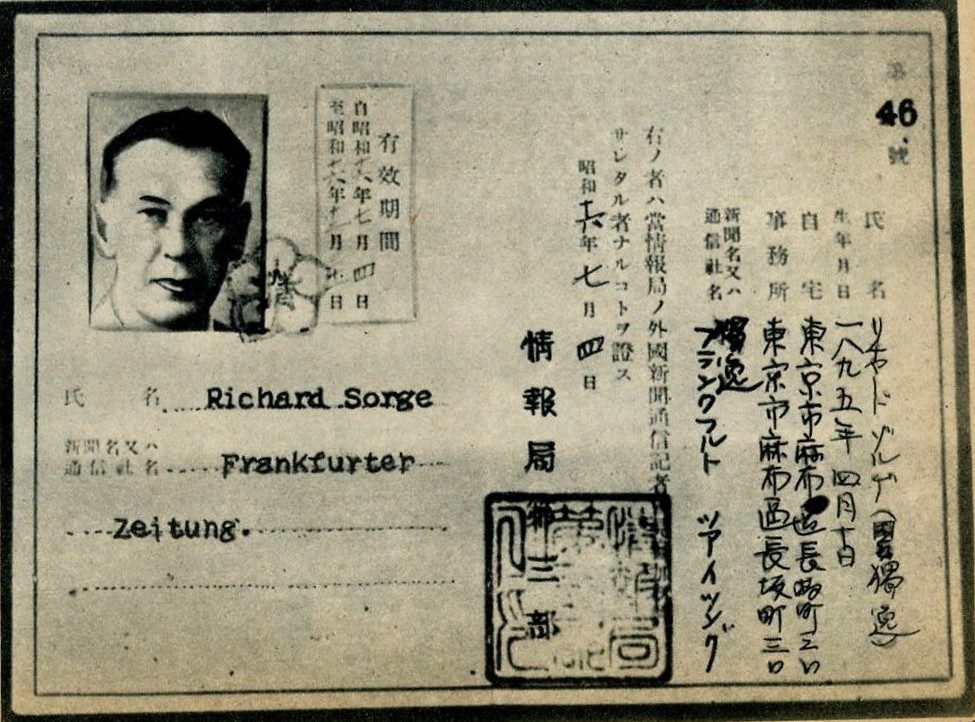

The most productive Soviet spy in prewar Asia did his work in plain sight. Richard Sorge was the Tokyo correspondent of the Frankfurter Zeitung, a member of the Nazi Party and, by 1938, a man with his own desk in the German embassy. He was also an officer of the Red Army's Fourth Department, the military intelligence service later known as the GRU, working under the code name Ramsay5.
A network built from nothing
Sorge reached Yokohama on 6 September 1933 after a spell in Berlin establishing his credentials as a pro-Nazi journalist5. Unlike a diplomat, he had no official cover to protect him, which puts him in the tradition of Soviet Illegals and legends. His instructions, as he later described them to Japanese interrogators, centered on one question: whether Japan was planning to attack the Soviet Union5.
The core of the ring was small. Max Clausen, a German radio operator, ran the transmitter and later a blueprint-copying business that served as cover. Branko Vukelić, a journalist writing for the French magazine Vu, gathered material, and Miyagi Yotoku translated Japanese reports and built his own small circle of informants5. The most valuable member was Hotsumi Ozaki of the Asahi Shimbun, a China specialist whom Sorge had first met in Shanghai in 1930. From 1937 Ozaki belonged to a policy group around Prince Fumimaro Konoe and then to the prime minister's informal "Breakfast Club," which put him in rooms where Japan's choices were being made7.
Inside the German embassy
Sorge's second source was the German embassy itself. He befriended the military attaché, Eugen Ott, and helped him write reports to Berlin. When Ott became ambassador in April 1938, Sorge breakfasted with him most days and sometimes drafted cables that went out over Ott's name5. A Gestapo officer at the embassy, Josef Meisinger, was later asked to look into Sorge and cleared him5.
In 1941 this access produced the ring's best-known reports. On 30 May Sorge relayed that Berlin had told Ott a German attack on the Soviet Union would begin in the second half of June. On 20 June he reported Ott's view that war was inevitable5. Stalin was receiving similar warnings from other sources and discounted them5.
After the invasion, the question of Japan returned to the center. Through Ozaki, Sorge followed the decisions of that summer, including the Imperial Conference of 2 July 1941, which chose to move south into Indochina while reinforcing the Kwantung Army in Manchuria. On 14 September Sorge told Moscow that, in the judgment of his group, the possibility of a Japanese attack that autumn had disappeared5.
Arrest and trial
Japanese political police watching Communists who had returned from exile picked up a thread that led to Miyagi, and his interrogation led them to the rest of the group6,8. Ozaki was arrested in mid-October 1941, and Sorge and Clausen on 18 October5,6. Ott at first protested to the Japanese, assuming the arrest was a case of spy mania5.
Sorge made a long statement in custody. A typed fragment in German, corrected in his hand, survives in CIA's files; the accompanying note says that most of the original manuscript burned in the air raids on Tokyo and that parts of the confession were evasive2. The Tokyo District Court sentenced Sorge and Ozaki to death on 29 September 1943, and their appeals were rejected in January 19446. Both were hanged at Sugamo Prison on 7 November 19445. Clausen received a life sentence and was freed by the American occupation in 1945; Vukelić died in Abashiri Prison in January 1945, and Miyagi died in Sugamo before his trial ended5.
How the story came out
The first public account came from the American side. On 10 February 1949 the US Army released a report by the intelligence staff of General Douglas MacArthur's Tokyo headquarters, "The Sorge Spy Ring," drawn largely from Japanese files. A Canadian diplomat who sent it to Ottawa called it highly colored, and its charge against the American writer Agnes Smedley, who denied it, made front pages4. Its author was General Charles Willoughby1. In January 1953 CIA acquired 150 to 200 copies of a further Willoughby compilation, A Partial Documentation of the Sorge Espionage Case, and kept them inside the agency3.
Moscow said nothing until late 1964, when a Pravda article began a campaign to make Sorge a popular hero. A decree of 5 November 1964 named him a Hero of the Soviet Union; Clausen and his wife Anna were decorated in January 19651. A CIA review of that campaign judged that the Soviet accounts added little, relied on the same Japanese investigation as Western writers, and showed no wish to publish an accurate history1.
What the record does not show
Moscow's own operational files on Ramsay have been only partly opened, and much of what is known still rests on Japanese interrogation records and on Sorge's statement, which he shaped to protect others. Those papers show what Sorge sent; they show less about how his reports were judged when they arrived1,2.
The documents
Declassified records of this operation, with the scans and their full text hosted here.
 9 August 1951 · 140 p.Hearings on American Aspects of the Richard Sorge Spy Case (HUAC, 1951)Committee on Un-American Activities, US House of Representatives (John S. Wood, chairman; Frank S. Tavenner Jr., counsel)The House Un-American Activities Committee's 1951 hearings with the procurator who interrogated Sorge and MacArthur's intelligence chief, Charles Willoughby: how the confession was made, and a Cold War case built on it.
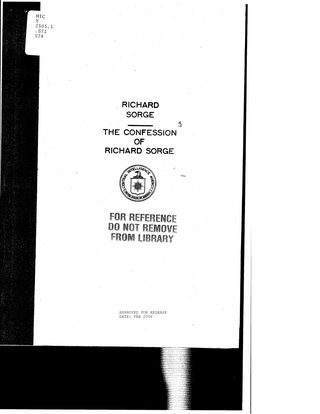 1941 · 26 p.Richard Sorge's own typescript: the discarded Shanghai draft of his confession (1941)Richard Sorge, in the custody of the Tokyo District Criminal Court procurator's office (German typescript, corrected in his hand); cover pages added by the CIATwenty-four pages Sorge typed in German in a Tokyo prison in late 1941 on his Shanghai years, later replaced in his statement. The prosecutor kept them and gave them to US Army G-2 in 1949.
Checking the record
Dates and outcome compared in two independent sources: they agree.
- CIA
- Operated in China and then Japan before the Pacific war; Hero of the Soviet Union by decree of 5 November 1964. Network exposed by the Japanese investigation, which remained the main non-Communist source on the case; Soviet Union later glorified Sorge without publishing an accurate history.
- Wikipedia
- Arrived in Yokohama 6 September 1933; arrested 18 October 1941; hanged 7 November 1944; Hero of the Soviet Union November 1964. Ring broken in October 1941; Sorge and Ozaki hanged; Soviet acknowledgment only in 1964.
The CIA review gives no arrest or execution dates but agrees on the outline and supplies the exact date of the 1964 decree. Sources disagree on whether Ozaki was arrested on 14 or 15 October 1941; this page says mid-October. The German Wikipedia article supplies the 29 September 1943 sentencing date, which the English article omits.
Sources
- CIA New Light on Old Spies: A Review of Recent Soviet Intelligence Revelations (Studies in Intelligence; CIA Historical Review Program release, 18 September 1995), Central Intelligence Agency, Center for the Study of Intelligence (1995-09-18).
- CIA The Confession of Richard Sorge (surviving fragment), CIA Reading Room document 0001289798, mirrored on the Internet Archive, Central Intelligence Agency (via Internet Archive).
- CIA Office memorandum: A Partial Documentation of the Sorge Espionage Case, 13 January 1953 (CIA-RDP80B01676R002600080027-9), mirrored on the Internet Archive, Central Intelligence Agency (via Internet Archive) (1953-01-13).
- Other Canadian Embassy, Washington, Letter No. 431 to the Secretary of State for External Affairs on the release of 'The Sorge Spy Ring' report, 19 February 1949, Great Unsolved Mysteries in Canadian History (reproduction of a Government of Canada document) (1949-02-19).
- Wikipedia Richard Sorge, Wikipedia.
- Wikipedia Richard Sorge, Wikipedia (German).
- Wikipedia Hotsumi Ozaki, Wikipedia.
- Other Tokyo Espionage: Legendary Soviet Spy Richard Sorge, Nippon.com.
Elsewhere in the files
- Agency GRU (Soviet military intelligence)
- Document Hearings on American Aspects of the Richard Sorge Spy Case (HUAC, 1951)
- Document Richard Sorge's own typescript: the discarded Shanghai draft of his confession (1941)
- Operation The Lucy spy ring
- Operation The Red Orchestra (Rote Kapelle)
- Person Richard Sorge
- Person Ruth Werner (SONYA)
Read next
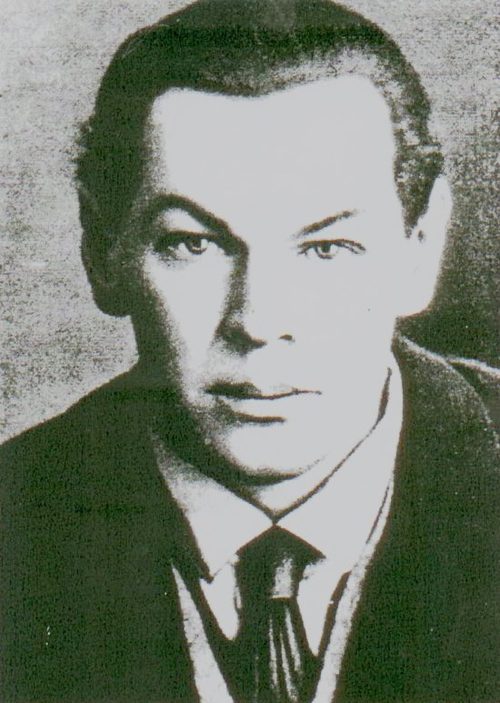 1895–1944
Richard Sorge
German journalist and Soviet military intelligence officer who ran the Tokyo spy ring of 1933–1941, was hanged by Japan in 1944 and made a Hero of the Soviet Union twenty years later.
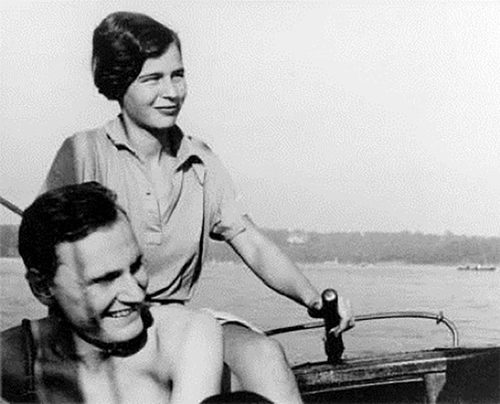 1938 – 3 May 1945
The Red Orchestra (Rote Kapelle)
Rote Kapelle was the German counterintelligence name for Soviet radio networks in Belgium, France and the Netherlands and for a Berlin resistance circle that passed secrets to Moscow. Most were rounded up in 1942.
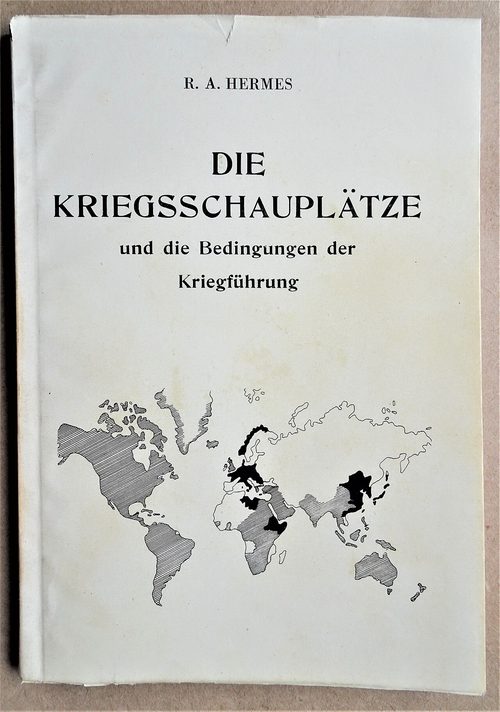 August 1942 – 19 May 1944
The Lucy spy ring
From Lucerne, the German émigré publisher Rudolf Roessler fed German high command secrets to Soviet intelligence in 1942–1943. Who his sources were, and how the material reached him, is still argued over.
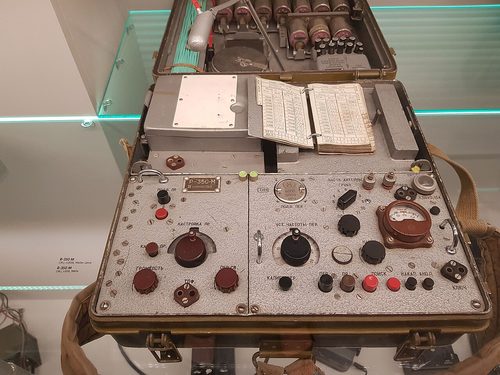 1920s–1980s
Illegals and legends
Soviet officers who lived abroad as private citizens under borrowed identities, with no diplomatic protection. The Abel and Portland court records show how their legends were built and how they came apart.
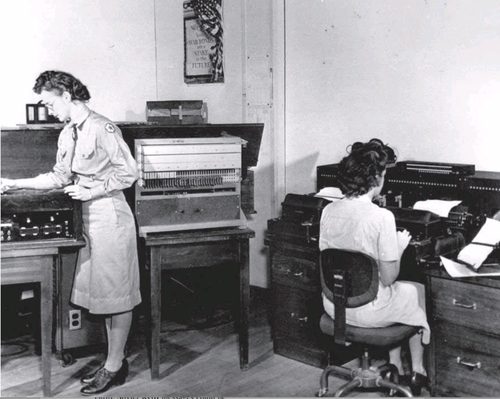 1914–1990s
Signals intelligence
Intelligence from intercepted communications and electronic emissions, from Room 40 and the Zimmermann telegram to Ultra, Venona, the Berlin tunnel and NSA's domestic programs exposed by the Church Committee.
Soviet Union · 1918–1992
GRU (Soviet military intelligence)
The Red Army's foreign intelligence service from 1918 to 1992: its interwar illegals, its wartime networks in America, the Western spies inside it, and its part in the war scare of the 1980s.