
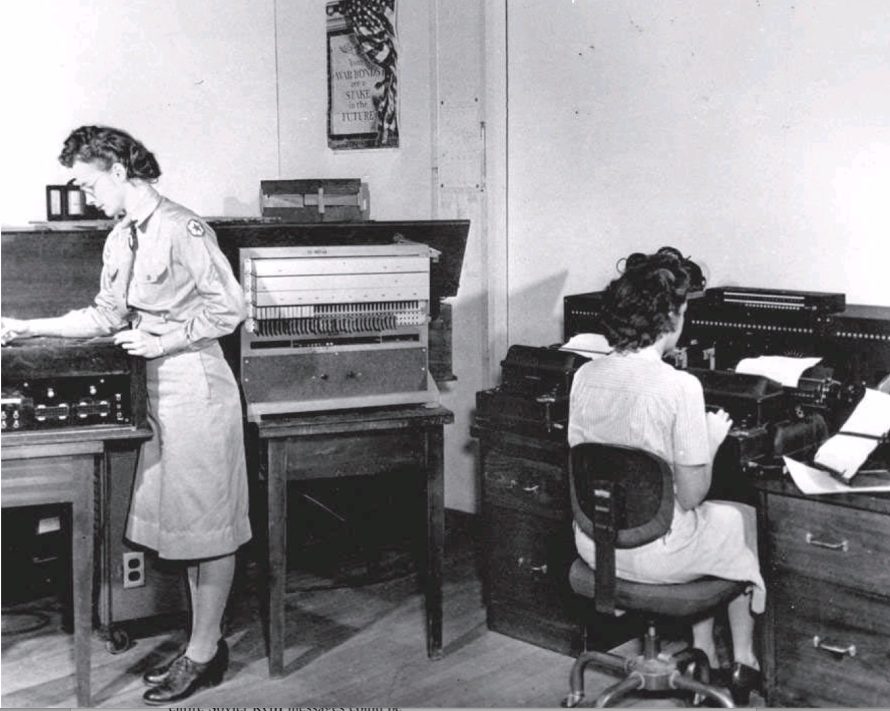

Signals intelligence, usually shortened to SIGINT, is intelligence drawn from intercepted signals. Its two main branches are communications intelligence (COMINT), the reading of messages sent by radio, cable or telephone, and electronic intelligence (ELINT), the study of non-communication emissions such as radar. Unlike a human source, an intercept station cannot be turned or bribed, and it may run for years without the target knowing. Its weaknesses are that it depends on breaking whatever protects the messages, and that its existence is easy to betray.
Room 40 and the Zimmermann telegram
Modern SIGINT was born in the First World War, when radio and international cables carried military and diplomatic traffic in volume. Britain's Admiralty codebreakers, known as Room 40, read much German traffic. In January 1917 they intercepted a cipher telegram from the German foreign secretary, Arthur Zimmermann, to his minister in Mexico, which the cryptographers Nigel de Grey and William Montgomery worked to decode.6
On 24 February 1917 the American ambassador in London, Walter Hines Page, cabled its text to Washington. Germany, it said, would begin unrestricted submarine warfare on 1 February; if the United States entered the war, Mexico was to be offered an alliance and "the lost territory in Texas, New Mexico, and Arizona."1 Page explained that the British had obtained the German code early in the war and asked that "the source of your information and the British Government's method of obtaining it" be kept "profoundly secret." He added that the copies "were not obtained in Washington but were bought in Mexico," a version designed to hide that Britain had read the cables directly, including traffic routed over American diplomatic channels.1,6 Zimmermann publicly admitted the telegram was genuine on 3 March 1917, and the United States declared war in April.6
The American Black Chamber
The United States set up its first peacetime codebreaking bureau, the Cipher Bureau or Black Chamber under Herbert Yardley, after the war; it read foreign diplomatic traffic, including Japan's during the 1921–22 Washington Naval Conference.7 It was closed in 1929 on the decision of the new Secretary of State, Henry Stimson; he later summed up his view as "Gentlemen do not read each other's mail."7 Army and Navy codebreaking units carried on, and before Pearl Harbor they were reading Japan's diplomatic machine cipher, PURPLE (see Magic and the breaking of Purple and Cipher machines).
The Second World War
The war made SIGINT a strategic weapon. The British effort at Bletchley Park against Enigma and the German teleprinter ciphers produced Ultra; American work against Japanese codes produced Magic. On 1 February 1943 the US Army's Signal Intelligence Service also began studying Soviet cables, the start of Venona, which in the late 1940s began to expose Soviet espionage in the United States.5
After the war Washington consolidated its scattered service agencies. The Armed Forces Security Agency was created on 20 May 1949, and after a review under George Brownell, President Truman's directive of 24 October 1952 led to the establishment of the National Security Agency on 4 November 1952.2
Tunnels and cables
Some of the boldest Cold War SIGINT operations went after cables rather than radio. By the early 1950s, the CIA notes, Soviet forces had shifted most military traffic in Berlin to landlines. After a similar success in Vienna in 1951, the CIA and SIS dug a 1,476-foot tunnel to reach and tap Soviet cables; Allen Dulles approved it in January 1954, and collection began in May 1955.3 The KGB knew of the plan from the start through George Blake, its agent in SIS, but let it run to protect him and staged its "discovery" on 22 April 1956. The CIA counts 443,000 fully transcribed conversations from the Berlin tunnel and judges that concerns that the Soviets had used it for disinformation were "ultimately disproven."3
From 1971 the US Navy, CIA and NSA tapped a Soviet military cable on the floor of the Sea of Okhotsk (Ivy Bells). The operation was compromised by a former NSA employee who sold information to the KGB beginning in 1980; in 1981 American satellites saw Soviet vessels over the tap site.8
SIGINT at home
The power to intercept could be turned inward. The Senate's Church Committee, reporting on 29 April 1976, revealed NSA's SHAMROCK and MINARET programs, "which monitored wire communications to and from the United States and shared some of that data with other intelligence agencies."4 Its findings led to the Foreign Intelligence Surveillance Act of 1978, which required the executive branch to obtain warrants from a new court for national-security wiretapping.4 (See also Surveillance and countersurveillance.)
Sources
- FRUS Papers Relating to the Foreign Relations of the United States, 1917, Supplement 1, The World War, Document 158, US Department of State, Office of the Historian (1917-02-24).
- NSA The Origins of the National Security Agency, 1940–1952 (Thomas L. Burns), National Security Agency, Center for Cryptologic History (archived by the Internet Archive).
- CIA A Look Back ... The Berlin Tunnel: Exposed, Central Intelligence Agency, Featured Story Archive (archived by the Internet Archive).
- Congress Senate Select Committee to Study Governmental Operations with Respect to Intelligence Activities (Church Committee), United States Senate, Historical Office.
- NSA VENONA: An Overview, Cryptologic Almanac 50th Anniversary Series, National Security Agency (archived by the Internet Archive).
- Wikipedia Zimmermann Telegram, Wikipedia.
- Wikipedia Black Chamber, Wikipedia.
- Wikipedia Operation Ivy Bells, Wikipedia.
- Wikipedia English Wikipedia article (used for cross-checking).
Elsewhere in the files
- Agency GC&CS and GCHQ
- Agency National Security Agency (NSA)
- Document "Project AZORIAN: The Story of the Hughes Glomar Explorer"
- Document A Venona decrypt: New York 1657, 27 November 1944
- Document Friedman's report on breaking PURPLE (14 October 1940)
- Document NSA's secret history of the Pelton trial and the Ivy Bells leak (1999)
- Document The BRUSA agreement on 'Special Intelligence' (1943), with the War Department's covering memo
- Document The CIA's history of the Berlin Tunnel (1968)
- Document The Soviet "War Scare" (PFIAB, 1990)
- Document What the Germans could read: the TICOM report, Volume 1, Synopsis (1946)
- Operation Able Archer 83 and the war scare
- Operation Magic and the breaking of Purple
- Operation Operation Gold (the Berlin Tunnel)
- Operation Operation Holystone
- Operation Operation Ivy Bells
- Operation Operation Shamrock
- Operation Operation Silver (the Vienna tunnels)
- Operation Project Azorian (the Glomar Explorer)
- Operation Project Coldfeet
- Operation Project Minaret
- Operation TICOM
- Operation The Lucy spy ring
- Operation The Red Orchestra (Rote Kapelle)
- Operation The Sorge spy ring
- Operation The Venona project
- Operation Ultra and the breaking of Enigma
- Person Alan Turing
- Person Noor Inayat Khan
- Tradecraft Cipher machines
- Tradecraft Numbers stations
- Tradecraft One-time pads
- Tradecraft Overhead reconnaissance
Read next
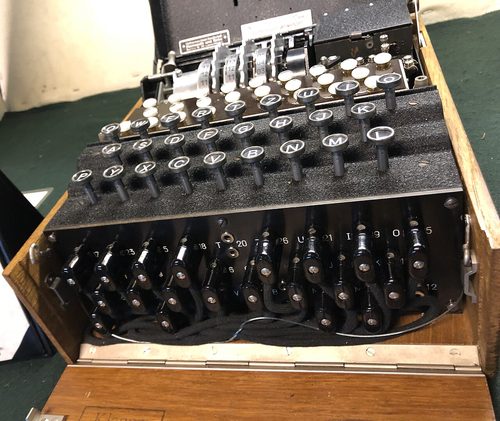 December 1932 – May 1945
Ultra and the breaking of Enigma
How Polish mathematicians first broke the German Enigma machine, and how Britain's codebreakers at Bletchley Park turned that start into Ultra, the most closely guarded intelligence source of the Second World War.
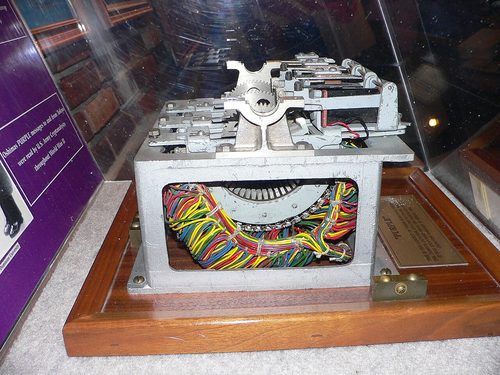 20 February 1939 – September 1945
Magic and the breaking of Purple
In September 1940 a small US Army team rebuilt Japan's top diplomatic cipher machine without ever seeing one. The decrypts, called Magic, shaped American policy before Pearl Harbor and fueled a long argument afterward.
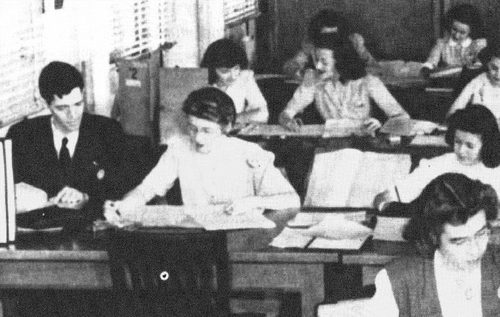 1 February 1943 – 1 October 1980
The Venona project
The US Army codebreaking program that, from 1943 to 1980, read parts of some 2,900 wartime Soviet intelligence cables and exposed Fuchs, the Rosenbergs and Donald Maclean.
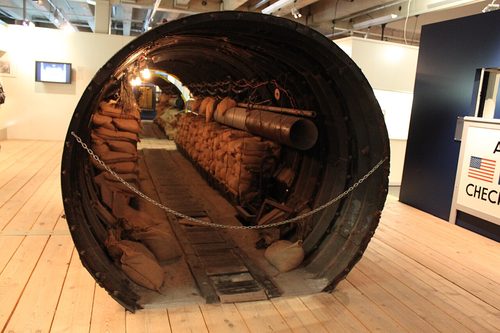 December 1953 – 22 April 1956
Operation Gold (the Berlin Tunnel)
From 1955 to 1956 the CIA and British SIS tapped Soviet military phone and teleprinter cables in East Berlin from a 1,476-foot tunnel, unaware that a KGB mole had betrayed the plan before digging began.
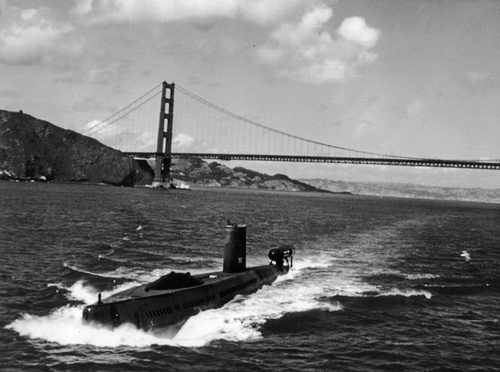 October 1971 – 1981
Operation Ivy Bells
From 1971 US Navy divers working from submarines tapped a Soviet military cable on the floor of the Sea of Okhotsk. Former NSA analyst Ronald Pelton sold the secret to the KGB, and the Soviets removed the tap in 1981.
August 1945 – 15 May 1975
Operation Shamrock
For thirty years, from August 1945 to May 1975, three American telegraph companies handed the government copies of international cables: the largest interception program affecting Americans, the Senate said.