
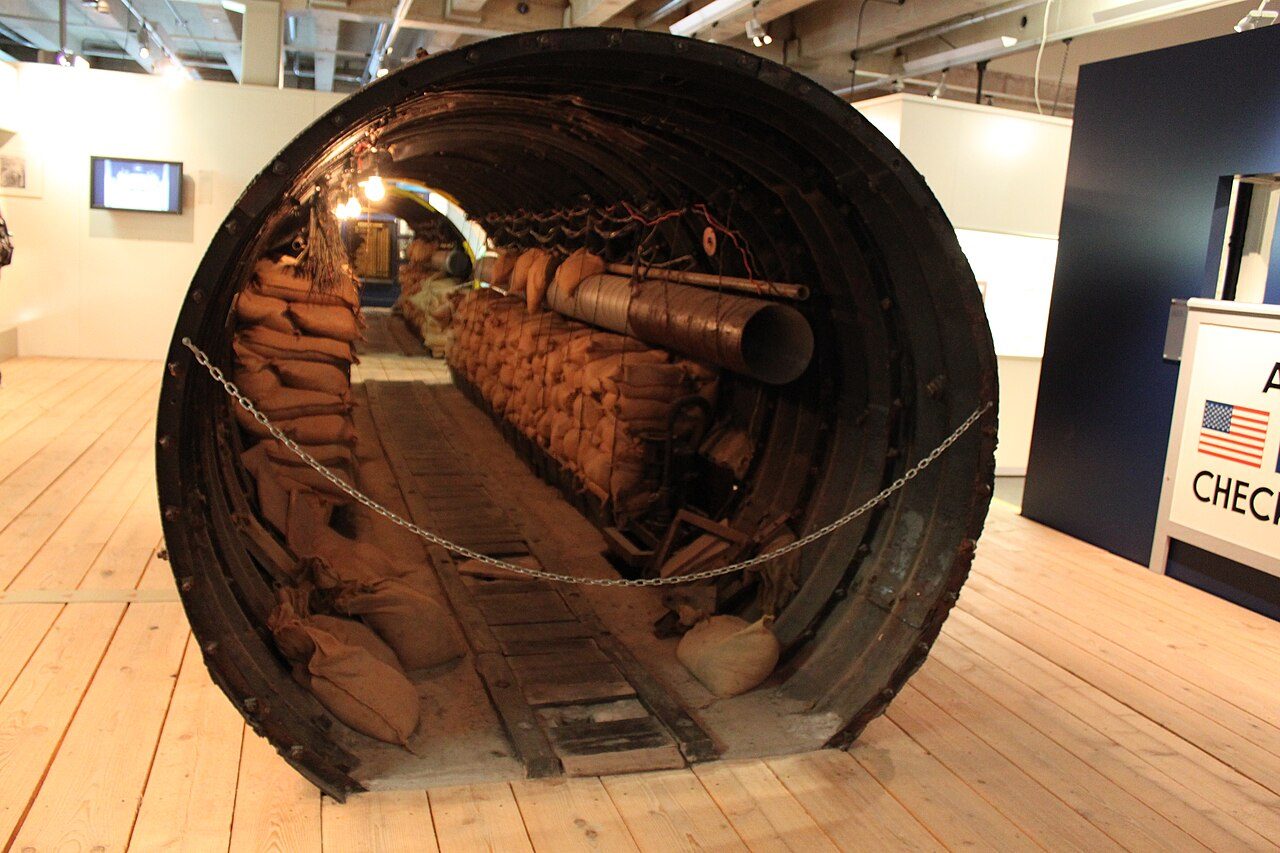
A little before one in the morning on 22 April 1956, American watchers in a warehouse on the edge of West Berlin saw 40 or 50 men spread out along the far side of the Schönefelder Chaussee, digging at intervals of a few feet. Just over an hour later a microphone hidden under the road picked up Russian voices. The Soviets had found the tap chamber of the Berlin Tunnel1.
The tunnel, known to the CIA as PBJOINTLY and to its British partners as Stopwatch, had been tapping Soviet military cables for 11 months and 11 days. It had been betrayed before the first shovel went in1,2.
Why dig
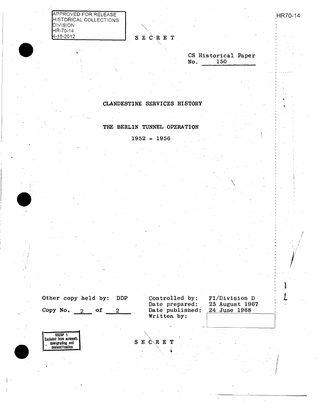
By the late 1940s Soviet forces in Germany had moved much of their traffic off radio and onto landlines, many of them old Reichspost cables, leaving large gaps in Western intelligence. CIA's internal history, written in 1967 and published in 1968 as CS Historical Paper No. 150, says the agency began looking seriously at landline taps from 19481,4.
In 1951 the British Secret Intelligence Service (SIS) told the CIA that it had for some years been tapping Soviet cables from tunnels in Vienna, the operation the Americans called Silver, and suggested Berlin might offer similar chances. Meanwhile CIA agents inside the East German postal and telecommunications service supplied cable plans, and in early 1953 short samples of a target circuit proved the idea could work1.
Building it
In December 1953 Director of Central Intelligence Allen Dulles approved terms of reference for negotiations with the British, and conferences in London in late 1953 and early 1954 split the work. The Americans would buy the site, put up the buildings, drive the tunnel and record the signals; the British would sink a vertical shaft to the cables, make the taps and run a joint center in London to process the voice recordings1. Dulles ordered that as little as possible be written down1.
The site was in Rudow, at the southeastern corner of the American sector. Spoil from the dig was the main headache. The answer was a warehouse with a deep basement, built by German contractors under the eyes of border guards, with radar antennas on the roof to give the compound an obvious purpose1,2,6.
US Army engineers under Lieutenant Colonel Leslie M. Gross rehearsed with a mock-up some 150 yards long in New Mexico, then started the shaft in the warehouse basement in late August 1954. Working behind a hydraulic shield, they lined the bore with steel rings about six feet across, grouted the gap to prevent subsidence, and stopped whenever East German patrols walked overhead. The tunnel was finished on 28 February 1955: 1,476 feet long, 125 tons of steel liner, about 3,100 tons of soil removed1,3,2.
British sappers then dug upward to the cables, which lay about 27 inches under the highway. The three cables were tapped on 11 May, 21 May and 2 August 1955. A steel and concrete door near the end of the tunnel bore a notice in German and Russian: "Entry is forbidden by order of the Commanding General"1.
What it collected
The take was enormous. According to CSHP 150, on average 121 voice and 28 telegraph circuits were recorded continuously, on some 50,000 reels of tape. A London staff that peaked at 317 transcribed 368,000 Soviet conversations; 350 people in Washington worked through the teleprinter reels. Processing of the backlog ran until 30 September 1958 and produced 1,750 reports and about 90,000 translated messages. The project cost $6.7 million1,2.
Most of what was read came from unguarded conversations and plain-text teleprinter traffic over official channels, not from broken high-level ciphers. The product went out under the control name REGAL1,5.
Discovery and betrayal
Heavy rain in April 1956 flooded cables south of Berlin, and Soviet and East German technicians spent days hunting faults on one of the tapped cables, FK 150, which had been in poor condition from the start. A memorandum written by the project staff in August 1956 concluded that the discovery was "purely fortuitous." By 0415 on 22 April Soviet signal officers on the intercepted lines knew what had been found. The tap wires were cut at 1535 that afternoon1.
Colonel Ivan Kotsyuba, acting Soviet commandant in Berlin, then did what Washington had not expected: he invited the press to tour the tunnel. The Soviet press called it a gangster act, but most coverage outside the Soviet bloc admired the engineering. The timing was awkward for London: the discovery fell during Khrushchev and Bulganin's state visit to Britain1,2,5.
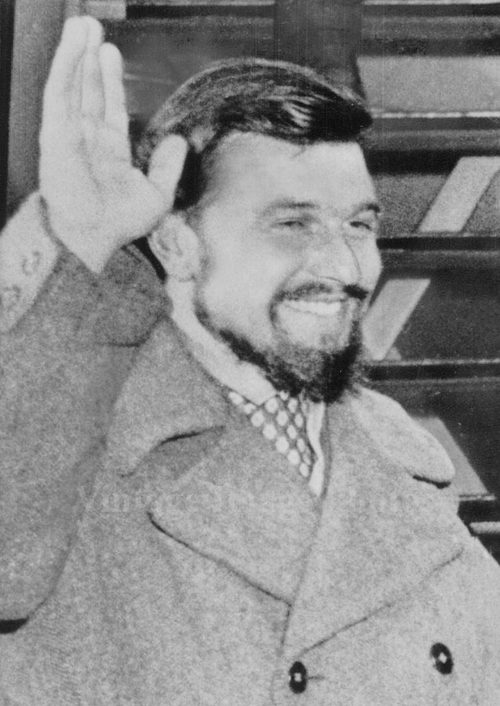
The real story emerged later. George Blake, an SIS officer recruited by Soviet intelligence while a prisoner in Korea, had attended the early planning meetings in London. Blake later said he told his Soviet contact about the tunnel in late 1953, when its location was settled. He was exposed and convicted in 1961. CSHP 150 concluded that "we will never know" exactly why the Soviets let the tunnel run for almost a year1,5. The answer now generally accepted, supported by KGB veteran Sergei Kondrashev's later account, is that the KGB chose to protect Blake. It told neither the Soviet military users of the cables nor the East Germans5,6.
What remains
East German forces later used the excavated eastern end. In 1997 a section was dug up for the AlliiertenMuseum in Berlin, and segments of the tunnel liner are on display at the CIA Museum and the International Spy Museum in Washington5,7. CSHP 150 called it the most publicized peacetime espionage enterprise of modern times "prior to the 'U-2 incident'"1, the episode told in The U-2 program and the 1960 shoot-down.
The documents
Declassified records of this operation, with the scans and their full text hosted here.

Checking the record
Dates and outcome compared in two independent sources: they agree.
- CIA
- Tunnel completed 28 February 1955; cables tapped 11 May, 21 May and 2 August 1955; discovered 22 April 1956 after 11 months and 11 days of operation. Source lost when the Soviets dug up a faulty cable; Blake later said he had told the Soviets of the plan in late 1953; no evidence the Soviets fed deception material.
- Wikipedia
- Construction began September 1954 and took about eight months; Soviets 'discovered' the tunnel on 21 April 1956. Betrayed from the start by Blake; Soviets left it running to protect him; no known attempt to feed disinformation.
Outcome agrees. Wikipedia gives 21 April for the discovery; CIA's history and its 2009 feature give the early hours of 22 April, when the digging party reached the tap chamber, which this page follows. Start-of-digging dates differ between CIA accounts (February, August or late August 1954); this page uses CSHP 150's late August.
Sources
- CIA Clandestine Services History: The Berlin Tunnel Operation, 1952–1956 (CS Historical Paper No. 150), 2012 release, Central Intelligence Agency (copy hosted by the National Security Archive) (1968-06-24).
- CIA A Look Back ... The Berlin Tunnel: Exposed, Central Intelligence Agency (archived copy) (2009-06-26).
- CIA Turning a Cold War Scheme into Reality: Engineering the Berlin Tunnel (Studies in Intelligence, vol. 52, no. 1), Central Intelligence Agency, Center for the Study of Intelligence (archived copy) (2008-03-25).
- CIA Review of Betrayal in Berlin, by Steve Vogel (Studies in Intelligence, vol. 64, no. 2), Central Intelligence Agency, Center for the Study of Intelligence (Gary Keeley) (2020-06).
- Wikipedia Operation Gold, Wikipedia.
- Other Spionage: »Operation Gold«, Der Spiegel (Klaus Wiegrefe) (1997-09-21).
- Other Berlin Tunnel Segment, International Spy Museum.
- Wikipedia English Wikipedia article (used for cross-checking).
Elsewhere in the files
Read next
 1949 – 1955
Operation Silver (the Vienna tunnels)
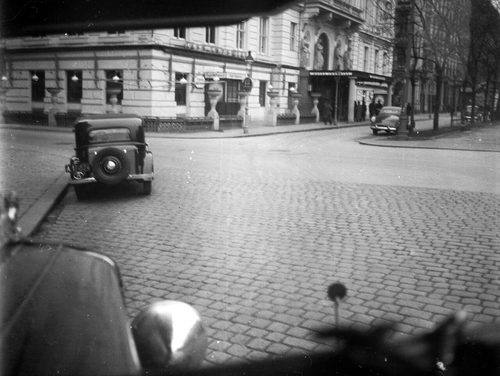
In occupied Vienna from about 1949, British SIS officers dug short tunnels to tap the telephone cables of the Soviet command, then shared the take with the CIA. It was the model for the Berlin Tunnel.
 1922–2020
George Blake
SIS officer who volunteered to the Soviets as a prisoner in Korea, betrayed the Berlin tunnel and many agents, received a record 42-year sentence in 1961, and escaped from Wormwood Scrubs in 1966.
 1914–1990s
Signals intelligence
Intelligence from intercepted communications and electronic emissions, from Room 40 and the Zimmermann telegram to Ultra, Venona, the Berlin tunnel and NSA's domestic programs exposed by the Church Committee.
 United States · 1952
National Security Agency (NSA)
America's signals intelligence and communications security agency, created by a secret Truman directive in 1952 out of the Armed Forces Security Agency, and exposed to public scrutiny by the Church Committee in 1975.
 24 November 1954 – 16 May 1960
The U-2 program and the 1960 shoot-down
From 1956 the CIA's U-2 photographed the Soviet Union from 70,000 feet. On 1 May 1960 a missile brought down Francis Gary Powers near Sverdlovsk, the cover story collapsed and the Paris summit failed.
 Soviet Union · 1954–1991
KGB
The Soviet Committee for State Security, 1954–1991: foreign intelligence, counter-intelligence, border troops and political police under one roof, from Khrushchev's reforms to the failed coup of August 1991.