
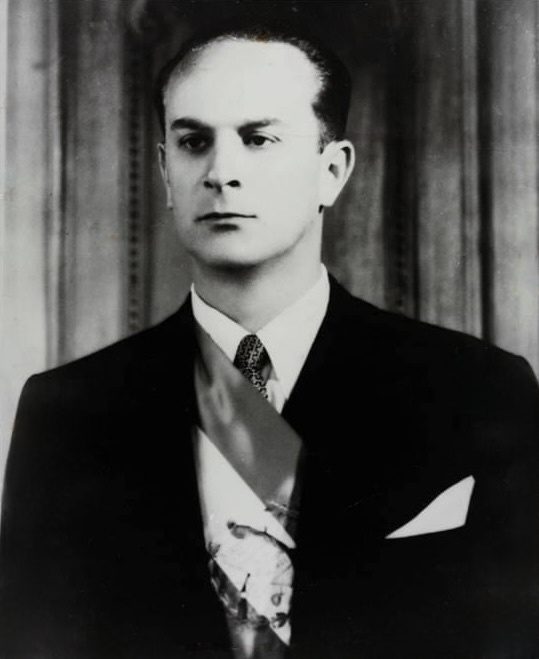
Jacobo Árbenz Guzmán won Guatemala's presidential election in 1950 and took office on 15 March 19518. On 17 June 1952 he promulgated Decree 900, an agrarian reform that expropriated idle land on large estates, with compensation in 25-year bonds at the land's declared tax value. The United Fruit Company, the largest landowner in the country, stood to lose most1,8. Guatemala's Communist party had helped draft the law, and in Washington that fact counted for more than the land itself. As the State Department's historians later put it, "agrarian reform was not the issue—communism was"1.
A first try under Truman
The CIA's first plan predates Eisenhower. In 1952 President Truman authorized PBFORTUNE, a collaboration with Nicaragua's president Anastasio Somoza to arm an exiled Guatemalan officer, Carlos Castillo Armas7,8. The FRUS editors note that little documentation on its beginning was found1. It collapsed in the autumn of 1952, when the State Department learned of the planned arms shipment and stopped it; accounts of how it found out differ, though several point to indiscretion in Somoza's circle. The CIA nonetheless kept Castillo Armas on a monthly retainer8.
Authorization and plan
The Eisenhower administration revived the idea within months of the coup in Iran. On 12 August 1953 the Psychological Strategy Board authorized the Director of Central Intelligence, Allen Dulles, to proceed "on a basis of high priority." Frank Wisner, the CIA's Deputy Director for Plans, called it the meeting "which flashed the 'green light'," and arranged for "a suitably sterilized entry" in the board's records. The first cost estimate was $2.735 million; Deputy Director Charles Cabell suggested asking for a round three million3. A State Department draft written the same month warned that no such operation could stay secret and that the United States would be seen to have tried "a Czechoslovakia in reverse"3.
A CIA summary written in May 1975 lists the parts of the plan: cutting off military aid to Guatemala and increasing it to its neighbors, diplomatic and economic pressure, efforts to subvert army and political leaders, "broad scale psychological warfare," and paramilitary action5. The field headquarters, code-named LINCOLN, was at Opa-locka, Florida. About 85 of Castillo Armas's men were trained in Nicaragua, and an estimated 250 more were staged in Honduras and El Salvador5,8.
Radio, rumor and a real arms ship
The psychological campaign carried most of the weight. From 1 May 1954 a clandestine station calling itself La Voz de la Liberación broadcast from outside the country while claiming to be inside it5,8. The 1975 summary records a plan to fabricate reports of Soviet arms reaching Guatemala by submarine and to plant a cache of Soviet weapons for discovery. Then the real thing arrived: in May 1954 the Swedish freighter Alfhem unloaded some 2,000 tons of Czechoslovak arms at Puerto Barrios, which Washington presented as proof of a Soviet foothold5,8.
The CIA also drew up lists. From early 1952 headquarters compiled names of Árbenz officials to be "disposed of" if a coup succeeded, and a training file contained a manual titled "A Study of Assassination." These papers were released in 1997 with the names blacked out7.
Invasion and resignation
Castillo Armas crossed from Honduras on 18 June 1954 with a few hundred men. The government had been tipped off: three days earlier, a Guatemalan minister had told officials that an uprising was planned for 18–19 June4. Militarily the invasion went poorly. But CIA-flown aircraft, roughly 80 missions between 14 and 29 June by the agency's count, dropped leaflets and bombed and strafed targets, including Guatemala City5,8. The radio insisted, in text drafted by the CIA, that "this is not a foreign intervention"4.
What decided the matter was the Guatemalan army, which declined to fight. Árbenz resigned on 27 June. The army chief, Colonel Carlos Enrique Díaz, formed a junta the next day; it was soon replaced by others, and Castillo Armas took over in early July after talks brokered in San Salvador8.
Afterward
The CIA sent a team, PBHISTORY, to comb Guatemalan government and party files for proof of Soviet control. By September it had reviewed more than 500,000 documents and found "very few" damaging ones6. Castillo Armas ruled until he was shot dead by a member of his own guard on 26 July 19578.
The operation's documentary history is a story in itself. The 1983 FRUS volume on the American republics printed the Guatemala record without the CIA, after references to the covert operation were denied in declassification. The criticism helped bring about the 1991 law requiring FRUS to be "thorough, accurate, and reliable." In the early 1990s CIA directors acknowledged eleven early Cold War covert actions, Guatemala among them, and the retrospective volume of 2003 followed2. The CIA released about 1,400 pages in May 19977.
PBSuccess came a year after the coup in Iran (Operation Ajax (TPAJAX)). The CIA's next attempt to remove a government in the hemisphere, against Fidel Castro, is told at The Bay of Pigs invasion.
The documents
Declassified records of this operation, with the scans and their full text hosted here.

Checking the record
Dates and outcome compared in two independent sources: they agree.
- FRUS
- Castillo Armas launched his attack on 18 June 1954; FRUS editorial note gives the hour as 8:20 p.m. Árbenz resigned (Embassy telegram of 28 June, Document 256); military junta formed.
- Wikipedia
- Invasion 18 June 1954 ("8:20 am"); Árbenz resigned 27 June Árbenz resigned; Castillo Armas became president ten days later after talks in San Salvador.
Dates and outcome agree. The hour of the crossing differs (FRUS 8:20 p.m., Wikipedia 8:20 a.m.); this page gives only the date.
Sources
- FRUS Foreign Relations of the United States, 1952–1954, Guatemala: Introduction, US Department of State, Office of the Historian (2003).
- FRUS FRUS, 1952–1954, Guatemala: Preface, US Department of State, Office of the Historian (2003).
- FRUS FRUS, 1952–1954, Guatemala, Document 40: Memorandum for the Record, 12 August 1953, US Department of State, Office of the Historian (1953-08-12).
- FRUS FRUS, 1952–1954, Guatemala, Document 202: Editorial Note on the invasion of 18 June 1954, US Department of State, Office of the Historian (2003).
- FRUS FRUS, 1952–1954, Guatemala, Document 287: CIA memorandum, CIA's Role in the Overthrow of Arbenz, 12 May 1975, US Department of State, Office of the Historian (1975-05-12).
- FRUS FRUS, 1952–1954, Guatemala, Document 286: Editorial Note on PBHISTORY, US Department of State, Office of the Historian (2003).
- National Security Archive CIA and Assassinations: The Guatemala 1954 Documents (Electronic Briefing Book No. 4), National Security Archive (1997).
- Wikipedia 1954 Guatemalan coup d'état, Wikipedia.
- Wikipedia English Wikipedia article (used for cross-checking).
Elsewhere in the files
- Agency Central Intelligence Agency (CIA)
- Document "Make the economy scream": Helms's notes of 15 September 1970
- Document Iran 1953: Kermit Roosevelt's debriefing at CIA headquarters
- Document Operation PBSUCCESS: the CIA's own history of the Guatemala coup (Cullather, 1994)
- Document The Battle for Iran: the CIA History Staff's account of the 1953 coup (c. 1974)
- Document The Inspector General's survey of the Cuban operation (1961)
- Operation Operation Ajax (TPAJAX)
- Operation Operation Cyclone
- Operation Operation Washtub
- Operation The Bay of Pigs invasion
- Operation Track II and Chile, 1970
- Person Allen Dulles
Read next
 March – 19 August 1953
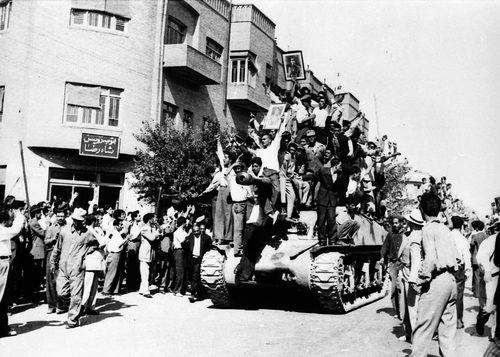
Operation Ajax (TPAJAX)
The 1953 Anglo-American covert operation that removed Iran's prime minister Mohammad Mosaddeq, as reconstructed from the CIA and State Department records published in 2017.
 17 March 1960 – 19 April 1961
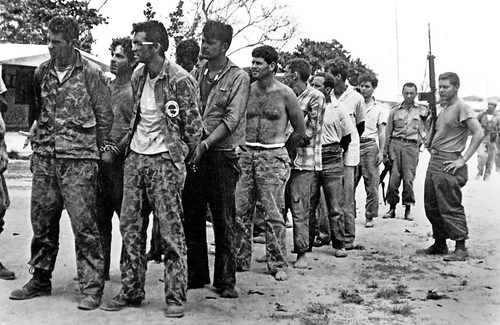
The Bay of Pigs invasion
In April 1961 a CIA-trained brigade of Cuban exiles landed at the Bay of Pigs to topple Fidel Castro and was defeated within three days. The records show how a covert plan outgrew its cover.
 United States · 1947
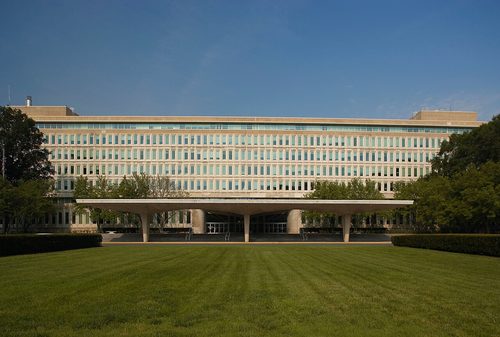
Central Intelligence Agency (CIA)
The US civilian intelligence service, created by the National Security Act of 1947 to coordinate foreign intelligence, which within a year also became Washington's instrument for covert action.
 1893–1969
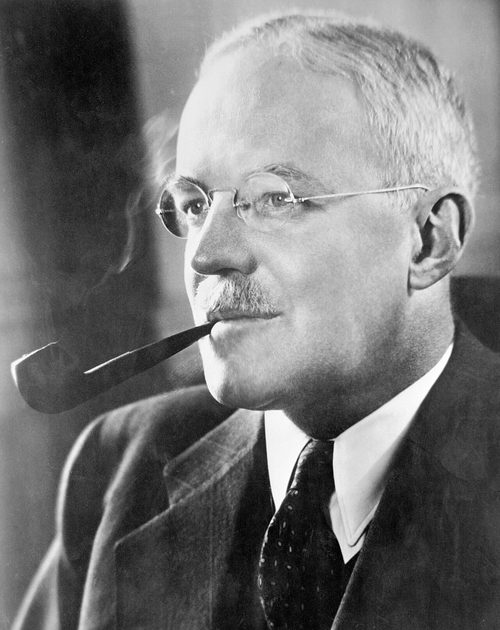
Allen Dulles
OSS spymaster in wartime Switzerland and Director of Central Intelligence from 1953 to 1961, Allen Dulles presided over the CIA's era of coups and covert wars until the Bay of Pigs ended his tenure.