
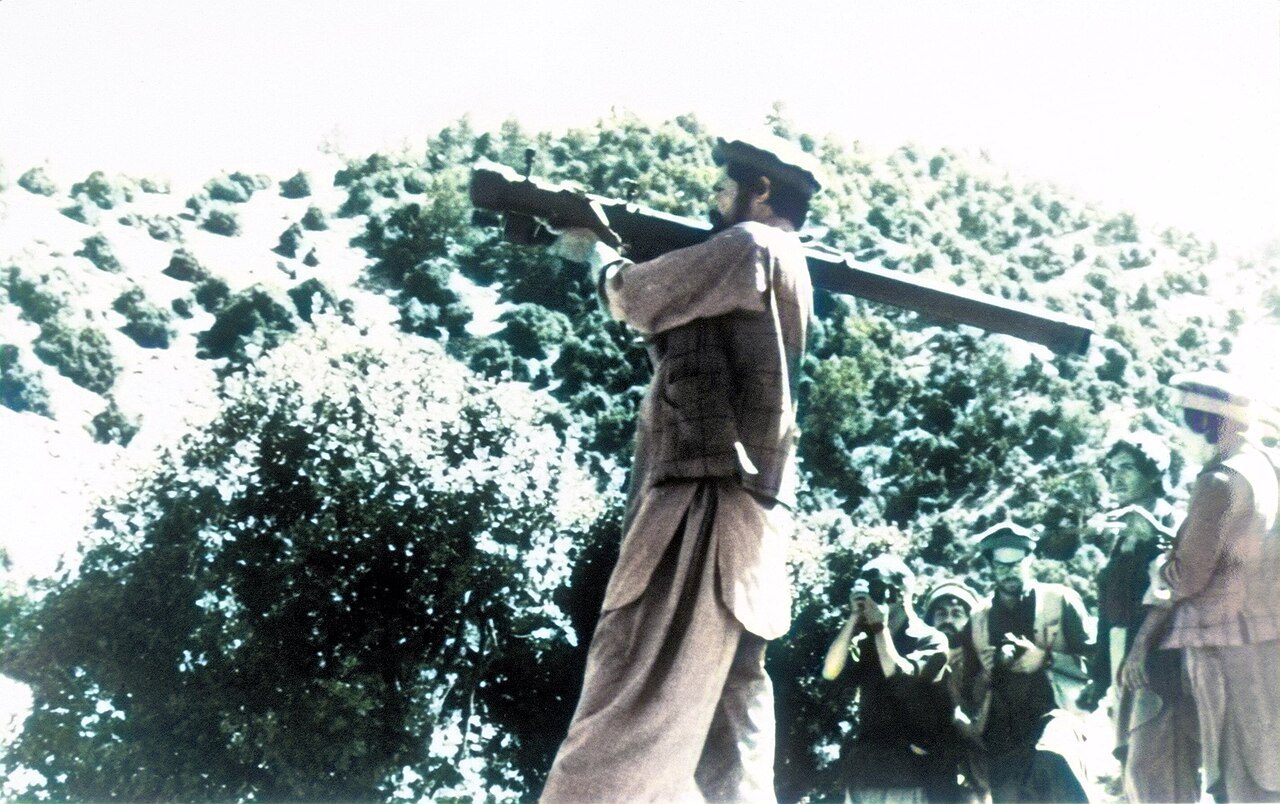

"Operation Cyclone" is the name under which the CIA's Afghan program became famous, largely through journalism after the fact. The declassified State Department record calls it simply the Afghanistan covert action program. Its editors describe it as "a modest beginning to an operation that would ultimately become the longest and largest in U.S. history to that point."3,5
Non-lethal beginnings, 1979
Afghanistan had a communist government from April 1978, and by early 1979 a rural revolt was under way. US officials began weighing options after the kidnapping and death of Ambassador Adolph Dubs in Kabul in February 1979; at that stage, the FRUS editors note, lethal aid was considered too risky.3
At a Special Coordination Committee meeting on 26 June 1979 the Director of Central Intelligence reported that contacts with Afghan insurgent leaders had been made in Pakistan. The committee approved propaganda and psychological operations, radio access to the Afghan population through third countries, and support to the insurgents in cash or non-military supplies, and agreed to encourage Saudi Arabia to fund similar aid.2 President Carter signed two findings on 3 July.2 A State Department summary written the following May puts the money for non-lethal supplies under the first findings at $695,000.1
The committee also agreed that Pakistan would be told of the support but that the CIA would run it unilaterally, and it deferred options for routing humanitarian supplies through Pakistan or a third country until Pakistani reactions and "other political fallout" had been assessed.2
Arms after the invasion
Soviet forces entered Afghanistan on 25 December 1979 and killed President Hafizullah Amin. On 28 December Carter signed a new finding authorizing lethal military equipment for "the Afghan opponents of the Soviet intervention," supplied directly or through third countries, with training outside Afghanistan.6,3,1 In February 1980 a further sum was authorized, to be matched by Saudi Arabia.1
By May 1980 the pipeline was working. The State Department's intelligence bureau briefed the new Secretary of State, Edmund Muskie, that the arms were Soviet-made rifles, machine guns, mines and anti-tank rockets, first from CIA reserve stocks and then bought on the international market. They were flown by US Air Force C-141s to Saudi Arabia and on to Pakistan in Saudi C-130s. No Americans in Pakistan handled logistics or training; Pakistani officers trained the Afghans, and the CIA station chief in Islamabad worked out the details with Pakistani intelligence and President Zia. Egypt had donated 15 Soviet-made SA-7 anti-aircraft launchers, and the CIA was buying more from a Bulgarian source through cut-outs. Zia had threatened to stop all cooperation if there were further press leaks.1
Growth under Reagan
The program expanded greatly in the 1980s. Pakistani intelligence (the ISI) controlled which of the seven resistance parties got what, and favored the Islamist factions.5 The 9/11 Commission summarized the arrangement: "Saudi Arabia and the United States supplied billions of dollars worth of secret assistance to rebel groups in Afghanistan," funneled through Pakistan, where the ISI "helped train the rebels and distribute the arms."4 From 1986 the CIA supplied US-made Stinger shoulder-fired missiles, which the mujahideen used against Soviet helicopters.5 Britain's MI6 ran a separate effort, with its own favored commander, Ahmad Shah Massoud.5 (See Secret Intelligence Service (MI6).)
The Soviet withdrawal was completed on 15 February 1989. US aid continued during the fighting that followed, with Congress funding the program into fiscal year 1992.5
The bin Laden question
Osama bin Laden arrived in Afghanistan in 1980 as one of thousands of foreign volunteers, notable chiefly for his family money.4 The 9/11 Commission found that he and the "Afghan Arabs" drew largely on a Gulf-based fund-raising network, and concluded:4
But Bin Ladin and his comrades had their own sources of support and training, and they received little or no assistance from the United States.
The documents
Declassified records of this operation.
- 9 May 1980The Afghan covert program in May 1980: INR's briefing for Secretary MuskieRonald I. Spiers, Director, Bureau of Intelligence and Research, Department of State (drafted by David Mark; sent through Under Secretary David Newsom)A short State Department briefing of 9 May 1980 for the new Secretary of State: how the CIA's Afghan program had grown from radio and cash to Soviet-made weapons flown via Saudi Arabia, with Egyptian SA-7s on the way.
- 26 June 1979The Afghan program begins: the Special Coordination Committee, 26 June 1979Special Coordination Committee, National Security Council (chaired by Zbigniew Brzezinski; summary drafted by Donald Gregg)The White House record of the 55-minute meeting at which Carter's advisers agreed to give Afghan insurgents covert cash and propaganda support, six months before the Soviet invasion: the first decision of the program later called Operation Cyclone.
Checking the record
Dates and outcome compared in two independent sources: they agree.
- FRUS
- First findings signed 3 July 1979 ($695,000 non-lethal); lethal finding 28 December 1979; Saudi matching funds authorized February 1980. By May 1980 Soviet-made arms were flowing via Saudi Arabia to Pakistan for distribution by Pakistani intelligence.
- Wikipedia
- Program 1979–1992; $695,000 in mid-1979; first weapons shipped December 1979; Stingers from 1986; Soviet withdrawal completed 15 February 1989. The mujahideen, armed through Pakistan's ISI with US and Saudi money, outlasted the Soviet army; funding continued at reduced levels after 1989.
Agree on the July 1979 start and figures. Wikipedia says the first weapons shipped in December 1979; FRUS dates the lethal finding to 28 December and the State Department memo describes arms moving by early 1980. This page follows FRUS.
Sources
- FRUS Foreign Relations of the United States, 1977–1980, Volume XII, Afghanistan, Document 267: Briefing Memorandum From the Director of the Bureau of Intelligence and Research (Spiers) to Secretary of State Muskie, 9 May 1980, US Department of State, Office of the Historian (1980-05-09).
- FRUS Foreign Relations of the United States, 1977–1980, Volume XII, Afghanistan, Document 53: Summary of Conclusions of a Special Coordination Committee Meeting, 26 June 1979, US Department of State, Office of the Historian (1979-06-26).
- FRUS Foreign Relations of the United States, 1977–1980, Volume XII, Afghanistan, Preface, US Department of State, Office of the Historian (2019).
- Congress The 9/11 Commission Report, chapter 2, 'The Foundation of the New Terrorism', National Commission on Terrorist Attacks Upon the United States (2004-07-22).
- Wikipedia Operation Cyclone, Wikipedia.
- FRUS Foreign Relations of the United States, 1977–1980, Volume XII, Afghanistan, Document 107: Minutes of a National Security Council Meeting, 28 December 1979, US Department of State, Office of the Historian (1979-12-28).
- Wikipedia English Wikipedia article (used for cross-checking).
Elsewhere in the files
Read next
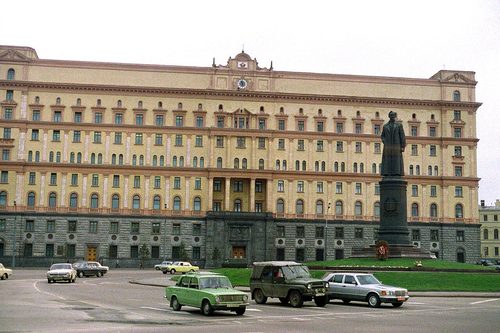 Soviet Union · 1954–1991
KGB
The Soviet Committee for State Security, 1954–1991: foreign intelligence, counter-intelligence, border troops and political police under one roof, from Khrushchev's reforms to the failed coup of August 1991.
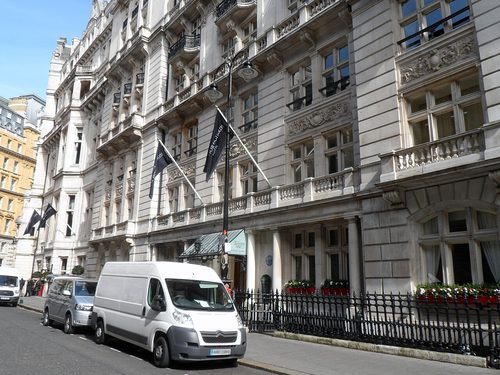 United Kingdom · 1909
Secret Intelligence Service (MI6)
Britain's foreign intelligence service, founded in 1909 as the foreign section of the Secret Service Bureau, run by a chief known as 'C', and not placed on a statutory footing until the Intelligence Services Act 1994.
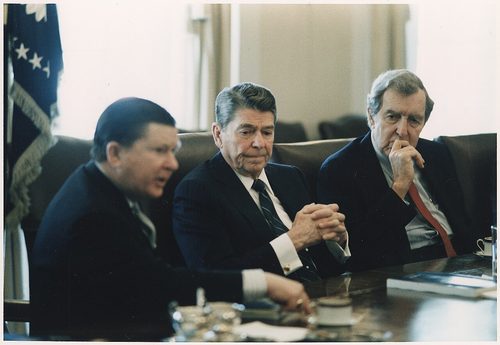 October 1984 – 25 November 1986
The Iran–Contra affair
In 1985–86 Reagan administration officials secretly sold missiles to Iran to free American hostages and ran a private supply line to the Nicaraguan contras despite a congressional ban, then tried to cover both up.
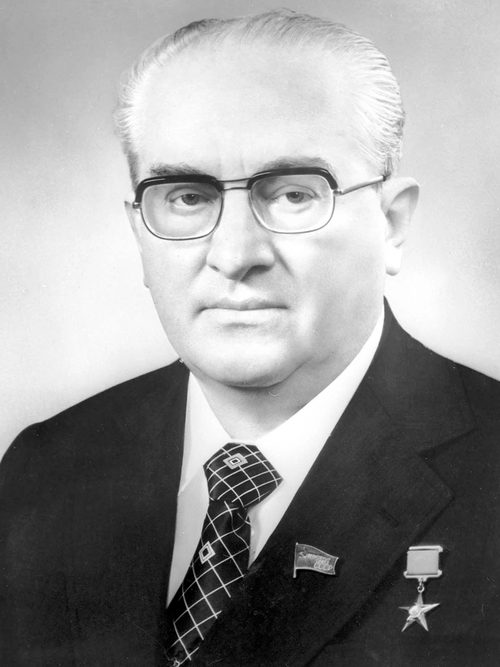 1914–1984
Yuri Andropov
Soviet ambassador in Budapest in 1956, KGB chairman for fifteen years and Soviet leader for fifteen months; the man who launched the RYAN war-scare alert and died in February 1984.
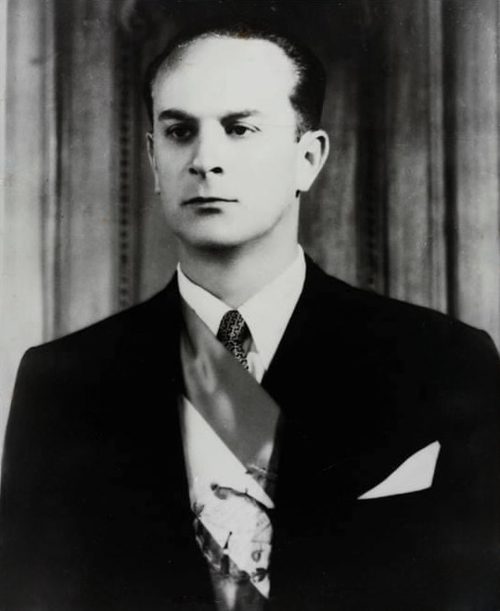 12 August 1953 – 27 June 1954
Operation PBSuccess
The CIA's 1953–54 campaign of propaganda, pressure and a small proxy invasion that forced Guatemala's elected president Jacobo Árbenz to resign on 27 June 1954.