
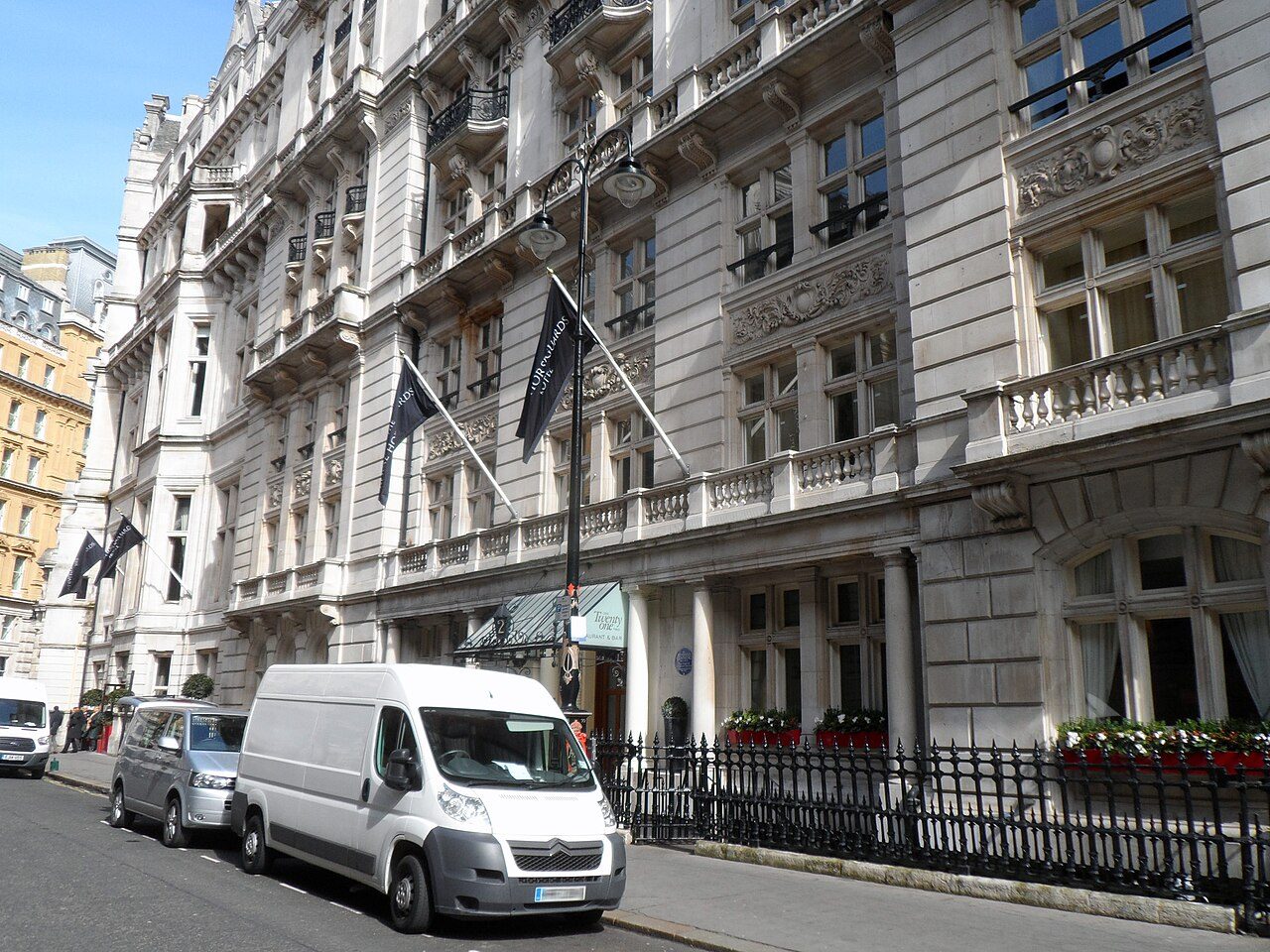

For most of its history the Secret Intelligence Service did not officially exist. Parliament could discuss its failures only in code: when George Blake was convicted in 1961, the Prime Minister described him as a temporary vice-consul who "was never an established member of the Foreign Service."4 The service's own website now says that the Intelligence Services Act 1994 "was the first public acknowledgement of the existence of both MI6 and GCHQ."1
Origins: "C"
SIS and MI5 began as one office. Amid fears of German espionage, a Secret Service Bureau was set up in 1909 and divided into home and foreign sections. In October 1909 the foreign section was given to Mansfield Cumming, a 50-year-old Royal Navy commander; the home section went to an Army captain, Vernon Kell.1,2 Cumming signed his letters "C," and every chief since has been known by the initial.1
During the First World War the foreign section worked closely with military intelligence, gathering information in neutral and occupied countries. It used a string of names, and the title Secret Intelligence Service was adopted around 1920. "MI6" was a wartime label that stuck.1,7
Between the wars and the Second World War
The interwar service concentrated first on Soviet communism and later on Germany, often using passport control offices in embassies as cover.7 In 1938 it set up Section D to plan sabotage and covert operations, and in July 1938 it bought Bletchley Park as a wartime home for itself and the Government Code and Cypher School, the forerunner of GCHQ.1 Section D was folded into the new Special Operations Executive in 1940.7
Through the war SIS ran agent networks in occupied Europe, among them the Belgian "Service Clarence" and the French "Alliance" network, and with American and French partners it dropped "Sussex" teams behind German lines after D-Day.1 Stewart Menzies, chief from 1939, controlled the distribution of the decrypted German traffic known as Ultra, which greatly increased the service's standing in Whitehall.7
The Cold War
In 1948 SIS hosted senior officials of the new CIA at a London conference on war planning, the start of what the service calls a long partnership.1 The two services worked together, sometimes uneasily, in covert action and collection. The first major joint effort, infiltrating émigré agents into Albania from 1949, ended in failure (see Operation Valuable (Albania)); by 1952 the CIA was asking that its records distinguish "the British Albanian operations" from its own.6 SIS worked with the CIA in the 1953 coup in Iran (Operation Ajax (TPAJAX)), the Operation Gold (the Berlin Tunnel) of 1955–56, and the running of the GRU colonel Oleg Penkovsky in 1961–62 (IRONBARK: the Penkovsky case).7
The same years brought the worst penetrations in the service's history. Kim Philby joined SIS in 1940, rose to a senior position and served as its representative in Washington in 1949–1951 while working for Moscow.5 George Blake, recruited by the Soviets while a prisoner in Korea, betrayed the Berlin tunnel and many agents before his arrest in 1961.4,7 Rebuilding trust with Washington after the The Cambridge Five affair took years.
Into the open
The Intelligence Services Act 1994 gave SIS a legal basis for the first time. Section 1 states that "there shall continue to be a Secret Intelligence Service," under the authority of the Secretary of State, with these functions:3
(a) to obtain and provide information relating to the actions or intentions of persons outside the British Islands; and (b) to perform other tasks relating to the actions or intentions of such persons.
Those functions may be used only in the interests of national security, the economic well-being of the United Kingdom, or the prevention or detection of serious crime.3 The same year SIS moved to its present headquarters at Vauxhall Cross on the south bank of the Thames, formally opened by Queen Elizabeth II in July 1994.1 Earlier headquarters included 54 Broadway, near St James's Park, from 1924 to 1966, and Century House in Lambeth from 1966.7
SIS commissioned an authorized history of its first forty years, published in 2010; the service says that history ends in 1949, and its later operational record remains largely closed.1,7
Key dates
- October 1909 Commander Mansfield Cumming takes charge of the foreign section of the new Secret Service Bureau.
- 1920 The title Secret Intelligence Service comes into use, around this year.
- 1938 Section D formed for sabotage and covert action; Bletchley Park bought as a wartime base for SIS and the codebreakers.
- 1940 Section D absorbed into the new Special Operations Executive.
- 1948 SIS hosts the London Conference on War Planning with the new CIA.
- 1949 SIS and the CIA begin infiltrating émigré agents into Albania.
- August 1953 SIS and the CIA back the coup that overthrows Iran's prime minister Mohammad Mosaddeq.
- 3 May 1961 SIS officer George Blake pleads guilty to spying for the Soviet Union.
- 23 January 1963 Former SIS officer Kim Philby disappears from Beirut.
- 1994 Intelligence Services Act gives SIS a statutory basis; the service moves to Vauxhall Cross.
Operations in these files
 December 1932 – May 1945
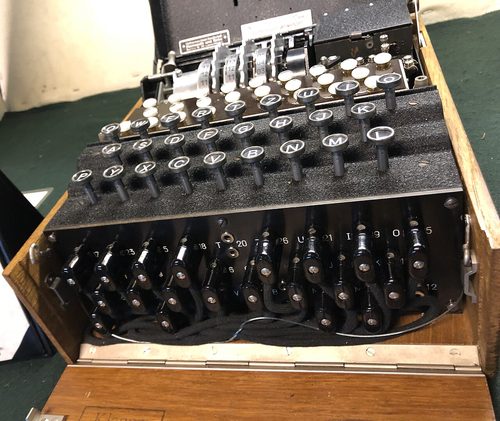
Ultra and the breaking of Enigma
How Polish mathematicians first broke the German Enigma machine, and how Britain's codebreakers at Bletchley Park turned that start into Ultra, the most closely guarded intelligence source of the Second World War.
 September 1939 – May 1945
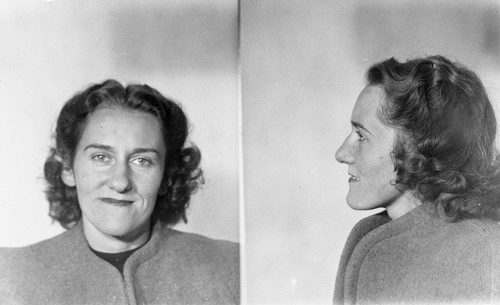
The Double-Cross System
How MI5 caught or recruited Germany's wartime spies in Britain and ran them as double agents, steered by the Twenty Committee, until their reports could carry the D-Day deception.
 January – September 1944
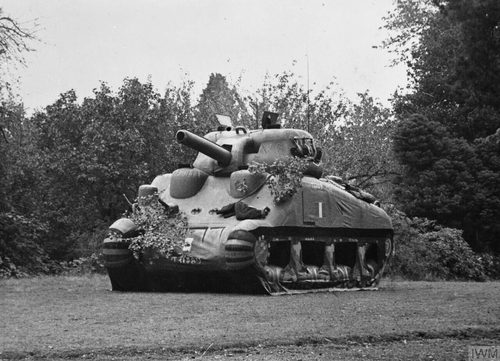
Operation Fortitude
The Allied deception that invented armies in Scotland and southeast England in 1944 to make Germany expect landings in Norway and the Pas-de-Calais, and to see Normandy as a feint.
1949 – 1954
Operation Redsox
REDSOX was the CIA's early Cold War program for parachuting and smuggling émigré agents into the Soviet Union. It produced little intelligence and cost many agents their lives.
 1949 – 1955
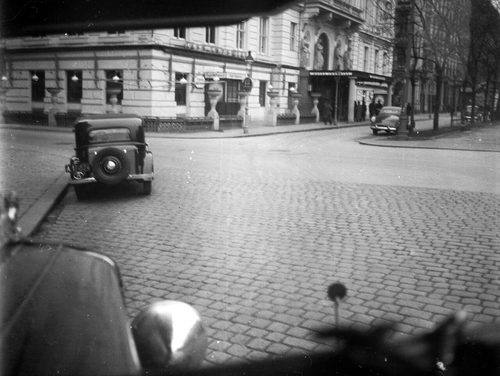
Operation Silver (the Vienna tunnels)
In occupied Vienna from about 1949, British SIS officers dug short tunnels to tap the telephone cables of the Soviet command, then shared the take with the CIA. It was the model for the Berlin Tunnel.
22 June 1949 – 1954
Operation Valuable (Albania)
The joint British and American attempt, from 1949 into the early 1950s, to undermine Enver Hoxha's regime by infiltrating Albanian émigré agents. Most teams were caught, and Hoxha stayed in power.
 March – 19 August 1953
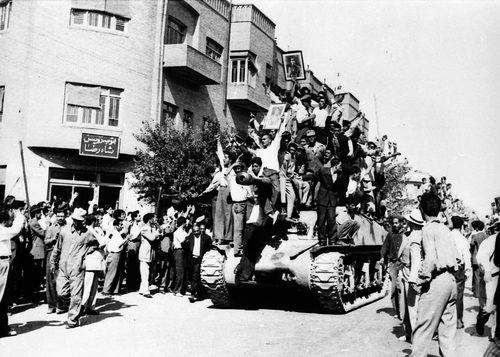
Operation Ajax (TPAJAX)
The 1953 Anglo-American covert operation that removed Iran's prime minister Mohammad Mosaddeq, as reconstructed from the CIA and State Department records published in 2017.
 December 1953 – 22 April 1956
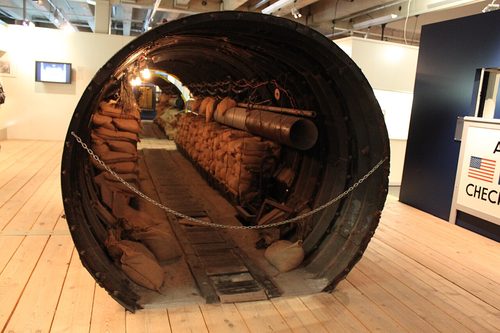
Operation Gold (the Berlin Tunnel)
From 1955 to 1956 the CIA and British SIS tapped Soviet military phone and teleprinter cables in East Berlin from a 1,476-foot tunnel, unaware that a KGB mole had betrayed the plan before digging began.
 20 April 1961 – 22 October 1962
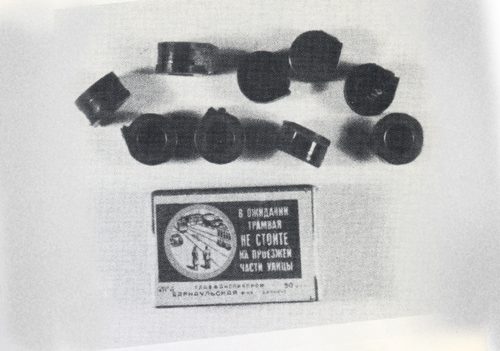
IRONBARK: the Penkovsky case
How a disaffected GRU colonel, Oleg Penkovsky, fed the CIA and MI6 Soviet missile manuals in 1961–62, and how his IRONBARK material shaped US judgments in the Cuban Missile Crisis.
 2–11 November 1983
Able Archer 83 and the war scare
A routine NATO nuclear-release exercise in November 1983 met an unusual Soviet military alert. What the declassified record shows about the reaction, and why historians still disagree on the danger.
Operations against the MI6
People
Sources
- Official history Our history, Secret Intelligence Service (MI6), archived by the Internet Archive.
- Official history The establishment of the Secret Service Bureau, MI5 (Security Service), archived by the Internet Archive.
- Other Intelligence Services Act 1994, section 1, legislation.gov.uk (The National Archives) (1994).
- Other Security Procedures (Case of George Blake), HC Deb 4 May 1961 vol 639 cc1609–18, UK Parliament, Hansard (1961-05-04).
- Other KV 2/4723: Harold Adrian Russell (Kim) PHILBY (catalogue description), The National Archives (UK), Discovery catalogue.
- CIA Memorandum, 1 December 1952: Operation BGFIEND, Central Intelligence Agency (released 2007; archived copy) (1952-12-01).
- Wikipedia Secret Intelligence Service, Wikipedia.
- Wikipedia English Wikipedia article (used for cross-checking).
Elsewhere in the files
- Agency GC&CS and GCHQ
- Agency Security Service (MI5)
- Agency Special Operations Executive (SOE)
- Document Alias George Wood: CIA's case history of Fritz Kolbe (1966)
- Document OPC's revaluation of the Albanian operation (29 November 1949)
- Document Penkovskiy's Legacy: a CIA analyst on the IRONBARK papers (1972)
- Document The Battle for Iran: the CIA History Staff's account of the 1953 coup (c. 1974)
- Document The CIA's history of the Berlin Tunnel (1968)
- Operation Able Archer 83 and the war scare
- Operation IRONBARK: the Penkovsky case
- Operation Operation Ajax (TPAJAX)
- Operation Operation Anthropoid
- Operation Operation Cyclone
- Operation Operation Fortitude
- Operation Operation Gladio
- Operation Operation Gold (the Berlin Tunnel)
- Operation Operation Redsox
- Operation Operation Silver (the Vienna tunnels)
- Operation Operation Trust
- Operation Operation Valuable (Albania)
- Operation The Cambridge Five
- Operation The Double-Cross System
- Operation Ultra and the breaking of Enigma
- Person Duško Popov (TRICYCLE)
- Person George Blake
- Person Guy Burgess
- Person John Cairncross
- Person Juan Pujol García (GARBO)
- Person Kim Philby
- Person Melita Norwood
- Person Oleg Penkovsky
- Person Sidney Reilly
- Person Vasili Mitrokhin
- Tradecraft Brush passes
- Tradecraft Signals intelligence