
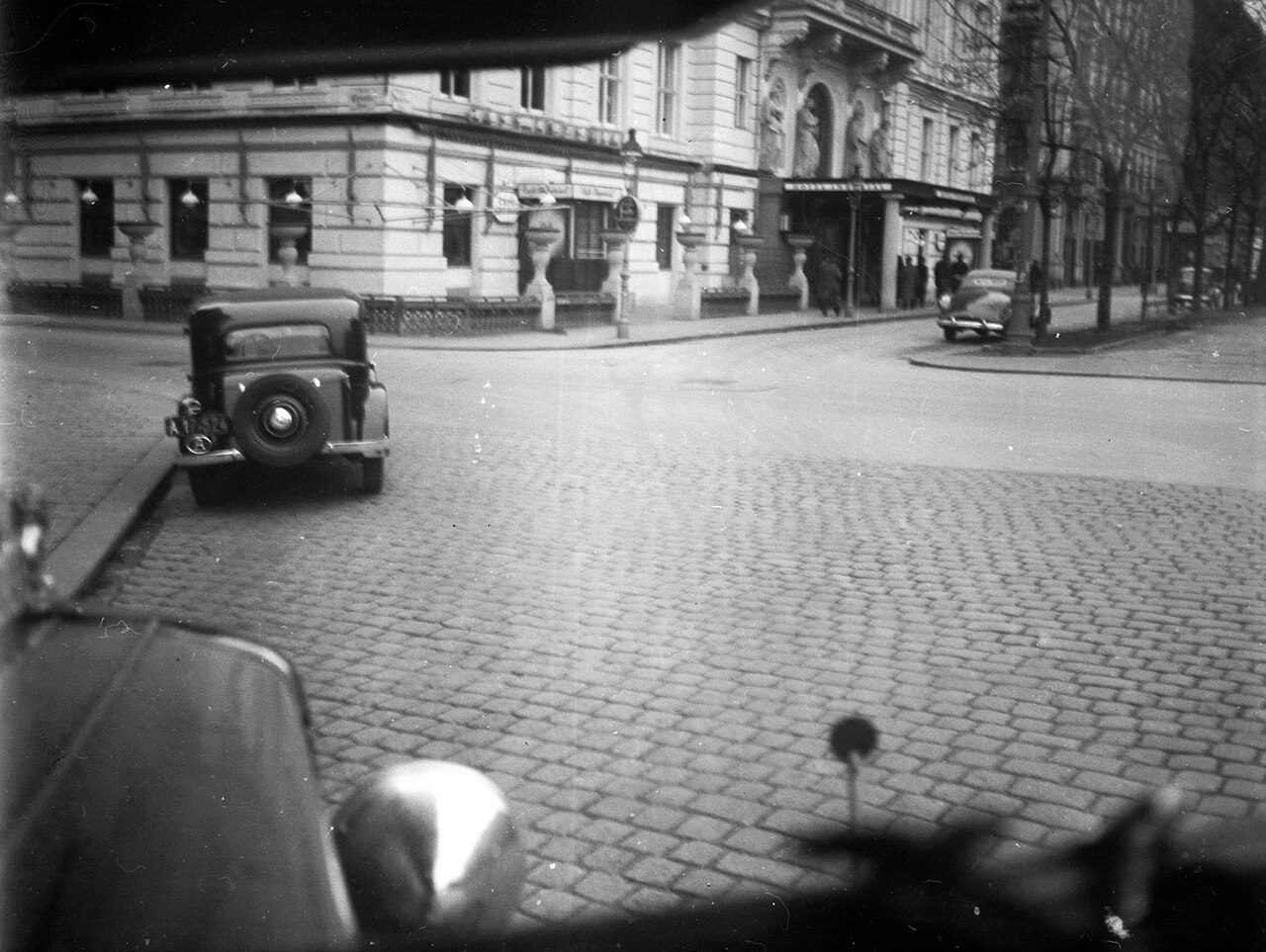
Before there was a Berlin Tunnel there were the Vienna tunnels. They were short, cheap and British, and for several years they gave London a direct line into the conversations of the Soviet occupation forces in Austria. The Americans called the operation Silver. The British appear to have used other names; Peter Lunn's obituary calls it Conflict and one account says Lord3,4.
A divided city with buried wires
After 1945 Vienna, like Berlin, was divided into American, British, French and Soviet sectors. The Soviet headquarters was in the Hotel Imperial on the Ring. Its telephone and teleprinter traffic, to Soviet units in eastern Austria and onward to Moscow, ran through buried cables, and some of those cables passed under the British and French sectors6,4.
Peter Lunn, an artillery officer and former Olympic skier who headed the SIS station in Vienna from 1948, saw the opportunity. His obituary quotes the aim: if he could tap these lines he would be the first to know if Stalin ordered an invasion of Western Europe4,6.
The tunnels
The surviving accounts agree on the method and differ on the details. Wikipedia's account of Lunn says a mining consultant dug from the basement of a police post to the main cable linking the Hotel Imperial with the Soviet airfield at Schwechat. Thomas Huntington, writing in 1995, describes a rented house and a tunnel of about 70 feet under a highway, with a shop selling Harris tweed as cover. The shop reportedly did so well that it got in the way. Lunn's obituary speaks of three tunnels and a villa bought on the route of the airport cable. The largest tap is usually described as running from a villa in Schwechat belonging to the SIS officer Major John Wyke3,4,5,6.
Telecommunications specialists from the British Post Office's research station at Dollis Hill in London worked on the operation alongside SIS officers5.
Sharing with Washington
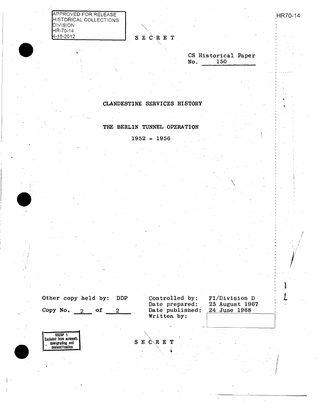
The most solid evidence that Silver existed comes from the CIA's own history of the Berlin Tunnel, CS Historical Paper No. 150. It records that in 1951 "the British advised CIA that they had for some years been tapping Soviet cables through a system of tunnels in the Vienna area and offered to share the take with the U.S." The British suggested at the same time that Berlin might offer similar chances1. CIA's 2009 public account calls Vienna "a similar success" that preceded the Berlin plan2.
From then on the take was shared, and when CIA and SIS divided the Berlin work in 1953–54, the British tapping role rested on Vienna. CSHP 150 notes that "the skills developed by the British during the Vienna operations stood us in good stead," and that the planned Berlin tunnel "far exceeded anything which had been done by the British in Vienna"1. Lunn moved on, and from 1953 he was head of station in Berlin. Wyke placed the taps in the Berlin Tunnel6,3.
How it ended
No released document gives a firm end date. Accounts range from 1951 or 1952 to 1955, when the Austrian State Treaty ended the occupation and the Soviets left Vienna. Der Spiegel, summarizing the 1997 book Battleground Berlin by David Murphy, Sergei Kondrashev and George Bailey, says the Vienna operation ran for three years before it was blown4,5,6,8.
George Blake, the SIS officer who betrayed the Berlin Tunnel, is said to have passed details of the Vienna operation to the KGB in 1953 as well. Nothing in the released record shows whether the Soviets acted on it5.
What the record does not show
The British side of Silver is still largely closed, and the CIA history says almost nothing about what Vienna produced. The colorful details, from the tweed shop to the villa, come from memoirs, interviews and journalists. Read them as plausible rather than proven. What is certain is the line of descent: the people, the tapping technique and the idea of tunneling to a cable all went from Vienna to Berlin1,3.
The documents
Declassified records of this operation, with the scans and their full text hosted here.

Checking the record
Dates and outcome compared in two independent sources: they agree.
- CIA
- In 1951 the British told CIA they had 'for some years' been tapping Soviet cables through tunnels in the Vienna area. The British offered to share the take and suggested Berlin; skills developed in Vienna were used for the Berlin Tunnel, which far exceeded the Vienna tunnels in length.
- Wikipedia
- 1949 to 1955. Soviet army landlines in Vienna tapped; revealed to the Americans in 1951; led to the joint Berlin operation; compromised by Blake in 1953; ended when Austria regained sovereignty in 1955.
The CIA history is consistent with Wikipedia but gives no start or end date. Other accounts end the operation in 1951 or 1952, so this page gives 1955 only as the latest possible end and flags the dates as uncertain.
Sources
- CIA Clandestine Services History: The Berlin Tunnel Operation, 1952–1956 (CS Historical Paper No. 150), 2012 release, Central Intelligence Agency (copy hosted by the National Security Archive) (1968-06-24).
- CIA A Look Back ... The Berlin Tunnel: Exposed, Central Intelligence Agency (archived copy) (2009-06-26).
- Other The Berlin Spy Tunnel Affair, Invention & Technology (Thomas Huntington), vol. 10, no. 4 (1995).
- Other Spy who loved to ski went underground in Cold War quest (obituary of Peter Lunn, from the Telegraph), Sydney Morning Herald (2011-12-08).
- Wikipedia Operation Silver (1949), Wikipedia.
- Wikipedia Peter Lunn, Wikipedia.
- CIA Review of Betrayal in Berlin, by Steve Vogel (Studies in Intelligence, vol. 64, no. 2), Central Intelligence Agency, Center for the Study of Intelligence (Gary Keeley) (2020-06).
- Other Spionage: »Operation Gold«, Der Spiegel (Klaus Wiegrefe) (1997-09-21).
- Wikipedia English Wikipedia article (used for cross-checking).
Elsewhere in the files
Read next
 December 1953 – 22 April 1956
Operation Gold (the Berlin Tunnel)
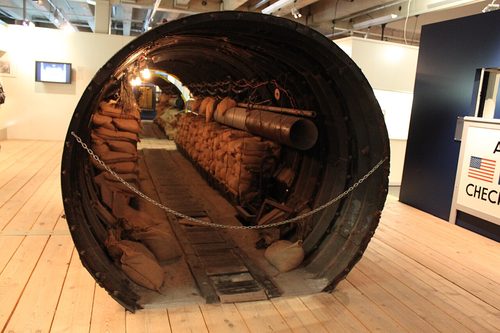
From 1955 to 1956 the CIA and British SIS tapped Soviet military phone and teleprinter cables in East Berlin from a 1,476-foot tunnel, unaware that a KGB mole had betrayed the plan before digging began.
 1914–1990s
Signals intelligence
Intelligence from intercepted communications and electronic emissions, from Room 40 and the Zimmermann telegram to Ultra, Venona, the Berlin tunnel and NSA's domestic programs exposed by the Church Committee.
 1922–2020
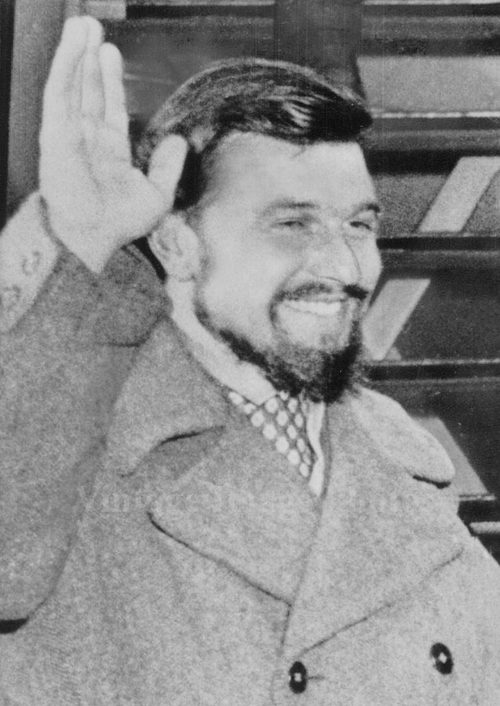
George Blake
SIS officer who volunteered to the Soviets as a prisoner in Korea, betrayed the Berlin tunnel and many agents, received a record 42-year sentence in 1961, and escaped from Wormwood Scrubs in 1966.
 United Kingdom · 1909
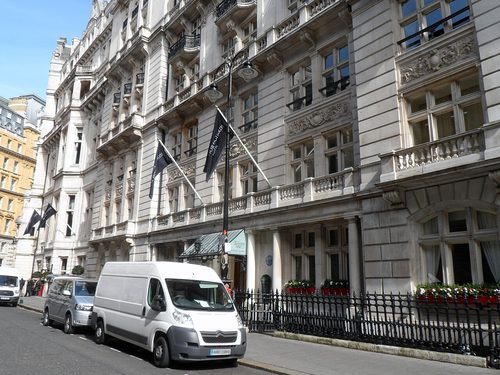
Secret Intelligence Service (MI6)
Britain's foreign intelligence service, founded in 1909 as the foreign section of the Secret Service Bureau, run by a chief known as 'C', and not placed on a statutory footing until the Intelligence Services Act 1994.
 United States · 1952
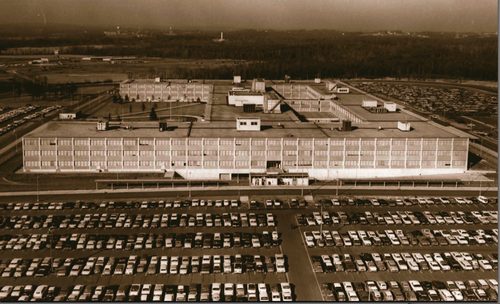
National Security Agency (NSA)
America's signals intelligence and communications security agency, created by a secret Truman directive in 1952 out of the Armed Forces Security Agency, and exposed to public scrutiny by the Church Committee in 1975.