
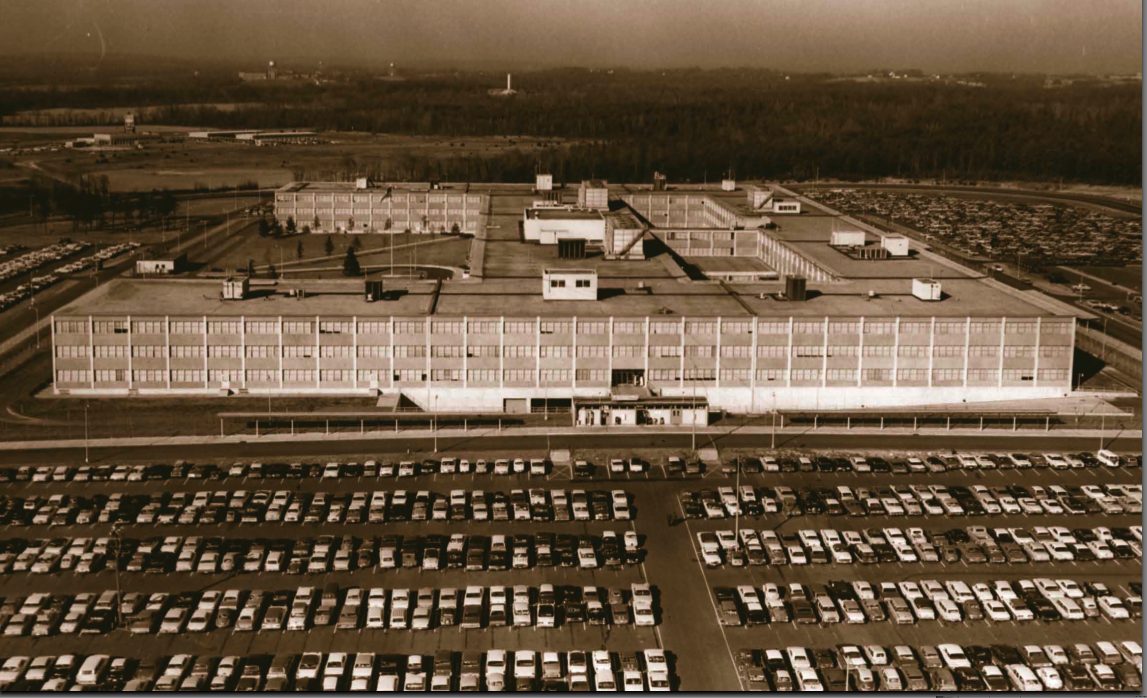
For its first two decades the National Security Agency had no statute, no public charter and, as far as most Americans knew, no existence. It was created by a Top Secret presidential memorandum, and people in the intelligence community joked that the initials stood for "No Such Agency." When Senator Frank Church's committee examined it in 1975, NSA's general counsel told investigators that no existing statute controlled, limited or defined its signals intelligence activities4,7.
From the Black Chamber to AFSA
American codebreaking began in April 1917 with a small Army section, MI-8, later run by Herbert Yardley. After the First World War, Yardley's "Black Chamber" in New York read foreign diplomatic traffic until Secretary of State Henry Stimson closed it in 19297,3. In the Second World War the Army's Signal Intelligence Service at Arlington Hall and the Navy's Op-20-G broke German and Japanese systems and began the long attack on Soviet messages known as Venona3,7.
Peace left the work split among the services. On 20 May 1949 they were brought together under the Armed Forces Security Agency (AFSA), which answered to the Joint Chiefs of Staff. It did not work well. In December 1951 Truman ordered a review, and the committee under the New York lawyer George Brownell reported on 13 June 1952 that the four existing organizations duplicated each other and that the US Communications Intelligence Board lacked the authority to fix it2,7.
A secret birth
On 24 October 1952 Truman signed a memorandum to the Secretaries of State and Defense on "Communications Intelligence Activities." It opened:
The communications intelligence (COMINT) activities of the United States are a national responsibility.
That is from1. The memo made the Secretary of Defense executive agent for the whole government in COMINT, removed the Joint Chiefs from the chain of command, and provided for a Director of NSA. A revised National Security Council Intelligence Directive No. 9 issued the same day. The National Archives dates the agency's establishment from 4 November 19521,2,3. NSA inherited AFSA's resources but not its weaknesses: its director reported to the Secretary of Defense and could act on his own judgment except where the intelligence board had voted1.
The agency later moved from Washington and Arlington Hall to Fort Meade, Maryland, between Washington and Baltimore. Its nine-story headquarters building opened there in 19637.
Cold War collection
NSA's raw material came from intercept stations, ships and aircraft around the Soviet bloc, many of them manned by the service cryptologic agencies under NSA's technical control, and from partnership with Britain's GCHQ4,6,7.
The work was dangerous. An NSA history commemorates 90 Navy men lost in aerial reconnaissance alone, beginning with a Privateer patrol plane shot down by the Soviets over the Baltic on 8 April 1950. In 1967 Israeli aircraft and torpedo boats attacked the intelligence ship USS Liberty during the Six-Day War. On 23 January 1968 North Korea seized USS Pueblo, killing one crewman and holding 82 men, many of them Naval Security Group cryptologists, for almost a year. On 15 April 1969 North Korean fighters shot down a Navy EC-121 with 31 men aboard6.
Tonkin Gulf and the limits of SIGINT
In August 1964 NSA reporting played a central part in the decision to retaliate against North Vietnam for a second attack on US destroyers in the Gulf of Tonkin on 4 August. That attack did not happen. An NSA historian, Robert Hanyok, later concluded that the agency's reporting had misread and selectively presented the intercepts. NSA released his study, with chronologies, intercepts and oral histories, in two installments on 30 November 2005 and 30 May 20065,7.
Exposure
In the 1970s Congress learned how far NSA's collection had reached into American life. The Church Committee's 1976 report described three programs. Under SHAMROCK, from August 1945 to May 1975, the agency and its predecessors received copies of millions of international telegrams from RCA Global, ITT World Communications and Western Union International. From the early 1960s until 1973, under watch lists formalized in 1969 as MINARET, NSA intercepted the international communications of Americans named by other agencies, including antiwar and civil rights activists. A third program monitored telephone links to South America for the narcotics bureau. No warrants were obtained4.
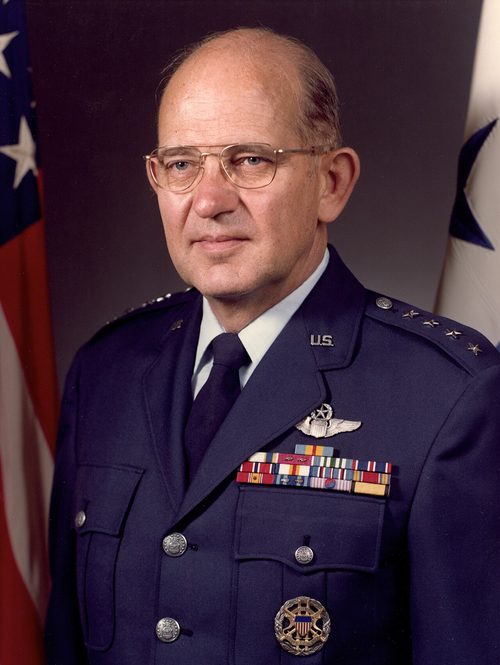
NSA's director, General Lew Allen Jr., had suspended MINARET in 1973 after the Justice Department called the watch lists of "questionable legality," and he testified in public on 29 October 19754. See Operation Shamrock and Project Minaret. The reaction led to the Foreign Intelligence Surveillance Act, signed on 25 October 1978, which set procedures, including a special court, for foreign-intelligence surveillance inside the United States7.
Key dates
- 20 May 1949 Armed Forces Security Agency created to centralize military cryptologic work under the Joint Chiefs of Staff.
- 13 December 1951 Truman orders a review of US communications intelligence; the Brownell Committee reports on 13 June 1952.
- 24 October 1952 Truman's memorandum on communications intelligence activities makes COMINT a national responsibility and provides for a Director of NSA.
- 4 November 1952 NSA comes into existence, replacing AFSA, with the Secretary of Defense as executive agent.
- 4 August 1964 NSA reporting supports a second North Vietnamese attack in the Gulf of Tonkin that did not occur.
- 8 June 1967 Israeli forces attack the intelligence ship USS Liberty; 34 crew are killed.
- 23 January 1968 North Korea seizes the intelligence ship USS Pueblo with its cryptologic crew.
- 29 October 1975 Director Lew Allen Jr. testifies before the Church Committee on MINARET and SHAMROCK.
- 25 October 1978 Foreign Intelligence Surveillance Act signed, putting domestic foreign-intelligence surveillance under court warrant.
Operations in these files
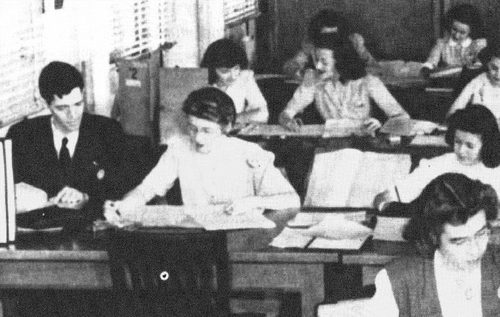 1 February 1943 – 1 October 1980
The Venona project
The US Army codebreaking program that, from 1943 to 1980, read parts of some 2,900 wartime Soviet intelligence cables and exposed Fuchs, the Rosenbergs and Donald Maclean.
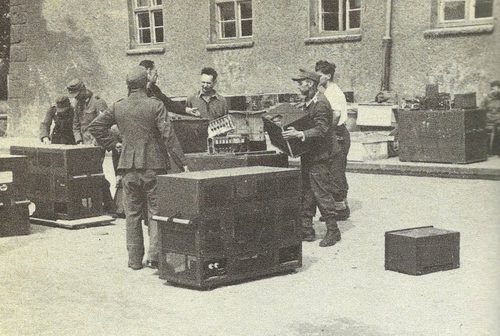 1944 – 1 May 1946
TICOM
The 1945 Anglo-American hunt for Germany's codebreakers, their machines and files, which showed how far the Germans had read Allied traffic and handed the West a working Soviet intercept system.
August 1945 – 15 May 1975
Operation Shamrock
For thirty years, from August 1945 to May 1975, three American telegraph companies handed the government copies of international cables: the largest interception program affecting Americans, the Senate said.
 20 October 1967 – October 1973
Project Minaret
From 1967 to 1973 the NSA searched international communications for the names of Americans supplied by the FBI, CIA and Secret Service, among them Martin Luther King Jr., Muhammad Ali and two sitting senators.
 October 1971 – 1981
Operation Ivy Bells
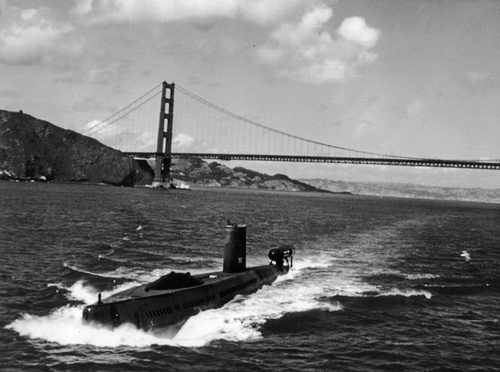
From 1971 US Navy divers working from submarines tapped a Soviet military cable on the floor of the Sea of Okhotsk. Former NSA analyst Ronald Pelton sold the secret to the KGB, and the Soviets removed the tap in 1981.
Operations against the NSA

Sources
- FRUS Foreign Relations of the United States, 1950–1955, The Intelligence Community, Document 132: Memorandum From President Truman to Secretary of State Acheson and Secretary of Defense Lovett, US Department of State, Office of the Historian (1952-10-24).
- FRUS Foreign Relations of the United States, 1950–1955, The Intelligence Community, Document 99: Editorial Note (Brownell Committee), US Department of State, Office of the Historian.
- National Archives Records of the National Security Agency/Central Security Service (Record Group 457): Administrative History, US National Archives.
- Congress Final Report of the Select Committee to Study Governmental Operations with Respect to Intelligence Activities, Book III: National Security Agency Surveillance Affecting Americans, US Senate (Church Committee), archived copy (1976-04-23).
- NSA Gulf of Tonkin Index: releases of 30 November 2005 and 30 May 2006, National Security Agency (archived copy) (2006).
- NSA A Dangerous Business: The U.S. Navy and National Reconnaissance During the Cold War (John R. Schindler), National Security Agency, Center for Cryptologic History (archived copy).
- Wikipedia National Security Agency, Wikipedia.
- Wikipedia USS Liberty incident, Wikipedia.
- Wikipedia English Wikipedia article (used for cross-checking).
Elsewhere in the files
- Agency Central Intelligence Agency (CIA)
- Agency GC&CS and GCHQ
- Agency National Reconnaissance Office (NRO)
- Document A Venona decrypt: New York 1657, 27 November 1944
- Document Church Committee Hearings, Volume 5: The NSA and Fourth Amendment Rights (1975)
- Document Friedman's report on breaking PURPLE (14 October 1940)
- Document Keeping the Nation's Secrets: the Stilwell Commission report (1985)
- Document Meeting the Espionage Challenge: the Senate's verdict on the Year of the Spy (1986)
- Document Meredith Gardner's first Venona report: "Covernames in Diplomatic Traffic" (1947)
- Document NSA's secret history of the Pelton trial and the Ivy Bells leak (1999)
- Document SNIE 11-10-84: the intelligence community reads the war scare (May 1984)
- Document The BRUSA agreement on 'Special Intelligence' (1943), with the War Department's covering memo
- Document The Church Committee's report on the NSA: 'National Security Agency Surveillance Affecting Americans' (1976)
- Document The Soviet "War Scare" (PFIAB, 1990)
- Document What the Germans could read: the TICOM report, Volume 1, Synopsis (1946)
- Operation Magic and the breaking of Purple
- Operation Operation Gold (the Berlin Tunnel)
- Operation Operation Holystone
- Operation Operation Ivy Bells
- Operation Operation RYAN
- Operation Operation Shamrock
- Operation Operation Silver (the Vienna tunnels)
- Operation Project Minaret
- Operation TICOM
- Operation The Stargate Project
- Operation The Venona project
- Tradecraft Cipher machines
- Tradecraft One-time pads
- Tradecraft Signals intelligence