
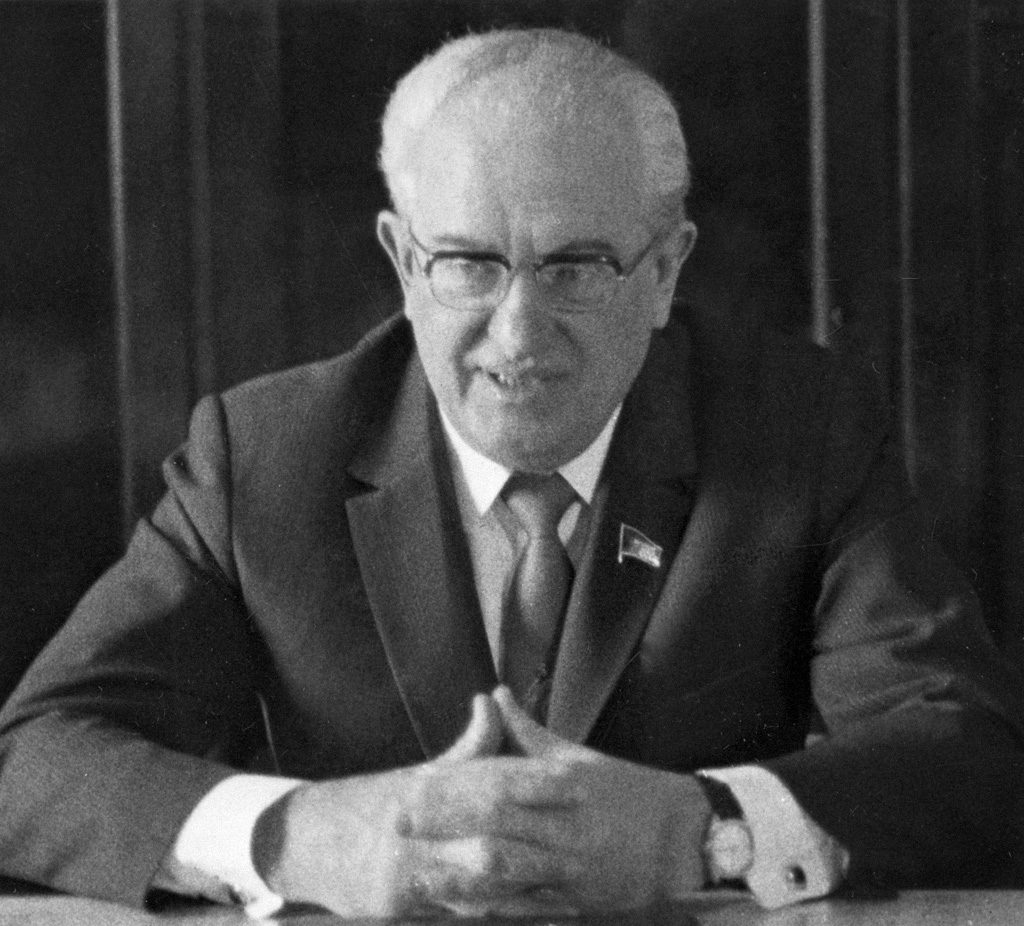

RYAN is a Russian acronym, raketno-yadernoye napadeniye: nuclear missile attack. In the early 1980s it named the largest peacetime intelligence alert the Soviet services ever ran, an effort to catch the moment when the United States decided to strike first. American documents of the period, including the 1990 PFIAB report, often render it VRYAN.1,2
A briefing in May 1981
The alert began a few months into the Reagan administration. In May 1981 Leonid Brezhnev and the KGB chairman, Yuri Andropov, appeared together before a closed session of senior KGB officers. Brezhnev spoke about the new administration in Washington; Andropov then said bluntly that the United States was preparing a surprise nuclear attack on the USSR, and that the KGB and the military intelligence service, the GRU, would join forces in a collection effort codenamed RYAN.1
Most of what is known of the next steps comes from the KGB officer Oleg Gordievsky, then a British agent inside the service. He reported that KGB residencies in the United States, Western Europe, Japan and some Third World countries received their first RYAN requirements in November 1981, with further guidance in January 1982 telling residencies to make RYAN a priority in their annual work plans.1 Benjamin Fischer, a CIA historian, calls the program unprecedented "in terms of its mission, scope, and consumption of operational resources," not least because it forced the KGB and GRU to cooperate.1
Indicators of war
On 17 February 1983 the KGB's headquarters told residencies that RYAN had acquired "an especial degree of urgency." Residents received personal orders to keep a continual watch with their entire staff, redirect existing agents, recruit new ones and put selected targets under observation.1 The tasking listed three kinds of target: US and NATO government, military, intelligence and civil-defense installations; consultations among the allies; and Western communications networks, whose traffic levels and staffing were themselves treated as signs.1
Some of the indicators reveal how the system thought. The London residency was told to watch the prices paid for blood at donor banks, on the theory that they would rise before a war; British donors were not paid. It was also asked to look for signs of mass slaughter of cattle and meat going into cold storage. Fischer suggests the requirements were lifted from Soviet intelligence files of 1939–41, when Stalin's service had surveyed mutton prices in occupied Europe for signs of a German winter campaign.1
The Warsaw Pact services were drawn in. A protocol of the 1983 conference of Pact military intelligence chiefs gave top priority to early warning of a surprise NATO nuclear attack.1 East German records show the Stasi began preparations in January 1983, issued its own order on systematic collection (Order 1/85) on 15 February 1985, and met KGB experts on "the RYAN problem" in August 1984. By then the KGB catalogue ran to 292 indicators, and its chairman, Viktor Chebrikov, had created a dedicated RYAN unit with 300 positions earmarked.5
The war scare
RYAN's reporting did not stay in filing cabinets. A former officer of the KGB's Washington residency wrote in 1994 that RYAN reporting went into the Politburo's daily briefing books, and that the program consumed an inordinate amount of time.1 In November 1983, during the NATO exercise Able Archer 83 and the war scare, Moscow sent a circular telegram to KGB residencies in Western Europe asking them to report on an alert at US bases that was not happening; GRU residencies received similar orders.2,1 The PFIAB later read the Soviet military reaction to the exercise as evidence that some forces were preparing to preempt or counterattack.2
US intelligence did not see it that way at the time. A Special National Intelligence Estimate of 18 May 1984 stated:3
We believe strongly that Soviet actions are not inspired by, and Soviet leaders do not perceive, a genuine danger of imminent conflict or confrontation with the United States.
In 1990 the President's Foreign Intelligence Advisory Board concluded the opposite, writing that the intelligence community had not attached "sufficient weight to the possibility that the war scare was real." See The Soviet "War Scare" (PFIAB, 1990).4
How long it lasted
Gordievsky was exfiltrated from Moscow in July 1985 and later said the program had ended in 1984, the year of Andropov's death.1,5 The Stasi files show otherwise. Monthly KGB summaries survive from August 1986 to April 1989, and the program was still running at the latter date. When and how it formally ended is not documented in the records released so far.5,6
The documents
Declassified records of this operation, with the scans and their full text hosted here.
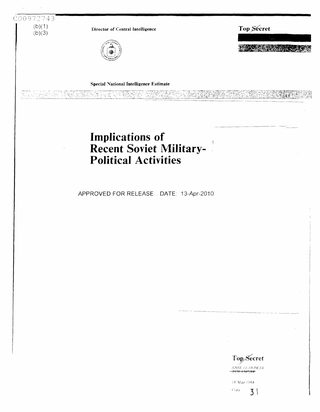 18 May 1984 · 12 p.SNIE 11-10-84: the intelligence community reads the war scare (May 1984)Director of Central Intelligence (National Intelligence Council); the National Foreign Intelligence Board concurringThe Special National Intelligence Estimate of 18 May 1984 that judged Soviet war talk after Able Archer 83 to be posturing, not fear of attack. Six years later the President's advisory board faulted its certainty.
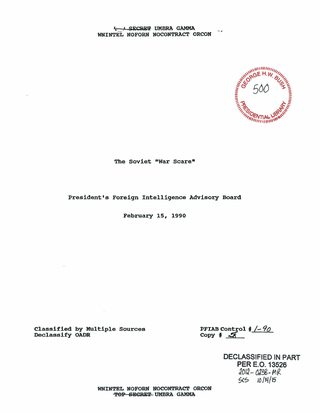 15 February 1990 · 25 p.The Soviet "War Scare" (PFIAB, 1990)President's Foreign Intelligence Advisory BoardA 1990 review by the President's Foreign Intelligence Advisory Board concluding that Soviet fear of a US first strike in 1983 was genuine, and that American intelligence had underrated it. Declassified in 2015.
Checking the record
Dates and outcome compared in two independent sources: they agree.
- CIA
- Announced at a closed KGB conference in May 1981; first requirements to residencies November 1981; urgency raised 17 February 1983. A joint KGB–GRU collection effort, unprecedented in scope, aimed at early warning of a US surprise attack; Fischer judges the underlying fear genuine but exaggerated.
- Wikipedia
- Initiated May 1981; expanded after March 1983; maintained until at least April 1989. Soviet program to collect intelligence on presumed US first-strike plans; peaked during the KAL 007 crisis and Able Archer 83.
Start dates and purpose agree. Fischer (1997) did not have the Stasi records showing RYAN ran past 1984; this page follows the later Wilson Center finding that it continued to at least April 1989.
Sources
- CIA A Cold War Conundrum: The 1983 Soviet War Scare, by Benjamin B. Fischer, Central Intelligence Agency, Center for the Study of Intelligence (1997).
- FRUS Foreign Relations of the United States, 1981–1988, Volume IV, Soviet Union, January 1983–March 1985, Document 135 (Editorial Note), US Department of State, Office of the Historian (2021).
- FRUS Foreign Relations of the United States, 1981–1988, Volume IV, Document 221: SNIE 11–10–84/JX, Implications of Recent Soviet Military-Political Activities, US Department of State, Office of the Historian (1984-05-18).
- National Security Archive The Soviet 'War Scare' (President's Foreign Intelligence Advisory Board report, 15 February 1990), National Security Archive (declassified US government document) (1990-02-15).
- Other Forecasting Nuclear War: Stasi/KGB Intelligence Co-operation under Project RYaN, Wilson Center (2014-11-13).
- Wikipedia Operation RYAN, Wikipedia.
- Wikipedia English Wikipedia article (used for cross-checking).
Elsewhere in the files
Read next
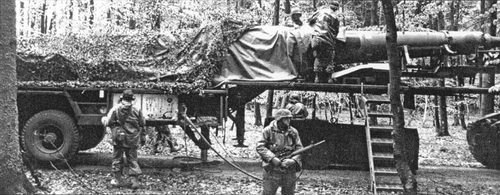 2–11 November 1983
Able Archer 83 and the war scare
A routine NATO nuclear-release exercise in November 1983 met an unusual Soviet military alert. What the declassified record shows about the reaction, and why historians still disagree on the danger.
15 February 1990
The Soviet "War Scare" (PFIAB, 1990)
A 1990 review by the President's Foreign Intelligence Advisory Board concluding that Soviet fear of a US first strike in 1983 was genuine, and that American intelligence had underrated it. Declassified in 2015.
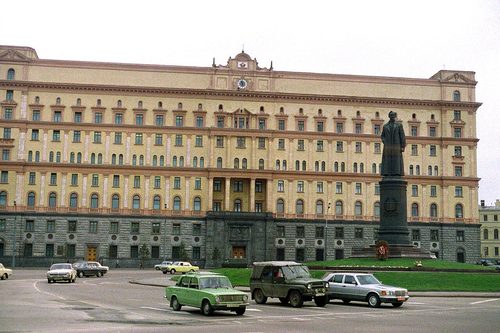 Soviet Union · 1954–1991
KGB
The Soviet Committee for State Security, 1954–1991: foreign intelligence, counter-intelligence, border troops and political police under one roof, from Khrushchev's reforms to the failed coup of August 1991.
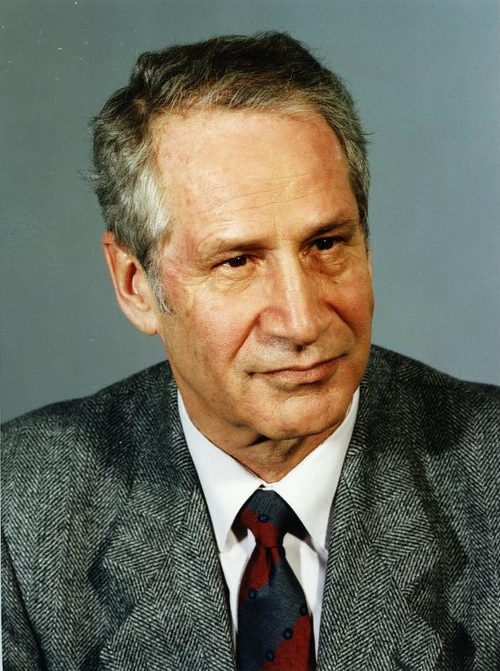 1923–2006
Markus Wolf
Head of East Germany's foreign intelligence service, the HV A, for more than three decades. The West had no usable photograph of him until 1978. After unification he was convicted of treason, a verdict later quashed.
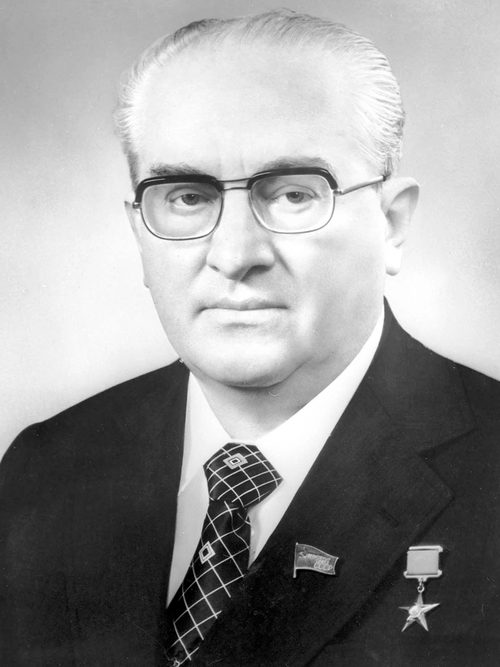 1914–1984
Yuri Andropov
Soviet ambassador in Budapest in 1956, KGB chairman for fifteen years and Soviet leader for fifteen months; the man who launched the RYAN war-scare alert and died in February 1984.