
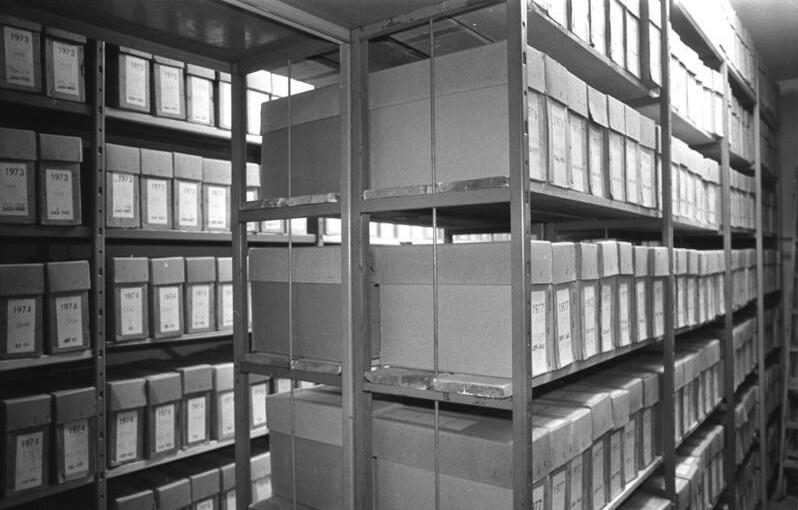

When the Stasi's officers knew the end was coming in late 1989, they tore up paper by hand. The torn pages were stuffed into sacks to wait for the shredders and furnaces. About 16,000 of those sacks survived, each holding 2,500 to 3,500 fragments, and archivists in Berlin have spent three decades piecing pages back together4.
Founding
On 8 February 1950 East Germany's parliament, the Volkskammer, unanimously passed a bill creating a Ministry for State Security. The ruling Socialist Unity Party (SED) had decided on it in secret at the end of January. Wilhelm Zaisser became minister and Erich Mielke his permanent secretary. No parliamentary oversight was provided for2.
In practice Soviet officers of the MGB, the forerunner of the KGB, held the reins: each head of a Stasi department had a Soviet "instructor." The ministry began with about 1,100 staff and nearly doubled in 1952 to about 8,800. Its early methods, by the account of the Stasi Records Archive itself, were arbitrary arrest and confessions extracted by night interrogation and torture2,1.
After the uprising of 17 June 1953, which the Stasi had failed to foresee, the ministry was demoted to a state secretariat inside the Interior Ministry and Zaisser was replaced by Ernst Wollweber. It regained ministry rank later in the decade, and on 1 November 1957 Mielke took charge. He stayed until November 19891,8.
Shield and sword
The ministry described itself as the "shield and sword of the Party." It answered only to the SED leadership and combined a secret police, an investigative authority with its own prisons, its own armed units and a foreign intelligence service1.
It grew fastest in the 1970s, when détente brought more contact with the West and the Stasi responded with new grounds for surveillance. By 1989 it had about 91,000 full-time employees. Its most important tool, in its own words its "key weapon," was the network of unofficial collaborators, or IMs: about 189,000 of them in 1989, roughly one for every 90 East Germans1,3.
Its methods changed over time. In the 1950s the Stasi kidnapped opponents from West Berlin and staged show trials. From the 1970s, with East Germany seeking international recognition, it favored quieter methods that the Stasi Records Archive calls "psychic demolition" (in Stasi German, Zersetzung): rumors, manipulation and engineered failures meant to isolate and discredit targets, often without their realizing who was behind it1,8.
Main Directorate A
Foreign espionage belonged to the Hauptverwaltung A (HV A), led by Markus Wolf from the early 1950s until 1986. It concentrated on West Germany: the Chancellery, the parties, the ministries, NATO and industry. By 1989 it had some 4,600 to 4,800 staff and about 1,550 informers in West Germany; over forty years roughly 6,000 West Germans are estimated to have worked for it1,5.
Its best-known agent, Günter Guillaume, rose to become an aide to Chancellor Willy Brandt. His arrest in April 1974 preceded Brandt's resignation in May; American diplomats in Bonn reported that Brandt saw the spy case as "the last factor" in a political situation already going against him5,6. See the Guillaume affair.
The Stasi cooperated closely with the other Warsaw Pact services. In 1977 they agreed on a joint database, known by its Russian acronym SOUD, which by 1987 held records on more than 188,000 people considered dangerous1.
The end
Mielke resigned on 7 November 1989. On 17 November the government renamed the ministry the Office for National Security; under pressure from the Round Table it ordered that office dissolved on 13 January 1990. Citizens' committees occupied Stasi offices across the country from December, and on 15 January 1990 demonstrators entered the Berlin headquarters to stop the destruction of files8.
The HV A was allowed to dissolve itself in 1990 and used the opportunity to destroy most of its records1,4.
On 14 November 1991 the Bundestag passed the Stasi Records Act, which opened the files to the people they concerned and set the rules for their use by researchers and the press7.
Key dates
- 8 February 1950 The Volkskammer passes the law creating the Ministry; Wilhelm Zaisser becomes minister and Erich Mielke state secretary.
- July 1953 After the June uprising the ministry is downgraded to a state secretariat; Ernst Wollweber replaces Zaisser.
- 1 November 1957 Erich Mielke becomes minister and stays until November 1989.
- 24 April 1974 West German police arrest Günter Guillaume, an HV A officer working as Chancellor Brandt's aide.
- 1977 Warsaw Pact services agree to build the joint SOUD database of 'hostile persons.'
- 1986 Markus Wolf retires as head of foreign intelligence.
- 17 November 1989 The ministry is renamed the Office for National Security.
- 15 January 1990 Demonstrators occupy the Berlin headquarters to stop the destruction of files.
- 14 November 1991 The Bundestag passes the Stasi Records Act, opening the files to the people they concern.
Operations in these files
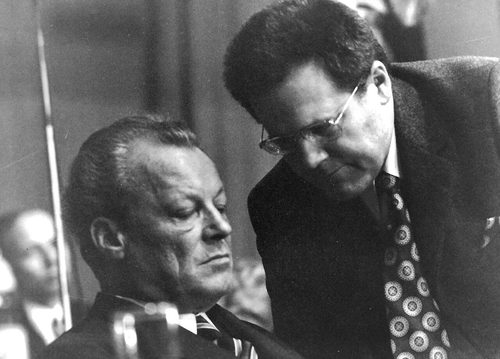 1956 – 6 May 1974
The Guillaume affair
An East German intelligence officer, planted in the West in 1956, rose to become an aide to Chancellor Willy Brandt. His arrest in April 1974 was followed two weeks later by Brandt's resignation.
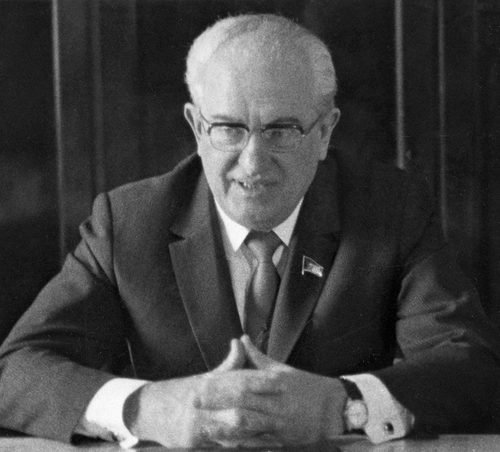 May 1981 – April 1989
Operation RYAN
The KGB–GRU intelligence alert launched in May 1981 to detect a feared American nuclear first strike, its indicator lists, and the long argument over whether Moscow's fear was real.
17 July 1983 – 1989
Operation INFEKTION
The 1980s KGB and Stasi campaign to persuade the world that the US military had created AIDS at Fort Detrick: how the story was planted, spread and disowned, and what its codename really was.
People
Sources
- Other What was the State Security? Introduction, Federal Archives, Stasi Records Archive.
- Other The Founding of the MfS, Federal Archives, Stasi Records Archive.
- Other The Unofficial Collaborators of the MfS, Federal Archives, Stasi Records Archive.
- Other The Reconstruction of Torn Documents, Federal Archives, Stasi Records Archive.
- Other Hauptverwaltung A (HV A) (glossary), Bundesarchiv, Stasi-Unterlagen-Archiv.
- FRUS Foreign Relations of the United States, 1969–1976, Volume E–15, Part 2, Documents on Western Europe, 1973–1976, Document 279, US Department of State, Office of the Historian (1974-05-07).
- Other Legal Basis (Stasi Records Act), Federal Archives, Stasi Records Archive.
- Wikipedia Stasi, Wikipedia.
- Wikipedia English Wikipedia article (used for cross-checking).
Elsewhere in the files
- Agency Gehlen Organization and BND
- Agency KGB
- Agency StB (Czechoslovak State Security)
- Document Kissinger to Nixon on Brandt's fall: the blackmail reports (May 1974)
- Operation Operation INFEKTION
- Operation Operation Neptune (1964)
- Operation Operation RYAN
- Operation The Guillaume affair
- Person Erich Mielke
- Person Günter Guillaume
- Person Markus Wolf
- Tradecraft Surveillance and countersurveillance