
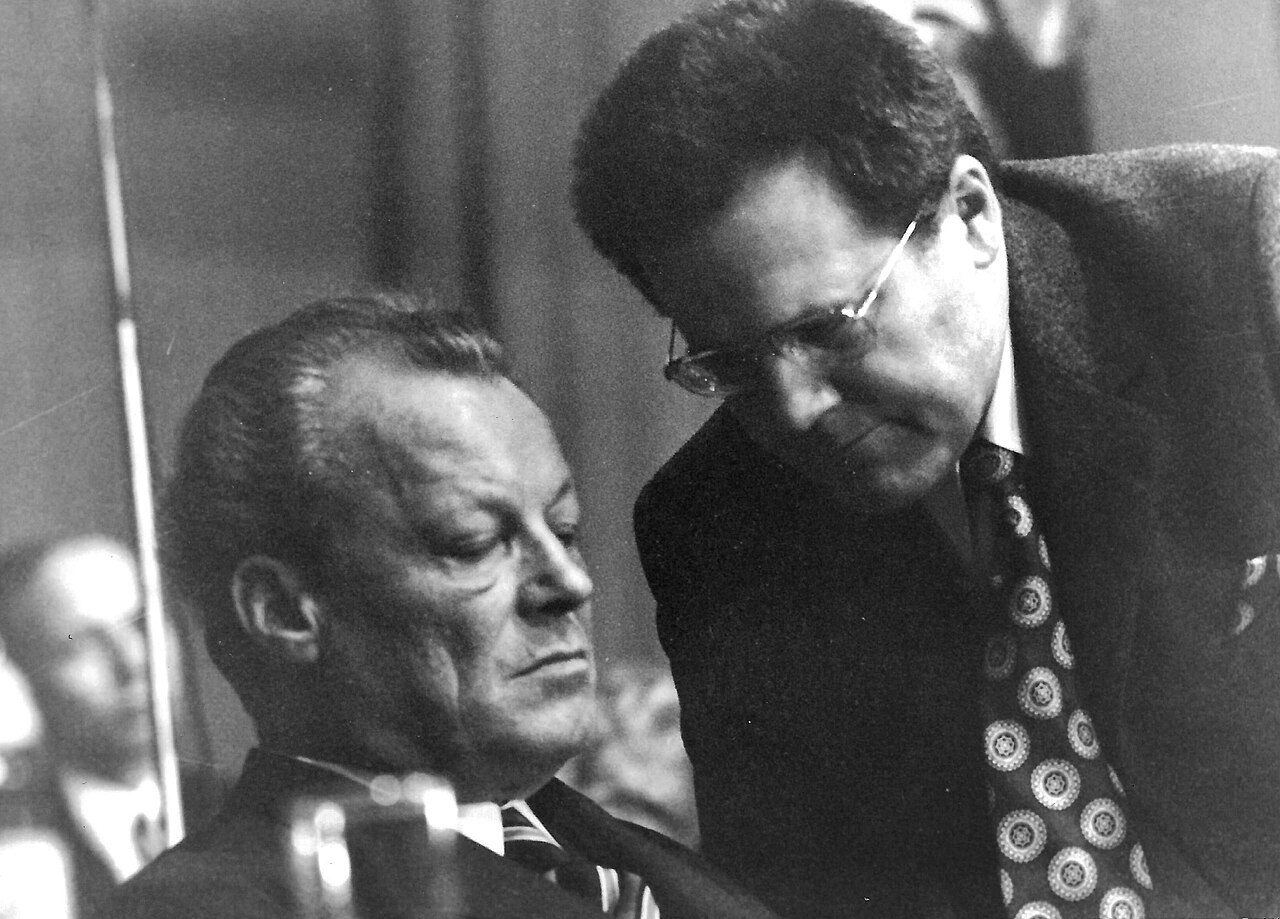

On 8 April 1974 a government photographer took a picture of Chancellor Willy Brandt on a campaign trip in Lower Saxony. Just behind him, in dark glasses, stood his party aide, Günter Guillaume. Sixteen days later Guillaume and his wife Christel were arrested at their flat in Bonn. He told the officers he was an officer of East Germany's army and an employee of its Ministry for State Security5,4.
Planted in 1956
The Stasi's foreign intelligence service, the HV A, trained the Guillaumes in the 1950s as fake refugees. Its records list Günter under the codename "Hansen" from 9 September 1954 and Christel as "Heinze" from 30 October 1958. In 1956 they moved to Frankfurt am Main, posing as people fleeing the East, and in 1957 joined the Social Democratic Party (SPD). Their brief, according to the Bundesarchiv, was "integration and reconnaissance of the SPD"3,4.
Günter made a career in the Frankfurt party organization. In 1969 he worked on the election campaign of Georg Leber, the federal transport minister, who recommended him for a post in the Federal Chancellery as liaison to the trade unions and parties4,3.
Into the Chancellery
His security check produced doubts from the Federal Criminal Police and from the BND. Horst Ehmke, head of the Chancellery, interviewed him and was satisfied; Guillaume was hired with effect from 1 January 1970. In 1972 he became Brandt's party aide, handling the chancellor's dealings with the SPD, and traveled with him4,3.
At the end of May 1973 Interior Minister Hans-Dietrich Genscher told Brandt that the Federal Office for the Protection of the Constitution suspected Guillaume of spying. Its president, Günther Nollau, proposed leaving him in place under observation to gather evidence. For almost a year he stayed in his post and kept his access to classified papers; the Chancellery files include a telex of 4 July 1973 sent to Guillaume with secret information for Brandt4.
What he passed
Most HV A files were destroyed in 1990, but the service's computerized registers, decoded by archivists in the 1990s, record what came from "Hansen." Between 30 July 1969 and 8 April 1974 he supplied 23 reports on internal SPD matters, 12 on government policy and nine on trade union questions. The Bundesarchiv's verdict is that he was no top-level source3.
Resignation
Brandt decided to resign on Sunday 5 May 1974 and sent his letter to the federal president on 6 May. American diplomats in Bonn, drawing on people close to him, reported that he saw the spy affair as "simply the last factor" in a bad situation: poor local election results, inflation, trouble with the party's youth wing, and foreign policy that was not succeeding. What decided him, one source said, was not the spy case itself but a feeling of "loneliness and non-support" from colleagues1,2. Helmut Schmidt succeeded him on 16 May; Brandt remained chairman of the SPD2,7.
Trial and exchange
The trial before the Düsseldorf Higher Regional Court ended on 15 December 1975. Günter Guillaume was sentenced to 13 years and Christel to eight, for treason. Brandt appeared as a witness4,3. A government commission on preventive security reported on the failures in November 1974, and a Bundestag investigating committee examined the case4.
Both were released early in 1981 and went to East Germany, where the Stasi celebrated them in a two-hour film, Auftrag erfüllt ("Mission accomplished"). Privately the Ministry had to explain the failure to the party leadership. Brandt's fall had damaged East Berlin's own policy toward Bonn; according to the last HV A chief, Werner Grossmann, Erich Honecker afterward asked Mielke to switch off other spies in the Chancellery so that no second case could spoil his hopes of a state visit to West Germany3.
The documents
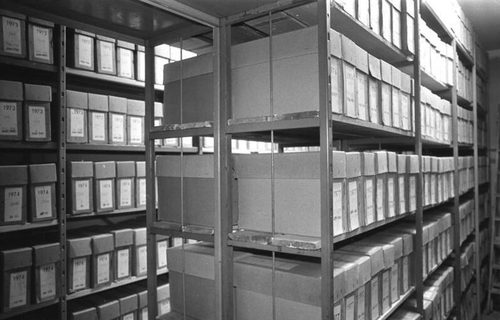
Declassified records of this operation.
Checking the record
Dates and outcome compared in two independent sources: they agree.
- FRUS
- Brandt resigned on 6 May 1974 and was succeeded by Helmut Schmidt on 16 May (editorial note to the document). Brandt left office after the Guillaume spy case; reports of possible blackmail circulated in the German press.
- Wikipedia
- Guillaume arrested 24 April 1974; Brandt resigned 6 May 1974. Brandt resigned as chancellor but remained SPD chairman; Guillaume was exchanged to East Germany in 1981.
Dates and outcome agree. The German Historical Institute's caption gives 7 May 1974 for the resignation; Brandt's letter went to the federal president late on 6 May and was announced the next day. This page uses 6 May, as FRUS does.
Sources
- FRUS Foreign Relations of the United States, 1969–1976, Volume E–15, Part 2, Documents on Western Europe, 1973–1976, Document 279, US Department of State, Office of the Historian (1974-05-07).
- FRUS Foreign Relations of the United States, 1969–1976, Volume E–15, Part 2, Documents on Western Europe, 1973–1976, Document 280, US Department of State, Office of the Historian (1974-05).
- Other Die Affäre Guillaume, Bundesarchiv, Stasi-Unterlagen-Archiv.
- Other Günter Guillaume – der Spion, den niemand stoppte (Geschichtsgalerie), Bundesarchiv.
- Other The Guillaume Affair (April/May 1974), German History in Documents and Images, German Historical Institute Washington.
- Other Former East German spy chief dies, BBC News (2006-11-09).
- Wikipedia Guillaume affair, Wikipedia.
- Wikipedia English Wikipedia article (used for cross-checking).
Elsewhere in the files
Read next
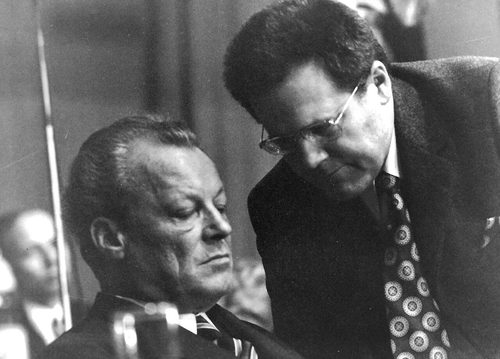 1927–1995
Günter Guillaume
East German intelligence officer who posed as a refugee, rose through the Social Democratic Party and became an aide to Chancellor Willy Brandt. Convicted of treason in 1975, he was returned to East Germany in 1981.
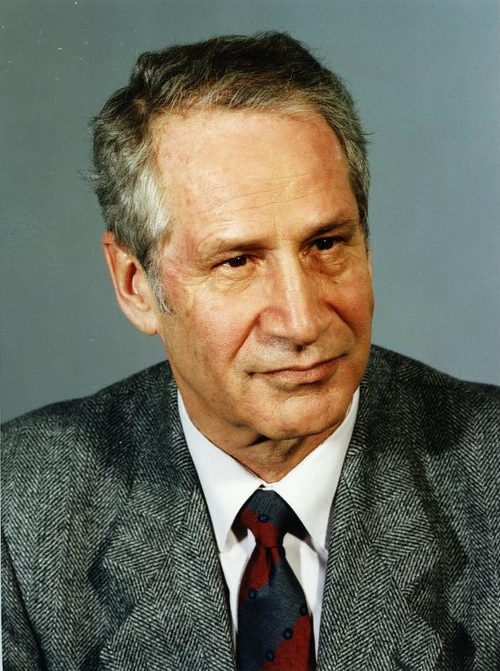 1923–2006
Markus Wolf
Head of East Germany's foreign intelligence service, the HV A, for more than three decades. The West had no usable photograph of him until 1978. After unification he was convicted of treason, a verdict later quashed.
 East Germany · 1950–1990
Stasi (Ministry for State Security)
East Germany's secret police and foreign intelligence service, 1950 to 1990: by the end 91,000 staff and 189,000 informers, answerable only to the ruling party, with a spy placed beside Willy Brandt.
 West Germany · 1946
Gehlen Organization and BND
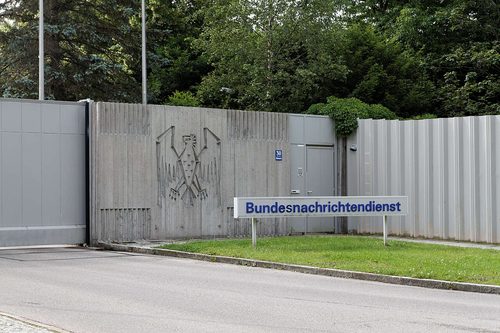
West Germany's foreign intelligence service grew out of a network run for the US Army and the CIA by Hitler's Eastern Front intelligence chief. It hired former SS men, and the KGB penetrated it deeply.
 1920s–1980s
Illegals and legends
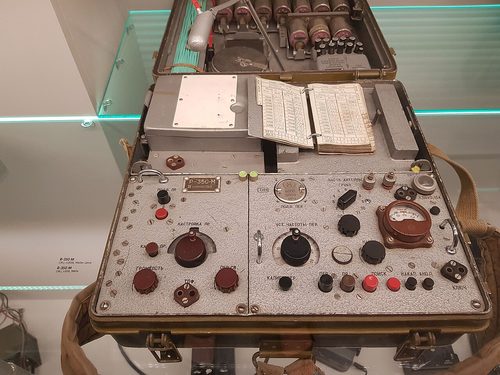
Soviet officers who lived abroad as private citizens under borrowed identities, with no diplomatic protection. The Abel and Portland court records show how their legends were built and how they came apart.