
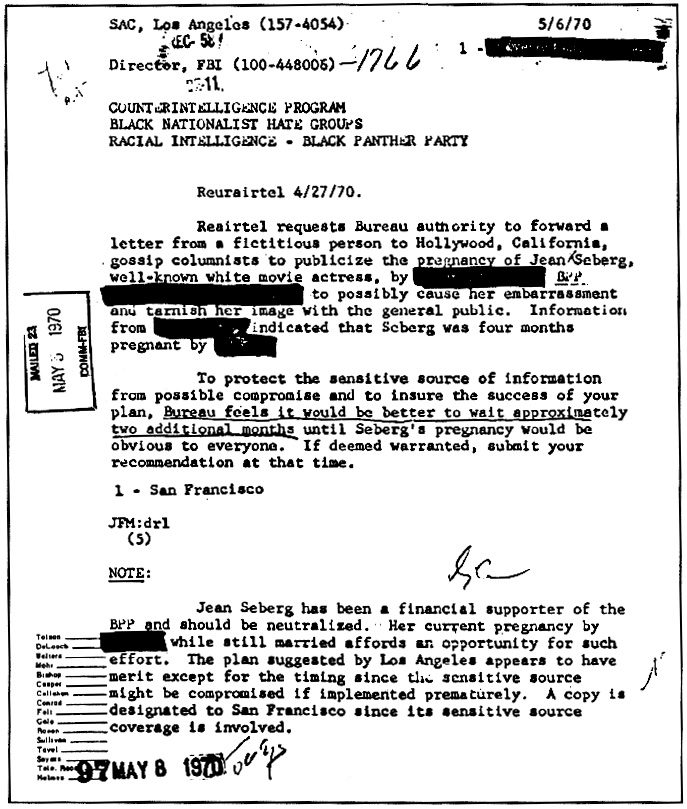
The word itself was the giveaway. On the night of 8 March 1971 a group calling itself the Citizens' Commission to Investigate the FBI broke into the Bureau's small resident office in Media, Pennsylvania, and carried away its files. Copies went to newspapers and members of Congress. Some carried a routing caption nobody outside the Bureau had seen before: COINTELPRO1,6.
An NBC reporter sued under the Freedom of Information Act to find out what it meant. The FBI decided "for security reasons" to end the programs, and on 28 April 1971 headquarters told its field offices they were over1. Five years later the Senate's Church Committee published what they had been.
Counterintelligence turned inward
COINTELPRO stood for "counterintelligence program." The Committee called that a misnomer. Counterintelligence meant protecting against hostile spies; COINTELPRO took techniques the FBI had used against foreign agents and turned them on American citizens. The better term, the Committee wrote, was "covert action," and its report put the purpose bluntly: the Bureau "went beyond the collection of intelligence to secret action designed to 'disrupt' and 'neutralize' target groups and individuals"1.
The first program began in August 1956, against the Communist Party of the United States. Bureau officials told the Committee they had acted partly out of frustration after Supreme Court rulings made Smith Act prosecutions of party members nearly impossible. Four more programs followed: the Socialist Workers Party (1961–1969), "White Hate Groups" such as the Ku Klux Klan (1964–1971), "Black Nationalist-Hate Groups" (1967–1971) and the "New Left" (1968–1971)1.
The labels hid how far the targeting spread. The nonviolent Southern Christian Leadership Conference was filed as a Black Nationalist "Hate Group." No one at the Bureau could define the New Left; its supervisor called it "more or less an attitude," and its targets ran from Students for a Democratic Society to all of Antioch College1. The FBI's own published history now describes the programs as "rightfully criticized" for abridging First Amendment rights, while adding that they made up about two-tenths of one percent of its investigative workload3.
What the files showed
The Committee's staff read more than 20,000 pages of Bureau documents. The FBI had approved 2,370 actions out of 3,247 proposed, more than half of them against the Communist Party. They ranged, the report said, "from the trivial (mailing reprints of Reader's Digest articles to college administrators) to the degrading (sending anonymous poison-pen letters intended to break up marriages) and the dangerous (encouraging gang warfare and falsely labeling members of a violent group as police informers)"1.
Other entries in the record included contacting employers to get targets fired, feeding derogatory information to friendly reporters, and asking the Internal Revenue Service to audit a professor to distract him from politics. At least four assaults were reported to headquarters as "results." The supervisor of one program, asked whether the absence of deaths from false informant labels was luck or planning, answered: "Oh, it just happened that way, I am sure"1.
William C. Sullivan, who had run the Domestic Intelligence Division, gave the Committee the program's working creed:
This is a rough, tough, dirty business, and dangerous. It was dangerous at times. No holds were barred.
That testimony is quoted in1.
King and the Panthers
The Committee published separate case studies of two targets. Against Martin Luther King Jr. the FBI waged a campaign it planned at a headquarters conference in December 1963. In November 1964, on orders that Sullivan said came from Hoover and his deputy Clyde Tolson, an agent flew to Florida and mailed King a composite tape from hotel-room microphones with an anonymous letter. King took the package as an attempt to drive him to suicide1.
Against the Black Panther Party, field offices worked to deepen a feud with a rival Los Angeles group, US, in which Panthers were killed. In Chicago an FBI informant gave the Bureau a floor plan of an apartment used by party members, and the FBI passed it to local authorities before the police raid of 4 December 1969 that killed the local party chairman, Fred Hampton, and another member. A Bureau memorandum credited the informant's information as the basis of the raid1.
Who knew
Secrecy was a rule of the programs. Orders warned that "under no circumstances should the existence of the program be made known outside the Bureau," and anonymous letters had to be typed on commercially bought paper. In May 1958 Hoover told President Eisenhower's national security assistant and the Attorney General that the Bureau had in August 1956 begun "a program designed to promote disruption" within the Communist Party, but described only informants and anonymous mailings1.
Aftermath
A Justice Department committee under Assistant Attorney General Henry Petersen reviewed the programs in 1974; Attorney General William Saxbe called most of the activity "legitimate," and the FBI Director, Clarence Kelley, defended it. The Church Committee disagreed. Its report found that the Bureau had conducted "a sophisticated vigilante operation aimed squarely at preventing the exercise of First Amendment rights of speech and association"1.
In 1976 Attorney General Edward Levi issued guidelines limiting domestic security investigations to groups breaking the law or engaging in violence. By the FBI's own count, its domestic security cases fell from over 21,000 in 1973 to 626 by September 19764. The FBI has since put large parts of the program files in its online reading room5.
The documents
Declassified records of this operation, with the scans and their full text hosted here.

Checking the record
Dates and outcome compared in two independent sources: they agree.
- Congress
- Program begun in August 1956 (Belmont memorandum of 28 August 1956); all programs terminated 27–28 April 1971. 2,370 actions approved across five programs; ended because of the threat of public exposure after the Media break-in.
- Wikipedia
- 1956 to 1971; secret until the Media, Pennsylvania, burglary of 8 March 1971. Exposed by the burglary and investigated by the Church Committee; formally ended in 1971.
Dates and outcome agree. Wikipedia goes further than the Committee on the Black Panthers, describing some deaths as assassinations; this page follows the Committee's documented findings and marks the Hampton question as contested.
Sources
- Congress Final Report of the Select Committee to Study Governmental Operations with Respect to Intelligence Activities, Book III (S. Rep. 94-755): 'COINTELPRO: The FBI's Covert Action Programs Against American Citizens' and related staff reports, US Senate, digitized by the Internet Archive (1976-04).
- Congress Church Committee Final Report, Book III (PDF), US Senate Select Committee on Intelligence (1976-04).
- FBI And Justice for All, 1954–1971 (A Brief History of the FBI), Federal Bureau of Investigation, archived by the Wayback Machine.
- FBI Crime and Corruption Across America, 1972–1988 (A Brief History of the FBI), Federal Bureau of Investigation, archived by the Wayback Machine.
- FBI COINTELPRO (FBI Records: The Vault), Federal Bureau of Investigation.
- Wikipedia COINTELPRO, Wikipedia.
- Wikipedia Fred Hampton, Wikipedia.
- Wikipedia English Wikipedia article (used for cross-checking).
Elsewhere in the files
- Agency Federal Bureau of Investigation (FBI)
- Document The FBI letter that opened COINTELPRO against black nationalist groups (1967)
- Document The Rockefeller Commission on Operation CHAOS (1975)
- Operation Operation CHAOS
- Operation Operation Shamrock
- Operation Project Minaret
- Person Frank Church
- Person J. Edgar Hoover
- Tradecraft Surveillance and countersurveillance
Read next
 United States · 1908
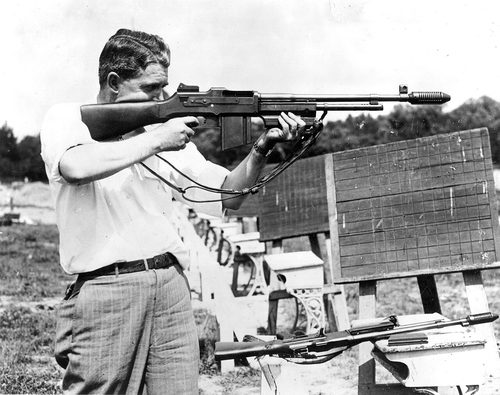
Federal Bureau of Investigation (FBI)
The US Justice Department's investigative service, founded in 1908: chief hunter of foreign spies at home from the 1930s, and under J. Edgar Hoover the author of secret domestic programs exposed in the 1970s.
 1895–1972
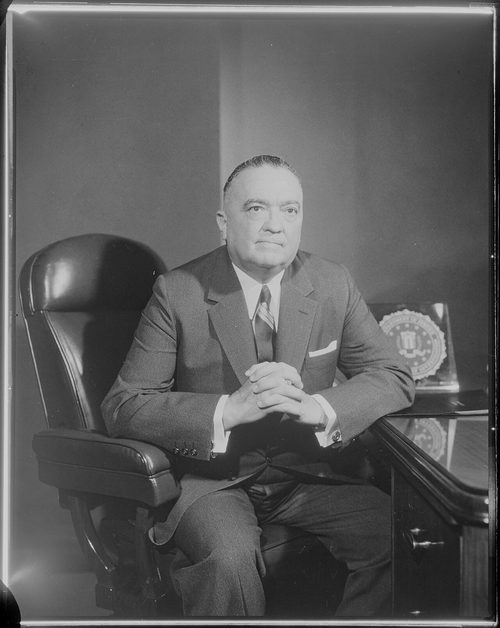
J. Edgar Hoover
Director of the Bureau of Investigation and then the FBI for 48 years, from 1924 until his death in 1972. He built a modern police agency and a secret domestic intelligence apparatus that the Senate later condemned.
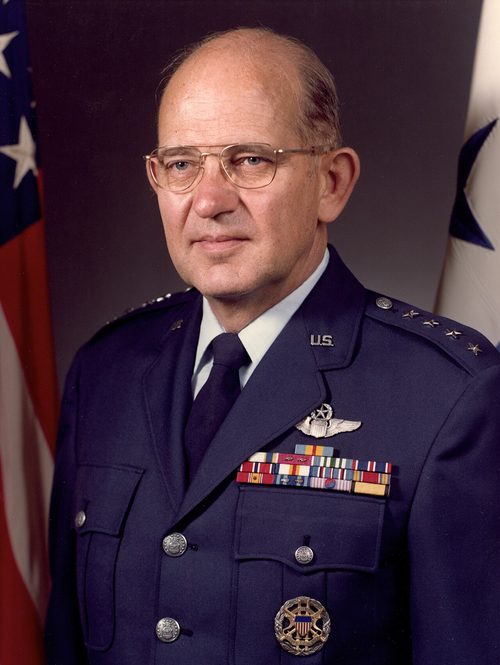 20 October 1967 – October 1973
Project Minaret
From 1967 to 1973 the NSA searched international communications for the names of Americans supplied by the FBI, CIA and Secret Service, among them Martin Luther King Jr., Muhammad Ali and two sitting senators.
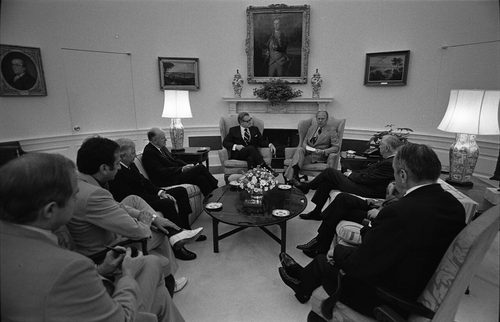 15 August 1967 – 5 March 1974
Operation CHAOS
Pressed by two presidents to prove that foreign communists were behind the antiwar movement, the CIA built files on 7,200 Americans from 1967 to 1974 and kept finding no such proof.
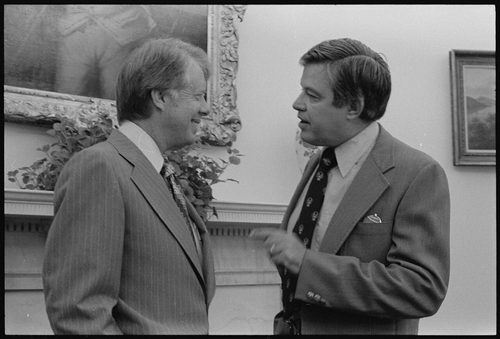 1924–1984
Frank Church
Idaho senator who chaired the 1975–76 Senate investigation of the CIA, FBI and NSA. His committee exposed assassination plots, COINTELPRO and Shamrock, and led to permanent intelligence oversight.
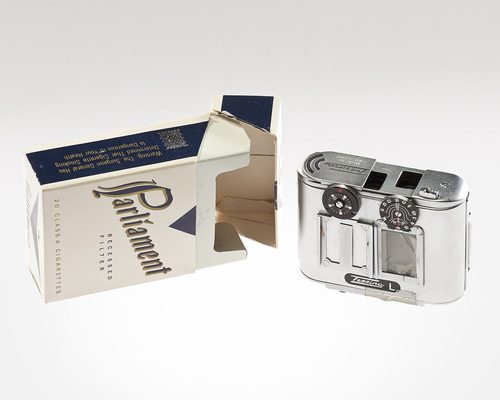 1940s–1990s
Surveillance and countersurveillance
Watching people was the core of Cold War counterintelligence, from MI5's watchers in the Portland case to KGB teams trailing CIA officers in Moscow, and the Church Committee exposed its abuse at home.