
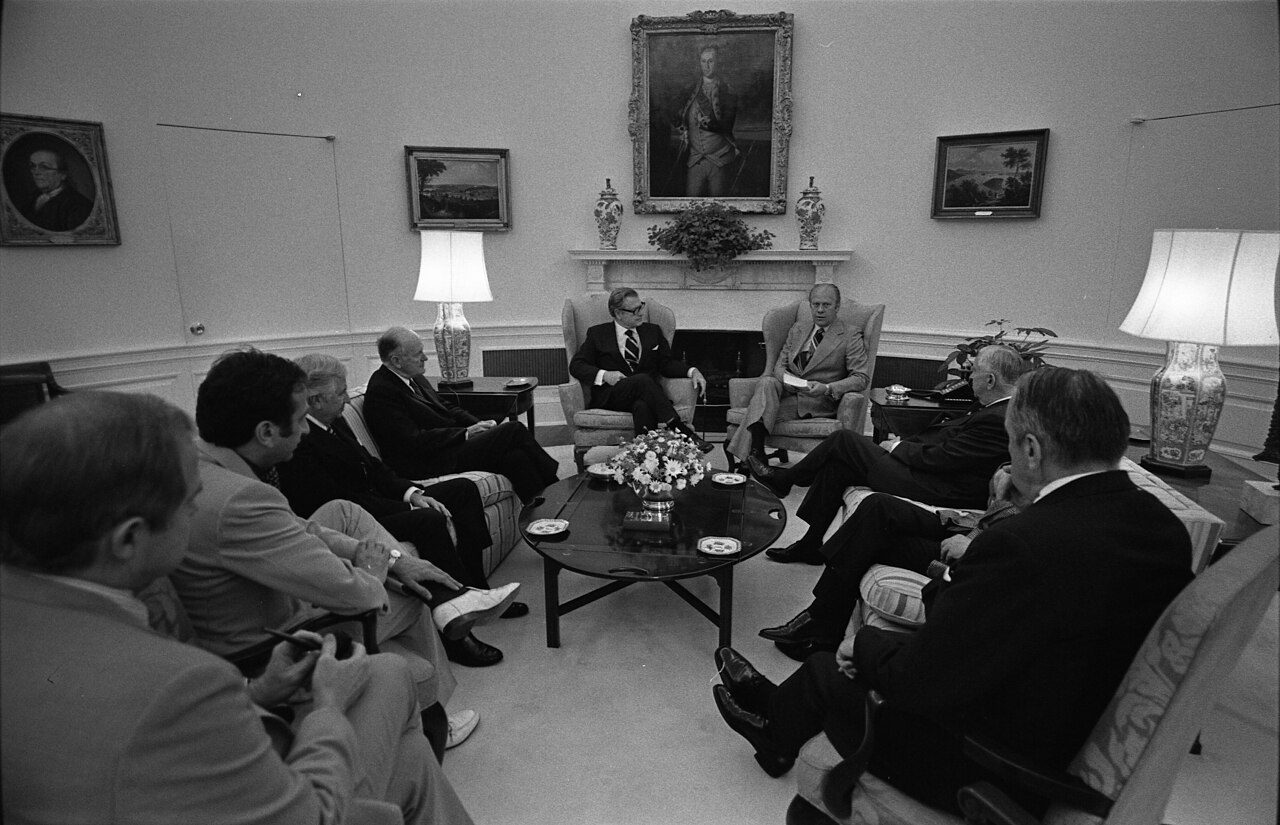

The White House kept asking the CIA the same thing: whether foreign communists were behind the riots and the antiwar movement. Lyndon Johnson wanted to know, and so, after him, did Richard Nixon. The CIA's answer was, repeatedly, that they were not. Operation CHAOS was what the Agency built while trying to prove its answer to men who did not believe it1,2.
A desk for "foreign connections"
On 15 August 1967, a month after Johnson set up the Kerner Commission on the summer's riots, the CIA's Deputy Director for Plans, Thomas Karamessines, told the chief of the Counterintelligence Staff, James Jesus Angleton, to set up an operation covering "subversive student activities" overseas. Director Richard Helms testified that he acted under "continuing, substantial pressure" from the President, and an FBI memorandum from the time reported that "the White House recently informed Richard Helms" that the CIA should make "every possible effort" to learn about American "racial agitators" who travelled abroad2.
Angleton chose Richard Ober to run what became the Special Operations Group. Ober had spent that year looking for foreign links to Ramparts magazine, which had exposed CIA ties to American student and youth organizations, and had already begun a computer index of American activists1.
The answer nobody wanted
The first product was a study, "International Connections of the United States Peace Movement," which Helms handed to Johnson on 15 November 1967. It found little evidence of foreign involvement and no evidence of significant foreign funding. A 1968 study, "Restless Youth," reached the same conclusion: student radicalism came from alienation at home, not from conspiracy abroad. When Helms sent it to Henry Kissinger in February 1969 he warned that the section on American students was "an area not within the charter of this Agency," adding that "should anyone learn of its existence it would prove most embarrassing for all concerned"2.
In mid-1968 the group received its cryptonym, CHAOS (in full MHCHAOS), and all reporting on dissidents was routed to it in a single "Eyes Only" channel. On 20 June 1969 a Nixon aide, Tom Charles Huston, wrote that the President wanted to know what gaps in coverage existed and how to fill them. The CIA replied on 30 June that it had found "very little evidence" of communist direction2.
Both commissions that later examined the program drew the same lesson. Each negative report brought demands for more coverage, and the Agency added staff and agents to prove that its findings were sound. The staff grew to 52 by 19711,2.
What it collected
The Rockefeller Commission gave the totals. In six years CHAOS compiled about 13,000 files, 7,200 of them on American citizens, and entered the names of more than 300,000 people and organizations in a computer index. Its staff wrote 3,500 memoranda for internal use, 3,000 for the FBI and 37 for the White House and other senior officials2.
Most of the material came from the FBI or from public sources. CHAOS also drew on CIA stations abroad, on the Agency's own mail-opening program, and on intercepts from the NSA's watch lists, later known as Project Minaret1. From late 1969 it recruited agents from American dissident groups, or placed recruits in them, to build "credentials" for work overseas. Most were not told to report on Americans at home, but some did, and on three occasions agents were sent to collect purely domestic information. The Rockefeller Commission found no evidence that CHAOS used wiretaps or break-ins in the United States2.
The CIA kept the operation walled off even inside its own building. The Inspector General's survey team was not allowed to see CHAOS files in 1972; station officers abroad told it they were uneasy at being asked to report on the movements of prominent Americans who were suspected of nothing1.
Winding down and exposure
With the protest movement fading, CHAOS was told in 1972 to put terrorism first. In August 1973 William Colby, newly Director, restricted it to foreign targets, and on 5 March 1974 he ended it by cable1. CHAOS was by then one of the entries in the CIA's internal list of questionable activities, the "Family Jewels," compiled on James Schlesinger's orders in 19731,3.
On 22 December 1974 the New York Times reported a "massive" CIA domestic operation against the antiwar movement. President Ford set up a commission under Vice President Nelson Rockefeller on 4 January 1975, and the Senate created the Church Committee later that month2,5,6.
The verdict
The Rockefeller Commission concluded in June 1975 that "some domestic activities of Operation CHAOS unlawfully exceeded the CIA's statutory authority," even though the stated aim of looking for foreign influence was proper. It blamed the pressure from two presidents and the group's isolation from the normal chain of command, and recommended that presidents "refrain from directing the CIA to perform what are essentially internal security tasks"2. The Church Committee's staff went further, arguing that for the citizen the question was not which agency kept a file on his politics but whether any should1.
The documents
Declassified records of this operation, with the scans and their full text hosted here.
 May 1973 · 148 p.The "Family Jewels" (1973)CIA offices and senior officials, reporting to the Director of Central Intelligence under James R. Schlesinger's directive of 9 May 1973The CIA's own 1973 inventory of activities that might have broken its charter, from mail opening and wiretaps on reporters to plots against Castro. Kept secret for 34 years, it was released in June 2007.
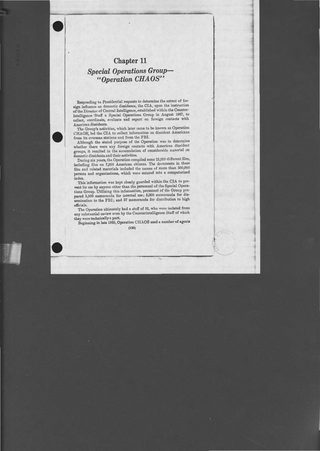 6 June 1975 · 21 p.The Rockefeller Commission on Operation CHAOS (1975)Commission on CIA Activities within the United States (chairman: Vice President Nelson A. Rockefeller)Chapter 11 of the 1975 Rockefeller Commission report: the first official account of the CIA's Special Operations Group, its 13,000 files and 300,000-name index, and its finding that CHAOS broke the CIA's charter.
Checking the record
Dates and outcome compared in two independent sources: they agree.
- Official history
- Special Operations Group established August 1967; activity reduced by mid-1972; formally terminated March 1974. Some 13,000 files, 7,200 on American citizens; 300,000 names indexed; some activities 'unlawfully exceeded the CIA's statutory authority'.
- Wikipedia
- 1967 to 1974 (the article also says it had 'been closed in 1973'). Files on 7,200 Americans and an index of 300,000 people; exposed by the New York Times in 1974; led to the Rockefeller Commission.
Figures and outcome agree. Wikipedia is internally inconsistent on the end date; this page follows the Church Committee, which quotes Colby's termination cable of 5 March 1974. Wikipedia's staff figure of 60 differs from the Rockefeller Commission's maximum of 52, which this page uses.
Sources
- Congress Final Report of the Select Committee to Study Governmental Operations with Respect to Intelligence Activities, Book III (S. Rep. 94-755): 'CIA Intelligence Collection About Americans: CHAOS and the Office of Security', US Senate, digitized by the Internet Archive (1976-04).
- Official history Report to the President by the Commission on CIA Activities Within the United States, Chapter 11: Special Operations Group, 'Operation CHAOS', Commission on CIA Activities Within the United States (Rockefeller Commission), digitized by the Internet Archive (1975-06).
- National Security Archive The CIA's Family Jewels (Electronic Briefing Book 222), National Security Archive (2007-06-26).
- CIA Family Jewels collection, Central Intelligence Agency, FOIA Reading Room (2007-06-25).
- Official history Senate Select Committee to Study Governmental Operations with Respect to Intelligence Activities, United States Senate, Historical Office.
- Wikipedia Operation CHAOS, Wikipedia.
- Wikipedia English Wikipedia article (used for cross-checking).
Elsewhere in the files
- Agency Central Intelligence Agency (CIA)
- Document The "Family Jewels" (1973)
- Document The Church Committee's report on the NSA: 'National Security Agency Surveillance Affecting Americans' (1976)
- Document The FBI letter that opened COINTELPRO against black nationalist groups (1967)
- Document The Rockefeller Commission on Operation CHAOS (1975)
- Operation COINTELPRO
- Operation Operation Holystone
- Operation Operation Shamrock
- Operation Project MKUltra
- Operation Project Minaret
- Operation Project Mockingbird (1963)
- Operation The Phoenix Program
- Person Frank Church
- Person James Jesus Angleton
- Person Richard Helms
- Person William Colby
Read next
 August 1956 – 28 April 1971
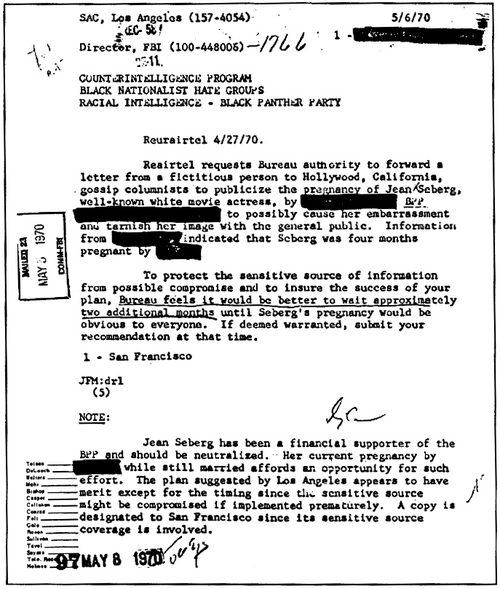
COINTELPRO
From 1956 to 1971 the FBI ran secret programs to 'disrupt' and 'neutralize' American political groups, from the Communist Party and the Klan to civil rights and antiwar organizations. A burglary in 1971 exposed them.
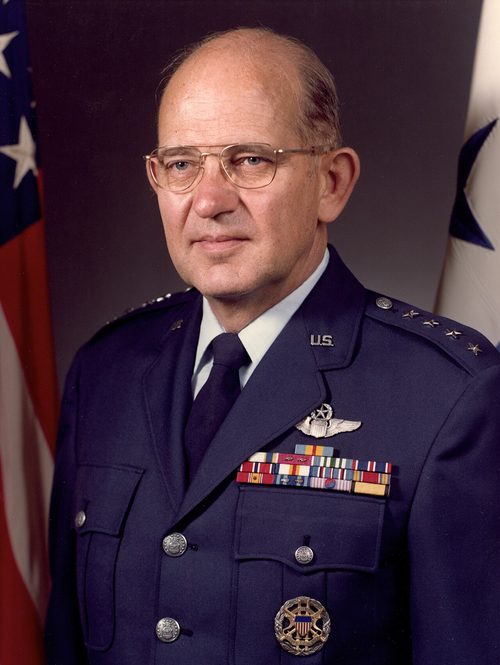 20 October 1967 – October 1973
Project Minaret
From 1967 to 1973 the NSA searched international communications for the names of Americans supplied by the FBI, CIA and Secret Service, among them Martin Luther King Jr., Muhammad Ali and two sitting senators.
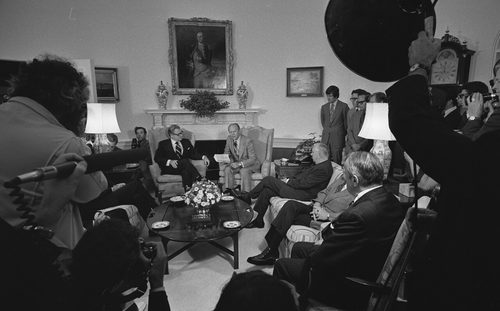 May 1973
The "Family Jewels" (1973)
The CIA's own 1973 inventory of activities that might have broken its charter, from mail opening and wiretaps on reporters to plots against Castro. Kept secret for 34 years, it was released in June 2007.
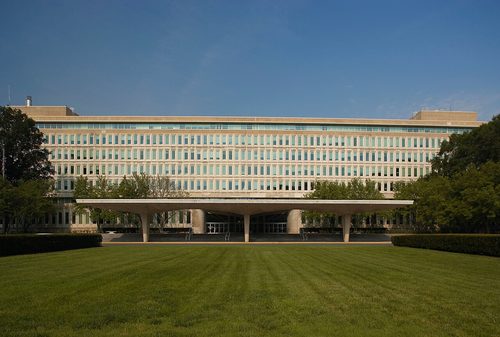 United States · 1947
Central Intelligence Agency (CIA)
The US civilian intelligence service, created by the National Security Act of 1947 to coordinate foreign intelligence, which within a year also became Washington's instrument for covert action.
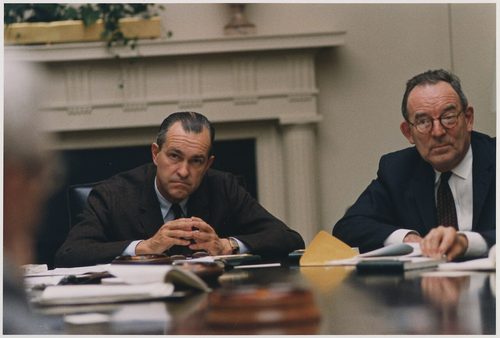 1913–2002
Richard Helms
A career clandestine officer who rose from OSS to Director of Central Intelligence (1966–73), Richard Helms ran the CIA through Vietnam and Chile and later became the only DCI convicted over testimony to Congress.
 1917–1987
James Jesus Angleton
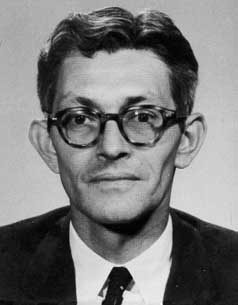
CIA counterintelligence chief from 1954 to 1974. A poetry editor turned molehunter, he ran the Agency's mail-opening program, distrusted Soviet defectors and was forced out after the revelations of 1974.