
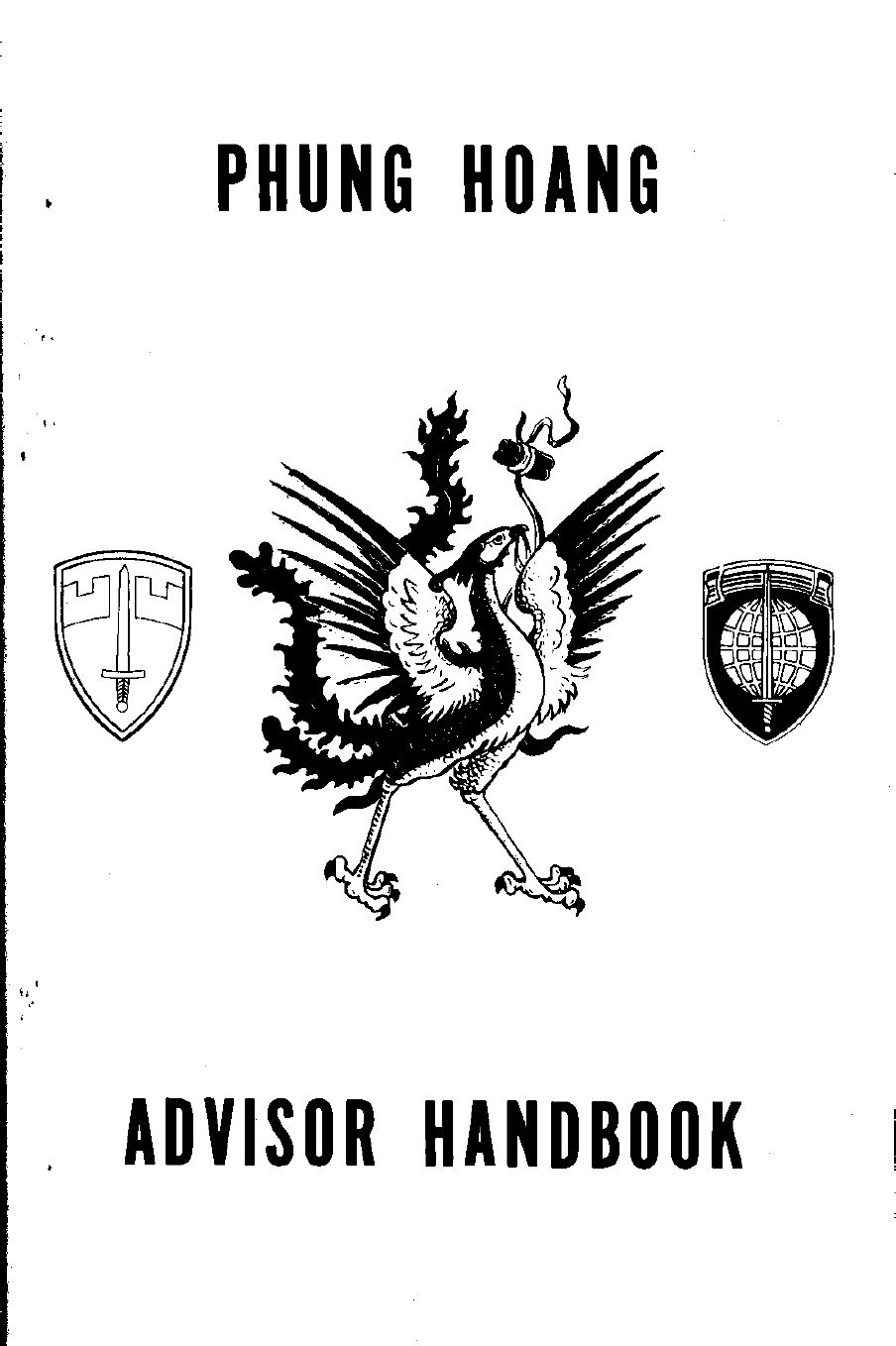
By 1967 American officials in Saigon had concluded that killing Viet Cong soldiers was not enough. Behind the guerrillas stood a clandestine political organization, the "Viet Cong infrastructure," of tax collectors, recruiters, propagandists and party committees in the villages. Phoenix was the program built to find and remove it2,4.
Origins
On 9 May 1967 all American pacification work in South Vietnam was placed under a new organization, Civil Operations and Revolutionary Development Support (CORDS). In June 1967 CORDS created the Intelligence Coordination and Exploitation program, ICEX, to pool what the many American and Vietnamese agencies knew about the infrastructure. In December 1967 the South Vietnamese prime minister decreed a matching Vietnamese program, Phung Hoang, after a mythical bird; the Americans called it Phoenix4.
The structure was a network of intelligence and operations centers at province and district level, where police, military and intelligence officers were to compile dossiers on named cadres and act on them. A 1968 CIA paper describes Phoenix, "formerly called ICEX," as having district centers "scattered throughout South Vietnam" and setting priorities in order: "defection in place, inducement to rally, capture," with killing last1. William Colby, formerly the CIA's Far East chief, was sent back to Saigon in 1968 as deputy to Robert Komer and soon succeeded him as head of CORDS, which made him responsible for Phoenix5.
The PRUs
The sharpest instrument was the Provincial Reconnaissance Units, local paramilitary teams paid and administratively controlled by the CIA. A December 1969 review for the 303 Committee, the White House covert-action panel, gives a rare inside view. About 4,200 PRU men operated in 44 provinces in teams of 15 to 20, advised by 101 US military advisers and seven CIA officers. In fiscal year 1969, the review said, PRU operations "resulted in the capture of 12,140 cadre and guerrillas and the killing of 6,112." In August 1969 the Phoenix program as a whole "killed or captured 1,381 communist cadre," of whom the PRUs accounted for 2073.
The same paper was frank about the risks. Its purpose, it said, was "to balance the results of the PRU program, and its anticipated effectiveness, against the potential for political embarrassment which it represents"3.
Results
The CIA's own assessments were mixed. In December 1968 the Saigon station reported that the attack on the infrastructure had made "encouraging progress, but has not yet produced a significant reduction of the Communists' ability to carry out essential activities." Losses had not "unduly hampered its functioning," and government intelligence on the cadres thinned out "as one gets further from the secure urban areas"2. The station's remedies were more South Vietnamese command attention, better personnel and training, and more emphasis on "targeted operations"2.
Official statistics later credited Phoenix with "neutralizing" 81,740 suspected members of the infrastructure between 1968 and 1972: captured, persuaded to defect, or killed. Of these, 26,369 were recorded as killed, and most of the deaths were attributed to ordinary military operations rather than Phoenix teams4. Phoenix set monthly "neutralization" quotas to prod reluctant Vietnamese officials; they often led instead to fabricated figures and false arrests, and some officials took bribes to release suspects4.
Wind-down
From 1970 the CIA's role was phased out and the program placed fully under CORDS. Phoenix officially ended in December 1972, though parts of it continued until the fall of Saigon in 19754. Colby left Saigon in 1971 and returned to CIA headquarters, becoming Director of Central Intelligence in 19735.
Phoenix grew out of earlier CIA efforts, notably the Counter-Terror teams of the mid-1960s, which by April 1965 numbered 140 and were later renamed Provincial Reconnaissance Units4. The CIA was fighting a parallel irregular war next door (The secret war in Laos).
The documents
Declassified records of this operation, with the scans and their full text hosted here.

Checking the record
Dates and outcome compared in two independent sources: they agree.
- FRUS
- Program in operation by 1968; reviewed by the 303 Committee in December 1969 In August 1969 the program as a whole 'killed or captured 1,381 communist cadre'; the CIA judged it effective but politically risky.
- Wikipedia
- ICEX created June 1967; Phung Hoang decree December 1967; program ran 1968–1972 81,740 'neutralized', of whom 26,369 were killed, by official figures; CIA responsibility phased out from 1970.
The sources agree on the program's span and purpose. FRUS gives partial contemporary figures, Wikipedia the official cumulative totals, which are disputed; this page marks the totals as contested.
Sources
- FRUS FRUS, 1964–1968, volume VI, Vietnam, Document 296: CIA Programs to Induce Desertions and Defections in South Vietnam (1968), US Department of State, Office of the Historian (1968).
- FRUS FRUS, 1964–1968, volume VII, Vietnam, Document 256: Editorial Note on the CIA Saigon Station's assessment of Phoenix, December 1968, US Department of State, Office of the Historian (2003).
- FRUS FRUS, 1969–1976, volume VI, Vietnam, Document 157: Memorandum for the 303 Committee, The Provincial Reconnaissance Unit Program in Vietnam, 11 December 1969, US Department of State, Office of the Historian (1969-12-11).
- Wikipedia Phoenix Program, Wikipedia.
- Wikipedia William Colby, Wikipedia.
- Wikipedia English Wikipedia article (used for cross-checking).
Elsewhere in the files
Read next
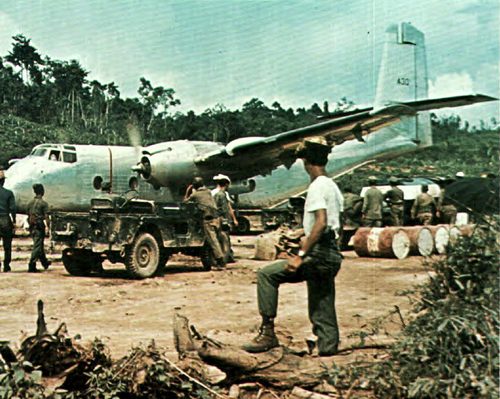 17 January 1961 – February 1973
The secret war in Laos
From 1961 to 1973 the CIA armed and directed an irregular army, built around Hmong fighters led by Vang Pao, against the Pathet Lao and North Vietnam in a country officially neutral.
 1920–1996
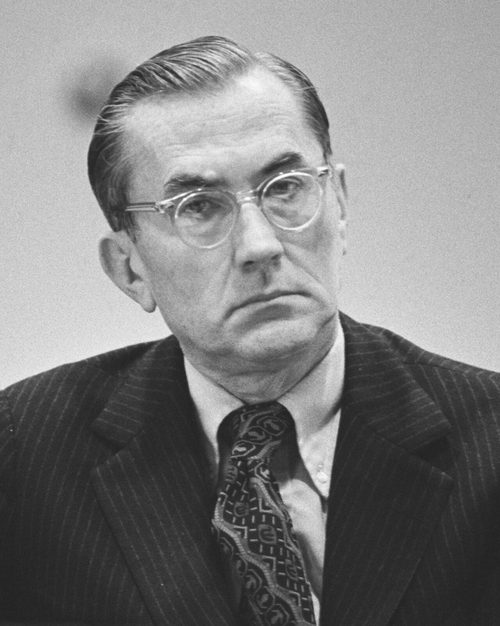
William Colby
OSS parachutist, CIA station chief in Saigon and head of the Phoenix program, Colby became Director of Central Intelligence in 1973 and chose to open the Agency's files to the investigations of 1975.
 United States · 1947
Central Intelligence Agency (CIA)
The US civilian intelligence service, created by the National Security Act of 1947 to coordinate foreign intelligence, which within a year also became Washington's instrument for covert action.
 15 August 1967 – 5 March 1974
Operation CHAOS
Pressed by two presidents to prove that foreign communists were behind the antiwar movement, the CIA built files on 7,200 Americans from 1967 to 1974 and kept finding no such proof.