
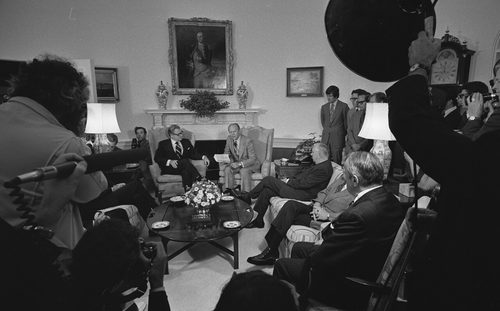
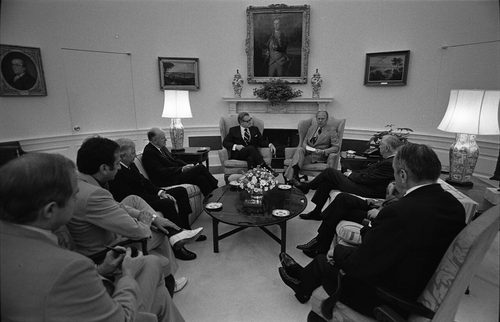
Portrait: Director of Central Intelligence William Colby, 28 April 1975. Unknown White House photographer. Wikimedia Commons, Public domain.

In 1975, with the Senate and House both investigating the CIA, its Director made a calculation that much of his own service never forgave. "In the context of the politics of the time," William Colby told a CIA oral historian years later, "we had just had Watergate, you really weren't going to get away with stonewalling them." He would tell the committees nearly everything except the names of agents2.
Parachutes and Norway
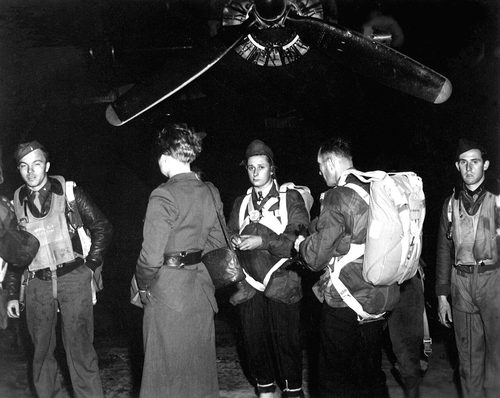
Colby was born in St. Paul, Minnesota, on 4 January 1920, the son of an Army officer, and graduated from Princeton in 1940. In the OSS he volunteered for the Jedburghs, and in August 1944 he parachuted into occupied France as leader of team BRUCE to work with the resistance; he won the Silver Star5.
In March 1945 he led the OSS Norwegian Special Operations Group, mostly Norwegian seamen who had found their way into the US Army, into central Norway to cut the Nordland railway. Eight B-24s left Harrington; only four dropped their men on the frozen Jaevsjo Lake, and one landed its party in neutral Sweden. In an account written in 1945 and found in CIA files decades later, Colby recorded that it was "the last thing to go right until we blew up the Nordland railway"1.
The Agency years
After the war he practiced law briefly in William Donovan's New York firm, then joined the CIA. He served in Stockholm and then in Rome, where in the 1950s he ran political operations in support of Italy's anti-communist parties. In 1959 he went to Saigon, rising to chief of station, and from 1962 he was deputy chief and then chief of the Far East Division in Washington5.
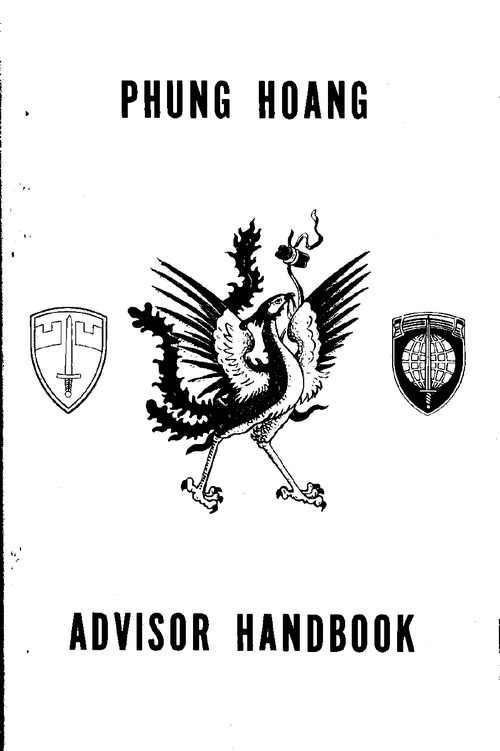
In 1968 President Johnson sent him back to Vietnam, where he soon took over CORDS, the combined American and South Vietnamese pacification effort. Part of it was the Phoenix program against the Viet Cong's political infrastructure. Colby said he put his instructions in writing "This is not a program of assassination" precisely because people said it was2,5.
Director
Colby returned to Washington in 1971 and became the CIA's executive director-comptroller, then in early 1973 head of the clandestine service under the new Director, James Schlesinger. After Watergate revelations about the CIA, Schlesinger ordered an inventory of activities "outside the legislative charter." Colby wrote the May 1973 directive and, already named as successor, co-signed it; the replies became the "Family Jewels." He was sworn in as Director on 4 September 19732,4,5.
He then issued what he called a series of "Thou shalt not" directives. On 29 August 1973 he confined Operation CHAOS to foreign targets, and on 5 March 1974 he ended it2,3. He privately briefed the senior members of the congressional committees that oversaw the CIA on the Family Jewels in 1973, and talked one of them, Representative Lucien Nedzi, out of releasing them. He also reorganized the Counterintelligence Staff and forced out its chief, James Angleton, in December 19742,5.
When Seymour Hersh came to him that month with a story about domestic spying, Colby tried to talk it down; Hersh took his partial denials as confirmation. In the investigations that followed he cooperated with Frank Church's committee and its House counterpart, but held the line on the names of sources, once going to court to stop a committee from publishing an officer's name2.
Afterwards
President Ford replaced him in November 1975, and he left office on 30 January 1976, succeeded by George H. W. Bush. He practiced law, wrote two memoirs, Honorable Men and Lost Victory, and argued for reductions in military spending5.
On 27 April 1996 Colby set out alone in a canoe from his weekend house at Rock Point, Maryland. The canoe was found the next day on a sandbar in the Wicomico River; his body was found on 6 May. Maryland's chief medical examiner ruled the death accidental, from a cardiac or circulatory event followed by hypothermia and drowning5.
Key dates
- August 1944 Parachutes into occupied France as leader of Jedburgh team BRUCE.
- March 1945 Leads the OSS Norwegian Special Operations Group's Operation Rype against the Nordland railway.
- 1959 Posted to Saigon; becomes CIA chief of station.
- 1968 Returns to Vietnam to run the CORDS pacification effort, including Phoenix.
- May 1973 Co-signs with James Schlesinger the directive that produces the 'Family Jewels'.
- 4 September 1973 Sworn in as Director of Central Intelligence.
- 5 March 1974 Ends Operation CHAOS.
- 30 January 1976 Leaves office, succeeded by George H. W. Bush.
Sources
- CIA OSS Operations in Norway: Skis and Daggers (William E. Colby), Studies in Intelligence, Winter 1999–2000, Central Intelligence Agency, Center for the Study of Intelligence (1999).
- CIA Oral History: Reflections of DCI Colby and Helms on the CIA's 'Time of Troubles', Studies in Intelligence 51, no. 3 (archived copy), Central Intelligence Agency, archived by the Wayback Machine (2007).
- Congress Final Report of the Select Committee to Study Governmental Operations with Respect to Intelligence Activities, Book III (S. Rep. 94-755): 'CIA Intelligence Collection About Americans: CHAOS and the Office of Security', US Senate, digitized by the Internet Archive (1976-04).
- CIA 'Family Jewels' compilation (MORI DocID 1451843), Central Intelligence Agency, full text posted by the National Security Archive (1973-05-16).
- Wikipedia William Colby, Wikipedia.
- Wikipedia English Wikipedia article (used for cross-checking).
Elsewhere in the files
- Agency Central Intelligence Agency (CIA)
- Agency Office of Strategic Services (OSS)
- Document "Project AZORIAN: The Story of the Hughes Glomar Explorer"
- Document Alleged Assassination Plots Involving Foreign Leaders (1975)
- Document Ford's meeting on the submarine leak (27 May 1975)
- Document The "Family Jewels" (1973)
- Document The Rockefeller Commission on Operation CHAOS (1975)
- Document Undercover Armies: the CIA's secret history of its war in Laos (2006)
- Document William Colby on Phoenix before the Senate (1970)
- Operation Operation CHAOS
- Operation Operation Gladio
- Operation Operation Holystone
- Operation Operation Jedburgh
- Operation Project Azorian (the Glomar Explorer)
- Operation Project MKUltra
- Operation Project Mockingbird (1963)
- Operation The Phoenix Program
- Operation The secret war in Laos
- Person Frank Church
- Person James Jesus Angleton
- Person Richard Helms
Read next
 May 1973
The "Family Jewels" (1973)
The CIA's own 1973 inventory of activities that might have broken its charter, from mail opening and wiretaps on reporters to plots against Castro. Kept secret for 34 years, it was released in June 2007.
 15 August 1967 – 5 March 1974
Operation CHAOS
Pressed by two presidents to prove that foreign communists were behind the antiwar movement, the CIA built files on 7,200 Americans from 1967 to 1974 and kept finding no such proof.
 June 1967 – 1972
The Phoenix Program
Phoenix (Phung Hoang) was the US–South Vietnamese effort of 1967–72 to identify and 'neutralize' the Viet Cong's clandestine political apparatus. It became the most contested program of the war.
 5 June 1944 – April 1945
Operation Jedburgh
From June 1944 Allied three-man teams in uniform, drawn from SOE, the OSS and the Free French, parachuted into France and the Low Countries to arm and lead resistance fighters behind German lines.
 United States · 1947
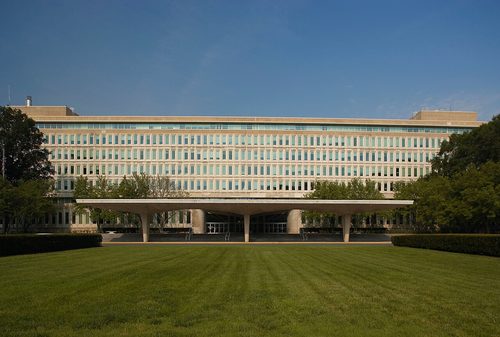
Central Intelligence Agency (CIA)
The US civilian intelligence service, created by the National Security Act of 1947 to coordinate foreign intelligence, which within a year also became Washington's instrument for covert action.
 1924–1984
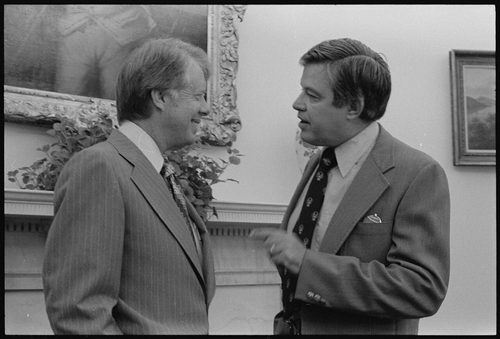
Frank Church
Idaho senator who chaired the 1975–76 Senate investigation of the CIA, FBI and NSA. His committee exposed assassination plots, COINTELPRO and Shamrock, and led to permanent intelligence oversight.