
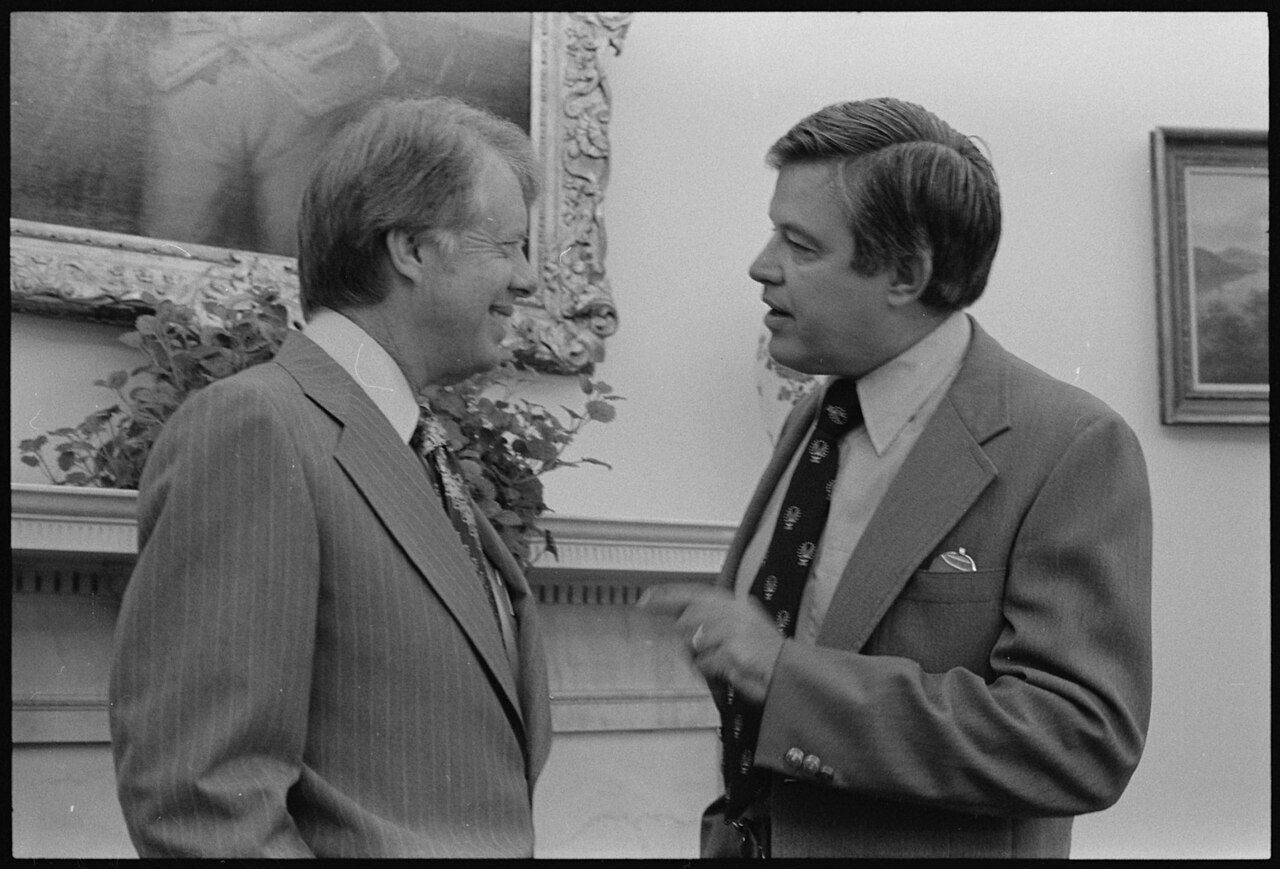

Frank Church gave his name to the most searching inquiry into American intelligence ever made public. For sixteen months in 1975 and 1976 the committee he chaired read the files of the CIA, the FBI and the National Security Agency, interviewed some 800 witnesses and published what it found in an interim report and six books2.
Idaho to the Senate
Church was born in Boise on 25 July 1924. During the Second World War he served in the Army as a military intelligence officer in India, Burma and China, from 1942 to 1946. He graduated from Stanford in 1947 and from Stanford Law School in 1950, then practiced law in Boise. Elected to the Senate as a Democrat in 1956, he took his seat on 3 January 1957 at 32, and was re-elected in 1962, 1968 and 19741,5.
On the Foreign Relations Committee he became a leading critic of the Vietnam War, co-sponsoring the Cooper–Church Amendment of 1970 and the Case–Church Amendment of 1973, which limited American military operations in Indochina. At home he was the floor sponsor of the Wilderness Act of 19645.
The committee
After the New York Times reported in December 1974 that the CIA had spied on antiwar activists, the Senate voted 82 to 4 on 27 January 1975 to create a select committee on intelligence. When Philip Hart declined the chair for health reasons, Majority Leader Mike Mansfield chose Church, who had lobbied for it. John Tower of Texas was vice chairman2.
The committee worked mostly behind closed doors, but Church used a few public hearings in September and October 1975 to show the country what it had found: a CIA biological agents program that had kept shellfish toxin after President Nixon ordered such stocks destroyed, a White House plan for domestic surveillance, IRS intelligence work and the FBI's programs against the civil rights and antiwar movements2,6. On the CIA's plots against Fidel Castro, Church put the dilemma to former Defense Secretary Robert McNamara in July 1975. Either the Agency was "a rogue elephant rampaging out of control," he said, or there was "some secret channel circumventing the whole structure of command," or its officers had misunderstood their authority3.
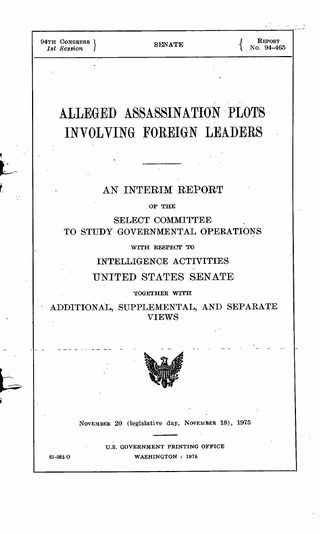
The committee's interim report, Alleged Assassination Plots Involving Foreign Leaders, was published on 20 November 1975 despite President Ford's request that it be withheld3,7. It found plots against Castro and Patrice Lumumba but could not settle Church's question; its final report concluded that the CIA, "in broad terms, is not 'out of control'"6.
The investigation brought to light programs that had never been public: COINTELPRO, Operation CHAOS, MKUltra's surviving records and the NSA's Shamrock and Minaret. When the executive branch refused to supply witnesses for a public session on Shamrock, Church read the committee's report into the record himself on 6 November 19752,4. Declassified NSA histories later showed that Church's own name had been on Minaret's watch list5,8.
What he warned about
On NBC's Meet the Press on 17 August 1975, without naming the NSA, Church described a government capability to intercept communications that "at any time could be turned around on the American people," leaving "no place to hide," and said the agencies holding it must operate "within the law and under proper supervision so that we never cross over that abyss"5.
The committee's final report, issued on 29 April 1976, made 96 recommendations. Its central finding was that intelligence agencies had "undermined the constitutional rights of citizens" because the checks and balances of the Constitution had not been applied to them. Later in 1976 the Senate created a permanent Select Committee on Intelligence, and in 1978 Congress passed the Foreign Intelligence Surveillance Act2.
Later years
Critics accused Church of using the inquiry for a presidential campaign; he declared his candidacy in March 1976, won several primaries and withdrew in favor of Jimmy Carter. He chaired the Foreign Relations Committee from 1979, supported the Panama Canal treaties and lost his seat in 1980 by less than one percentage point. He practiced international law in Washington and died of pancreatic cancer at his home in Bethesda, Maryland, on 7 April 19841,2,5.
Key dates
- 3 January 1957 Takes his seat as a Democratic senator from Idaho.
- 27 January 1975 Senate creates the Select Committee on intelligence activities, 82 to 4; Church becomes chairman.
- 11 July 1975 In questioning Robert McNamara, asks whether the CIA was 'a rogue elephant rampaging out of control'.
- 6 November 1975 Reads the committee's report on NSA's Operation Shamrock into the public record.
- 20 November 1975 Committee publishes its interim report on assassination plots against foreign leaders.
- 29 April 1976 Committee issues its final report, with 96 recommendations.
- 4 November 1980 Loses his Senate seat.
Sources
- Congress CHURCH, Frank Forrester (1924–1984), Biographical Directory of the United States Congress (archived copy), US Congress, archived by the Wayback Machine.
- Official history Senate Select Committee to Study Governmental Operations with Respect to Intelligence Activities, United States Senate, Historical Office.
- Congress Alleged Assassination Plots Involving Foreign Leaders: An Interim Report (S. Rep. 94-465), US Senate, digitized by the Internet Archive (1975-11-20).
- Congress Final Report of the Select Committee to Study Governmental Operations with Respect to Intelligence Activities, Book III (S. Rep. 94-755), US Senate, digitized by the Internet Archive (1976-04).
- Wikipedia Frank Church, Wikipedia.
- Congress Final Report of the Select Committee to Study Governmental Operations with Respect to Intelligence Activities, Book I: Foreign and Military Intelligence (S. Rep. 94-755), US Senate, digitized by the Internet Archive (1976-04).
- Wikipedia Church Committee, Wikipedia.
- National Security Archive 'Disreputable if Not Outright Illegal': The National Security Agency versus Martin Luther King, Muhammad Ali, Art Buchwald, Frank Church, et al., National Security Archive (2013-09-25).
- Wikipedia English Wikipedia article (used for cross-checking).
Elsewhere in the files
- Agency Federal Bureau of Investigation (FBI)
- Agency National Security Agency (NSA)
- Document Alleged Assassination Plots Involving Foreign Leaders (1975)
- Document Allen Dulles's cable on Lumumba: 'an urgent and prime objective' (August 1960)
- Document Church Committee Hearings, Volume 5: The NSA and Fourth Amendment Rights (1975)
- Document The "Family Jewels" (1973)
- Document The CIA Inspector General's inspection of MKULTRA (1963)
- Document The Church Committee's report on the NSA: 'National Security Agency Surveillance Affecting Americans' (1976)
- Document The FBI letter that opened COINTELPRO against black nationalist groups (1967)
- Document The Rockefeller Commission on Operation CHAOS (1975)
- Document The congressional Iran-Contra report (1987)
- Document William Colby on Phoenix before the Senate (1970)
- Operation COINTELPRO
- Operation Operation Shamrock
- Operation Project MKUltra
- Operation Project Minaret
- Operation The CIA and the Congo crisis, 1960–61
- Operation The Iran–Contra affair
- Operation The plots against Fidel Castro
- Person J. Edgar Hoover
- Person James Jesus Angleton
- Person William Colby
- Tradecraft Signals intelligence
- Tradecraft Surveillance and countersurveillance
Read next
 20 November 1975
Alleged Assassination Plots Involving Foreign Leaders (1975)
The Church Committee's interim report of 20 November 1975 found that US officials plotted to kill Castro and Lumumba and backed plotters in three other countries where leaders died. Ford opposed publication.
August 1945 – 15 May 1975
Operation Shamrock
For thirty years, from August 1945 to May 1975, three American telegraph companies handed the government copies of international cables: the largest interception program affecting Americans, the Senate said.
 20 October 1967 – October 1973
Project Minaret
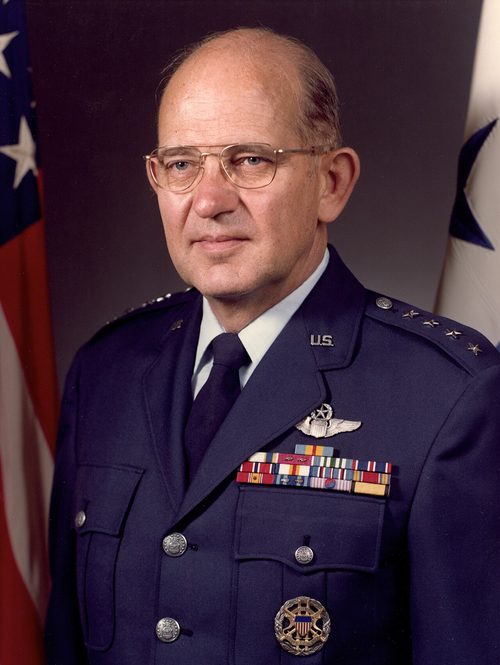
From 1967 to 1973 the NSA searched international communications for the names of Americans supplied by the FBI, CIA and Secret Service, among them Martin Luther King Jr., Muhammad Ali and two sitting senators.
 August 1956 – 28 April 1971
COINTELPRO
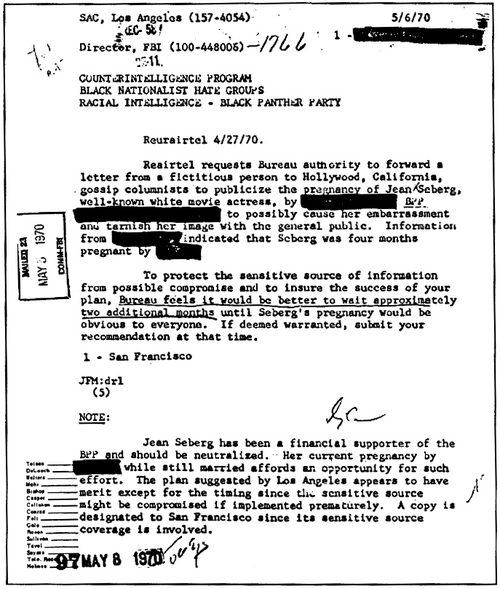
From 1956 to 1971 the FBI ran secret programs to 'disrupt' and 'neutralize' American political groups, from the Communist Party and the Klan to civil rights and antiwar organizations. A burglary in 1971 exposed them.
 15 August 1967 – 5 March 1974
Operation CHAOS
Pressed by two presidents to prove that foreign communists were behind the antiwar movement, the CIA built files on 7,200 Americans from 1967 to 1974 and kept finding no such proof.
 13 April 1953 – 1964
Project MKUltra
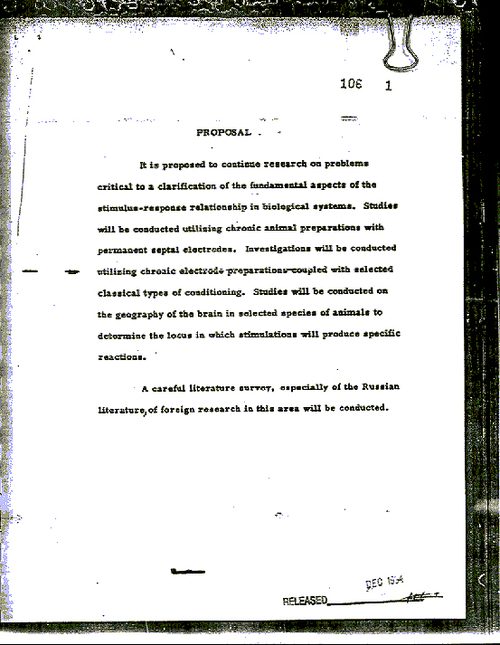
The CIA's umbrella program, approved in 1953, for secret research on drugs and behavior control. It included LSD tests on unwitting Americans; most records were destroyed in 1973, and a surviving cache surfaced in 1977.