
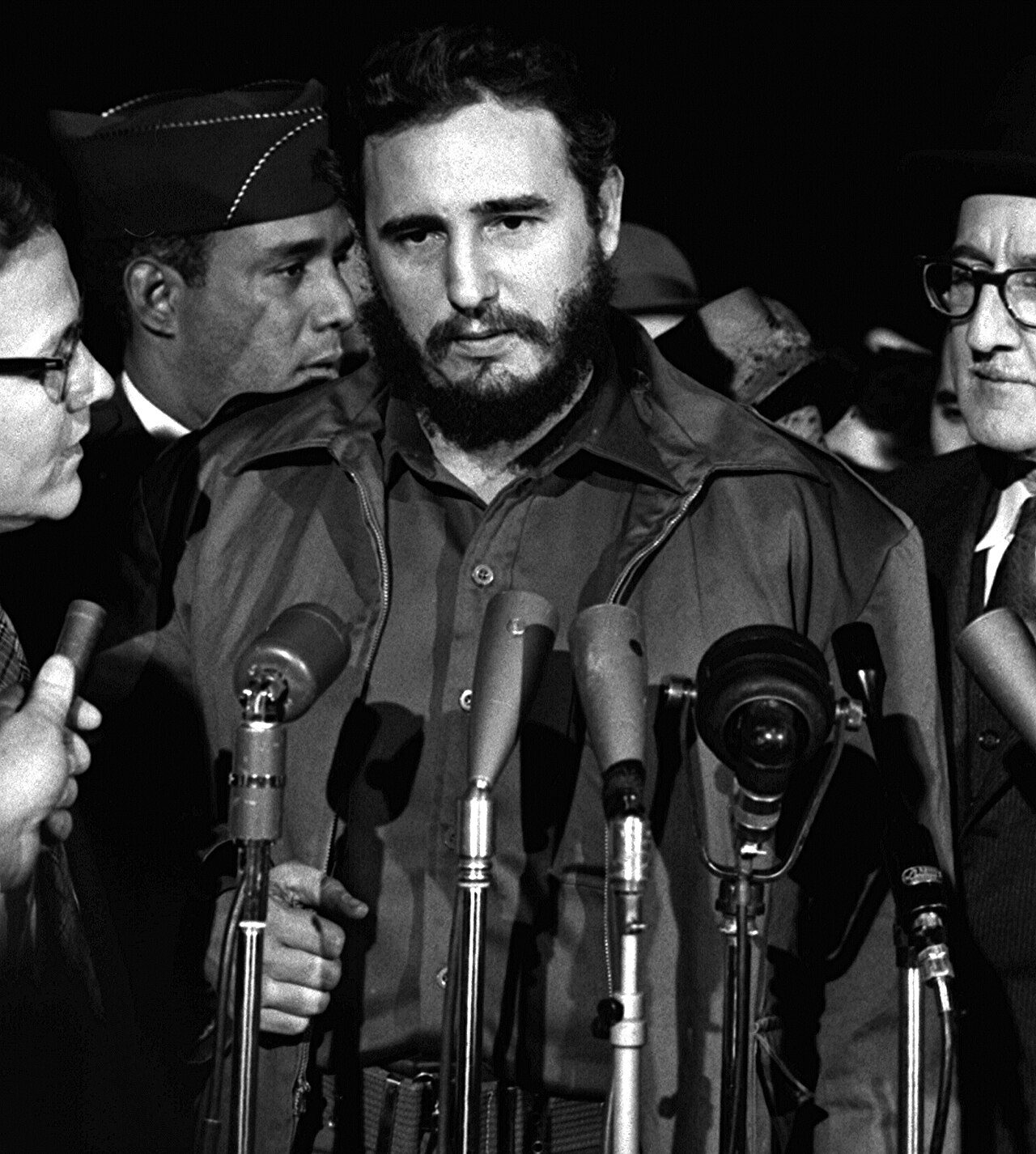

The Senate committee chaired by Frank Church put it flatly in November 1975: "We have found concrete evidence of at least eight plots involving the CIA to assassinate Fidel Castro from 1960 to 1965." Some never got beyond planning. One, involving American gangsters, twice reached the point of sending poison pills into Cuba. Another supplied weapons and devices to a Cuban official who wanted Castro dead1,2.
Most of what is known comes from that report and from a 1967 internal history by the CIA's Inspector General, which the committee obtained and quoted at length2. See the document page Alleged Assassination Plots Involving Foreign Leaders (1975).
Before the Bay of Pigs
The first schemes, in 1960, aimed at Castro's image rather than his life. The Inspector General recorded proposals from the agency's Technical Services Division to spray his broadcasting studio with a hallucinogen, to give him cigars treated with a disorienting chemical, and to dust his shoes with thallium salts so that his beard would fall out. None went forward2.
In August 1960 the CIA's Office of Security, with the approval of Richard Bissell, the Deputy Director for Plans, began looking for underworld help. Through Robert Maheu, a former FBI agent turned private investigator, it reached John Rosselli, who brought in Sam Giancana and Santo Trafficante. The agency's Technical Services Division produced poison pills, tested in February 1961. According to the Inspector General, Rosselli reported in late February or March that they had reached an official close to Castro, who returned them weeks later, perhaps because he had lost his position and his access; another attempt through a Cuban exile leader followed in April 19612. A box of Castro's favorite cigars was also treated with botulinum toxin in 1960; the record does not show whether anyone tried to deliver them2. The committee could not settle whether Director Allen Dulles briefed President Eisenhower; Bissell believed he would have, but had no personal knowledge2.
Harvey and "Phase Two"
After the Bay of Pigs, William Harvey was assigned in 1961 to build a general CIA capability for "disabling foreign leaders, including assassination as a 'last resort'," known as Executive Action and later given the cryptonym ZR/RIFLE. In April 1962 Harvey took over the Rosselli channel and passed a new batch of pills to him in Miami2. Richard Helms, by then Deputy Director for Plans, told the committee he had "reluctantly" approved the operation, and that although he did not remember approving the pills, "I must have authorized them in some fashion"2.
These plots ran at the same time as Operation Mongoose. At a Mongoose policy meeting on 10 August 1962, the idea of assassinating Cuban leaders was raised; Harvey wrote that the consensus was that "this is not a subject which has been made a matter of official record," and the Director of Central Intelligence, John McCone, later recalled taking "immediate exception." Harvey testified that he did not tell McCone about the Rosselli operation2,4.
Around the turn of 1963 the CIA's Cuba task force explored two more ideas: an exploding seashell placed where Castro went skin diving, and a diving suit dusted with a fungus that causes a chronic skin disease and with its breathing apparatus contaminated with tubercle bacilli, to be presented by the American lawyer then negotiating the release of the Bay of Pigs prisoners. The shell was judged impractical, and the suit never left the laboratory2,3.
AM/LASH
The longest plot centered on a senior Cuban official the CIA code-named AM/LASH, recruited as a source in 1961. By 1963 he was asking for help to kill Castro. On 22 November 1963 Desmond FitzGerald, head of the CIA's Cuba operations, and a case officer met him, offered him a ballpoint pen fitted with a hypodermic needle, and told him that a cache including rifles with telescopic sights would be dropped in Cuba. The committee called it the most ironic of the plots: it happened on the day President Kennedy was shot in Dallas, while an emissary of Kennedy's was meeting Castro to explore better relations2. Support for AM/LASH continued until 19653.
What the committee concluded
"The efforts to assassinate Castro failed," the committee wrote. On authority, it was cautious. It was "unable to draw firm conclusions concerning who authorized the assassination plots," and said the system of command was "so inherently ambiguous" that the gaps might reflect either action without express authority or a successful "plausible denial" that hid a presidential order3.
In 1976 President Ford issued Executive Order 11905, which barred US government employees from engaging in political assassination5. Castro outlived the plots by half a century and died on 25 November 2016.
The documents
Declassified records of this operation, with the scans and their full text hosted here.
 23 May 1967 · 137 p.The CIA Inspector General's report on plots to kill Castro (1967)J. S. Earman, Inspector General, CIA (written by Inspectors K. E. Greer and S. D. Breckinridge)Inspector General J. S. Earman's 1967 report for Richard Helms on CIA plots against Fidel Castro: the Mafia poison pills, their revival under William Harvey, and the AMLASH operation with Rolando Cubela.
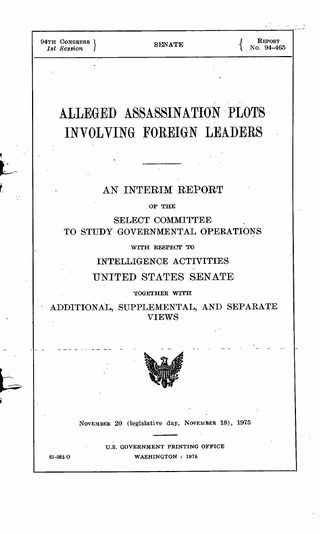 20 November 1975 · 85 p.Alleged Assassination Plots Involving Foreign Leaders (1975)Senate Select Committee to Study Governmental Operations with Respect to Intelligence Activities (Frank Church, chairman)The Church Committee's interim report of 20 November 1975 found that US officials plotted to kill Castro and Lumumba and backed plotters in three other countries where leaders died. Ford opposed publication.
 May 1973 · 148 p.The "Family Jewels" (1973)CIA offices and senior officials, reporting to the Director of Central Intelligence under James R. Schlesinger's directive of 9 May 1973The CIA's own 1973 inventory of activities that might have broken its charter, from mail opening and wiretaps on reporters to plots against Castro. Kept secret for 34 years, it was released in June 2007.
Checking the record
Dates and outcome compared in two independent sources: they agree.
- Congress
- The effort to assassinate Castro began in 1960 and continued until 1965 The efforts to assassinate Castro failed.
- Wikipedia
- Eight proven CIA attempts between 1960 and 1965 (citing the Church Committee) No attempt succeeded; Ford banned political assassination by executive order in 1976.
Both rest on the Church Committee. Wikipedia also reports Cuban figures of 634 to 638 schemes, which include non-CIA plots and are not documented in US records; this page treats them as a contested claim.
Sources
- Congress Alleged Assassination Plots Involving Foreign Leaders: An Interim Report (S. Rep. 94-465), US Senate Select Committee to Study Governmental Operations with Respect to Intelligence Activities (Church Committee) (1975-11-20).
- Congress Alleged Assassination Plots, Part III.B: Cuba (chapter scan), Church Committee; copy hosted by the Assassination Archives and Research Center (1975-11-20).
- Congress Alleged Assassination Plots, Part IV: Findings and Conclusions (chapter scan), Church Committee; copy hosted by the Assassination Archives and Research Center (1975-11-20).
- FRUS FRUS, 1961–1963, volume X, Cuba, Document 371: Editorial Note on the Special Group (Augmented) meeting of 10 August 1962, US Department of State, Office of the Historian (1997).
- Wikipedia CIA assassination attempts on Fidel Castro, Wikipedia.
- Wikipedia English Wikipedia article (used for cross-checking).
Elsewhere in the files
- Agency Central Intelligence Agency (CIA)
- Document Alleged Assassination Plots Involving Foreign Leaders (1975)
- Document Allen Dulles's cable on Lumumba: 'an urgent and prime objective' (August 1960)
- Document Lansdale's "The Cuba Project" (1962)
- Document Lansdale's first Cuba Project program review (18 January 1962)
- Document The "Family Jewels" (1973)
- Document The CIA Inspector General's report on plots to kill Castro (1967)
- Document The Northwoods memorandum (1962)
- Operation Operation Mongoose
- Operation Operation Northwoods
- Operation The Bay of Pigs invasion
- Operation The CIA and the Congo crisis, 1960–61
- Person Allen Dulles
- Person Richard Helms
Read next
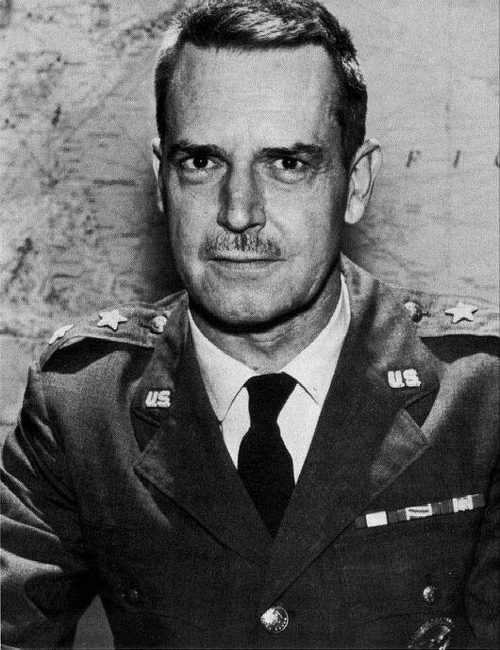 30 November 1961 – October 1962
Operation Mongoose
The Kennedy administration's 1961–62 covert program to overthrow Fidel Castro, run by Edward Lansdale under Robert Kennedy's eye, which aimed at a revolt in Cuba by October 1962.
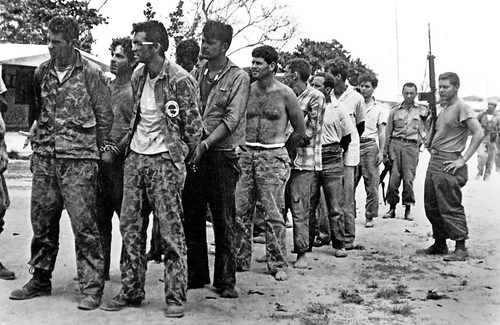 17 March 1960 – 19 April 1961
The Bay of Pigs invasion
In April 1961 a CIA-trained brigade of Cuban exiles landed at the Bay of Pigs to topple Fidel Castro and was defeated within three days. The records show how a covert plan outgrew its cover.
20 November 1975
Alleged Assassination Plots Involving Foreign Leaders (1975)
The Church Committee's interim report of 20 November 1975 found that US officials plotted to kill Castro and Lumumba and backed plotters in three other countries where leaders died. Ford opposed publication.
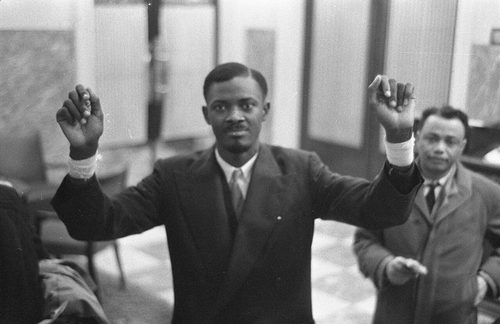 18 August 1960 – 17 January 1961
The CIA and the Congo crisis, 1960–61
In 1960 the CIA plotted to poison Patrice Lumumba and backed Joseph Mobutu. Lumumba was killed by Katangan authorities in January 1961; the Church Committee found no evidence the US took part in his death.
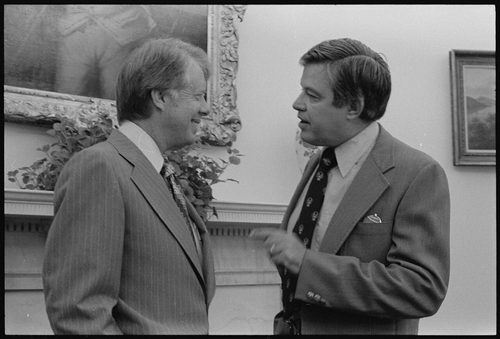 1924–1984
Frank Church
Idaho senator who chaired the 1975–76 Senate investigation of the CIA, FBI and NSA. His committee exposed assassination plots, COINTELPRO and Shamrock, and led to permanent intelligence oversight.