
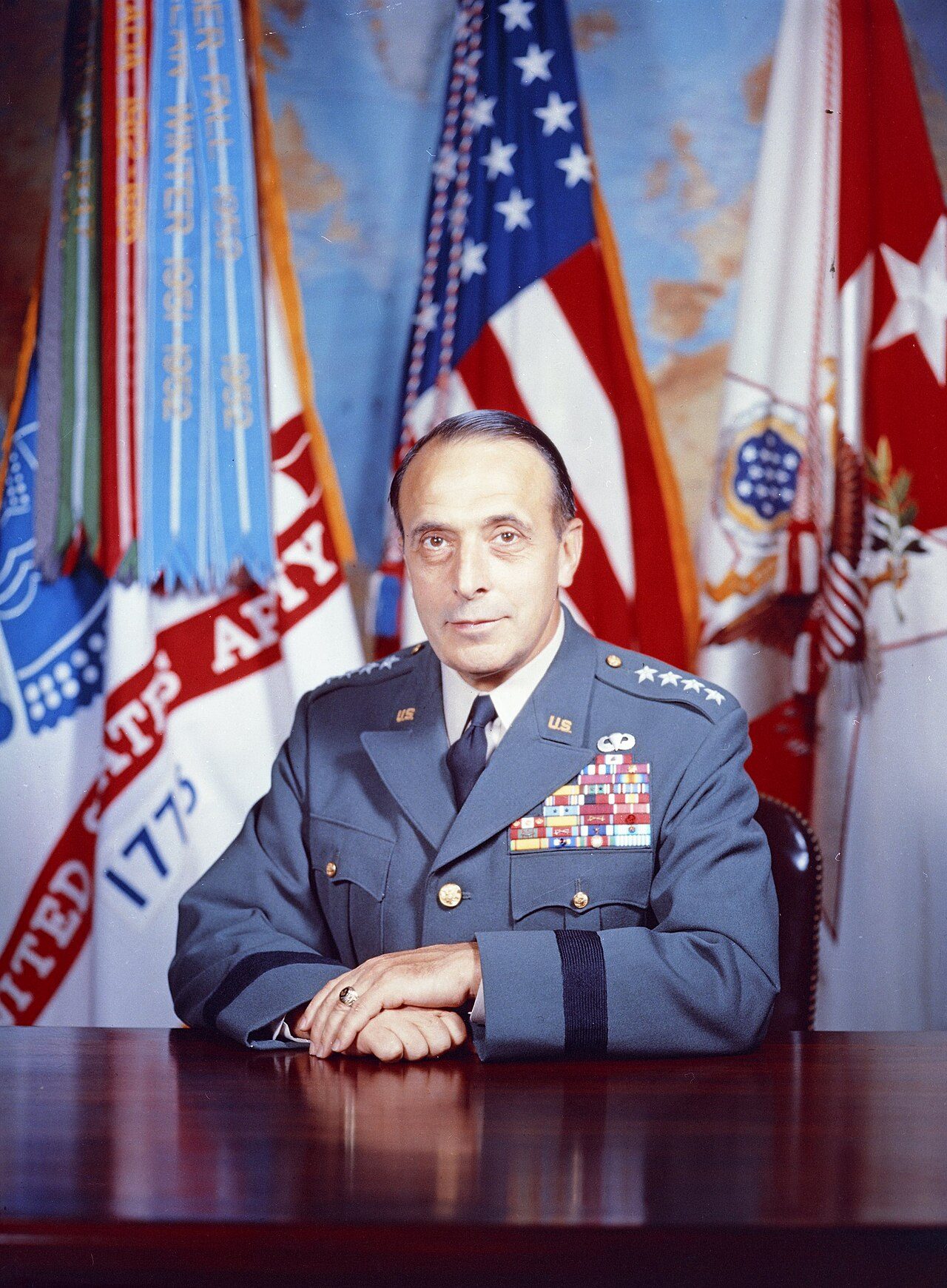
Northwoods was never an operation. It was a set of proposals, written by Pentagon planners in March 1962, for incidents that could be staged and blamed on Cuba to give the United States a pretext for invading. The Joint Chiefs of Staff approved the paper and sent it to the Secretary of Defense. The Kennedy administration did not act on it, and nothing in it was carried out1,6. It is widely cited because it sets such deceptions down in an official document.
Where it came from
The paper was a product of Operation Mongoose, the covert program against Fidel Castro run by Brigadier General Edward Lansdale. On 5 March 1962 Lansdale asked the Defense Department representative on his team, Brigadier General William Craig, for "a brief but precise description of pretexts which the JCS believes desirable if a decision is ultimately made to use direct military intervention," and the next day asked the State Department for a companion list1,3.
The Joint Chiefs already held that an invasion could follow if Cuba committed "hostile acts against US forces or property." On 7 March 1962 they had added that if a credible internal revolt proved impossible within nine or ten months, the United States would need to decide "to develop a Cuban 'provocation' as justification for positive US military action"1.
What the paper proposed
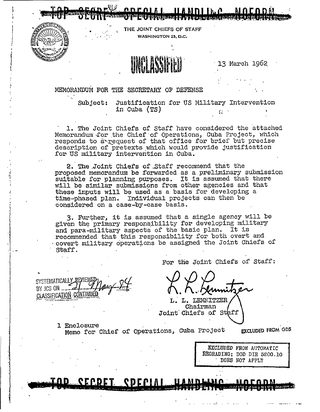
The Defense representative's report, dated 9 March, went to the Chiefs under the code word NORTHWOODS. They approved it at their meeting on 13 March, and the same day the chairman, General Lyman Lemnitzer, signed a covering memorandum to Secretary of Defense Robert McNamara forwarding it "as a preliminary submission suitable for planning purposes" and asking that the Joint Chiefs be given responsibility for "both overt and covert military operations"1.
The draft's stated aim was to "place the United States in the apparent position of suffering defensible grievances from a rash and irresponsible government of Cuba." Its annex, "Pretexts to Justify US Military Intervention in Cuba," listed options "arranged neither chronologically nor in ascending order"1. They included:
- staged attacks on the US naval base at Guantánamo by "friendly Cubans" in Cuban uniform, with sabotage, fires and mock funerals;
- a "Remember the Maine" incident, blowing up a US ship in Guantánamo Bay or a drone vessel near Havana and blaming Cuba;
- a "Communist Cuban terror campaign" in Miami, other Florida cities "and even in Washington," including attacks on Cuban refugees;
- a faked Cuban raid on a neighboring country;
- an incident appearing to show a Cuban MiG shooting down a chartered airliner, in which a drone would be destroyed and the real passengers secretly landed at Eglin Air Force Base;
- a faked shoot-down of a US Air Force plane over international waters1.
Rejection
The paper reached the White House in the middle of a debate about how far Mongoose should go. The guidelines for Mongoose approved on 16 March assumed that eventual success would require US military intervention, but limited current action to intelligence and covert work4. At the President's meeting that day, attended by Lemnitzer, Kennedy "expressed skepticism" that circumstances would arise to justify overt military action, and "it was clearly understood no decision was expressed or implied approving the use of such forces"4. Lansdale's own note of the meeting, released later, records Lemnitzer mentioning plans "for creating plausible pretexts to use force," and Kennedy saying "bluntly that we were not discussing the use of military force"6.
The idea of pretexts did not vanish at once. On 11 April 1962 the Director of Central Intelligence, John McCone, noted that a "JCS paper on pretext or provocative actions" had been discussed at the Mongoose policy group and called it "a very thoughtful and useful document"5. Defense Department papers in 1963 still discussed contrived incidents6. But no pretext operation was approved. Lemnitzer left the chairmanship in the autumn of 1962 and became NATO's supreme commander in January 19636.
How it became public
The memorandum was released on 18 November 1997 by the Assassination Records Review Board, among some 1,500 pages of military records from 1962 to 1964 reviewed under the JFK Records Act. It attracted little notice until a 2001 book on the National Security Agency described it, and the National Security Archive posted the scan on 30 April 20012,6. See the document page The Northwoods memorandum (1962).
The documents
Declassified records of this operation, with the scans and their full text hosted here.

Checking the record
Dates and outcome compared in two independent sources: they agree.
- Other
- Memorandum signed by General Lemnitzer for the Joint Chiefs, 13 March 1962; JCS approval of the paper at their meeting of 13 March Forwarded to the Secretary of Defense as 'a preliminary submission suitable for planning purposes'.
- Wikipedia
- Presented to McNamara on 13 March 1962; made public 18 November 1997 Approved by the Joint Chiefs, rejected by President Kennedy; none of the operations carried out.
The sources agree on dates and outcome. Wikipedia describes Kennedy's response as rejection of Northwoods; the contemporaneous record shows him rejecting overt military intervention in general, which made the pretexts moot. This page reports what the documents say.
Sources
- Other Memorandum for the Secretary of Defense, Justification for US Military Intervention in Cuba (TS), 13 March 1962 (JCS 1969/321, Northwoods), Joint Chiefs of Staff; scan posted by the National Security Archive (1962-03-13).
- National Security Archive Pentagon Proposed Pretexts for Cuba Invasion in 1962, National Security Archive (2001-04-30).
- FRUS FRUS, 1961–1963, volume X, Cuba, Document 310: Memorandum from Lansdale to Goodwin, 6 March 1962 (request for pretexts), US Department of State, Office of the Historian (1962-03-06).
- FRUS FRUS, 1961–1963, volume X, Cuba, Document 314: Guidelines for Operation Mongoose, 14 March 1962, with note of the President's meeting of 16 March, US Department of State, Office of the Historian (1962-03-14).
- FRUS FRUS, 1961–1963, volume X, Cuba, Document 325: McCone notes on the Special Group (Augmented) meeting of 11 April 1962, US Department of State, Office of the Historian (1962-04-12).
- Wikipedia Operation Northwoods, Wikipedia.
- Wikipedia English Wikipedia article (used for cross-checking).
Elsewhere in the files
Read next
 13 March 1962
The Northwoods memorandum (1962)
On 13 March 1962 the Joint Chiefs sent the Secretary of Defense a list of staged incidents that could justify invading Cuba, from a fake attack on Guantanamo to a sham terror campaign in Florida. None was carried out.
 30 November 1961 – October 1962
Operation Mongoose
The Kennedy administration's 1961–62 covert program to overthrow Fidel Castro, run by Edward Lansdale under Robert Kennedy's eye, which aimed at a revolt in Cuba by October 1962.
 17 March 1960 – 19 April 1961
The Bay of Pigs invasion
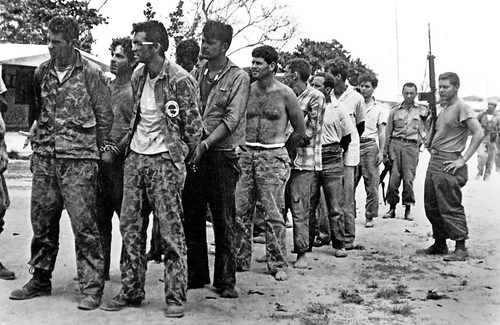
In April 1961 a CIA-trained brigade of Cuban exiles landed at the Bay of Pigs to topple Fidel Castro and was defeated within three days. The records show how a covert plan outgrew its cover.
 August 1960 – 1965
The plots against Fidel Castro
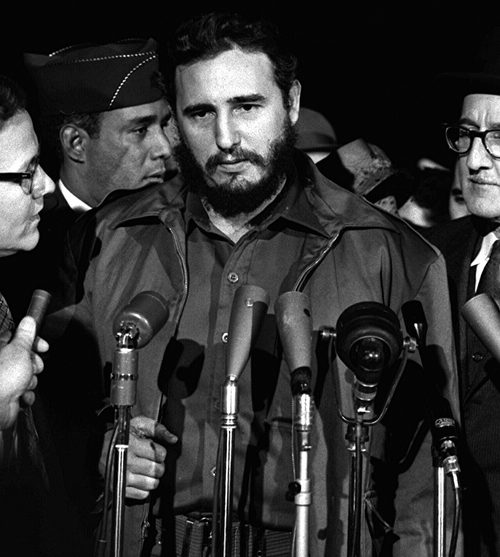
Between 1960 and 1965 the CIA pursued at least eight plots to kill Fidel Castro, using poison pills, gangsters and a Cuban insider. None succeeded, and who authorized them was never settled.