

Seven months after the Bay of Pigs, the Kennedy brothers tried again, this time without an invasion force. On 3 November 1961 the President met his advisers at the White House and authorized a new program to undermine Fidel Castro's government. Robert Kennedy's handwritten notes of the meeting set out the idea: "stir things up on island with espionage, sabotage, general disorder, run & operated by Cubans themselves." He added: "Do not know if we will be successful in overthrowing Castro but we have nothing to lose in my estimate"1.
The organization
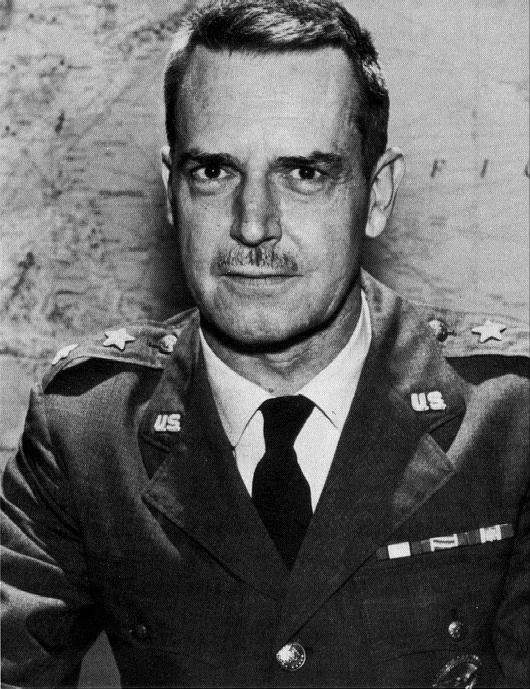
A presidential memorandum of 30 November 1961, apparently drafted by McGeorge Bundy, set the program up. The United States would "use our available assets to go ahead with the discussed project in order to help Cuba overthrow the communist regime." Air Force Brigadier General Edward Lansdale became Chief of Operations. An earlier draft of 22 November had put the Attorney General formally in charge with Lansdale under him; the final text did not, but Robert Kennedy remained its driving force2,7. Lansdale had made his name in the Philippines and Vietnam dealing with insurgencies7.
Policy control passed to a body created for the purpose, the Special Group (Augmented): the regular covert-action review group plus the Attorney General and the Chairman of the Joint Chiefs, chaired by General Maxwell Taylor4,7. The CIA carried most of the load through Task Force W under William Harvey, operating from a large station, JMWAVE, on University of Miami property8. Richard Helms, who replaced Richard Bissell as Deputy Director for Plans in February 1962, was Harvey's superior7.
A timetable for revolution
On 20 February 1962 Lansdale presented "The Cuba Project," a six-phase schedule that "aims for a revolt which can take place in Cuba by October 1962." Action would begin in March, build-up run from April to July, a policy decision come on 1 August, guerrilla operations follow in August and September, and the final phases were labeled "Open revolt and overthrow of the Communist regime" in the first two weeks of October3. (See the document page Lansdale's "The Cuba Project" (1962).)
The Special Group's guidelines of 14 March 1962 were more cautious, and more candid. They assumed that "final success will require decisive U.S. military intervention," and that the resources developed inside Cuba would be used "to prepare for and justify this intervention." For the time being the priority was "hard intelligence," and other actions were to stop short of anything "reasonably calculated to inspire a revolt"4. That gap between an exile-led uprising and an American invasion runs through the whole program. The Joint Chiefs' contribution to the planning included the pretext proposals known as Operation Northwoods.
What it achieved
Mongoose collected a great deal of intelligence, ran infiltration teams and propaganda, and tried sabotage, but the revolt never came near. On 16 October 1962, as the missile crisis was breaking, Robert Kennedy told a Mongoose meeting of "the general dissatisfaction of the President." After a year, he said, the results were discouraging: "there had been no acts of sabotage, and that even the one which had been attempted had failed twice." Intelligence collection had improved, but little else had6.
According to the Church Committee, Mongoose "was disbanded following the Cuban Missile Crisis"; the Special Group (Augmented) was abolished and an interagency Cuban Coordinating Committee in the State Department took over the planning of covert action7. Little if any sabotage took place in the first half of 1963; in June 1963 President Kennedy approved a new, more limited sabotage program7.
Mongoose and the assassination question
Mongoose ran alongside, and partly overlapped with, the CIA's attempts to kill Castro (The plots against Fidel Castro). The clearest trace in the record is the Special Group (Augmented) meeting of 10 August 1962. Harvey wrote that Secretary of Defense McNamara raised the assassination of Cuban leaders, and that it was "the obvious consensus at that meeting" that this was "not a subject which has been made a matter of official record." The Director of Central Intelligence, John McCone, later recalled that he "took immediate exception" to the suggestion5.
Many historians count Mongoose, and the threat of invasion it seemed to foreshadow, among the factors behind the Soviet and Cuban decision to place missiles on the island8.
The documents
Declassified records of this operation, with the scans and their full text hosted here.
 23 May 1967 · 137 p.The CIA Inspector General's report on plots to kill Castro (1967)J. S. Earman, Inspector General, CIA (written by Inspectors K. E. Greer and S. D. Breckinridge)Inspector General J. S. Earman's 1967 report for Richard Helms on CIA plots against Fidel Castro: the Mafia poison pills, their revival under William Harvey, and the AMLASH operation with Rolando Cubela.
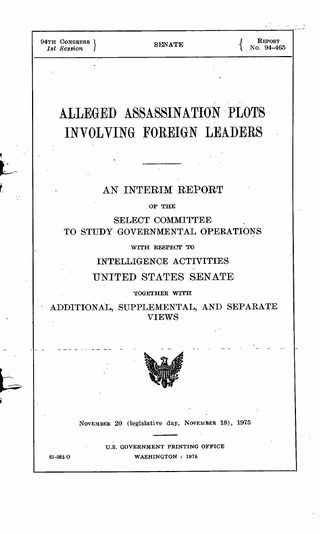 20 November 1975 · 85 p.Alleged Assassination Plots Involving Foreign Leaders (1975)Senate Select Committee to Study Governmental Operations with Respect to Intelligence Activities (Frank Church, chairman)The Church Committee's interim report of 20 November 1975 found that US officials plotted to kill Castro and Lumumba and backed plotters in three other countries where leaders died. Ford opposed publication.
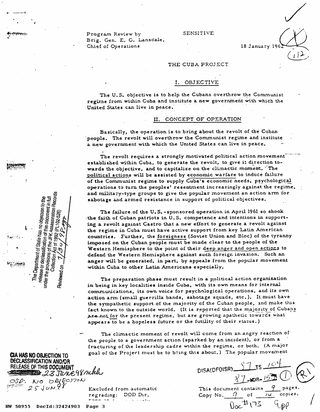 18 January 1962 · 9 p.Lansdale's first Cuba Project program review (18 January 1962)Brig. Gen. Edward G. Lansdale, Chief of Operations, the Cuba ProjectSeven weeks into Operation Mongoose, Brig. Gen. Edward Lansdale set out its goal, admitted how little the CIA had inside Cuba, and handed the agencies 32 tasks with February deadlines.
- 20 February 1962Lansdale's "The Cuba Project" (1962)Brig. Gen. Edward G. Lansdale, USAF, Chief of Operations, Operation MongooseBrig. Gen. Edward Lansdale's program review of 20 February 1962 for Operation Mongoose, with a six-phase timetable that aimed at an 'open revolt and overthrow' of the Castro government in October 1962.
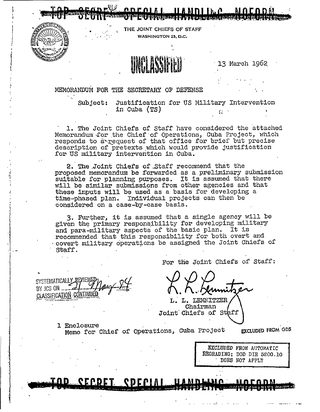 13 March 1962 · 15 p.The Northwoods memorandum (1962)General Lyman L. Lemnitzer, Chairman, for the Joint Chiefs of StaffOn 13 March 1962 the Joint Chiefs sent the Secretary of Defense a list of staged incidents that could justify invading Cuba, from a fake attack on Guantanamo to a sham terror campaign in Florida. None was carried out.
Checking the record
Dates and outcome compared in two independent sources: they agree.
- FRUS
- Program authorized by President Kennedy's memorandum of 30 November 1961; disbanded after the October 1962 missile crisis (Church Committee) No revolt; program disbanded and replaced by a Cuban Coordinating Committee.
- Wikipedia
- Officially authorized on 30 November 1961; name agreed at a White House meeting on 4 November 1961 Operation failed to overthrow Castro; a factor in the Soviet decision to deploy missiles to Cuba.
Both give 30 November 1961 for authorization. Wikipedia dates the naming meeting to 4 November; FRUS dates the White House meeting to 3 November 1961. This page follows FRUS.
Sources
- FRUS FRUS, 1961–1963, volume X, Cuba, Document 270: Editorial Note on the White House meeting of 3 November 1961, US Department of State, Office of the Historian (1997).
- FRUS FRUS, 1961–1963, volume X, Cuba, Document 278: Memorandum from President Kennedy, 30 November 1961, US Department of State, Office of the Historian (1961-11-30).
- FRUS FRUS, 1961–1963, volume X, Cuba, Document 304: Program Review by the Chief of Operations (Lansdale), 20 February 1962, US Department of State, Office of the Historian (1962-02-20).
- FRUS FRUS, 1961–1963, volume X, Cuba, Document 314: Guidelines for Operation Mongoose, 14 March 1962, US Department of State, Office of the Historian (1962-03-14).
- FRUS FRUS, 1961–1963, volume X, Cuba, Document 371: Editorial Note on the Special Group (Augmented) meeting of 10 August 1962, US Department of State, Office of the Historian (1997).
- FRUS FRUS, 1961–1963, volume XI, Document 19: Memorandum for the Record, Mongoose meeting with the Attorney General, 16 October 1962, US Department of State, Office of the Historian (1962-10-16).
- Congress Alleged Assassination Plots Involving Foreign Leaders (S. Rep. 94-465), Part III.B: Cuba, US Senate Select Committee to Study Governmental Operations with Respect to Intelligence Activities (Church Committee); copy hosted by the Assassination Archives and Research Center (1975-11-20).
- Wikipedia Operation Mongoose, Wikipedia.
- Wikipedia English Wikipedia article (used for cross-checking).
Elsewhere in the files
- Agency Central Intelligence Agency (CIA)
- Document Alleged Assassination Plots Involving Foreign Leaders (1975)
- Document Lansdale's "The Cuba Project" (1962)
- Document Lansdale's first Cuba Project program review (18 January 1962)
- Document The CIA Inspector General's report on plots to kill Castro (1967)
- Document The CIA historian's case against the Taylor Committee (1984)
- Document The Inspector General's survey of the Cuban operation (1961)
- Document The Northwoods memorandum (1962)
- Operation Intelligence in the Cuban Missile Crisis
- Operation Operation Anadyr
- Operation Operation Northwoods
- Operation The Bay of Pigs invasion
- Operation The plots against Fidel Castro
- Person Richard Helms
- Tradecraft Secret writing
Read next
 17 March 1960 – 19 April 1961
The Bay of Pigs invasion
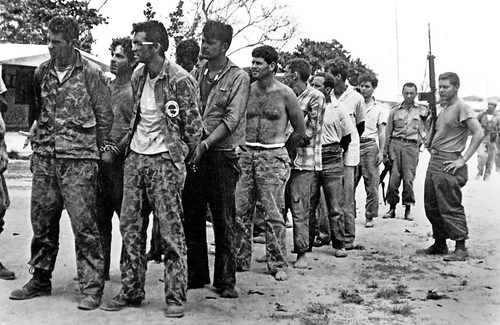
In April 1961 a CIA-trained brigade of Cuban exiles landed at the Bay of Pigs to topple Fidel Castro and was defeated within three days. The records show how a covert plan outgrew its cover.
 August 1960 – 1965
The plots against Fidel Castro
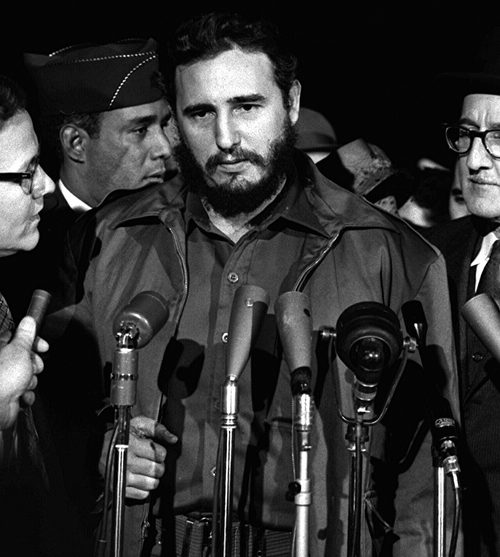
Between 1960 and 1965 the CIA pursued at least eight plots to kill Fidel Castro, using poison pills, gangsters and a Cuban insider. None succeeded, and who authorized them was never settled.
 9–16 March 1962
Operation Northwoods
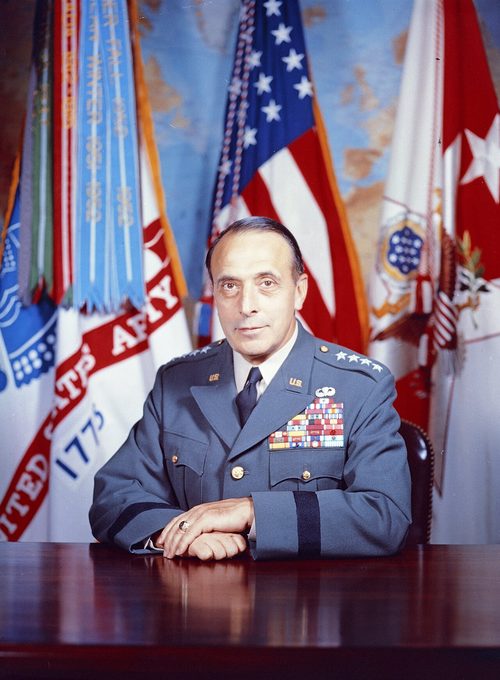
A March 1962 Joint Chiefs of Staff paper listing staged incidents that could be blamed on Cuba to justify a US invasion. It was a proposal only, and the Kennedy administration did not adopt it.
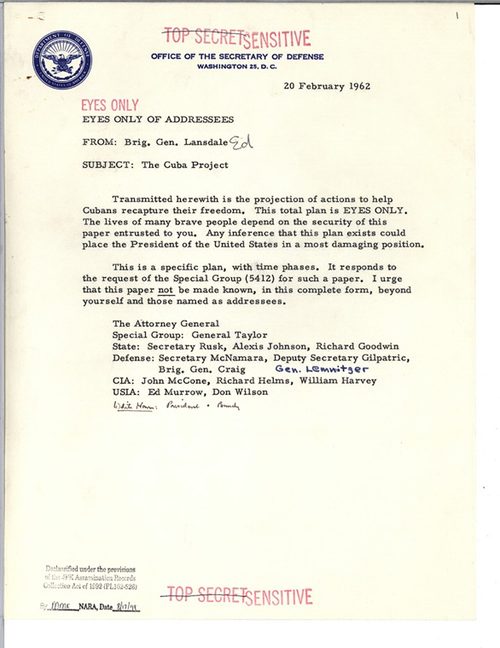 20 February 1962
Lansdale's "The Cuba Project" (1962)
Brig. Gen. Edward Lansdale's program review of 20 February 1962 for Operation Mongoose, with a six-phase timetable that aimed at an 'open revolt and overthrow' of the Castro government in October 1962.
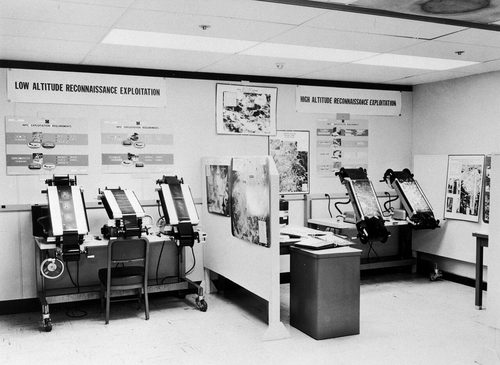 10 August – 20 November 1962
Intelligence in the Cuban Missile Crisis
How US intelligence missed, then found, Soviet missiles in Cuba in 1962: a wrong estimate, a five-week gap in U-2 coverage, the 14 October flight over San Cristóbal, and what the photographs never showed.