
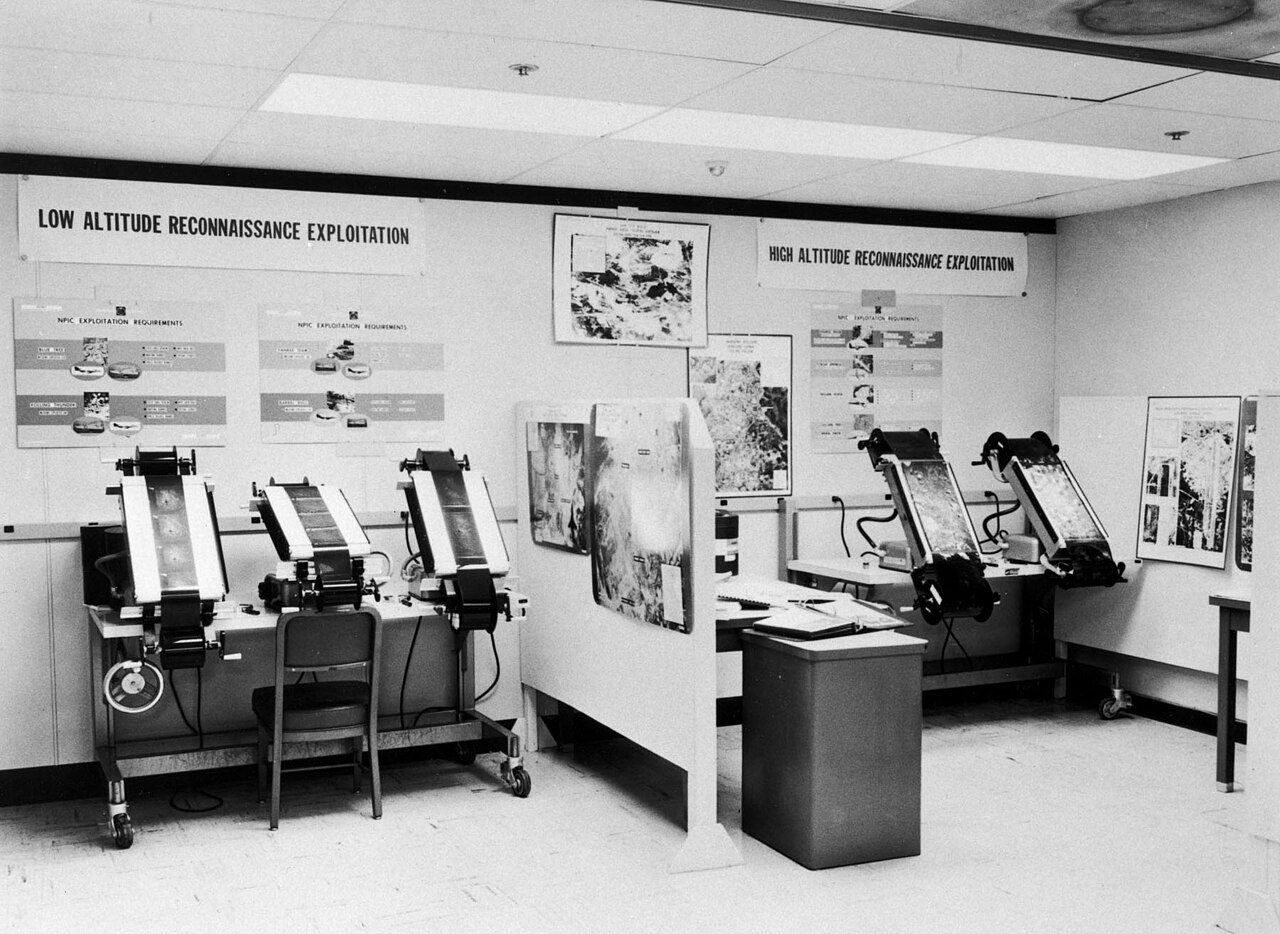

The intelligence story of October 1962 is usually told as a triumph: a U-2, a light table, a photo interpreter saying "We've got MRBMs in Cuba." The declassified record shows something less tidy. The formal estimate was wrong, the most useful collection was switched off for five weeks, and the crucial photographs were taken barely in time3.
A buildup nobody read correctly
Moscow's deployment, Operation Anadyr, was hidden by elaborate deception. The plan approved in July 1962 called for moving 50,874 men. Units were told they were going somewhere cold, and missiles and warheads were shipped under false manifests; the CIA's own later study of the operation treats it as a case of deliberate maskirovka5,6.
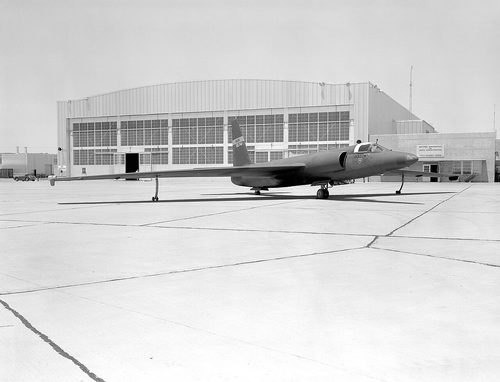
Signs of a buildup were plain by August. The second U-2 flight of the month, on 29 August, found SA-2 surface-to-air missile sites, the same type that had brought down Francis Gary Powers in 19603. Director of Central Intelligence John McCone had already argued on 10 August that the Soviets might be preparing to put ballistic missiles in Cuba, and he pressed the point with Kennedy on 22 and 23 August before leaving for his wedding and a honeymoon on the French Riviera. From there he sent a stream of what became known as the "honeymoon cables"3.
Almost no one agreed with him. Special National Intelligence Estimate 85-3-62, issued on 19 September 1962, judged that the Soviets valued Cuba mainly for political reasons and that the buildup was meant to protect Castro's regime. On missiles it said:
The USSR could derive considerable military advantage from the establishment of Soviet medium and intermediate range ballistic missiles in Cuba, or from the establishment of a Soviet submarine base there. As between these two, the establishment of a submarine base would be the more likely. Either development, however, would be incompatible with Soviet practice to date and with Soviet policy as we presently estimate it.
That is conclusion D of the estimate1. By then, according to the CIA's later reconstruction, recognizable missile equipment had already reached the San Cristóbal area, on 17–18 September3.
The photo gap
On 10 September, after the loss of a Taiwanese-flown U-2 over China and an Air Force U-2's brief stray into Soviet airspace, Secretary of State Dean Rusk and National Security Adviser McGeorge Bundy pressed the CIA to stop flights deep over Cuba. The compromise replaced one overflight with four short missions, two of them only over international waters, that avoided known SAM sites. Combined with a rule against flying when more than a quarter of the sky was forecast to be overcast, this left western and central Cuba unphotographed from early September until mid-October3.
McCone, back in Washington on 24 September, pushed to lift the restrictions. At a Special Group (Augmented) meeting on 4 October he said there had been no coverage of the western end of the island "for over a month." Meanwhile a Cuban agent recruited under Operation Mongoose had reported, in secret writing, "very secret and important work" in the hills near San Cristóbal, and refugees described large missiles moving west from Havana. Officers of the CIA's Task Force W marked a trapezoid on the map and had the Defense Intelligence Agency request the flight3.
Fourteen October
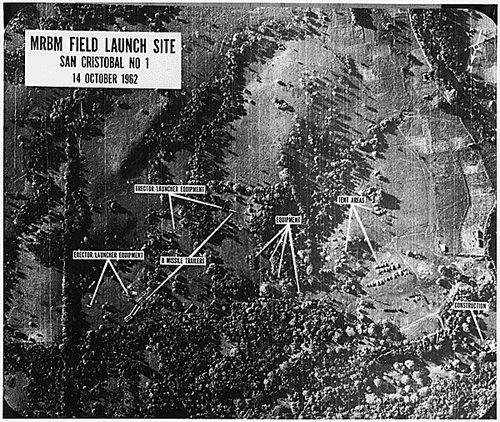
On 9 October one flight over western Cuba was approved. Weather and the need to train an Air Force pilot on the CIA's U-2 held it until Sunday 14 October, when Major Richard D. Heyser flew south to north across Pinar del Río and took 928 photographs in about six minutes2,3. The film reached the National Photographic Interpretation Center the next morning. Analysts found three medium-range ballistic missile sites near San Cristóbal, with eight large missile transporters and four erector-launchers. Two more U-2 flights on 15 October found a fourth MRBM site, two intermediate-range sites at Guanajay, and crates for Il-28 bombers2.
The CIA's deputy director told Bundy at 8:30 that evening. Bundy chose to let the President sleep and briefed him on the morning of 16 October2. At the first meeting of advisers that day, photo interpreters walked the group through the pictures before Rusk spoke of setting "in motion a chain of events that will eliminate this base"4.
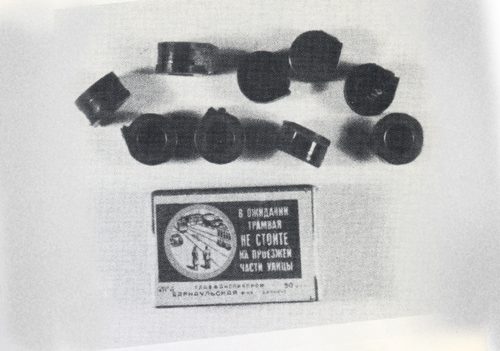
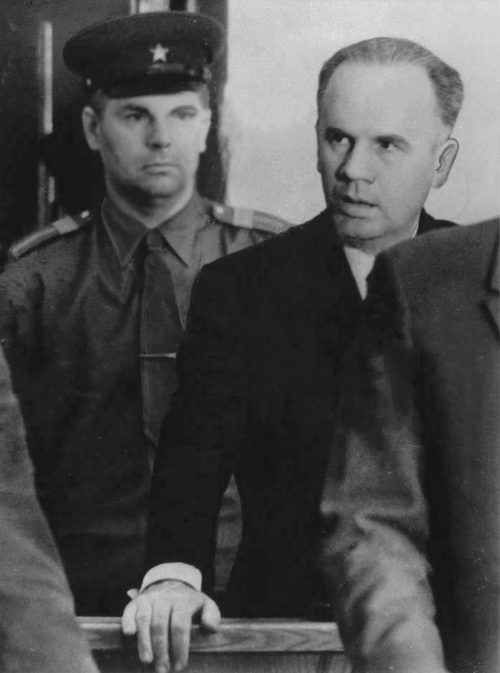
The interpreters could identify the SS-4 partly because of Oleg Penkovsky, the GRU colonel run by the CIA and MI6 in IRONBARK. He had supplied technical manuals on Soviet missile systems; he gave no warning of the Cuban deployment itself, and the KGB arrested him on 22 October, the day Kennedy announced the quarantine6,7.
Watching through the crisis
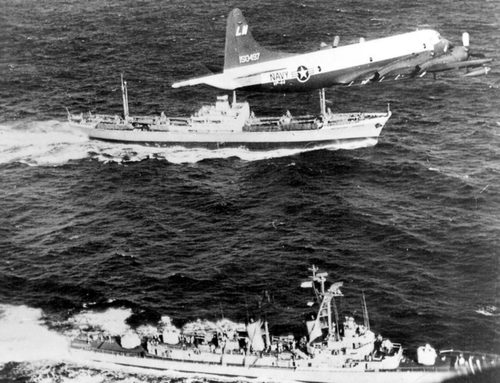
From 16 October the President authorized unrestricted U-2 flights3. From 23 October Navy RF-8A Crusaders and Air Force RF-101 Voodoos flew low-level photographic runs over the sites. On 27 October a U-2 flown by Major Rudolf Anderson was shot down over eastern Cuba by a Soviet SA-2, and he was killed6. Photography then tracked the dismantling of the sites and the loading of 42 missiles onto Soviet ships in November; US forces stood down on 20 November6.
What the photographs missed
Imagery showed missiles and launchers, not the warheads. According to a CIA study, the freighter Indigirka had already delivered the first nuclear warheads to Cuba in early October5. Nor did Washington know that Soviet forces had short-range tactical nuclear weapons for the defense of the island. That became public only in the 1990s, through Soviet participants at joint conferences and Russian sources6.
The documents
Declassified records of this operation, with the scans and their full text hosted here.
 19 September 1962 · 4 p.SNIE 85-3-62: the estimate that ruled out missiles in Cuba (1962)Director of Central Intelligence, for the United States Intelligence Board (drafted by the Office of National Estimates, CIA)The conclusions of the US intelligence community's estimate of 19 September 1962, which judged Soviet missiles in Cuba unlikely four weeks before a U-2 photographed them. Printed by the CIA History Staff in 1992.
 13 February 1964 · 153 p.Cuba 1962: Khrushchev's Miscalculated Risk (CIA staff study, 1964)CIA Directorate of Intelligence, Office of Research and Reports (DD/I Staff Study, SC 03387/64)A CIA staff study of February 1964 that rebuilt the Soviet missile deployment in Cuba from photography and reports, and argued that Moscow had judged the risk of an American military response to be slight.
- 16 October 196216 October 1962: the first White House meeting on the missile sitesWhite House taping system (transcript of audiotape 28.1, President's Office Files, Kennedy Library)The transcript of the meeting at which President Kennedy and his advisers first discussed U-2 photographs of Soviet medium-range missile sites in Cuba, and began weighing an air strike against a blockade.
Checking the record
Dates and outcome compared in two independent sources: they agree.
- FRUS
- U-2 flown by Maj. Richard D. Heyser over western Cuba on the morning of 14 October 1962; MRBMs confirmed by the CIA to Bundy at 8:30 p.m. on 15 October; President told the next morning. Three MRBM sites found near San Cristóbal on the first film; a fourth MRBM site and two IRBM sites at Guanajay found on 15 October flights.
- Wikipedia
- Heyser's U-2 photographed the sites on 14 October 1962; NPIC identified MRBMs on 15 October; Kennedy briefed 16 October. Discovery led to the quarantine and the Kennedy–Khrushchev settlement; the US did not know of tactical nuclear warheads in Cuba until 1992.
Dates and outcome agree. Wikipedia credits DIA analysts with the flight path; Holland's CIA article shows the target area came from a CIA agent report passed to DIA so that it would not carry only CIA fingerprints. This page follows Holland, who used declassified CIA records.
Sources
- FRUS Foreign Relations of the United States, 1961–1963, Volume X, Cuba, 1961–1962, Document 433: Special National Intelligence Estimate 85-3-62, US Department of State, Office of the Historian (1962-09-19).
- FRUS Foreign Relations of the United States, 1961–1963, Volume XI, Cuban Missile Crisis and Aftermath, Document 16: Editorial Note, US Department of State, Office of the Historian (1996).
- CIA The "Photo Gap" that Delayed Discovery of Missiles (Max Holland), Studies in Intelligence 49, no. 4, Central Intelligence Agency, Center for the Study of Intelligence (archived copy) (2005).
- FRUS Foreign Relations of the United States, 1961–1963, Volume XI, Document 18: Transcript of a Meeting at the White House, 16 October 1962, 11:50 a.m., US Department of State, Office of the Historian (1962-10-16).
- CIA Soviet Deception in the Cuban Missile Crisis (James H. Hansen), Studies in Intelligence 46, no. 1, Central Intelligence Agency, Center for the Study of Intelligence (archived copy) (2002).
- Wikipedia Cuban Missile Crisis, Wikipedia.
- Wikipedia Oleg Penkovsky, Wikipedia.
Elsewhere in the files
- Agency National Reconnaissance Office (NRO)
- Agency SDECE and DST (French intelligence)
- Document 16 October 1962: the first White House meeting on the missile sites
- Document CORONA: the CIA's 1995 documentary history of its first spy satellite
- Document Cuba 1962: Khrushchev's Miscalculated Risk (CIA staff study, 1964)
- Document Lansdale's "The Cuba Project" (1962)
- Document Penkovskiy's Legacy: a CIA analyst on the IRONBARK papers (1972)
- Document SNIE 85-3-62: the estimate that ruled out missiles in Cuba (1962)
- Document The Northwoods memorandum (1962)
- Operation CORONA
- Operation IRONBARK: the Penkovsky case
- Operation Operation Anadyr
- Operation Operation Mongoose
- Operation The Bay of Pigs invasion
- Operation The U-2 program and the 1960 shoot-down
- Person Oleg Penkovsky
- Tradecraft Overhead reconnaissance
- Tradecraft Secret writing
Read next
 May – November 1962
Operation Anadyr
The Soviet General Staff's 1962 plan to move nuclear missiles and some 42,000 troops to Cuba in secret, and the deception that hid it from US intelligence until a U-2 flight on 14 October.
 24 November 1954 – 16 May 1960
The U-2 program and the 1960 shoot-down
From 1956 the CIA's U-2 photographed the Soviet Union from 70,000 feet. On 1 May 1960 a missile brought down Francis Gary Powers near Sverdlovsk, the cover story collapsed and the Paris summit failed.
 20 April 1961 – 22 October 1962
IRONBARK: the Penkovsky case
How a disaffected GRU colonel, Oleg Penkovsky, fed the CIA and MI6 Soviet missile manuals in 1961–62, and how his IRONBARK material shaped US judgments in the Cuban Missile Crisis.
 1919–1963
Oleg Penkovsky
GRU colonel who spied for the CIA and MI6 in 1961–62, supplying the missile manuals behind the IRONBARK reporting of the Cuban crisis; arrested in October 1962 and shot in May 1963.
 16 October 1962
: the first White House meeting on the missile sites
The transcript of the meeting at which President Kennedy and his advisers first discussed U-2 photographs of Soviet medium-range missile sites in Cuba, and began weighing an air strike against a blockade.
 30 November 1961 – October 1962
Operation Mongoose
The Kennedy administration's 1961–62 covert program to overthrow Fidel Castro, run by Edward Lansdale under Robert Kennedy's eye, which aimed at a revolt in Cuba by October 1962.