
Portrait: Francis Gary Powers holds a model of the U-2 at a Senate Armed Services Committee hearing, 6 March 1962. Warren K. Leffler. Wikimedia Commons, CC0.
Francis Gary Powers spent less than two years in Soviet custody, but the suspicion that followed him home lasted the rest of his life. Critics said he had flown too low, failed to destroy his camera and talked too freely. The official record, much of it released decades later, mostly takes his side.
From Kentucky to the U-2
Powers was born on 17 August 1929 in Jenkins, Kentucky, a coal miner's son. After Milligan College he enlisted in the Air Force in October 1950 and was commissioned in 1952, flying F-84 Thunderjets6.
The CIA recruited him in January 1956 for its new high-altitude program. Like other U-2 pilots he left the Air Force, in May 1956, and became a civilian employee, with a written assurance that he could return to the service later. He trained in Nevada and was posted to the detachment at Incirlik near Adana, Turkey6,2. By 1960 the CIA counted him its most experienced U-2 pilot, with more flights than anyone else in the program1.
1 May 1960
Powers was chosen to fly Operation GRAND SLAM (the 1960 shoot-down), the first planned U-2 crossing of the entire Soviet Union, from Peshawar to Bodø in Norway. The aircraft assigned, Article 360, had a poor reputation. For the first time, he accepted the poison pin the agency offered, hidden in a silver dollar1,2.
About four hours into the flight, near Sverdlovsk, a surface-to-air missile burst close by. The aircraft went into a spin. Powers was pulled halfway out of the cockpit while still attached by his oxygen hoses, could not reach the destruct switches, and finally broke free and parachuted down. He threw away the coin but kept the needle in his pocket, and was seized soon after landing, some 1,200 miles inside the Soviet Union1,2,3.
Lubyanka and Vladimir
The CIA had given its pilots little guidance on capture; they were told they might as well talk, since the wreckage would reveal most of what they knew. Powers adopted a strategy of seeming to cooperate while holding back what he could2,1. His trial before the Military Collegium of the Soviet Supreme Court opened on 17 August 1960, his 31st birthday. On counsel's advice he said he was sorry, and on 19 August he was sentenced to ten years' "deprivation of liberty," the first three in prison. He served his time in Vladimir prison, east of Moscow2,1,6.
His release came through the case of Rudolf Abel, the Soviet illegal convicted in New York after the Hollow Nickel case. According to the CIA, Powers's father first proposed a swap. Abel's lawyer, James Donovan, negotiated it through Abel's supposed wife in East Germany. On 10 February 1962 the two men crossed the Glienicke Bridge between Potsdam and West Berlin; an American student, Frederic Pryor, was freed separately the same day1,2.
Cleared, but not welcomed
The CIA's new director, John McCone, set up a board of inquiry under the retired federal judge E. Barrett Prettyman. It reported on 27 February 1962 that Powers had acted in accordance with his instructions and had "complied with his obligations as an American citizen during this period." Debriefings, a polygraph and Kelly Johnson's study of the wreckage photographs supported him. On 6 March 1962 the Senate Armed Services Committee commended him2.
McCone excluded Powers when he gave the Intelligence Star to the other U-2 pilots in April 1963. Powers received it in April 1965, just before McCone left office2,1. He left the CIA in October 1962 and flew for Lockheed as a U-2 test pilot until 1970, then as a radio traffic pilot and, from 1976, a helicopter reporter for KNBC in Los Angeles6,1. In 1970 he published a memoir, Operation Overflight6.
On 1 August 1977 his helicopter crashed in Encino, killing Powers and his cameraman1,6. He was buried at Arlington National Cemetery6.
Recognition came late. The CIA's Director's Medal was awarded posthumously in 2000, and on 15 June 2012 the Air Force presented the Silver Star to his family. Its citation said he had "steadfastly refused all attempts to give sensitive defense information or be exploited for propaganda purposes"1,5. The FBI's file on him is now public4.
Key dates
- October 1950 Enlists in the US Air Force; later commissioned and trained as a fighter pilot.
- May 1956 Leaves the Air Force to fly the U-2 as a civilian CIA employee.
- 1 May 1960 Shot down near Sverdlovsk on Operation GRAND SLAM and captured.
- 19 August 1960 Convicted of espionage in Moscow and sentenced to ten years' deprivation of liberty.
- 10 February 1962 Exchanged for Rudolf Abel on the Glienicke Bridge, Berlin.
- 6 March 1962 Appears before the Senate Armed Services Committee, which commends him.
- April 1965 Receives the CIA's Intelligence Star, withheld two years earlier.
- 1 August 1977 Killed when his television news helicopter crashes in Los Angeles.
Sources
- CIA May Day Over Moscow: The Francis Gary Powers Story, Central Intelligence Agency (2020-04-29).
- CIA The Central Intelligence Agency and Overhead Reconnaissance: The U-2 and OXCART Programs, 1954-1974, Chapter 4 (incl. 'The Fate of Francis Gary Powers'), CIA History Staff (1992), released 2013, via the National Security Archive (1992).
- FRUS Foreign Relations of the United States, 1958–1960, Volume X, Part 1, Document 147 (Editorial Note on the U-2 incident), US Department of State, Office of the Historian.
- FBI Francis Gary Powers (FBI file), Federal Bureau of Investigation, The Vault.
- Other U-2 Pilot Gary Powers Receives Silver Star, ABC News (2012-06-15).
- Wikipedia Francis Gary Powers, Wikipedia.
- Wikipedia English Wikipedia article (used for cross-checking).
Elsewhere in the files
- Document After the U-2: the President and his advisers (May 1960)
- Document Francis Gary Powers before the CIA Board of Inquiry (22 February 1962)
- Operation CORONA
- Operation Intelligence in the Cuban Missile Crisis
- Operation Project Oxcart
- Operation The Hollow Nickel case
- Operation The U-2 program and the 1960 shoot-down
- Person Rudolf Abel (William Fisher)
- Tradecraft Concealment devices
- Tradecraft Illegals and legends
- Tradecraft Overhead reconnaissance
Read next
 24 November 1954 – 16 May 1960
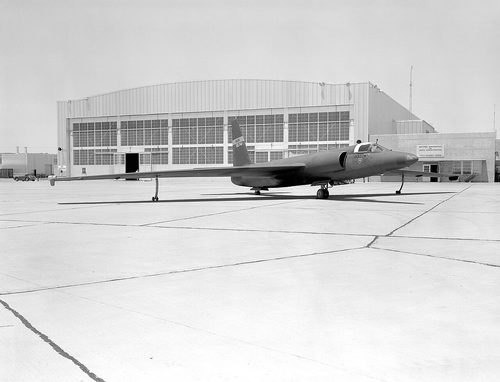
The U-2 program and the 1960 shoot-down
From 1956 the CIA's U-2 photographed the Soviet Union from 70,000 feet. On 1 May 1960 a missile brought down Francis Gary Powers near Sverdlovsk, the cover story collapsed and the Paris summit failed.
 1903–1971
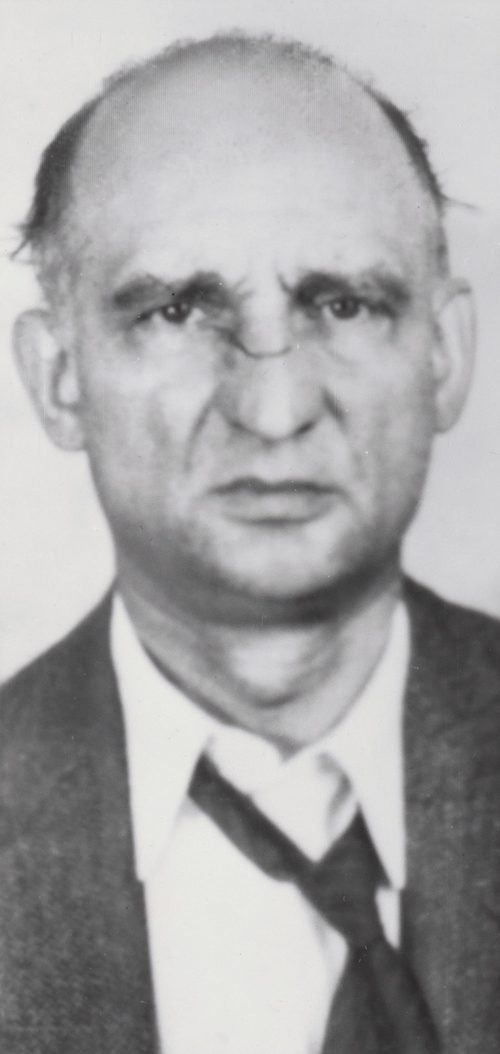
Rudolf Abel (William Fisher)
British-born KGB illegal who lived in Brooklyn as an artist, was arrested in 1957 under the name Rudolf Abel, and was exchanged for U-2 pilot Francis Gary Powers in 1962.
 22 June 1953 – 15 November 1957
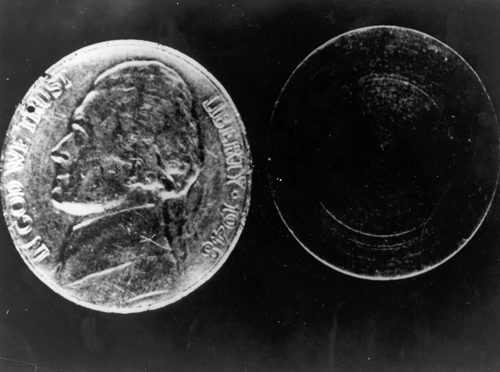
The Hollow Nickel case
A Brooklyn newsboy's trick nickel held a coded message the FBI could not read for four years, until a drunken KGB defector explained it and led agents to the illegal known as Rudolf Abel.
 29 August 1959 – 21 June 1968
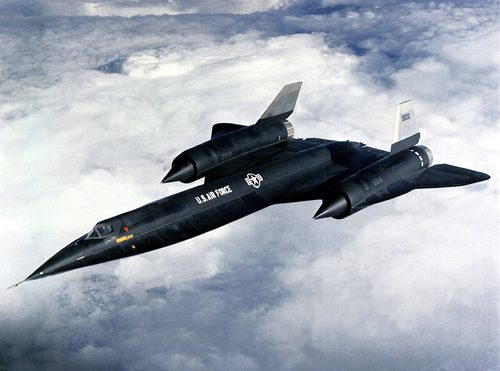
Project Oxcart
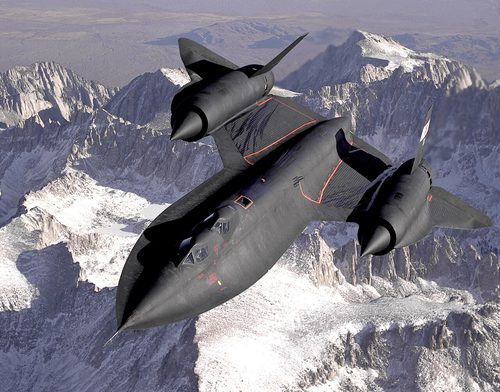
The CIA's Mach 3 titanium spy plane, the Lockheed A-12, was built to replace the U-2 over the Soviet Union. It never flew there; its only operation, BLACK SHIELD, covered Vietnam and North Korea in 1967–68.
 1956–1990s
Overhead reconnaissance
Balloons, the U-2, the A-12 and the CORONA satellites gave the United States its first reliable picture of Soviet military power. The programs were secret for decades; the NRO itself was not acknowledged until 1992.