
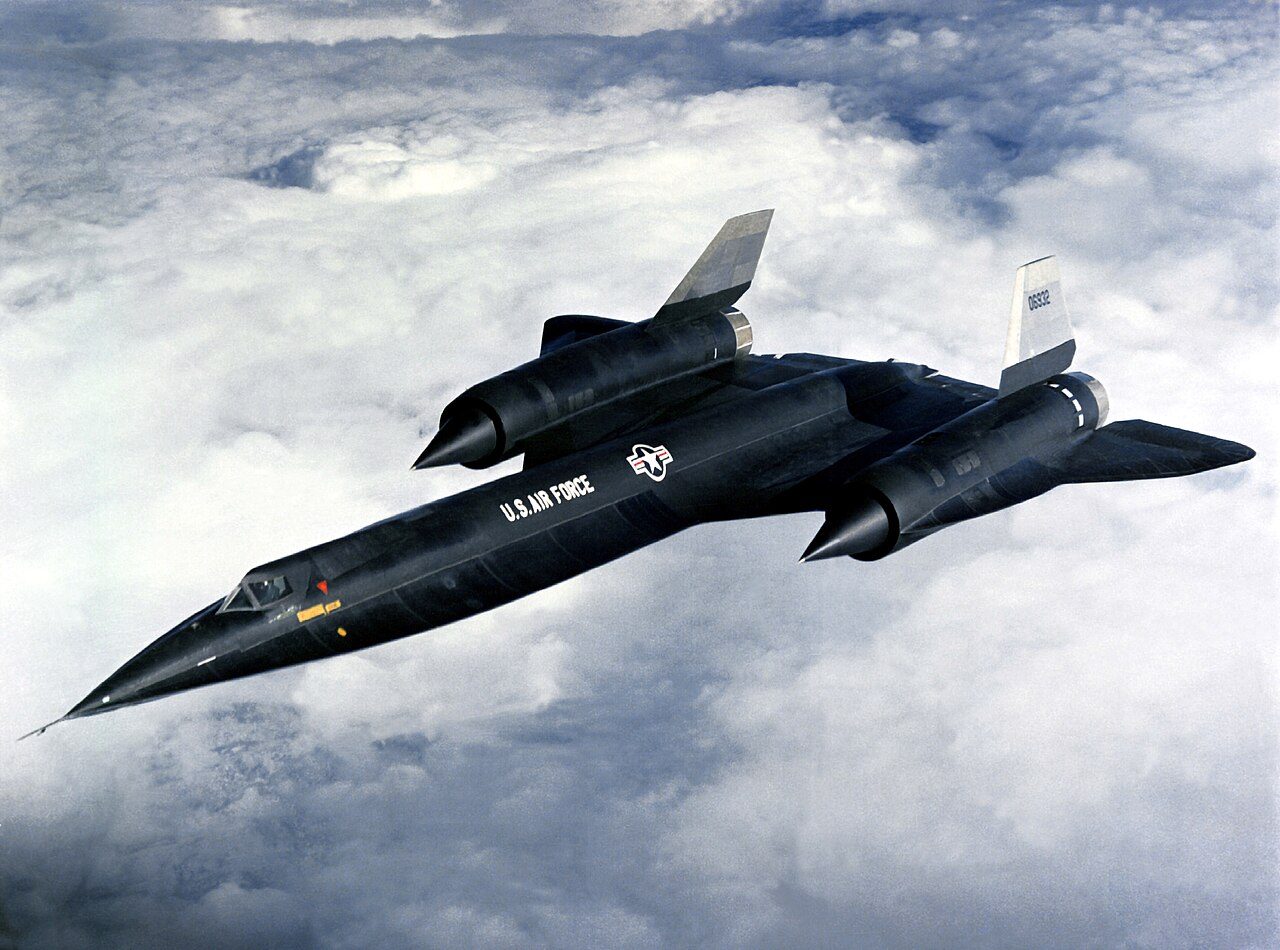
The U-2 was meant to have a short life over the Soviet Union. Before it was even operational, CIA planners guessed it might survive eighteen months to two years. After the first overflights in July 1956 showed that Soviet radar could see it, Richard Bissell feared for it within six months1. OXCART was his answer: an aircraft that would fly so high and so fast that it could not be caught.
From U-2 to Mach 3
Attempts to make the U-2 itself harder to see on radar, under Project RAINBOW, failed and were cancelled in May 19581. Lockheed's Skunk Works under Clarence "Kelly" Johnson began studies for a Mach 3 aircraft in April 1958. Its successive designs, numbered as versions of "Archangel," competed with Convair's FISH and KINGFISH in a CIA–Air Force evaluation called GUSTO2,1.
Convair's design had a smaller radar cross-section, and some CIA officials preferred it. Lockheed's promised slightly better performance at a lower price, and Lockheed had built the U-2 on time and in secret, while Convair's B-58 had run late and over budget. A joint panel picked Lockheed's A-12 on 29 August 1959. The work was renamed OXCART, a name drawn from a random list, under CIA program manager John Parangosky1,2,6. Bissell authorized twelve aircraft on 26 January 1960, and the contract was signed on 11 February. Lockheed quoted $96.6 million; costs eventually more than doubled1.
Building it
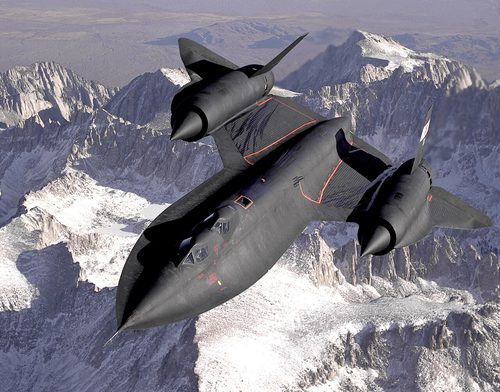
The A-12 was designed to cruise at Mach 3.2 at about 90,000 feet, where air friction would heat the airframe to more than 500°F. Lockheed made over 90 percent of the airframe from a titanium alloy, which was strong and heat-resistant but brittle and hard to machine. Early on, 95 percent of the metal delivered was rejected2,1. Pratt & Whitney's J58 engine and new fuels, sealants and tires had to be developed as well2.
The first A-12 was trucked to Groom Lake in Nevada, the CIA's U-2 test site, now generally known as Area 51. Lockheed's Lou Schalk took it up on an unofficial first flight on 26 April 1962, followed by the official one on 30 April. It first reached Mach 3 in July 19632,1. On 29 February 1964 President Lyndon Johnson announced an "A-11" aircraft. The machine he described was really the Air Force's YF-12A interceptor version, and its public appearance at Edwards Air Force Base drew attention away from the CIA aircraft in Nevada. In July 1964 he revealed the SR-71, the Air Force's two-seat reconnaissance derivative1. The A-12 was declared operational in 19653.
No mission
The A-12 was designed to overfly the Soviet Union, but by then it could not do so. After Francis Gary Powers was shot down in May 1960, flights over the USSR had stopped. By the time the A-12 was ready, CORONA satellites were photographing the Soviet Union regularly. Their pictures were slower and less sharp, but no missile could reach them and they provoked no diplomatic incidents3. Cuba stayed with the U-2, and in 1967 the SR-71 was assigned to take over Cuban overflights1,6. On 28 December 1966 Johnson approved ending OXCART by January 19681.
BLACK SHIELD
Then came a job in Asia. Washington wanted to know whether surface-to-surface missiles were being brought into North Vietnam. Director of Central Intelligence Richard Helms won Johnson's approval on 16 May 1967. The first A-12 flew nonstop from Nevada to Kadena on Okinawa on 22 May, and the first BLACK SHIELD mission flew on 31 May1,2. It photographed 70 of the 190 known SAM sites and found no surface-to-surface missiles. By mid-July analysts concluded none had been deployed2,1.
A typical mission refueled south of Okinawa, crossed North Vietnam in about 12 minutes, refueled again over Thailand and returned. The aircraft's wide turns sometimes took it into Chinese airspace1. North Vietnam began firing at the aircraft. On 30 October 1967 at least six missiles were fired at Dennis Sullivan's A-12, and a fragment lodged in the wing1,6.
After North Korea seized the USS Pueblo on 23 January 1968, the A-12's speed suddenly mattered. At a meeting the next morning, Helms said BLACK SHIELD could be ready within 24 hours, and McNamara called it "essential"4,2. On 26 January Jack Weeks flew over North Korea, and the photographs showed the Pueblo anchored near Wonsan, with no sign that North Korea was preparing for war2.
In all, the A-12s at Kadena flew 29 missions out of 58 alerts: 24 over North Vietnam, two over Cambodia, Laos and the DMZ, and three over North Korea2,3.
The end
The Air Force argued that its SR-71 carried more kinds of sensors; the CIA argued that the A-12 flew higher and had the better camera. A flyoff called NICE GIRL between 20 October and 3 November 1967 settled nothing. With the war's costs climbing, Defense Secretary Clark Clifford reaffirmed the termination on 16 May 1968, and Johnson confirmed it on 21 May1,2. On 4 June Jack Weeks disappeared on a test flight east of Manila. He was the program's second fatality; Walter Ray had died in a crash in January 1967. On 21 June 1968 Frank Murray flew the last A-12 into storage at Palmdale, California2,1.
The CIA's 1992 history passed a hard verdict on its own program:
The most advanced aircraft of the 20th century had become an anachronism before it was ever used operationally.
That is from1. Its record still stands: CIA says the A-12's sustained Mach 3.29 at 90,000 feet remains unbeaten by any air-breathing piloted jet3. The program's existence was acknowledged with the A-11 announcement in 1964, but the CIA's role became public only in stages. Hundreds of documents were released in 2007, when the agency put Article 128 on display at Langley, and the 1992 history was released in 20132,5.
The documents
Declassified records of this operation, with the scans and their full text hosted here.

Checking the record
Dates and outcome compared in two independent sources: they agree.
- Official history
- Lockheed design selected 29 August 1959; first flight 26 April 1962; BLACK SHIELD from 31 May 1967; last mission May 1968; last A-12 flight to storage 21 June 1968. 29 operational missions (24 over North Vietnam, 2 over Cambodia, Laos and the DMZ, 3 over North Korea); program ended in favor of the SR-71.
- Wikipedia
- Selected 1959; first flight 26 April 1962; BLACK SHIELD began 31 May 1967; final mission May 1968; retired June 1968. Retired after Vietnam and Pueblo-crisis sorties, superseded by the SR-71.
Dates and outcome agree. Counts of aircraft differ: CIA sources speak of 15 built under OXCART, Wikipedia of 18 airframes (13 A-12s, 3 YF-12As, 2 M-21s); this page uses CIA's mission figures from Archangel.
Sources
- CIA The Central Intelligence Agency and Overhead Reconnaissance: The U-2 and OXCART Programs, 1954-1974, Chapter 6: The U-2's Intended Successor: Project OXCART, 1956-1968, CIA History Staff (Pedlow and Welzenbach, 1992), released 2013, via the National Security Archive (1992).
- Official history Archangel: CIA's Supersonic A-12 Reconnaissance Aircraft (2nd ed.), by David Robarge, CIA Center for the Study of Intelligence (2012).
- CIA About the A-12 OXCART, CIA Museum.
- FRUS Foreign Relations of the United States, 1964–1968, Volume XXIX, Part 1, Korea, Document 217: Summary Minutes of Pueblo Group, 24 January 1968, US Department of State, Office of the Historian (1968-01-24).
- National Security Archive The Secret History of the U-2 – and Area 51 (Electronic Briefing Book 434), National Security Archive (2013-08-15).
- Wikipedia Lockheed A-12, Wikipedia.
- Wikipedia English Wikipedia article (used for cross-checking).
Elsewhere in the files
Read next
 24 November 1954 – 16 May 1960
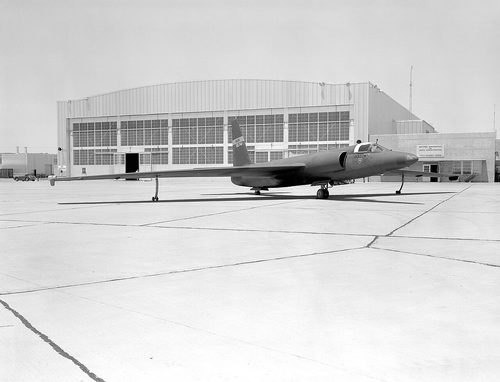
The U-2 program and the 1960 shoot-down
From 1956 the CIA's U-2 photographed the Soviet Union from 70,000 feet. On 1 May 1960 a missile brought down Francis Gary Powers near Sverdlovsk, the cover story collapsed and the Paris summit failed.
 February 1958 – 31 May 1972
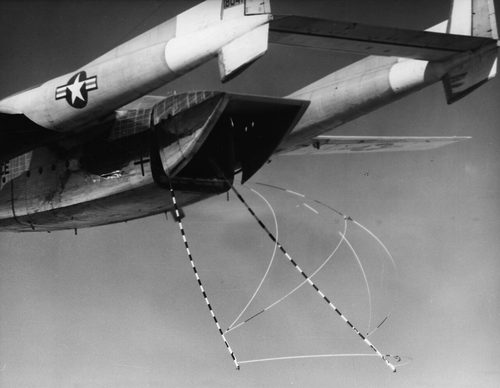
CORONA
America's first photographic reconnaissance satellite, run by the CIA and Air Force from 1958 to 1972. Its film buckets, caught in midair, ended the missile-gap guesswork and stayed secret until 1995.
 1956–1990s
Overhead reconnaissance
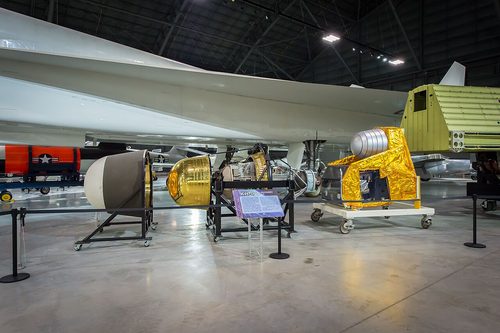
Balloons, the U-2, the A-12 and the CORONA satellites gave the United States its first reliable picture of Soviet military power. The programs were secret for decades; the NRO itself was not acknowledged until 1992.
 United States · 1961
National Reconnaissance Office (NRO)
The joint Pentagon-CIA office set up in 1961 to build and fly America's spy satellites and, for a time, its spy planes. Its name was secret until 1992.
 1929–1977
Francis Gary Powers
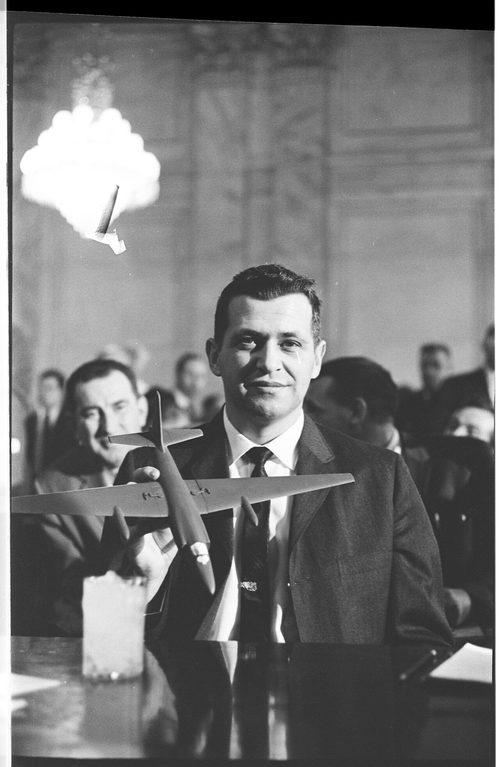
Air Force pilot turned CIA U-2 flier, shot down near Sverdlovsk on 1 May 1960, tried in Moscow and swapped for Rudolf Abel in 1962. Cleared by a CIA board, he was long treated coldly at home.