
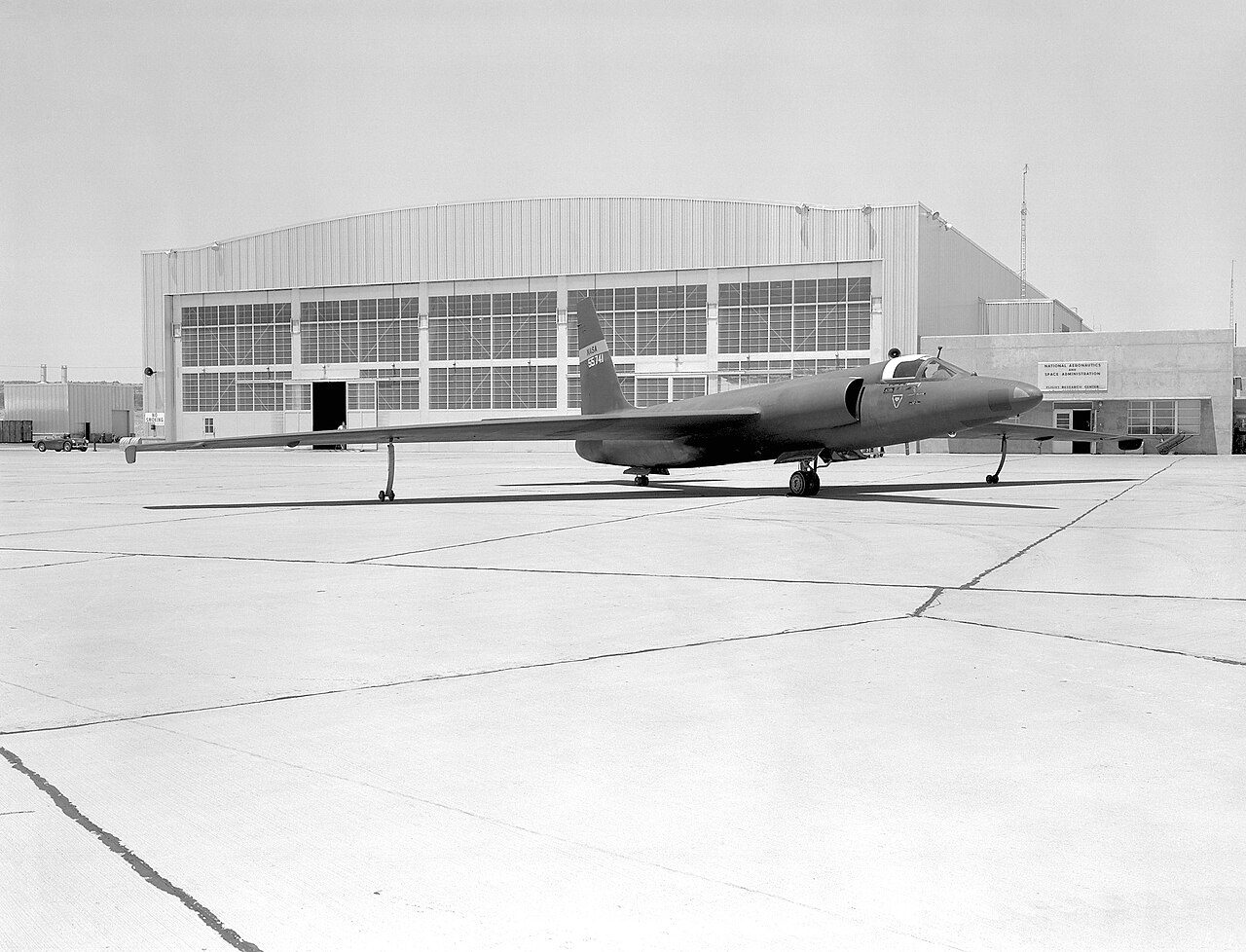

By May 1960 the United States had been photographing the Soviet interior from 70,000 feet for almost four years, and Moscow had said little about it in public. The loss of a single aircraft over the Urals on May Day ended the overflights and wrecked a summit. It also exposed a cover story that had never been built for the case where the pilot lived.
A civilian spy plane
The U-2 began with scientists, not generals. In late 1954 Edwin Land and James Killian of the president's Technological Capabilities Panel urged Dwight Eisenhower to build Lockheed's CL-282, an unarmed glider-like jet designed by Clarence "Kelly" Johnson. At a White House meeting on 24 November 1954 Eisenhower gave verbal approval and told Director of Central Intelligence Allen Dulles that the CIA would manage it, with the Air Force in support. He wanted it kept clear of service rivalries3.
The project, codenamed AQUATONE and run by Richard Bissell, was paid for through unvouchered CIA funds that escaped normal accounting. Test flying began in 1955 at Groom Lake, a dry lake bed in Nevada later known as Area 517,8.
On 4 July 1956 a U-2 made the first flight over the Soviet Union, from Wiesbaden. Eisenhower approved each Soviet overflight personally. Between 20 June and 10 July 1956 U-2s made eight flights beyond the Iron Curtain, five of them over the USSR. Photographs of nine long-range bomber bases showed no Myasishchev-4 "Bison" bombers. That ended the "bomber gap," which the Air Force had used to argue for more B-52s2,1. Soviet radar tracked the flights from the start. On 10 July 1956 Moscow handed the US embassy a note protesting the first two missions, and Eisenhower stopped all overflights until further notice. They resumed later, more rarely, from bases in Turkey, Pakistan and Japan, with British pilots flying some missions2,7.
GRAND SLAM
By 1960 the argument was about missiles, not bombers. On 9 April 1960 a U-2 crossed the Soviet border from Pakistan and photographed targets including the Tyuratam missile range. Moscow made no protest1,8. Eisenhower then allowed one more mission, and on 25 April his staff secretary told Bissell it must be flown before 1 May1,4.
Operation GRAND SLAM, mission 4154, was to be the first U-2 flight across the whole Soviet Union. The route ran from Peshawar over Tyuratam, Sverdlovsk and Plesetsk to Bodø in Norway, looking for deployed SS-6 ICBM sites. After repeated weather delays it was flown in Article 360, an aircraft pilots distrusted after a crash landing in Japan. Francis Gary Powers took off at 0159Z on 1 May 19601.
May Day was a poor choice. With little military air traffic over the holiday, Soviet radar could follow the intruder easily. Near Sverdlovsk an SA-2 battery fired. The aircraft was crippled and began to spin. Powers was thrown partly out of the cockpit before he could reach the destruct switches, and he parachuted to the ground, where he was quickly captured. The CIA history notes that the destruct charge was designed to wreck the camera, not the aircraft1. In March 1963 the US air attaché in Moscow learned that the same salvo had also destroyed a Soviet fighter sent up to intercept1.
The cover story
At headquarters, Bissell's staff assumed nobody could survive a fall from above 70,000 feet. They opened an inquiry codenamed MUDLARK and fell back on the cover story Eisenhower had approved in 1956: a NASA weather research flight, now said to have flown from Adana in Turkey1. NASA issued a statement on 3 May that the plane had probably gone down near Lake Van4.
Khrushchev released his information in stages. On 5 May he told the Supreme Soviet that a US "spyplane" had been shot down, but did not say the pilot was alive. Washington repeated the weather story. On 7 May he revealed that the pilot was alive; the American account fell apart1,4,8. Dulles offered to take responsibility and resign. Eisenhower refused, not wanting to appear to have lost control of his own government1. At the National Security Council on 9 May he said that "Our reconnaissance was discovered and we would just have to endure the storm and say as little as possible"5.
On 11 May Eisenhower took responsibility in public, an unusual step for a president. He called intelligence gathering
a distasteful but vital necessity.
That is from6. Privately, he had already approved ending provocative intelligence operations against the Soviet Union1.
Paris and after
The summit opened in Paris on 16 May. Khrushchev insisted on speaking first, read a long protest and demanded an apology. Eisenhower said the overflights had been suspended and would not resume, but would not apologize. The conference broke up, and with it Eisenhower's planned visit to the Soviet Union1,8.
The shock spread to the bases. British pilots were flown out of Adana, Japan asked for its U-2s to leave, and NASA withdrew its cover1. A Soviet military court sentenced Powers on 19 August 1960, and on 10 February 1962 he was exchanged for the Soviet intelligence officer Rudolf Abel on the Glienicke Bridge in Berlin1,8.
No U-2 flew over the Soviet Union again. Flights paused for months while the detachments came home, and the next U-2 operation, in late October 1960, was over Cuba, where U-2s would find Soviet missiles two years later (see the missile crisis)1. The shoot-down also hurried along the CORONA reconnaissance satellite and the faster A-12 OXCART8.
What the record shows, and what it doesn't
The CIA's own historians were blunt. After four years of success, Bissell's division had grown overconfident and had planned only for the "best case," in which neither pilot nor film survived1. The full history was written in 1992 and published heavily redacted in 1998. A far less redacted version, naming pilots and describing the British role, was released in 20137.
The documents
Declassified records of this operation, with the scans and their full text hosted here.
 1992 · 50 p.The CIA's history of OXCART: 'The U-2's Intended Successor' (1992)Gregory W. Pedlow and Donald E. Welzenbach, History Staff, Central Intelligence AgencyChapter 6 of the CIA's in-house history of overhead reconnaissance: how the A-12 was chosen, built in titanium and tested at Area 51, flown over Vietnam and North Korea in 1967–68, and retired in favor of the SR-71.
 22 February 1962 · 63 p.Francis Gary Powers before the CIA Board of Inquiry (22 February 1962)CIA Board of Inquiry (Judge E. Barrett Prettyman presiding), stenographic transcriptThe transcript of U-2 pilot Francis Gary Powers's sworn testimony to the CIA's Prettyman board, twelve days after his release: his briefings, the shoot-down near Sverdlovsk, his capture and his interrogation.
- 9 May 1960After the U-2: the President and his advisers (May 1960)Marion W. Boggs, National Security Council staff (drafted 13 May 1960)The record of the 9 May 1960 National Security Council meeting, where Eisenhower told his advisers to 'endure the storm' over Francis Gary Powers's downed U-2 and the CIA assessed why Khrushchev was exploiting it.
Checking the record
Dates and outcome compared in two independent sources: they agree.
- CIA
- Powers took off from Peshawar at 0159Z on 1 May 1960 and was downed near Sverdlovsk; Khrushchev announced the shoot-down on 5 May; Eisenhower took responsibility on 11 May; the Paris summit ended after the 16 May session. Cover story destroyed, overflights of the USSR suspended, summit and Eisenhower's visit to the USSR cancelled; Powers tried in August 1960 and exchanged for Abel on 10 February 1962.
- Wikipedia
- Shot down 1 May 1960 near Kosulino; NASA cover release 5 May; Khrushchev revealed the pilot was alive 7 May; summit talks 15–16 May. Summit cancelled; Powers convicted 19 August 1960 and exchanged for Abel on 10 February 1962.
Dates and outcome agree. Sources differ on when the cover story first went public (the CIA history says late on 2 May at Adana; FRUS cites a NASA statement of 3 May; Wikipedia a NASA release of 5 May) and on how many missiles were fired; this page follows the CIA history and FRUS.
Sources
- CIA The Central Intelligence Agency and Overhead Reconnaissance: The U-2 and OXCART Programs, 1954-1974, Chapter 4: The Final Overflights of the Soviet Union (Pedlow and Welzenbach), CIA History Staff (1992), released 2013, via the National Security Archive (1992).
- CIA The Central Intelligence Agency and Overhead Reconnaissance, Chapter 3: U-2 Operations in the Soviet Bloc and Middle East, 1956-1958, CIA History Staff (1992), released 2013, via the National Security Archive (1992).
- CIA The Central Intelligence Agency and Overhead Reconnaissance, Chapter 1: Searching for a System, CIA History Staff (1992), released 2013, via the National Security Archive (1992).
- FRUS Foreign Relations of the United States, 1958–1960, Volume X, Part 1, Document 147 (Editorial Note on the U-2 incident), US Department of State, Office of the Historian.
- FRUS Foreign Relations of the United States, 1958–1960, Volume X, Part 1, Document 149: Memorandum of Discussion at the 444th Meeting of the National Security Council, 9 May 1960, US Department of State, Office of the Historian (1960-05-09).
- Other The President's News Conference, May 11, 1960, The American Presidency Project, UC Santa Barbara (Public Papers of the Presidents) (1960-05-11).
- National Security Archive The Secret History of the U-2 – and Area 51 (Electronic Briefing Book 434), National Security Archive (2013-08-15).
- Wikipedia 1960 U-2 incident, Wikipedia.
- Wikipedia English Wikipedia article (used for cross-checking).
Elsewhere in the files
- Agency Central Intelligence Agency (CIA)
- Agency National Reconnaissance Office (NRO)
- Document 16 October 1962: the first White House meeting on the missile sites
- Document Abel v. United States: the Supreme Court and the spy's wastebasket (1960)
- Document After the U-2: the President and his advisers (May 1960)
- Document CORONA: the CIA's 1995 documentary history of its first spy satellite
- Document Cuba 1962: Khrushchev's Miscalculated Risk (CIA staff study, 1964)
- Document Francis Gary Powers before the CIA Board of Inquiry (22 February 1962)
- Document The CIA's history of OXCART: 'The U-2's Intended Successor' (1992)
- Operation CORONA
- Operation Intelligence in the Cuban Missile Crisis
- Operation Operation Anadyr
- Operation Operation Gold (the Berlin Tunnel)
- Operation Project Azorian (the Glomar Explorer)
- Operation Project Oxcart
- Operation The Hollow Nickel case
- Person Allen Dulles
- Person Francis Gary Powers
- Person Rudolf Abel (William Fisher)
- Tradecraft Concealment devices
- Tradecraft Overhead reconnaissance
Read next
 1929–1977
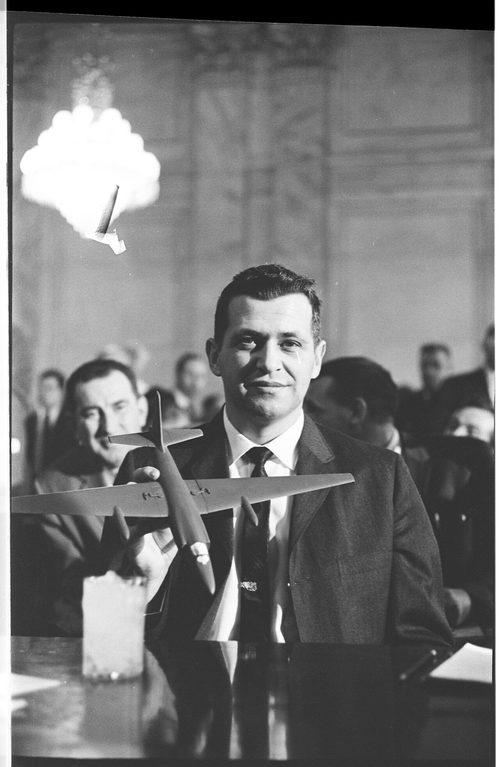
Francis Gary Powers
Air Force pilot turned CIA U-2 flier, shot down near Sverdlovsk on 1 May 1960, tried in Moscow and swapped for Rudolf Abel in 1962. Cleared by a CIA board, he was long treated coldly at home.
 29 August 1959 – 21 June 1968
Project Oxcart
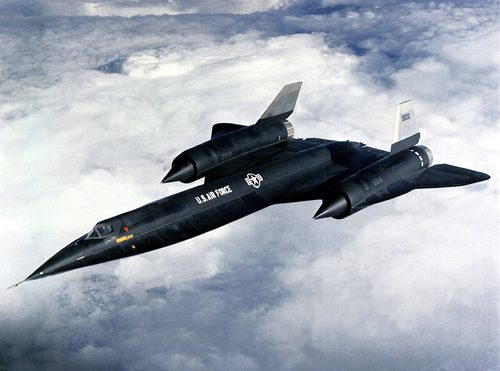
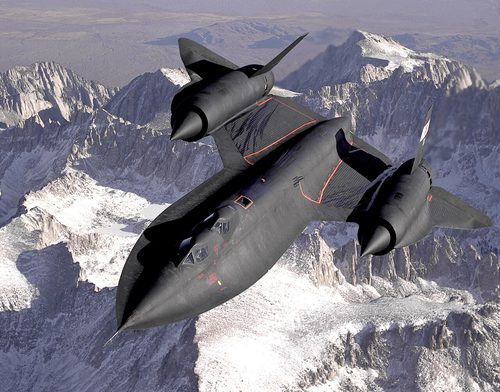
The CIA's Mach 3 titanium spy plane, the Lockheed A-12, was built to replace the U-2 over the Soviet Union. It never flew there; its only operation, BLACK SHIELD, covered Vietnam and North Korea in 1967–68.
 February 1958 – 31 May 1972
CORONA
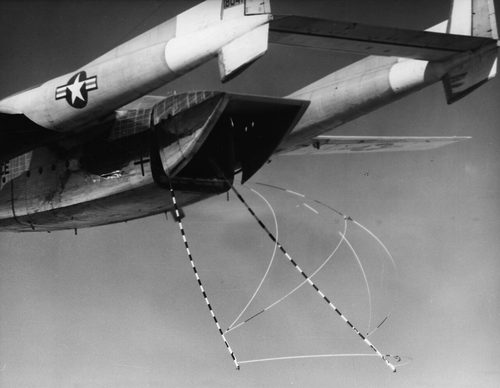
America's first photographic reconnaissance satellite, run by the CIA and Air Force from 1958 to 1972. Its film buckets, caught in midair, ended the missile-gap guesswork and stayed secret until 1995.
 1956–1990s
Overhead reconnaissance
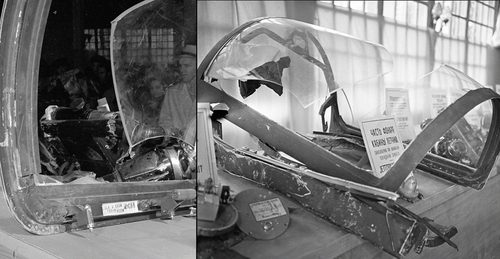
Balloons, the U-2, the A-12 and the CORONA satellites gave the United States its first reliable picture of Soviet military power. The programs were secret for decades; the NRO itself was not acknowledged until 1992.
 9 May 1960
After the U-2: the President and his advisers (May 1960)
The record of the 9 May 1960 National Security Council meeting, where Eisenhower told his advisers to 'endure the storm' over Francis Gary Powers's downed U-2 and the CIA assessed why Khrushchev was exploiting it.
 10 August – 20 November 1962
Intelligence in the Cuban Missile Crisis
How US intelligence missed, then found, Soviet missiles in Cuba in 1962: a wrong estimate, a five-week gap in U-2 coverage, the 14 October flight over San Cristóbal, and what the photographs never showed.