

On 27 January 1955 Secretary of State John Foster Dulles had an urgent message delivered to Egypt's foreign minister. Two men had just been condemned to death in Cairo, and Dulles was "much disturbed" that their execution might damage American efforts to calm the Arab-Israeli conflict. He asked, without questioning the court's verdict, that the sentences be commuted. Four days later the US embassy reported that the hangings had taken place that morning1.
The condemned men, Moshe Marzouk and Shmuel Azar, were Egyptian Jews who had planted firebombs for Israeli military intelligence. The operation behind them, code-named Susannah, became the Lavon affair3,4.
The plan
In 1954 Britain was negotiating its withdrawal from the Suez Canal base, with American encouragement. Israel feared that without British troops nothing would stand between Egypt and the Negev. In the summer of 1954 the director of military intelligence (Aman), Colonel Binyamin Gibli, activated a sleeper network of young Egyptian Jews, Unit 131, to carry out arson and bomb attacks that would look like the work of Egyptian communists or the Muslim Brotherhood. The aim was to persuade London and Washington that Egypt's new military government could not keep order4,6,3.
The network had been built in the early 1950s by an Israeli officer, Avraham Dar, who posed in Egypt as a British subject from Gibraltar. Several members had been brought secretly to Israel in 1952 for training in sabotage and photography. In 1954 a new Israeli controller, Avri Elad, arrived under the identity of a former SS officer named Paul Frank3,4.
July 1954
On 2 July 1954 the cell set small incendiary devices in Alexandria's post office. On 14 July devices went off in the US Information Agency libraries in Cairo and Alexandria. They were simple delayed-action bombs placed on library shelves before closing time, and they did little damage and hurt no one4,3.
Later that month a member of the cell was carrying a device to a cinema in Alexandria when it ignited in his pocket. A fire engine was already waiting outside; the police had been watching. A search of his home produced the bomb-making materials and led to the rest of the group. Elad left Egypt in early August. About a dozen people were arrested, including Israeli agents; one of them, Meir Max Bineth, and an Egyptian Jew, Yosef Carmon, killed themselves in custody3,4.
Trial in Cairo
A military court heard the case from 11 December 1954 to 27 January 1955. Marzouk and Azar were sentenced to death, two defendants were acquitted, and the others received terms from seven years to life. Appeals from Britain, from Jewish organizations and from Dulles failed, and the two men were hanged on 31 January4,1,3.
Israeli censorship kept the facts from the public, which was told the defendants were innocent victims of an Egyptian show trial. Israel did not acknowledge the network until 20054,3.
The question of the order
In Jerusalem the affair turned into a fight over who had authorized it. Gibli said Defense Minister Pinhas Lavon had given him an oral order; Lavon said he had not. Prime Minister Moshe Sharett appointed two senior figures, Justice Isaac Olshan and the former chief of staff Yaakov Dori, who could not reach a conclusion. Lavon resigned. The American embassy reported the announcement of his resignation on 17 February 1955 and Ben-Gurion's surprise return as defense minister4,2,5.
Eleven days later Israeli troops raided an Egyptian army post in Gaza. The American embassy, analyzing the raid, listed "Cairo trial and spy executions" among the reasons Israel's government wanted to strike at Egypt2.
Afterward
The surviving prisoners were released in stages, the last in 1968 under a secret clause of a prisoner exchange after the Six-Day War. Gibli was removed from military intelligence in March 1955. Lavon retired from public life in 1964 and died in 19764,3,5,6.
Accounts of the network's collapse dwell on how it was built. Its members were friends who all knew one another, so one arrest exposed the rest, and none had been prepared for interrogation3.
The documents
Declassified records of this operation.
Checking the record
Dates and outcome compared in two independent sources: they agree.
- FRUS
- Death sentences pending on 27 January 1955; the US embassy in Cairo reported the executions carried out on the morning of 31 January 1955. Two men convicted in the Cairo trial were executed despite a US appeal for commutation.
- Wikipedia
- Bombings 2 and 14 July 1954; trial 11 December 1954 to 27 January 1955; Lavon resigned 17 February 1955. Two operatives executed, two suicides in custody, two acquitted, the rest imprisoned; Lavon forced to resign.
The two sources agree on the trial's outcome and dates. FRUS does not name the condemned men or describe the bombings; those details come from Israeli and secondary accounts, and the State Department record confirms Lavon's resignation was announced on 17 February 1955.
Sources
- FRUS Foreign Relations of the United States, 1955–1957, Volume XIV, Arab-Israeli Dispute, 1955, Document 12, US Department of State, Office of the Historian (1955-01-27).
- FRUS Foreign Relations of the United States, 1955–1957, Volume XIV, Arab-Israeli Dispute, 1955, Document 41, US Department of State, Office of the Historian (1955-03-04).
- Other The Lavon Affair, Jewish Virtual Library.
- Wikipedia Lavon affair, Wikipedia.
- Wikipedia Pinhas Lavon, Wikipedia.
- Wikipedia Binyamin Gibli, Wikipedia.
- Wikipedia English Wikipedia article (used for cross-checking).
Elsewhere in the files
Read next
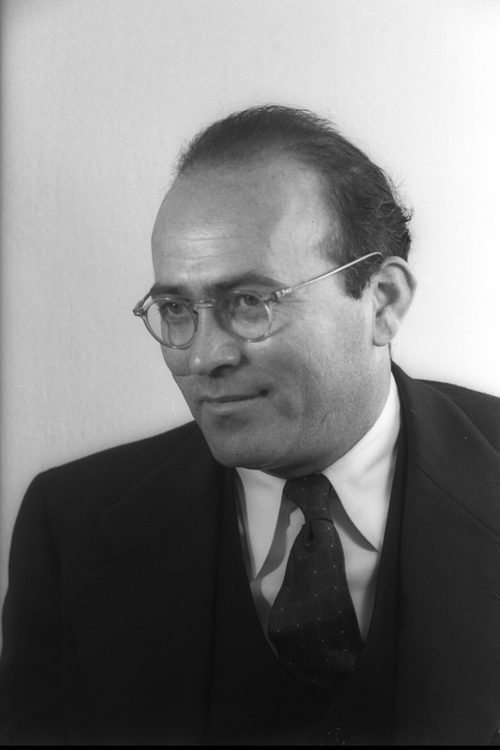 Israel · 1949
Mossad
Israel's foreign intelligence and covert action service, founded in 1949 and answerable only to the prime minister. Its early record runs from the capture of Eichmann to the Lillehammer killing of an innocent man.
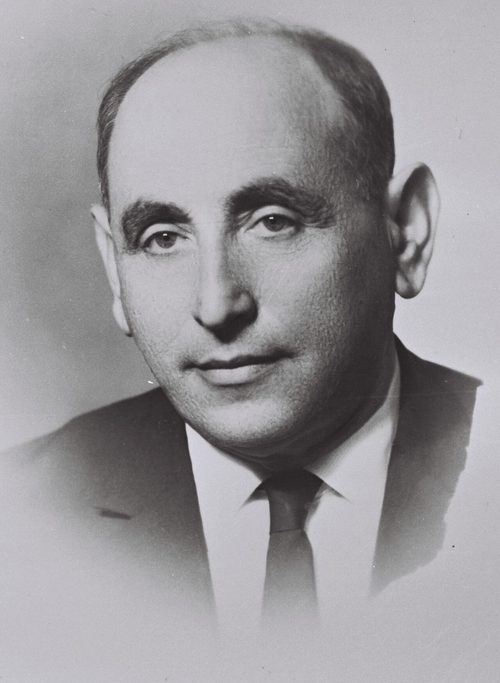 1912–2003
Isser Harel
First head of Israel's Shin Bet and director of the Mossad from 1952 to 1963, the only man to command both services at once. He ran the 1960 capture of Adolf Eichmann and resigned in a dispute with Ben-Gurion.
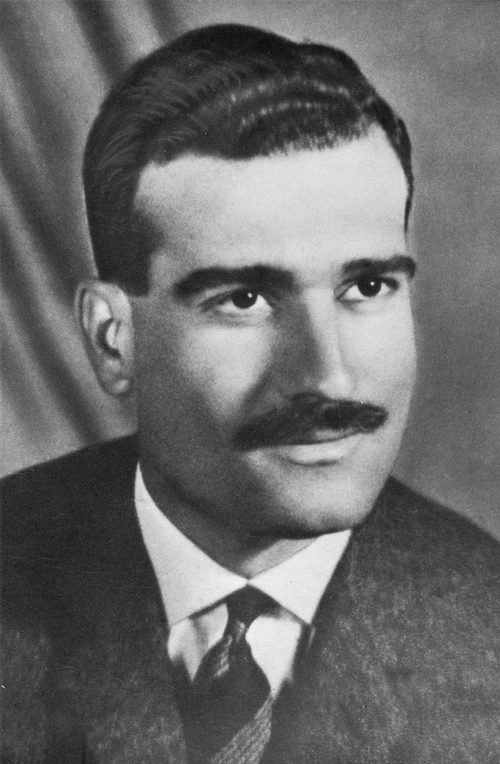 1924–1965
Eli Cohen
Egyptian-born Israeli agent who lived in Damascus from 1962 as a returning émigré businessman, cultivated Syria's Ba'athist elite, and was caught at his transmitter in January 1965 and publicly hanged.
 1963 – 16 August 1966
Operation Diamond
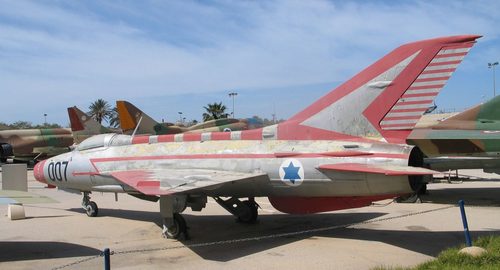
In August 1966 an Iraqi Air Force captain recruited by the Mossad flew his MiG-21, the Soviet Union's newest fighter, to Israel. Israel tested it and in 1968 lent it to the United States, which flew it at Area 51.