
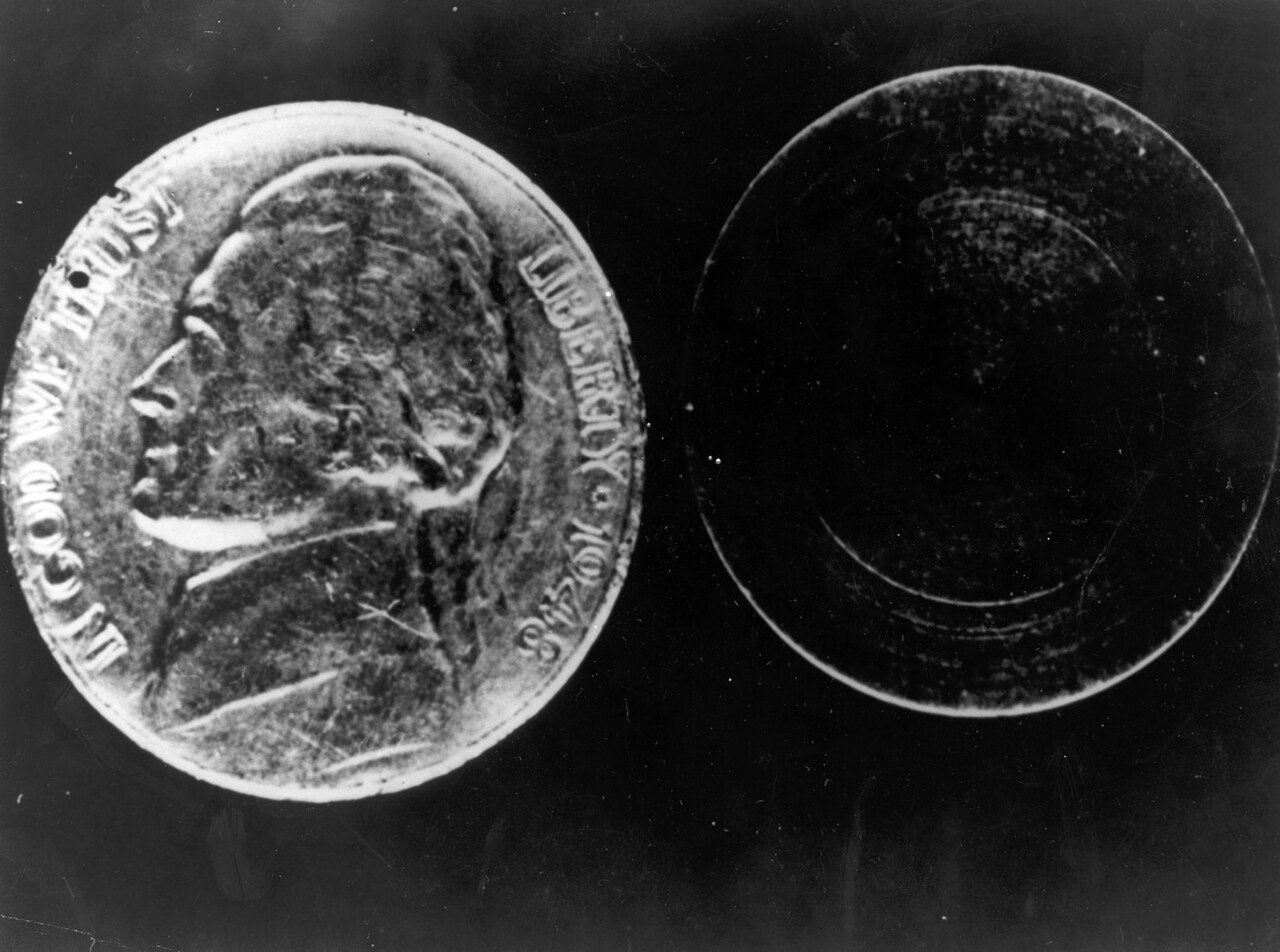
On the evening of 22 June 1953 a newsboy for the Brooklyn Eagle was collecting money at an apartment house at 3403 Foster Avenue. Two women across the hall pooled their coins to change a dollar for him. One nickel felt light. When he dropped it on the floor it split in two, and inside was a tiny photograph of rows of numbers1.
Through a police officer's daughter who knew the boy, word reached a New York detective, who mentioned it to an FBI agent on 24 June; the coin arrived at the FBI Laboratory in Washington on 26 June1.
Four years of dead ends
The laboratory found a carefully made object. The face was a 1948 Jefferson nickel; the back came from a different coin, struck between 1942 and 1945 in the wartime copper-silver alloy. A tiny hole had been drilled in the R of "TRUST" so the halves could be pried apart1. The microphotograph showed ten columns of typed five-digit groups, most columns 21 groups long. The typewriter could not be matched to any American make, which suggested a foreign machine1.
The FBI could not break the cipher1,4. Agents showed the coin to novelty dealers, who said it was useless for magic tricks because the cavity was too small for anything but paper; they questioned defectors from Soviet-bloc services, who could not help; and field offices sent in hollow tokens and trick coins from across the country, none of them linked to the nickel1.
The defector
The answer walked into the US Embassy in Paris in early May 1957. Reino Hayhanen, a KGB lieutenant colonel born near Leningrad in 1920, said he had spent five years in the United States, had been ordered home, and did not want to go1. He had entered the country in October 1952 on a passport issued in Helsinki to "Eugene Maki", using the identity of an American-born man whose family had emigrated to Soviet Estonia in the 1920s1. The CIA and NSA history of Venona calls him an "unreliable illegal" who feared punishment at home3.
Hayhanen was flown to New York on 10 May 19571. He described meetings at the Prospect Park subway station and dead drops in a fence near Macombs Bridge and a lamp post in Fort Tryon Park. On 15 May agents dug a hollow bolt out of cement steps in Prospect Park, where it had been sealed by a repair crew two years earlier; it held a typed note complaining of a missed meeting1. In Hayhanen's house in Peekskill they found a hollowed Finnish 50-markka coin with a pinhole in one letter, made the same way as the nickel1. With Hayhanen's account of the cipher systems he had used, the laboratory had the full text of the nickel's message by 3 June 19571.
It was an anticlimax. The message was a welcome note to Hayhanen from Moscow, sent soon after his arrival:
WE CONGRATULATE YOU ON A SAFE ARRIVAL. WE CONFIRM THE RECEIPT OF YOUR LETTER TO THE ADDRESS `V REPEAT V' AND THE READING OF LETTER NUMBER 1.1
It went on to promise money for his cover business and to tell him how to split personal details across separate messages1.
Finding "Mark"
Hayhanen's first superior, "Mikhail", he identified from photographs as Mikhail Svirin, formerly first secretary of the Soviet delegation to the United Nations, who had gone home in October 19561. His second, "Mark", was a KGB colonel who had entered the United States illegally from Canada around 1948. Hayhanen remembered a photo storage room near Fulton Street in Brooklyn1.
Agents traced it to 252 Fulton Street, where a photographer named Emil R. Goldfus had kept a fifth-floor studio since January 1954 and had left in late April 1957, saying he was going south for his sinuses1. On the night of 13 June agents saw a light in the studio and followed a man to the Hotel Latham on East 28th Street, where he was registered as Martin Collins. On 15 June Hayhanen looked at a surveillance photograph and said, "That's 'Mark'"1.
On 21 June 1957 officers of the Immigration and Naturalization Service arrested the man on an alien warrant, with FBI agents present1,2. The searches produced, among other things, a hollowed pencil holding eighteen microfilms and a block of wood wrapped in sandpaper with a cipher pad inside, both retrieved from his hotel wastebasket2. In custody he gave his name as Rudolf Ivanovich Abel, a Soviet citizen, but refused to discuss his work1. He was in fact William Fisher, a British-born KGB officer; see Rudolf Abel (William Fisher)3,5.
Trial and afterlife
Abel was tried in federal court in New York in October 1957, with Hayhanen as the main government witness1. On 25 October the jury convicted him of conspiracy to transmit defense information to the Soviet Union, conspiracy to obtain it, and conspiracy to act as an unregistered foreign agent; on 15 November Judge Mortimer W. Byers sentenced him to thirty years1. On 28 March 1960 the Supreme Court, 5 to 4, held that the items seized after his immigration arrest had been properly admitted2. On 10 February 1962 he was exchanged in Berlin for the U-2 pilot Francis Gary Powers1,5. See The U-2 program and the 1960 shoot-down.
The case was a counterintelligence success built almost entirely on a volunteer. Benson and Warner note that Abel's arrest "marked the first time the government had caught a Soviet 'illegal' working in America", and that in the 1950s American counterintelligence leads came mostly from walk-ins like Hayhanen3. The objects themselves, the nickel, the bolt and the coins, became standard exhibits of Cold War concealment devices.
The documents
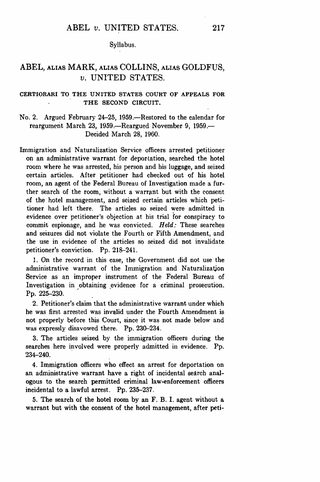
Declassified records of this operation, with the scans and their full text hosted here.

Checking the record
Dates and outcome compared in two independent sources: they agree.
- FBI
- Nickel found 22 June 1953; Hayhanen defected in Paris early May 1957; arrest 21 June 1957; verdict 25 October 1957; sentence 15 November 1957. Message decoded by 3 June 1957; Abel convicted on three conspiracy counts, sentenced to thirty years; exchanged for Francis Gary Powers on 10 February 1962.
- Wikipedia
- 22 June 1953; defection May 1957; verdict 25 October 1957; sentence 15 November 1957. Fisher (alias Abel) convicted on all three counts and later exchanged for Powers.
Both follow the FBI's account closely. They differ only in detail: the FBI describes Hayhanen's coin as a hollow 50-markka piece, while one Wikipedia article calls it a 5-mark coin. This page follows the FBI.
Sources
- FBI Hollow Nickel/Rudolf Abel, Federal Bureau of Investigation (archived copy).
- Court record Abel v. United States, 362 U.S. 217 (1960), Legal Information Institute, Cornell Law School (1960-03-28).
- CIA Venona: Soviet Espionage and the American Response, 1939–1957 (Introduction), Central Intelligence Agency and National Security Agency (1996).
- Wikipedia Hollow Nickel Case, Wikipedia.
- Wikipedia Rudolf Abel, Wikipedia.
- Wikipedia English Wikipedia article (used for cross-checking).
Elsewhere in the files
- Agency KGB
- Document Abel v. United States: the Supreme Court and the spy's wastebasket (1960)
- Document After the U-2: the President and his advisers (May 1960)
- Person Francis Gary Powers
- Person Morris and Lona Cohen
- Person Rudolf Abel (William Fisher)
- Tradecraft Brush passes
- Tradecraft Concealment devices
- Tradecraft Dead drops
- Tradecraft Illegals and legends
- Tradecraft Microdots
- Tradecraft Numbers stations
- Tradecraft One-time pads
- Tradecraft Surveillance and countersurveillance
Read next
 1940s–1980s
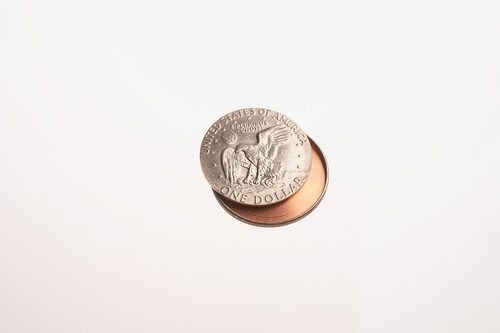
Concealment devices
Hollow coins, bolts, batteries and books: the everyday objects spies used to carry film and messages. Many now sit in FBI and CIA collections, and nearly all were found the same way, through an informant or an arrest.
 1940s–2001
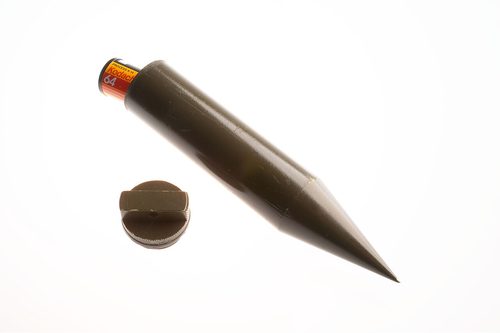
Dead drops
A hiding place where one spy leaves material for another to collect later, so the two never meet. The Abel, Ames and Hanssen cases show how it worked and how the FBI turned it against its users.
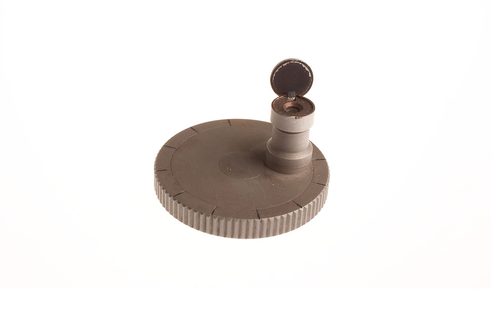 1870–1960s
Microdots
A page of text photographed down to the size of a printed full stop. The Abwehr's wartime microdots, Popov's Pearl Harbor questionnaire and the Soviet illegals' kits in New York and London show how far the trick went.
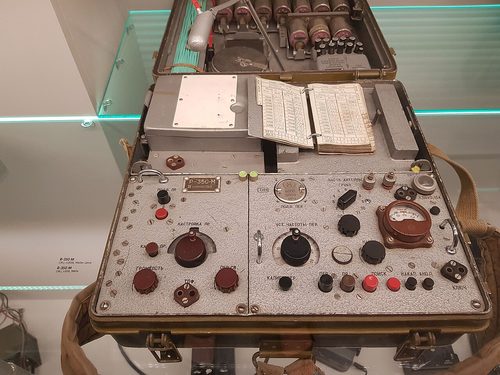 1920s–1980s
Illegals and legends
Soviet officers who lived abroad as private citizens under borrowed identities, with no diplomatic protection. The Abel and Portland court records show how their legends were built and how they came apart.
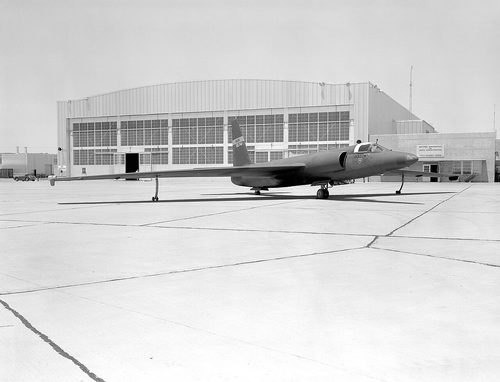 24 November 1954 – 16 May 1960
The U-2 program and the 1960 shoot-down
From 1956 the CIA's U-2 photographed the Soviet Union from 70,000 feet. On 1 May 1960 a missile brought down Francis Gary Powers near Sverdlovsk, the cover story collapsed and the Paris summit failed.
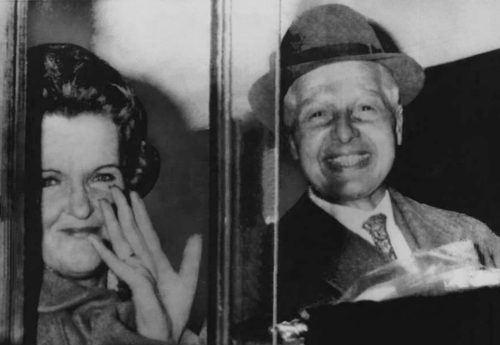 1910–1995
Morris and Lona Cohen
New York communists who worked for Soviet intelligence in the 1940s, vanished in 1950, and resurfaced in a London suburb as the booksellers Peter and Helen Kroger, radio hub of the Portland spy ring.