
A dead drop keeps two spies apart. The brush pass does the opposite: it puts them together for a few seconds, in a street, a park or a crowded lobby, long enough for one to hand the other a roll of film or a folded note. The name describes the ideal, two people brushing past each other without stopping. In practice the label covers a family of short, staged encounters, from a pass between strangers on a pavement to a quick exchange in a building entrance.6
The trade-off was straightforward. A drop left material lying in a public place, where a stranger or a hostile service might find it. A brush pass kept the material in someone's hands the whole time, but required both people to be free of surveillance at the same moment.3,6
Penkovsky's film, Moscow 1961–62
The most thoroughly documented brush contacts of the Cold War belong to the case of Oleg Penkovsky, the GRU colonel who spied for the CIA and MI6 in 1961–62 (IRONBARK: the Penkovsky case). Outside the Soviet Union, on official trips to London and Paris, he could be debriefed at length. Inside Moscow, he needed someone to take his film and give him fresh supplies.1,2
That role fell to Janet Chisholm, the wife of the MI6 head of station. In May 1961 the British businessman Greville Wynne carried instructions to Moscow for contacting her at a playground near her family's apartment, together with photographs of her and her children and a candy box for passing film.1 At their first meeting there, on 2 July 1961, Penkovsky handed over seven rolls of film, about 350 frames, and two typed pages of notes.1 Later that year their contacts moved to brief meetings in apartment vestibules; on 23 December 1961 he passed her his report on Khrushchev's threats over Berlin.1 The CIA's own summary says only that "in Moscow he delivered documentary material in meetings with the wife of an officer posted to the British embassy."2
After the Chisholms left Moscow on 14 July 1962, a CIA officer, Rodney Carlson, took over. Penkovsky's last delivery, on 27 August 1962, was made in a bathroom during a reception for a visiting American tobacco delegation: some 600 pages of photographed documents, in exchange for a false internal passport.1
What the KGB saw
The weakness of the method was that it needed people, and people could be watched. The KGB had photographed Wynne entering the Chisholms' apartment in May 1961, and it already knew Roderick Chisholm's real job because George Blake, its agent inside MI6, had exposed him years earlier.1 According to the CIA, KGB officers were later posted in apartments overlooking Penkovsky's home.2 Covert KGB film of Penkovsky meeting Janet Chisholm survived and was shown on British television in 2007.5 Penkovsky was arrested on 22 October 1962, tried with Wynne in May 1963 and executed on 16 May 1963.2
Tolkachev: from the street to a parked car
Two decades later the CIA's Moscow station ran Adolf Tolkachev, an aviation-electronics engineer, largely through personal meetings (see The Tolkachev case). His first approaches were themselves quick hand-offs: beginning in early 1977 he approached the CIA's Moscow chief in the street, once dropping a note into his car, and in February and March 1978 he passed handwritten notes to the chief and his wife at their car after work.3
Once contact was established, the station first planned to use dead drops. Tolkachev objected. In an April 1979 note he argued that a drop was no safer than a meeting, since in both cases a CIA officer had to be free of surveillance, and that a drop could fall into the wrong hands and lead back to him. The CIA agreed, and from then on meetings were used "almost exclusively."3 At one 15-minute walking contact that April he handed over five rolls of film and more than 50 pages of notes. From October 1980 many meetings took place in his own parked car, which looked less odd in a Moscow winter than two men strolling.3
The meetings worked until Tolkachev was betrayed. On 13 June 1985 the CIA officer arriving at a meeting site was seized by more than a dozen KGB men who had been hiding in nearby bushes; Tolkachev never appeared, and TASS announced in September that he had been arrested in June. The CIA's history concludes there is "little doubt" that the former CIA officer Edward Lee Howard betrayed him, and notes that Aldrich Ames also reportedly gave his name to the KGB in 1985.3
The American side of the record
The FBI's account of the The Hollow Nickel case shows the KGB's own illegals using the same mix in New York in the 1950s: Rudolf Abel and his assistant Reino Häyhänen met "in Prospect Park, on crowded streets, and in other inconspicuous places," and used dead drops when meeting was unwise.4 For the countermeasures on both sides, see Surveillance and countersurveillance and The "Moscow Rules".
Sources
- CIA Review Essay: The True Story Behind the Movie "The Courier" (Randy P. Burkett), Studies in Intelligence 66, no. 1, Central Intelligence Agency, Center for the Study of Intelligence (2022-03).
- CIA The Capture and Execution of Colonel Penkovsky, 1963, Central Intelligence Agency, Featured Story Archive (archived by the Internet Archive) (2010-03-05).
- CIA Tolkachev, A Worthy Successor to Penkovsky (Barry G. Royden), Studies in Intelligence 47, no. 3, Central Intelligence Agency, Center for the Study of Intelligence (archived by the Internet Archive) (2003).
- FBI Hollow Nickel/Rudolf Abel, Federal Bureau of Investigation, History (archived by the Internet Archive).
- Wikipedia Oleg Penkovsky, Wikipedia.
- Wikipedia Clandestine HUMINT operational techniques, Wikipedia.
Elsewhere in the files
Read next
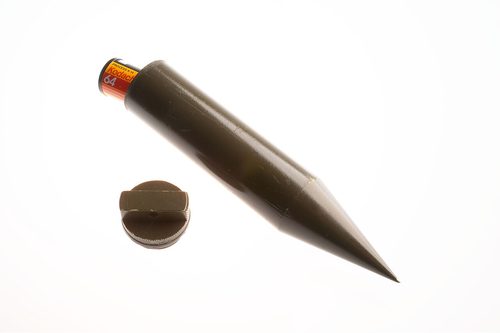 1940s–2001
Dead drops
A hiding place where one spy leaves material for another to collect later, so the two never meet. The Abel, Ames and Hanssen cases show how it worked and how the FBI turned it against its users.
1960s–1980s
The "Moscow Rules"
The unwritten working habits of CIA officers in Cold War Moscow, later popularized as a ten-line list. What the record shows about where they came from and the Moscow cases that shaped them.
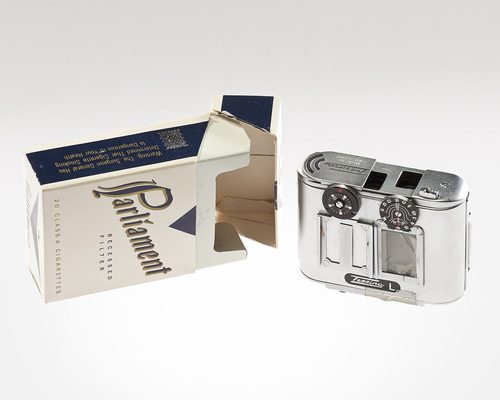 1940s–1990s
Surveillance and countersurveillance
Watching people was the core of Cold War counterintelligence, from MI5's watchers in the Portland case to KGB teams trailing CIA officers in Moscow, and the Church Committee exposed its abuse at home.
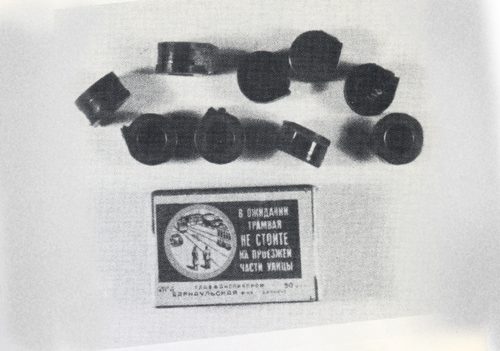 20 April 1961 – 22 October 1962
IRONBARK: the Penkovsky case
How a disaffected GRU colonel, Oleg Penkovsky, fed the CIA and MI6 Soviet missile manuals in 1961–62, and how his IRONBARK material shaped US judgments in the Cuban Missile Crisis.
January 1977 – 24 September 1986
The Tolkachev case
From 1979 to 1985 Soviet radar engineer Adolf Tolkachev photographed secret designs for the CIA in Moscow, handing over hundreds of rolls of film. Betrayed in 1985, he was executed in September 1986.
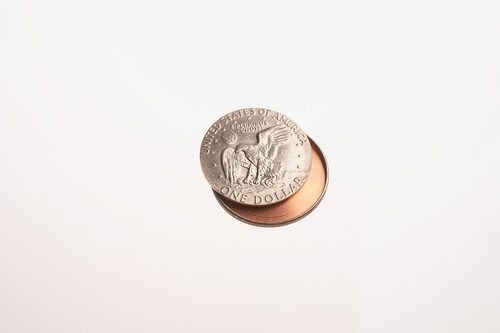 1940s–1980s
Concealment devices
Hollow coins, bolts, batteries and books: the everyday objects spies used to carry film and messages. Many now sit in FBI and CIA collections, and nearly all were found the same way, through an informant or an arrest.