

The sworn affidavit that the FBI filed against Robert Hanssen in February 2001 opens with a glossary, because a jury would need one. Its definition of a dead drop is as good as any: "a prearranged hidden location used for the clandestine exchange of packages, messages, and payments, which avoids the necessity of an intelligence officer and an agent being present at the same time."1
That last clause is the whole point. A face-to-face meeting puts both people in the same place, where one surveillance team can photograph them together. A dead drop separates them in time. British services called the same thing a dead letter box; the alternative, a hand-off in passing, is the Brush passes.1,7
Signals and sites
A drop rarely worked alone. It was paired with a signal site, a public spot where a mark told the other side that a package had been left or collected. The Hanssen affidavit describes these too, noting that the mark "may be made by, for example, chalk or a piece of tape."1 The FBI later put Hanssen's chalk and thumbtacks on display among its historical artifacts, remarking on the oddity that a man regarded as an expert in electronic communications relied on such old methods.4
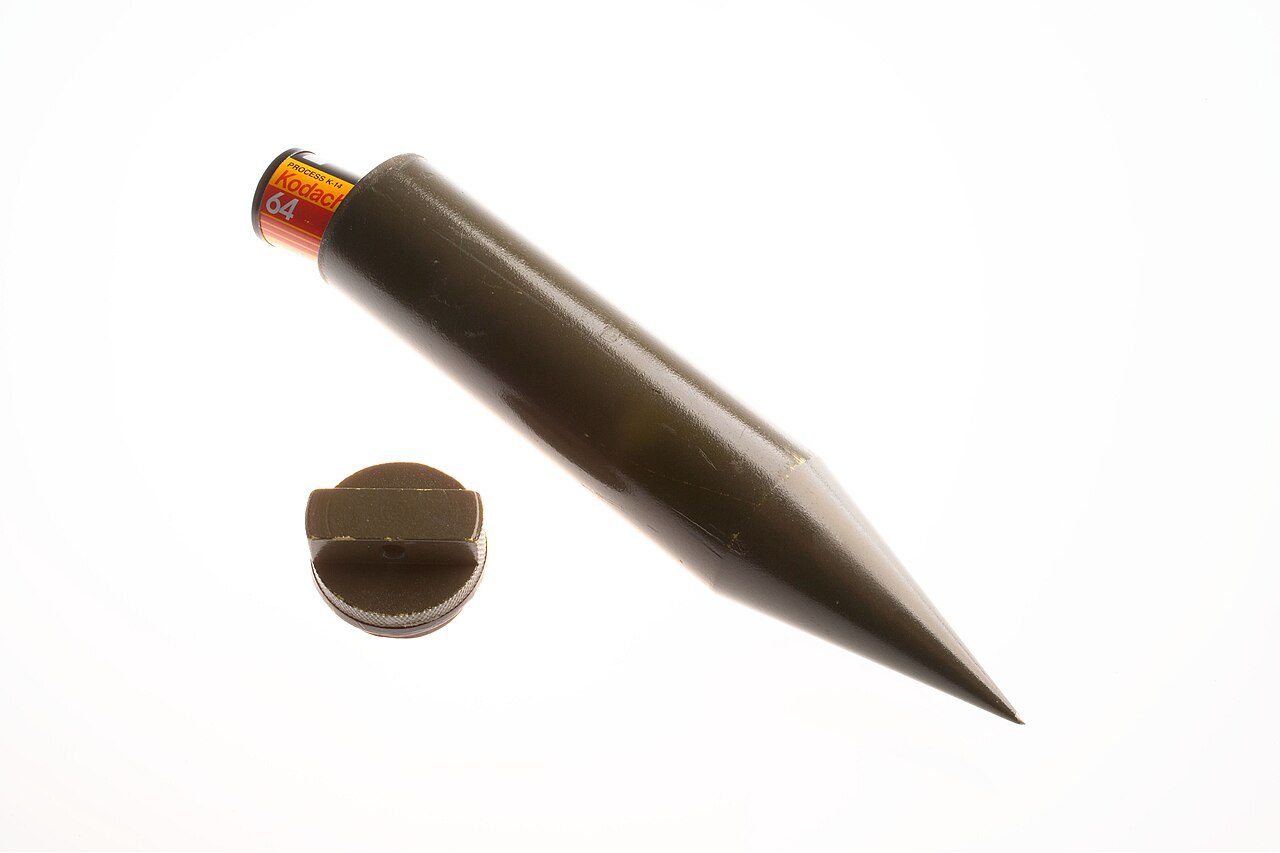
The hiding places themselves were ordinary by design. Soviet officers in New York in the 1950s used an iron picket fence near the Macombs Dam Bridge, the base of a lamp post in Fort Tryon Park and a hole in some cement steps in Prospect Park.2 The CIA Museum holds a hollow metal spike, about 20 centimeters long, made to be pushed into the ground and to pass for a cemetery marker; the museum describes it as a container for messages, documents or film.5
The KGB's New York drops
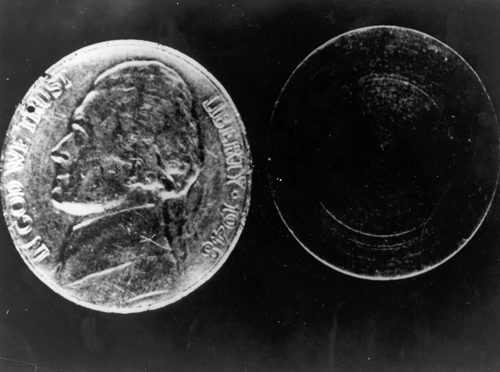
The best-documented early American case came out of the The Hollow Nickel case. When the KGB officer Reino Häyhänen defected in Paris in May 1957, he told the FBI that he and his superiors had exchanged material through dead drops around New York.2
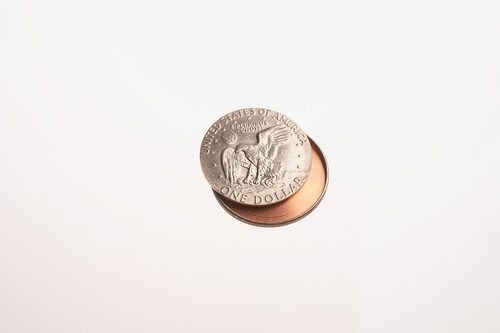
Agents checked the sites he named. In the Prospect Park steps, on 15 May 1957, they found a hollowed-out bolt about two inches long holding a typed message that complained, "Nobody came to meeting." It had sat there for about two years: a repair crew had filled the hole with cement and sealed the bolt inside.2 The FBI then kept watch on the drops while it hunted for Häyhänen's superior, the illegal later identified as Rudolf Abel, who was arrested in June 1957.2 (On hollow bolts, coins and the like, see Concealment devices.)
Moscow, 1962
Drops were just as vulnerable when one side had been caught. Oleg Penkovsky, the GRU colonel run jointly by the CIA and MI6 (IRONBARK: the Penkovsky case), was arrested by the KGB on 22 October 1962. On 2 November, the CIA's Moscow station received the agreed signals that he had loaded a drop: silent telephone calls and a chalk mark on a telephone pole. Richard Jacob, an embassy employee sent to empty it, was seized by the KGB at the site, declared persona non grata and left the Soviet Union on 6 November.6 The signals had been made under KGB control.6,7
Ames and Hanssen
The two most damaging American spies of the late Cold War both depended on drops. The FBI's history of the Ames case says that after returning to Washington in 1989, the CIA officer Aldrich Ames left classified documents at dead drops for KGB officers from the Soviet embassy and was paid through others. On 13 October 1993 FBI surveillance watched him make a chalk mark on a mailbox, a signal that he would meet his handler in Bogotá; agents then saw both men there on 1 November. He was arrested on 21 February 1994.3
Robert Hanssen, an FBI counterintelligence agent, went further. He refused to meet the KGB at all. A 1987 letter quoted in the affidavit reads: "I will not meet abroad or here." In another he explained that meeting would mean "revealing my identity," and that "insulation has been my best protection against betrayal."1 The affidavit counts 33 packages the KGB and its successor, the SVR, left for him and 22 he left for them, almost all at drops in the parks of Northern Virginia.1
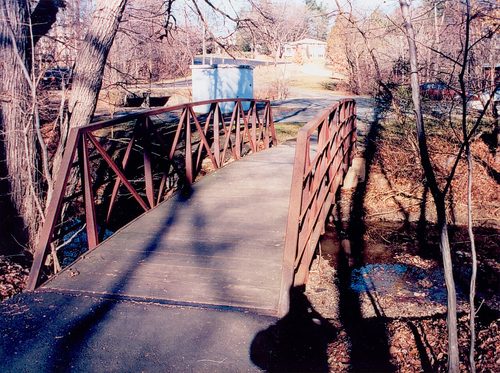
The first, codenamed PARK, was loaded by the KGB with $50,000 on 2 November 1985. In 1989 the KGB proposed a new site, ELLIS, under a footbridge over Wolftrap Creek in Foxstone Park; it was used seven times.1 The site that had protected him also convicted him. By early 2001 the FBI had identified Hanssen and was watching the drops. On 18 February 2001 he was arrested near Foxstone Park after leaving a package at ELLIS.1,4 (See The Hanssen case.)
Why the method failed when it failed
Every case above was broken by a person, not by luck in finding a hiding place. A defector (Häyhänen), an arrested agent (Penkovsky) or, in Hanssen's case, information the FBI paid a Russian intelligence source to provide, led investigators to the drop.2,6,8 Once a drop was known, counterintelligence could watch it, read it or bait it, as the FBI did when it opened, copied and replaced a package of $50,000 left for Hanssen at another site in February 2001.1 Drops spared spies the danger of meeting. They did nothing to protect them from betrayal.
Sources
- Court record USA v. Robert Philip Hanssen: Affidavit in Support of Criminal Complaint, Arrest Warrant and Search Warrants, US District Court, Eastern District of Virginia (text hosted by the Federation of American Scientists) (2001-02).
- FBI Hollow Nickel/Rudolf Abel, Federal Bureau of Investigation, History (archived by the Internet Archive).
- FBI Aldrich Ames, Federal Bureau of Investigation, History (archived by the Internet Archive).
- FBI Robert Hanssen Business Cards, Chalk, and Thumbtacks, Federal Bureau of Investigation, History: Artifacts (archived by the Internet Archive).
- CIA "Dead" Drop Spike, Central Intelligence Agency, CIA Museum.
- Official history Mind-Sets and Missiles: A First Hand Account of the Cuban Missile Crisis (Kenneth Michael Absher), Strategic Studies Institute, US Army War College (archived by the Internet Archive) (2009-09).
- Wikipedia Dead drop, Wikipedia.
- Wikipedia Robert Hanssen, Wikipedia.
- Wikipedia English Wikipedia article (used for cross-checking).
Elsewhere in the files
- Document The FBI's affidavit against Robert Hanssen (2001)
- Operation IRONBARK: the Penkovsky case
- Operation The Hanssen case
- Operation The Hollow Nickel case
- Operation The Walker spy ring
- Tradecraft Brush passes
- Tradecraft Concealment devices
- Tradecraft Illegals and legends
- Tradecraft Secret writing
- Tradecraft Surveillance and countersurveillance
- Tradecraft The "Moscow Rules"
Read next
 1940s–1980s
Concealment devices
Hollow coins, bolts, batteries and books: the everyday objects spies used to carry film and messages. Many now sit in FBI and CIA collections, and nearly all were found the same way, through an informant or an arrest.
 1940s–1990s
Surveillance and countersurveillance
Watching people was the core of Cold War counterintelligence, from MI5's watchers in the Portland case to KGB teams trailing CIA officers in Moscow, and the Church Committee exposed its abuse at home.
1960s–1980s
The "Moscow Rules"
The unwritten working habits of CIA officers in Cold War Moscow, later popularized as a ten-line list. What the record shows about where they came from and the Moscow cases that shaped them.
 22 June 1953 – 15 November 1957
The Hollow Nickel case
A Brooklyn newsboy's trick nickel held a coded message the FBI could not read for four years, until a drunken KGB defector explained it and led agents to the illegal known as Rudolf Abel.
 November 1979 – 18 February 2001
The Hanssen case
FBI agent Robert Hanssen spied for Soviet and Russian intelligence in three bursts from 1979 to 2001 without revealing his name. Caught at a Virginia dead drop in 2001, he was the most damaging spy in FBI history.