
There was never a CIA manual called the Moscow Rules. The phrase names something looser: the habits that American case officers absorbed for working in the Soviet capital, where the KGB's internal counterintelligence directorate watched foreigners closely and an exposed agent faced execution.1,3
The best-known statement comes from Tony Mendez, a CIA technical officer who became the agency's chief of disguise. In a passage quoted by the International Spy Museum, he wrote that although "no one had written them down," they were the precepts everyone understood, and "by the time they got to Moscow, everyone knew these rules."1
The list
The ten maxims usually printed under the name appeared in the Spy Museum's 2015 online exhibit on Mendez. They are aphorisms rather than procedures: assume nothing, trust your instinct, treat anyone as possibly working for the other side, assume you are never alone, blend in, vary your routine while staying in cover, keep the opposition comfortable rather than provoking it, choose your own moment to act, and keep alternatives open.1
The record suggests caution about treating this list as a historical document. Mendez himself said the rules were unwritten.1 Wikipedia's article notes that the list "may never have existed as written," and the museum and Wikipedia attribute Mendez's description to different books, the museum to his 1999 memoir The Master of Disguise and Wikipedia to Spy Dust (2003).1,6 The phrase reached a wide audience again in 2019 through a book of that title by Mendez and his wife, a former CIA chief of disguise, cleared by the CIA shortly before his death that January.5
The cases behind the habits
Penkovsky, 1962. The first great Moscow operation ended in a trap. After the KGB arrested Oleg Penkovsky (IRONBARK: the Penkovsky case), the CIA station received his agreed signal that a dead drop had been loaded. On 2 November 1962 the embassy employee sent to clear it was ambushed and arrested; the signals had been made under KGB control.4 The lesson that a familiar signal can come from the enemy is what "assume nothing" means in practice.
TRIGON, 1977. Aleksandr Ogorodnik, a Soviet diplomat recruited by the CIA in South America in 1973, was run in Moscow entirely through impersonal contact (signal sites, radio messages, concealment devices and drops), because face-to-face meetings were judged too dangerous. His case officer, Martha Peterson, and he never met.2 He was compromised by a CIA contract translator working for Czechoslovak intelligence and arrested; on 22 June 1977 he killed himself with a CIA-supplied poison pen. Unaware of his death, Peterson went to a drop site on the Krasnoluzhskiy railway bridge on 15 July 1977 and was seized by a waiting KGB team, questioned at the Lubyanka and expelled.2
Tolkachev, 1979–85. The CIA's account of the The Tolkachev case is the fullest released description of how the station worked. Officers built routines dull enough to bore their KGB surveillance teams, ran surveillance-detection routes before any operational act and kept several officers briefed on a case so that whoever was free of surveillance that day could act.3 From 1980 they used disguise to leave the embassy unrecognized, and later a pop-up dummy, called the "Jack-in-the-Box," that let an officer leave a moving car while the dummy filled his seat. The CIA's history notes that this was used sparingly because the KGB would know an officer had slipped away and would retaliate with harassment.3 (See also Surveillance and countersurveillance and Brush passes.)
What the rules could not protect against
Every one of these operations was eventually lost to betrayal from outside Moscow rather than to a street mistake. Penkovsky's exposure is still debated; TRIGON was betrayed by an agent inside the CIA's own contractor workforce; Tolkachev, by former CIA officer Edward Lee Howard and, according to later accounts, Aldrich Ames.2,3 The FBI's history of the Ames case records that sources he named were arrested and some executed (see 1985, the Year of the Spy), however carefully they had been handled in Moscow.7
Sources
- Other Moscow Rules (ARGO Exposed online exhibit), International Spy Museum (archived by the Internet Archive) (2015).
- CIA TRIGON: Spies Passing in the Night, Central Intelligence Agency, Stories (2016-06-20).
- CIA Tolkachev, A Worthy Successor to Penkovsky (Barry G. Royden), Studies in Intelligence 47, no. 3, Central Intelligence Agency, Center for the Study of Intelligence (archived by the Internet Archive) (2003).
- Official history Mind-Sets and Missiles: A First Hand Account of the Cuban Missile Crisis (Kenneth Michael Absher), Strategic Studies Institute, US Army War College (archived by the Internet Archive) (2009-09).
- Other Moscow Rules: How The CIA Operated Under The Watchful Eye Of The KGB (Greg Myre), NPR, via High Plains Public Radio (2019-06-10).
- Wikipedia The Moscow rules, Wikipedia.
- FBI Aldrich Ames, Federal Bureau of Investigation, History (archived by the Internet Archive).
- Wikipedia English Wikipedia article (used for cross-checking).
Elsewhere in the files
Read next
 1940s–1990s
Surveillance and countersurveillance
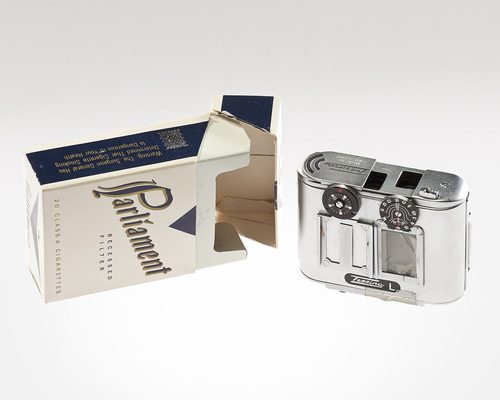
Watching people was the core of Cold War counterintelligence, from MI5's watchers in the Portland case to KGB teams trailing CIA officers in Moscow, and the Church Committee exposed its abuse at home.
 1940s–2001
Dead drops
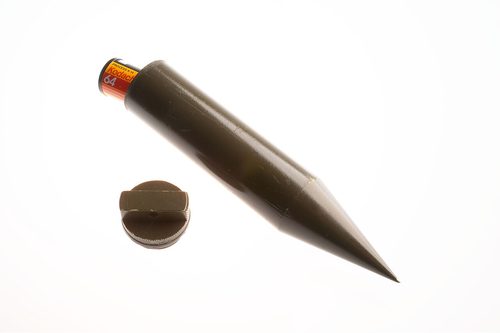
A hiding place where one spy leaves material for another to collect later, so the two never meet. The Abel, Ames and Hanssen cases show how it worked and how the FBI turned it against its users.
1950s–1980s
Brush passes
The brief hand-to-hand exchange, made in passing in a public place. Declassified CIA accounts of the Penkovsky and Tolkachev cases in Moscow show how much of the Cold War's best intelligence moved this way.
January 1977 – 24 September 1986
The Tolkachev case
From 1979 to 1985 Soviet radar engineer Adolf Tolkachev photographed secret designs for the CIA in Moscow, handing over hundreds of rolls of film. Betrayed in 1985, he was executed in September 1986.
 20 April 1961 – 22 October 1962
IRONBARK: the Penkovsky case
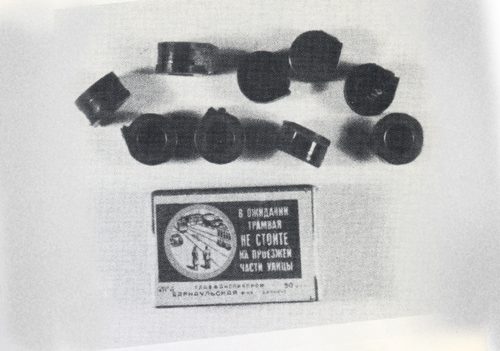
How a disaffected GRU colonel, Oleg Penkovsky, fed the CIA and MI6 Soviet missile manuals in 1961–62, and how his IRONBARK material shaped US judgments in the Cuban Missile Crisis.
 16 April – 25 November 1985
1985, the Year of the Spy
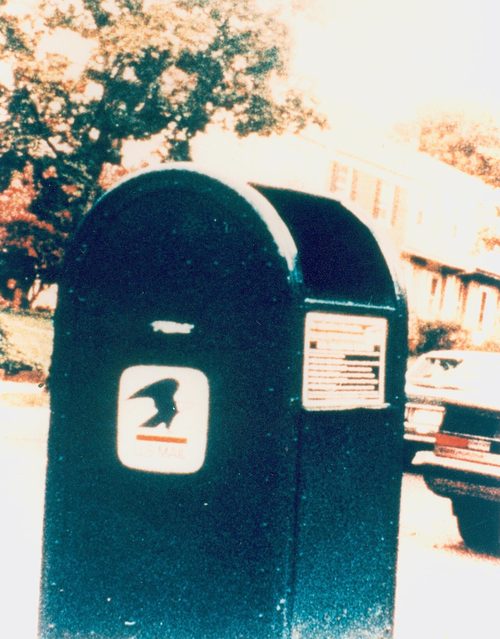
In 1985 the FBI arrested a string of Americans spying for Moscow, Beijing and Israel, a KGB officer defected and re-defected, and the CIA lost almost every agent it had inside Soviet intelligence.