

On 18 October 1962, two days after President Kennedy was first shown photographs of Soviet missile sites in Cuba, the CIA circulated a joint evaluation of the threat, prepared by the intelligence community's guided-missile and atomic-energy committees and the National Photographic Interpretation Center. It concluded that at least one regiment of eight launchers and sixteen SS-4 medium-range missiles was already deployed in western Cuba and could fire within 18 hours of a decision to launch. The paper carried the codeword IRONBARK. As the State Department's documentary history explains, the name signaled that the analysis drew on material from the CIA's most important Soviet source, Colonel Oleg Penkovsky of Soviet military intelligence.1
A volunteer nobody trusted at first
Penkovsky was a decorated wartime artillery officer whose career in the GRU had stalled after a posting to Ankara went badly. According to the CIA History Staff, he decided as early as January 1959 to defect with his family and began collecting secrets to trade. On 12 August 1960 he approached two American students on Moscow's Moskvoretsky Bridge and asked them to carry envelopes to the US embassy; one contained his offer to spy, with proposed dead drops and signal sites.2
For eight months the approach went nowhere, and he tried other channels, including Western businessmen. The break came through Greville Wynne, a British salesman who already reported to MI6. Penkovsky pressed a package of papers on him in April 1961, and the papers reached London on 13 April. The CIA and MI6 agreed to run the case jointly.2
Debriefings in London and Paris
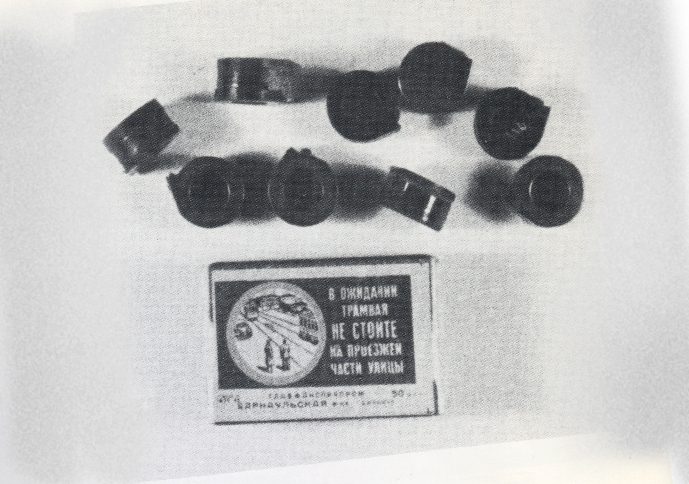
Penkovsky arrived in London with a Soviet trade delegation on 20 April 1961. In hotel rooms booked for the purpose, two CIA officers (George Kisevalter and Joseph Bulik) and two MI6 officers met him 17 times for a total of 52 hours. He brought documents from his missile course, information on the GRU including the identities of two GRU officers in London, and military target data. He was trained on the Minox camera and given a communications plan. A second London visit that summer produced 14 more meetings, and a September trip to Paris about a dozen.2
In Moscow his contact from 2 July 1961 was Janet Chisholm, wife of the MI6 head of station, who received his exposed film in brief meetings. At their first meeting he passed seven rolls of film, about 350 frames. His last known delivery, on 27 August 1962, went to a CIA officer and included roughly 600 pages of photographed documents. Among his most valuable material were photographs of the classified edition of the Soviet General Staff journal Military Thought, signed out of the GRU library and copied in a side office.2
Two codewords, one source
The product was compartmented to protect him. Sidney Graybeal, a CIA missile analyst who briefed President Kennedy during the crisis, later explained that IRONBARK was the classification used for the data Penkovsky supplied, and that it did not identify him. A second, narrower codeword, CHICKADEE, carried his background and was limited to the President, the Secretaries of State and Defense and a few senior CIA officials.4
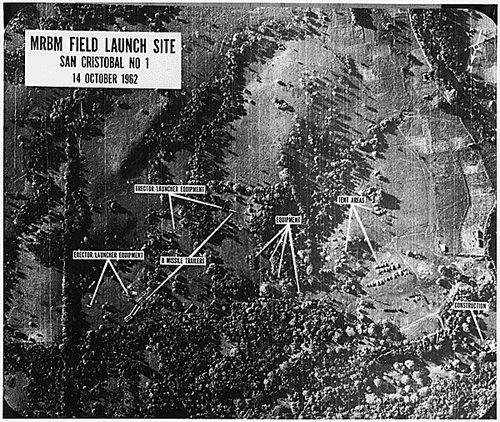
That arrangement mattered in October 1962. After a U-2 photographed missile sites near San Cristóbal on 14 October, analysts matched what they saw against Penkovsky's manuals on the SS-4 and SS-5 systems.6,2 The CIA review credits that combination with letting analysts say what weapons were going in and when they would be ready, which in turn gave Kennedy confidence to choose a naval quarantine over air strikes.2 The Soviet side of the deployment is told at Operation Anadyr; the American intelligence effort at Intelligence in the Cuban Missile Crisis.
How it ended
Penkovsky was already being watched. CIA's 1993 literature review notes that his frequent meetings with Chisholm in autumn 1961 may have drawn KGB attention, since the KGB knew her husband was MI6.3 In July 1962 the KGB searched Wynne's hotel room and photographed a shaving-cream can with a false bottom.2 Penkovsky was arrested on 22 October 1962, the day Kennedy announced the missiles to the world.3
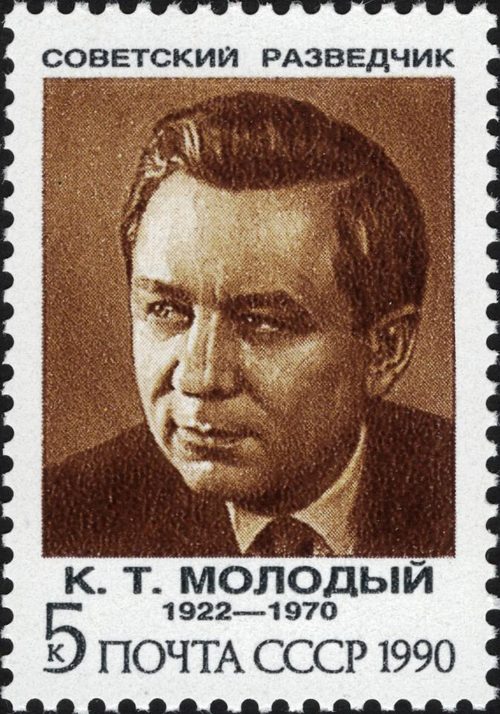
Under interrogation he gave up his dead-drop arrangements. When the agreed "drop loaded" signals came, a CIA officer under embassy cover went to service the site and was seized; the same day Hungarian authorities arrested Wynne in Budapest.2,7 On 15 December Pravda published a long article implicating four US embassy officials, an attack the embassy called unprecedented in recent times.5 Penkovsky and Wynne were tried together in May 1963. Penkovsky was sentenced to death and executed on 16 May 1963; Wynne received eight years and was exchanged on 22 April 1964 for the Soviet illegal Konon Molody, known in Britain as Gordon Lonsdale.2 (See Konon Molody (Gordon Lonsdale).)
What the record does not show
The FRUS volumes print the IRONBARK evaluation but not Penkovsky's reports themselves. The CIA History Staff reviewer stresses that Penkovsky never told the West where the missiles were going in Cuba and was in prison before the crisis broke; his contribution was the technical baseline that made the U-2 photographs readable.2,1
The documents
Declassified records of this operation, with the scans and their full text hosted here.
 1972 · 18 p.Penkovskiy's Legacy: a CIA analyst on the IRONBARK papers (1972)Len Parkinson, CIA Directorate of Intelligence (article in Studies in Intelligence, adapted from his February 1971 talk to the Midcareer Executive Development Course)A Secret 1972 Studies in Intelligence article by a CIA Directorate of Intelligence analyst explaining why the Soviet military documents Oleg Penkovsky photographed were still being mined for doctrine and weapons ten years on.
- 16 October 196216 October 1962: the first White House meeting on the missile sitesWhite House taping system (transcript of audiotape 28.1, President's Office Files, Kennedy Library)The transcript of the meeting at which President Kennedy and his advisers first discussed U-2 photographs of Soviet medium-range missile sites in Cuba, and began weighing an air strike against a blockade.
Checking the record
Dates and outcome compared in two independent sources: they agree.
- FRUS
- IRONBARK-based joint evaluation issued 18 October 1962; Penkovsky arrested 22 October 1962 and executed 16 May 1963 (CIA). Penkovsky's material let analysts identify the SS-4 and SS-5 systems in Cuba; he was caught, tried and shot.
- Wikipedia
- First approach July 1960; recruited April 1961; arrested 22 October 1962; executed 16 May 1963. Supplied missile data used with U-2 photography in the Cuban Missile Crisis; convicted of treason and executed.
The sources agree on recruitment, arrest, execution and the Cuban use of the material. Wikipedia dates his first approach to July 1960; the CIA History Staff review places his approach to two American students on the Moskvoretsky Bridge on 12 August 1960, and this page follows the CIA.
Sources
- FRUS Foreign Relations of the United States, 1961–1963, Volume XI, Cuban Missile Crisis and Aftermath, Document 30 (Editorial Note), US Department of State, Office of the Historian (1996).
- CIA Review Essay: The True Story Behind the Movie 'The Courier' (Studies in Intelligence 66, no. 1), Central Intelligence Agency, Center for the Study of Intelligence (2022-03).
- CIA Of Moles and Molehunters: A Review of Counterintelligence Literature, 1977–92, Central Intelligence Agency, Center for the Study of Intelligence (1993-10).
- National Security Archive Interview with Sidney Graybeal (CNN Cold War series, episode 21), National Security Archive (1998-01-29).
- FRUS Foreign Relations of the United States, 1961–1963, Volume V, Soviet Union, Document 273 (Editorial Note), US Department of State, Office of the Historian.
- FRUS Foreign Relations of the United States, 1961–1963, Volume XI, Document 16 (Editorial Note), US Department of State, Office of the Historian.
- Wikipedia Oleg Penkovsky, Wikipedia.
Elsewhere in the files
- Agency GRU (Soviet military intelligence)
- Agency Secret Intelligence Service (MI6)
- Document Penkovskiy's Legacy: a CIA analyst on the IRONBARK papers (1972)
- Operation Intelligence in the Cuban Missile Crisis
- Operation Operation Anadyr
- Operation TOPHAT: the Polyakov case
- Operation The Portland spy ring
- Operation The Tolkachev case
- Person Konon Molody (Gordon Lonsdale)
- Person Oleg Penkovsky
- Tradecraft Brush passes
- Tradecraft Concealment devices
- Tradecraft Dead drops
- Tradecraft Surveillance and countersurveillance
- Tradecraft The "Moscow Rules"
Read next
 10 August – 20 November 1962
Intelligence in the Cuban Missile Crisis
How US intelligence missed, then found, Soviet missiles in Cuba in 1962: a wrong estimate, a five-week gap in U-2 coverage, the 14 October flight over San Cristóbal, and what the photographs never showed.
 May – November 1962
Operation Anadyr
The Soviet General Staff's 1962 plan to move nuclear missiles and some 42,000 troops to Cuba in secret, and the deception that hid it from US intelligence until a U-2 flight on 14 October.
Soviet Union · 1918–1992
GRU (Soviet military intelligence)
The Red Army's foreign intelligence service from 1918 to 1992: its interwar illegals, its wartime networks in America, the Western spies inside it, and its part in the war scare of the 1980s.
 1922–1970
Konon Molody (Gordon Lonsdale)
Soviet intelligence officer who lived in London as the Canadian businessman 'Gordon Lonsdale', ran the Portland spy ring, was jailed in 1961 and was exchanged for Greville Wynne in 1964.
 1940s–2001
Dead drops
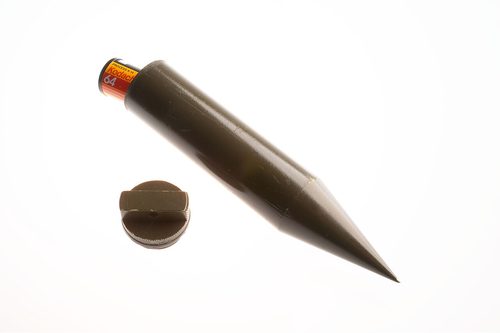
A hiding place where one spy leaves material for another to collect later, so the two never meet. The Abel, Ames and Hanssen cases show how it worked and how the FBI turned it against its users.
 16 October 1962
: the first White House meeting on the missile sites
The transcript of the meeting at which President Kennedy and his advisers first discussed U-2 photographs of Soviet medium-range missile sites in Cuba, and began weighing an air strike against a blockade.