
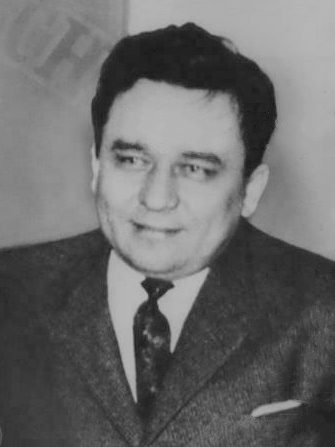

MI5 counts the Portland case among its most significant postwar counter-espionage successes. It was also an embarrassment: the two British spies at its center had been reported as security risks years before anyone acted.2,5
Two clerks and a naval base
Harry Houghton was a former Royal Navy master-at-arms who in the early 1950s worked as a clerk to the British naval attaché in Warsaw. MI5's later investigation concluded that he became a spy in 1951, "probably having made the first contact himself," and that he was handled first by Polish intelligence and then by the Soviets. Between January and November 1952 alone he passed 99 secret documents, including a Manual of Naval Intelligence.2,3
Back in Dorset from 1953, Houghton worked at the Admiralty's Underwater Detection Establishment at Portland, where the Royal Navy developed sonar and anti-submarine equipment.2 His colleague Ethel Gee, a filing clerk with access to more highly classified material, joined him in the work; MI5's file on her describes the pair as Soviet spies working to "the Soviet Intelligence officer 'Gordon LONSDALE.'"2,8
The illegals
Lonsdale was in fact Konon Molody, a KGB officer living in London under a Canadian identity and posing as a small businessman (see Konon Molody (Gordon Lonsdale) and Illegals and legends). Houghton and Gee travelled to London at weekends to hand him naval plans and film.2 Lonsdale passed the material to Peter and Helen Kroger, ostensibly antiquarian booksellers living in a bungalow in Ruislip. They were the Americans Morris and Lona Cohen, Soviet agents since the 1940s, and their house was the network's communications hub for Moscow (see Morris and Lona Cohen).1,2,6
How it was found
The lead came from Poland. A source inside Polish intelligence, Michał Goleniewski, told the CIA that the Soviets had a spy who had served in the British naval attaché's office in Warsaw; MI5 identified Houghton from the description.2,7 From mid-1960 MI5's watchers followed Houghton and Gee on their London trips, saw Houghton hand a bag to a man, and traced that man to Lonsdale.7 The investigation then followed Lonsdale to a bank safe-deposit box and, in November 1960, to the Krogers' house.7 (On the watchers' methods, see Surveillance and countersurveillance.)
The decision to move fast was forced by the Polish source's own plans. Told that he was about to defect, MI5 struck at the next meeting.7 On Saturday, 7 January 1961, Special Branch officers arrested Houghton, Gee and Lonsdale near the Old Vic theatre in London; all three had secret naval material on them. The Krogers were arrested at Ruislip the same day.1,2,7
The Ruislip searches produced some of the best-known exhibits of Cold War espionage: a radio transmitter hidden beneath the kitchen floor, one-time pads, equipment for making microdots, forged New Zealand passports and household objects with hidden compartments (see Concealment devices).7 Fingerprints matched to FBI records identified the Krogers as the Cohens.7
Trial and inquiry
The five were tried at the Old Bailey in March 1961 on a charge of conspiracy to communicate information contrary to the Official Secrets Act 1911; the court file survives at The National Archives.4 All were convicted. Lonsdale received 25 years, the Krogers 20 years each, and Houghton and Gee 15 years each.2,7
A committee of inquiry under Sir Charles Romer reported in June 1961. Its findings, read to both Houses of Parliament, said that in 1956 Houghton had twice been reported within the establishment as a probable security risk, that the inquiry made then was inadequate, and that both the Admiralty and the Security Service could not escape criticism for failing to press the matter.5
Exchanges
None of the three illegals served out a sentence. Lonsdale was exchanged in April 1964 for Greville Wynne, the British businessman convicted in Moscow as the courier for the GRU colonel Oleg Penkovsky (IRONBARK: the Penkovsky case).2,7 The Krogers were exchanged in October 1969 for a British lecturer who had been imprisoned in the Soviet Union since 1965.7 Houghton and Gee, with the shortest sentences, served the longest, and were released in 1970; they married the following year.2,7
MI5's files on the case reached The National Archives in two batches, Houghton and Gee in November 2017 and the illegals in September 2019. The 2019 release includes interviews in which Lonsdale talked to the MI5 officer Charles Elwell "with surprising candour" about life as an illegal.1
Checking the record
Dates and outcome compared in two independent sources: they agree.
- Official history
- Houghton spied from 1951; arrests of Houghton, Gee and Lonsdale near the Old Vic and of the Krogers at Ruislip (MI5 page gives the date as 7 January 1960). Houghton and Gee sentenced to 15 years; Lonsdale and the Krogers later exchanged in prisoner swaps.
- Wikipedia
- Active 1953–1961; arrests 7 January 1961; Old Bailey trial 13–22 March 1961. Lonsdale 25 years, Krogers 20, Houghton and Gee 15; Lonsdale swapped for Greville Wynne in April 1964, Krogers exchanged October 1969.
The outcome agrees. MI5's history page dates the arrests to 7 January 1960, which conflicts with MI5's own 2019 release note, the National Archives file dates (Gee's file ends 10 January 1961) and the March 1961 trial record. This page follows 7 January 1961 and treats the MI5 page's year as an error.
Sources
- Official history September 2019 release of historical MI5 files, MI5 (Security Service), archived by the Internet Archive (2019-09).
- Official history Portland spy ring, MI5 (Security Service).
- Other KV 2/4380: Harry Frederick HOUGHTON (catalogue description), The National Archives (UK), Discovery catalogue (1954–1960).
- Court record CRIM 1/3604: Defendant GEE, Ethel Elizabeth; LONSDALE, Gordon Arnold and others (catalogue description), The National Archives (UK), Discovery catalogue (1961-03-01).
- Other Naval Security (Romer Committee's Report), HL Deb 13 June 1961, UK Parliament, Hansard (1961-06-13).
- Other KV 2/4484: Peter John KROGER and Helen Joyce KROGER alias Morris COHEN and Lona COHEN (catalogue description), The National Archives (UK), Discovery catalogue (1948–1960).
- Wikipedia Portland spy ring, Wikipedia.
- Other KV 2/4377: Ethel Elizabeth GEE (catalogue description), The National Archives (UK), Discovery catalogue (1956–1961).
- Wikipedia English Wikipedia article (used for cross-checking).
Elsewhere in the files
- Agency KGB
- Agency Security Service (MI5)
- Person George Blake
- Person Konon Molody (Gordon Lonsdale)
- Person Morris and Lona Cohen
- Tradecraft Concealment devices
- Tradecraft Illegals and legends
- Tradecraft Microdots
- Tradecraft Numbers stations
- Tradecraft One-time pads
- Tradecraft Surveillance and countersurveillance
Read next
 1920s–1980s
Illegals and legends
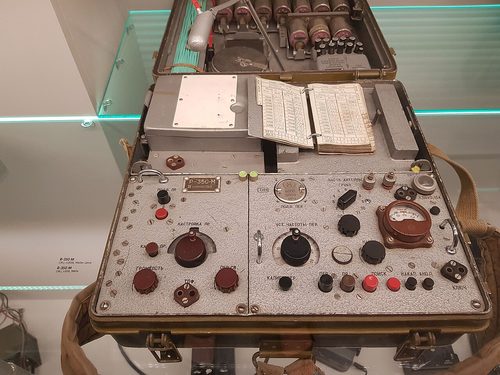
Soviet officers who lived abroad as private citizens under borrowed identities, with no diplomatic protection. The Abel and Portland court records show how their legends were built and how they came apart.
 1870–1960s
Microdots
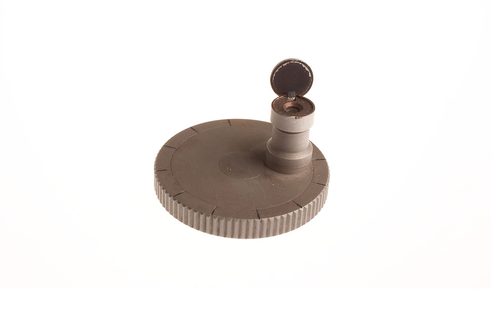
A page of text photographed down to the size of a printed full stop. The Abwehr's wartime microdots, Popov's Pearl Harbor questionnaire and the Soviet illegals' kits in New York and London show how far the trick went.
 1917–1980s
One-time pads
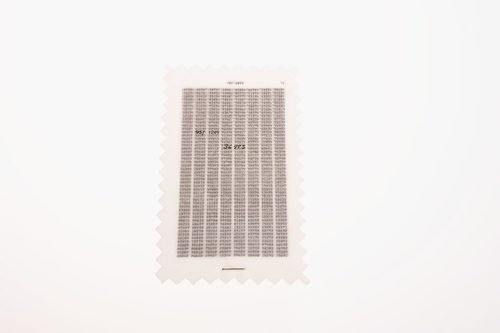
The one cipher proven unbreakable if its key is random and never reused. Soviet intelligence relied on it, and a wartime printing shortcut that duplicated pages let US codebreakers read thousands of messages.
 1940s–1980s
Concealment devices
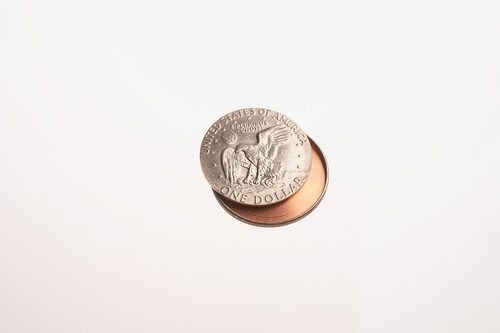
Hollow coins, bolts, batteries and books: the everyday objects spies used to carry film and messages. Many now sit in FBI and CIA collections, and nearly all were found the same way, through an informant or an arrest.
 1940s–1990s
Surveillance and countersurveillance
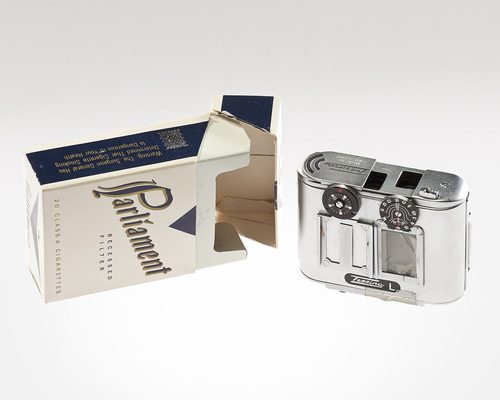
Watching people was the core of Cold War counterintelligence, from MI5's watchers in the Portland case to KGB teams trailing CIA officers in Moscow, and the Church Committee exposed its abuse at home.
 20 April 1961 – 22 October 1962
IRONBARK: the Penkovsky case
How a disaffected GRU colonel, Oleg Penkovsky, fed the CIA and MI6 Soviet missile manuals in 1961–62, and how his IRONBARK material shaped US judgments in the Cuban Missile Crisis.