
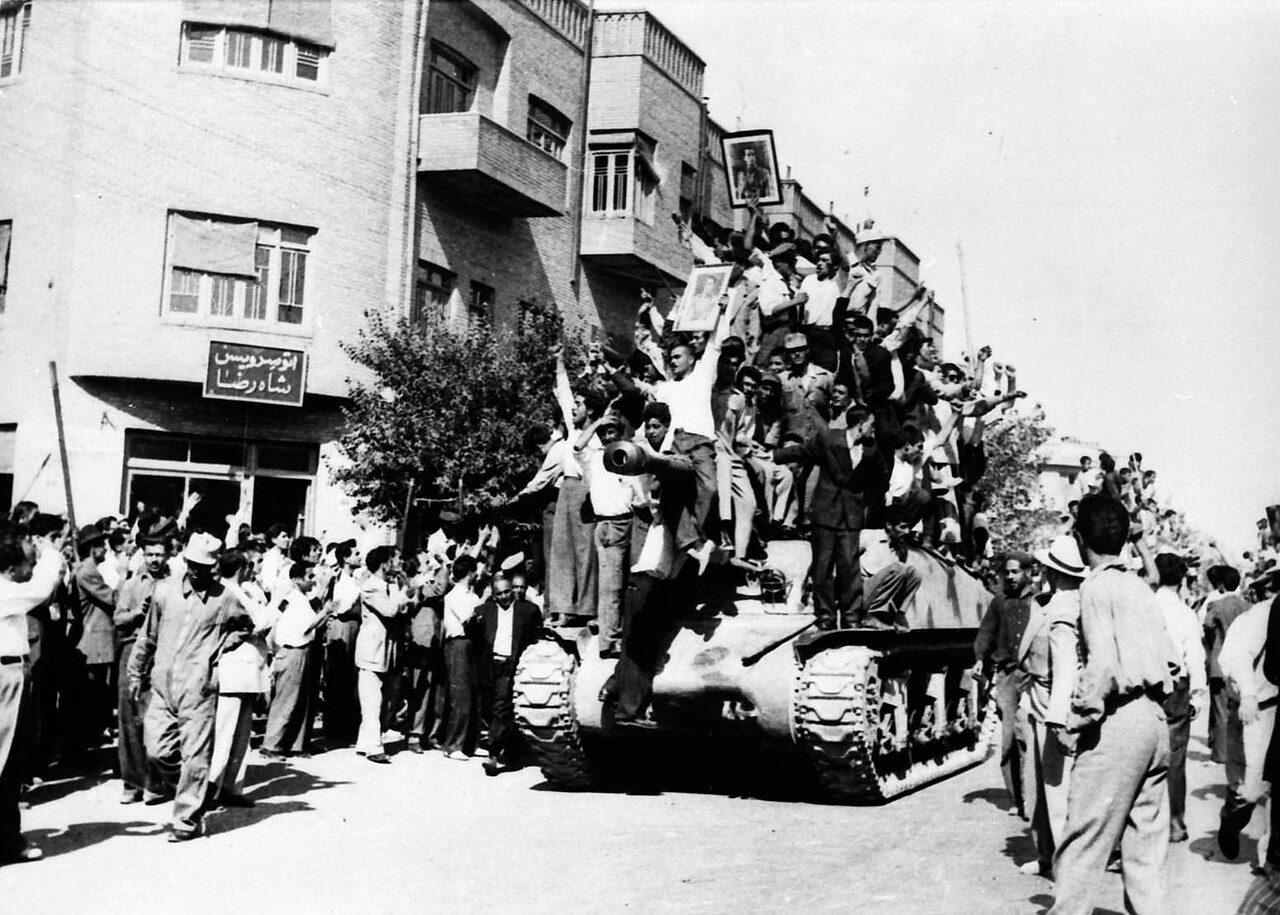

In March 1951 Iran's parliament, the Majlis, voted to nationalize the Anglo-Iranian Oil Company, and the following month Mohammad Mosaddeq became prime minister. Britain answered with an embargo on Iranian oil and, from late 1952, with repeated proposals that Washington join it in removing him. The Truman administration declined. The Eisenhower administration, in office from January 1953, did not1,8.
The American side of the result was a CIA project with the cryptonym TPAJAX. The British Secret Intelligence Service (Secret Intelligence Service (MI6)) called its part Operation Boot. For decades the story rested on memoirs and leaks; since 2017 it can be read in the government's own documents, in a retrospective volume of Foreign Relations of the United States compiled to fill the gap left by a 1989 volume that had omitted the CIA's role entirely1.
From worry to plan
The records show Washington's concern was framed as a Communist one. On 1 March 1953 the Director of Central Intelligence, Allen Dulles, warned President Eisenhower that Iran's slow disintegration was building "a situation where a Communist takeover is becoming more and more of a possibility." The same memorandum noted that the cleric Ayatollah Kashani, by then Mosaddeq's rival, had shown more power than expected in rallying crowds, and that the monarchy "may have more popular backing than was expected"2.
Planning moved quickly over the spring. The joint CIA–SIS operational plan known as the "London Draft" of 19 June is still withheld in FRUS, all 29 pages. On 1 July Kermit Roosevelt, chief of the CIA's Near East and Africa Division, was told that the British prime minister had approved the plan3. A CIA chronology records that the State Department and the Foreign Office authorized implementation on 11 July, and a handwritten addition says the DCI "also obtained approval of President" that day. The FRUS editors add that no written presidential authorization has been found3.
The plan relied on the young Shah, Mohammad Reza Pahlavi, to sign two decrees (firmans): one dismissing Mosaddeq, one appointing the retired general Fazlollah Zahedi in his place. A propaganda campaign through Iranian newspapers and paid agents was meant to prepare opinion7,8.
The night it failed
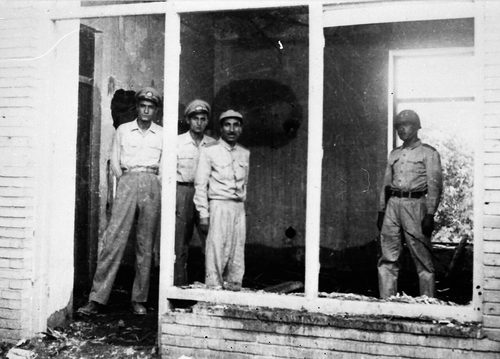
On the night of 15–16 August Colonel Nematollah Nasiri of the Imperial Guard went to Mosaddeq's house to deliver the dismissal decree. Mosaddeq had been forewarned, reportedly by the Tudeh party, which had cells in the army. Nasiri was arrested, loyal troops occupied the streets, and the Shah flew from the Caspian coast to Baghdad and on to Rome5,8.
Roosevelt later described the morning to his superiors: "The radio jeep didn't arrive, the telephone system wasn't put out, tanks were moving but we couldn't tell whose tanks they were"5. Zahedi went into hiding. On 17 August the Tehran station cabled that "initial attempt failed," but argued that the decrees were legally in force and that "nothing can be gained by selling the Shah, constitution, army, Islam, down drain"6.
The station's response was to argue that Mosaddeq, not the Shah, had staged a coup. It arranged for Zahedi's son to show the American correspondents of the New York Times and the Associated Press the Shah's decree appointing his father, and handed out photostatic copies5.
19 August
On 19 August pro-Shah crowds filled the streets of Tehran, army units joined them, and tanks went to Mosaddeq's house, where his guard held out for several hours before he fled; he surrendered on 21 August. By the evening Zahedi held the capital4,8. The next day John Waller, head of the CIA's Iran branch, wrote that Zahedi was "in definite control of Tehran" and that the royalist movement "contained a large element of spontaneity"4. The Shah, who had gone on from Baghdad to Rome, returned to Tehran on 22 August8.
Aftermath and disclosure
Mosaddeq was tried by a military court and on 21 December 1953 sentenced to three years' solitary confinement, followed by house arrest at his estate in Ahmadabad, where he died on 5 March 1967. His foreign minister, Hossein Fatemi, was executed in 1954. A new oil agreement in 1954 replaced the Anglo-Iranian monopoly with an international consortium8.
Inside the CIA, TPAJAX became a template. The CIA's own debriefing on 28 August 1953 was attended by the Deputy Director for Plans, Frank Wisner, his chief of operations Richard Helms, Roosevelt and Tracy Barnes5. Wisner went on to oversee Operation PBSuccess in Guatemala the next year.
The CIA's role was an open secret for decades, but official acknowledgment came slowly. Donald Wilber's internal history leaked to the New York Times in 2000. In August 2013 the National Security Archive published a newly released copy of a mid-1970s internal CIA history, The Battle for Iran, whose references to TPAJAX had been blacked out in a 1981 release; it is regarded as the agency's first formal acknowledgment that it helped plan and execute the coup7. The 2017 FRUS volume, roughly a thousand pages, is now the fullest public record8, though the declassification review withheld 10 documents in full and cut passages from 120 others1. The main gap is the British side: the SIS records have not been released.
See also the document page Iran 1953: Kermit Roosevelt's debriefing at CIA headquarters.
The documents
Declassified records of this operation, with the scans and their full text hosted here.
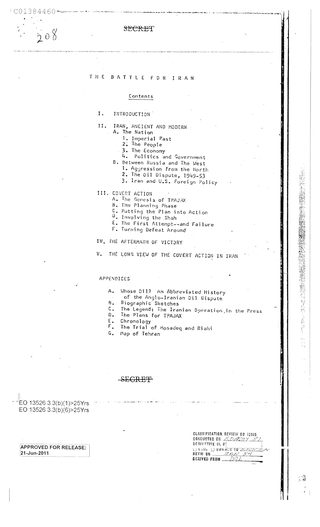 1974 · 128 p.The Battle for Iran: the CIA History Staff's account of the 1953 coup (c. 1974)CIA History Staff (author's name withheld)An undated CIA History Staff account of Iran and the 1953 coup, released in 2011 and posted in 2013. In it the CIA states that the coup was carried out under its direction as an act of US policy.
- 28 August 1953Iran 1953: Kermit Roosevelt's debriefing at CIA headquartersCentral Intelligence Agency, Directorate of Plans (reporter's record; drafter's name not declassified)A verbatim record of 28 August 1953, printed in the 2017 FRUS retrospective volume on Iran, in which the CIA's field commander told agency leaders how the TPAJAX coup against Mosaddeq was saved after it failed.
Checking the record
Dates and outcome compared in two independent sources: they agree.
- FRUS
- First attempt night of 15–16 August 1953 failed; Zahedi in control of Tehran on 19 August (Waller memorandum, 20 August) Zahedi in control of Tehran, Mosaddeq ousted; Shah to return from Rome.
- Wikipedia
- 15–19 August 1953 Mosaddegh overthrown on 19 August; Zahedi formed a government; Mosaddegh tried and imprisoned.
Both give the failed attempt of 15–16 August and the success of 19 August. The CIA documents stress the 'spontaneity' of the crowds, while Wikipedia reports the scholarly debate about how far CIA-paid crowds drove events; this page presents both.
Sources
- FRUS Foreign Relations of the United States, 1952–1954, Iran, 1951–1954 (retrospective volume), Preface, US Department of State, Office of the Historian (2017).
- FRUS FRUS, Iran, 1951–1954, Document 169: Memorandum from DCI Dulles to President Eisenhower, 1 March 1953, US Department of State, Office of the Historian (1953-03-01).
- FRUS FRUS, Iran, 1951–1954, Document 225: Editorial Note on approval of TPAJAX, US Department of State, Office of the Historian (2017).
- FRUS FRUS, Iran, 1951–1954, Document 291: Memorandum by John Waller, 20 August 1953, US Department of State, Office of the Historian (1953-08-20).
- FRUS FRUS, Iran, 1951–1954, Document 307: Record of Meeting in the Central Intelligence Agency, 28 August 1953, US Department of State, Office of the Historian (1953-08-28).
- FRUS FRUS, Iran, 1951–1954, Document 273: Telegram from the Station in Iran, 17 August 1953, US Department of State, Office of the Historian (1953-08-17).
- National Security Archive CIA Confirms Role in 1953 Iran Coup (Electronic Briefing Book No. 435), National Security Archive (2013-08-19).
- Wikipedia 1953 Iranian coup d'état, Wikipedia.
- Wikipedia English Wikipedia article (used for cross-checking).
Elsewhere in the files
- Agency Central Intelligence Agency (CIA)
- Agency Secret Intelligence Service (MI6)
- Document Iran 1953: Kermit Roosevelt's debriefing at CIA headquarters
- Document NSC 10/2: covert action authorized (1948)
- Document Operation PBSUCCESS: the CIA's own history of the Guatemala coup (Cullather, 1994)
- Document The Battle for Iran: the CIA History Staff's account of the 1953 coup (c. 1974)
- Document The CIA Iran Task Force's account of the Canadian Caper (1980)
- Operation Operation PBSuccess
- Operation Operation Valuable (Albania)
- Operation The Canadian Caper
- Person Allen Dulles
- Person Richard Helms
Read next
 28 August 1953
Iran 1953: Kermit Roosevelt's debriefing at CIA headquarters
A verbatim record of 28 August 1953, printed in the 2017 FRUS retrospective volume on Iran, in which the CIA's field commander told agency leaders how the TPAJAX coup against Mosaddeq was saved after it failed.
 12 August 1953 – 27 June 1954
Operation PBSuccess
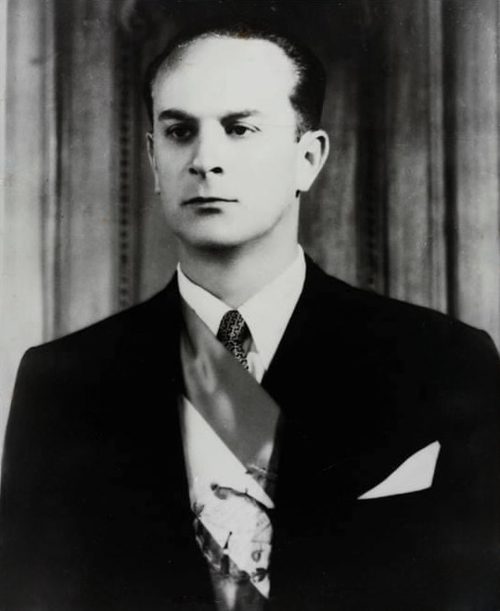
The CIA's 1953–54 campaign of propaganda, pressure and a small proxy invasion that forced Guatemala's elected president Jacobo Árbenz to resign on 27 June 1954.
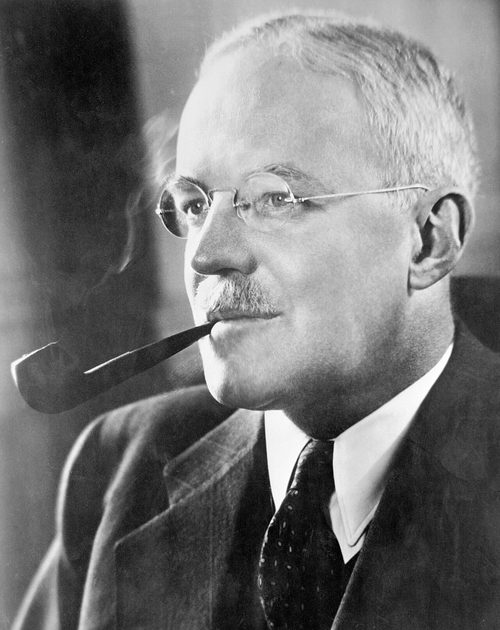 1893–1969
Allen Dulles
OSS spymaster in wartime Switzerland and Director of Central Intelligence from 1953 to 1961, Allen Dulles presided over the CIA's era of coups and covert wars until the Bay of Pigs ended his tenure.
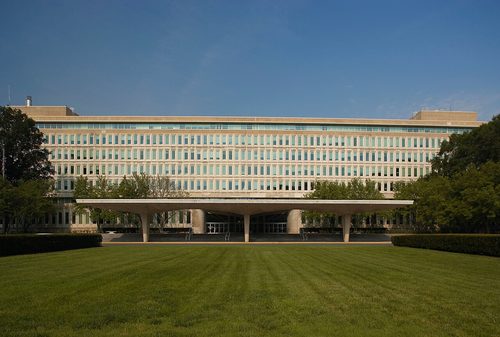 United States · 1947
Central Intelligence Agency (CIA)
The US civilian intelligence service, created by the National Security Act of 1947 to coordinate foreign intelligence, which within a year also became Washington's instrument for covert action.
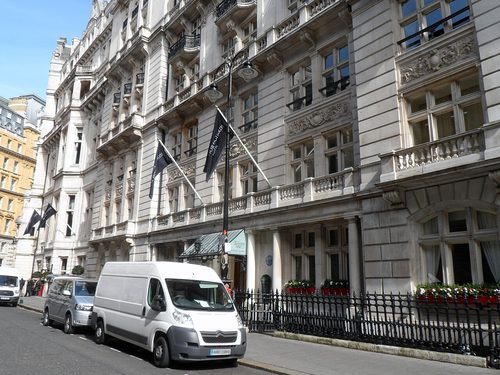 United Kingdom · 1909
Secret Intelligence Service (MI6)
Britain's foreign intelligence service, founded in 1909 as the foreign section of the Secret Service Bureau, run by a chief known as 'C', and not placed on a statutory footing until the Intelligence Services Act 1994.