
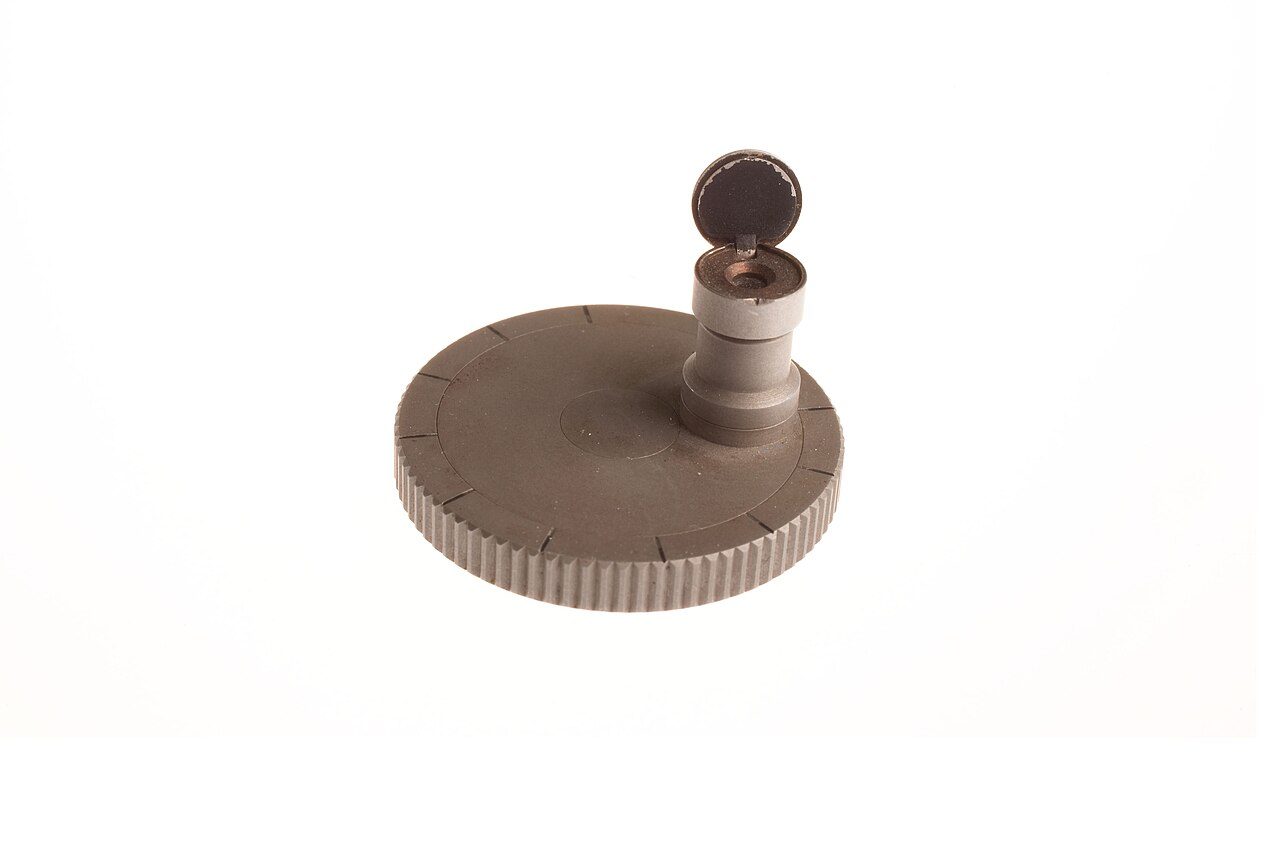

A microdot is a photograph shrunk so far that a page of text fits on a speck of film no bigger than a typed full stop. Glued over a punctuation mark in an ordinary letter, it could pass through a wartime censor's office unnoticed. Its purpose was not to make a message unreadable, which is the job of a cipher, but to make it invisible: a form of steganography.5
From pigeon post to the laboratory
Extreme reduction began as a civilian technology. The French photographer René Dagron, who held the first microfilm patent (1859), put it to military use during the siege of Paris in 1870–71, when carrier pigeons flew microfilmed messages into the encircled city.6
The next step came from the Dresden scientist Emanuel Goldberg, head of the camera maker Zeiss Ikon. At the International Congress of Photography in Paris in 1925 he showed a two-stage process that could reduce a page of text to an area of a hundredth of a square millimeter; his "Mikrat" was widely reported at the time.4,5 Germany's intelligence services adopted the principle between the wars.5
The Abwehr's microdots
The FBI met microdots in earnest during the Second World War. The best-known batch arrived with Dusko Popov, the Yugoslav double agent run by the British Double Cross system under the codename TRICYCLE. When the Abwehr sent him to the United States in August 1941 to build a network, it gave him a long questionnaire, including a page of questions about the defenses of Pearl Harbor, in microdot form.2 Popov shared the questions with the Bureau. A CIA review of his career notes that "no warning of this interest was ever passed to the US military," and that none of the eight formal Pearl Harbor investigations mentioned Popov or the questionnaire.2
German networks in Latin America used microdots for routine reporting. The FBI's Special Intelligence Service, which handled the Western Hemisphere, tracked rings in Mexico that mailed microdot letters to cover addresses in Europe; the flow continued until 31 January 1942, shortly before Mexican officials arrested the leader of the largest group, who was found carrying concealed microdots. Couriers also hid dots on clothing and on dolls that looked like presents for children. One such doll is now in the FBI's historical collection.1 An NSA photograph shows microdots taped inside the label of an envelope sent from Mexico City to Lisbon and intercepted by the Allies.5
The Soviet illegals' kits
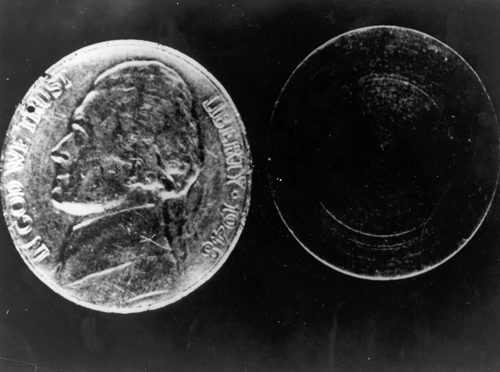
After the war the technique passed to Soviet intelligence, and it turned up whenever an illegal network was rolled up. The coded message inside the hollow nickel found in Brooklyn in 1953 was a tiny photograph of ten columns of five-digit groups.3 When the FBI arrested Rudolf Abel in 1957, his studio and hotel room contained "cameras and film for producing microdots," and a hollow piece of steel from his assistant Reino Häyhänen's home held a piece of microfilm less than an inch square naming a recruited US Army sergeant.3
In London, the Ruislip home of Morris and Lona Cohen, living as the booksellers Peter and Helen Kroger, held a microdot reader inside a hollowed tin of talcum powder. According to published accounts of the The Portland spy ring, the Krogers sent microdots to Moscow hidden in the spines of books mailed to customers in Europe.7 (For hollow containers, see Concealment devices.)
How censors found them
Microdots defeated the eye, but they were only as safe as the people who carried and received them. The FBI says of its doll that the film was "virtually invisible to regular censors," but "the FBI knew how to find it."1 The more common route was a defector or an arrest: the Brooklyn nickel's message sat unread for four years until Häyhänen defected in 1957 and explained the cipher.3 Related methods are described under Secret writing.
Sources
- FBI March 2020 Microdot Object (FBI Artifact of the Month), Federal Bureau of Investigation, via Wikimedia Commons (2020-03).
- CIA Review of Into the Lion's Mouth: The True Story of Dusko Popov (David A. Foy), Studies in Intelligence 62, no. 1, Central Intelligence Agency, Center for the Study of Intelligence (2018-03).
- FBI Hollow Nickel/Rudolf Abel, Federal Bureau of Investigation, History (archived by the Internet Archive).
- Other Emanuel Goldberg, 1881–1970: Pioneer of Information Science (Michael Buckland), UC Berkeley School of Information (archived by the Internet Archive).
- Wikipedia Microdot, Wikipedia.
- Wikipedia René Dagron, Wikipedia.
- Wikipedia Portland spy ring, Wikipedia.
- Wikipedia English Wikipedia article (used for cross-checking).

Elsewhere in the files
- Document The FBI's case write-up on the Duquesne spy ring (1985)
- Operation The Double-Cross System
- Operation The Duquesne spy ring
- Operation The Hollow Nickel case
- Operation The Portland spy ring
- Person Duško Popov (TRICYCLE)
- Person Morris and Lona Cohen
- Tradecraft Concealment devices
- Tradecraft Illegals and legends
- Tradecraft Secret writing
Read next
 1770s–1970s
Secret writing
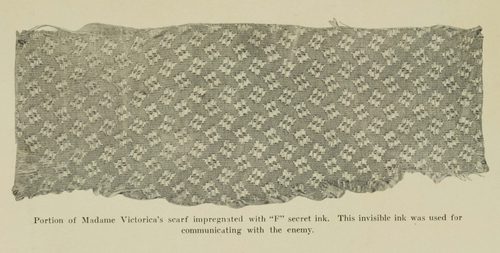
Invisible inks carried spy reports from the American Revolution to the Cold War. The record runs from Washington's 'sympathetic stain' to the CIA's oldest classified papers, finally released in 2011.
 1940s–1980s
Concealment devices
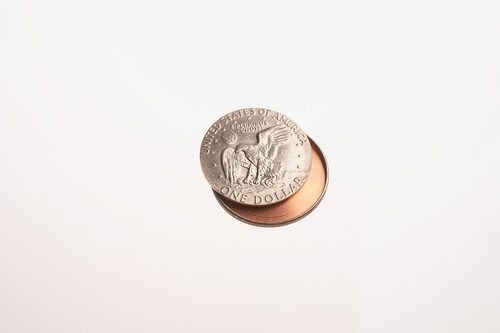
Hollow coins, bolts, batteries and books: the everyday objects spies used to carry film and messages. Many now sit in FBI and CIA collections, and nearly all were found the same way, through an informant or an arrest.
 September 1939 – May 1945
The Double-Cross System
How MI5 caught or recruited Germany's wartime spies in Britain and ran them as double agents, steered by the Twenty Committee, until their reports could carry the D-Day deception.
 22 June 1953 – 15 November 1957
The Hollow Nickel case
A Brooklyn newsboy's trick nickel held a coded message the FBI could not read for four years, until a drunken KGB defector explained it and led agents to the illegal known as Rudolf Abel.
 1951 – 22 March 1961
The Portland spy ring
A Soviet network that took naval secrets from the Admiralty's underwater research establishment at Portland, run by the KGB illegal 'Gordon Lonsdale' and broken up by MI5 in January 1961.