
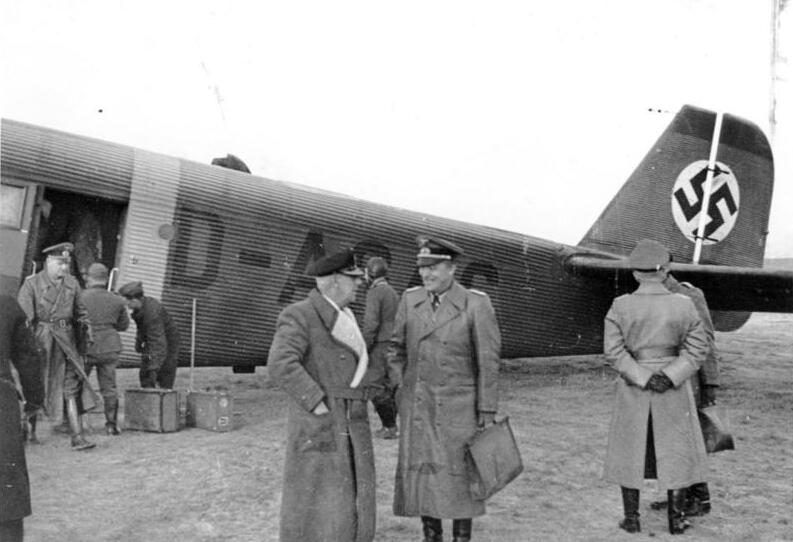
The word Abwehr means "defense," and the name was a fig leaf. The Treaty of Versailles left Germany no room for an espionage service, so in 1920 the new Reichswehr ministry set up a small group whose stated job was to guard against foreign spies. It began with a handful of officers. By the Second World War it was a large organization running agents from Lisbon to Ankara and from New York to Tripoli, and it was best known abroad for how often those agents were caught or turned.5
From defense office to war service
Through the 1920s the Abwehr was a modest department staffed mostly by army officers, with the navy's intelligence staff folded in by 1928. Two naval officers then ran it in turn: Conrad Patzig from 1932, and from 1 January 1935 Wilhelm Canaris, a former U-boat commander with intelligence experience from the First World War. Under Canaris the staff grew from fewer than 150 people to nearly a thousand within two years. Its headquarters stood at 76/78 Tirpitzufer in Berlin, next door to the war ministry.5,6
When Hitler took personal command of the armed forces on 4 February 1938, the war ministry became the Armed Forces High Command (OKW), and the Abwehr became its Amt Ausland/Abwehr. Erwin Lahousen, an Austrian officer who joined after the Anschluss, described the setup to the Nuremberg tribunal: three Abwehr divisions plus a foreign-affairs division. Division I collected secret intelligence under Colonel Hans Piekenbrock. Division II, which Lahousen later headed, handled sabotage and subversion. Division III, under Franz-Eccard von Bentivegni, handled counterintelligence. Below Berlin, each military district had an Abwehrstelle, and in neutral capitals officers worked under embassy or trade cover.1,5
What the record shows it did
Lahousen's testimony on 30 November 1945 is the most detailed public account by an insider. He testified that in August 1939 Divisions I and II were ordered to supply Polish uniforms and identity papers for an "Undertaking Himmler." Only after the invasion did the officers learn that concentration camp prisoners in those uniforms had been used to stage an attack on the Gleiwitz radio station. He also described orders from Field Marshal Keitel, which the Abwehr leadership said it refused, to arrange the killing of the French generals Weygand and Giraud.1
Its espionage against the Western Allies went badly. In the United States, agents recruited before the war included a Norden bombsight inspector, but the FBI turned the Abwehr's radio channel and rolled up the Duquesne ring in 1941. A year later the saboteurs of Operation Pastorius were in custody within two weeks of landing. In Britain, MI5 identified the agents it sent and ran many of them back as double agents under the Double-Cross System, including Juan Pujol García and Dusko Popov. In the East the Abwehr was fed by Soviet-controlled sources such as the one in Operation Monastery.2,5
It had real successes too. In the occupied Netherlands from 1942 the Abwehr officer Hermann Giskes captured British-trained agents and used their radios to draw in more, the episode known as the Englandspiel. A review in the CIA's Studies in Intelligence sums up the wider verdict: under Canaris the service was "generally ineffectual and often bested by Allied counterintelligence," partly because German commanders put little faith in human intelligence.3,5
Opposition and complicity
The Abwehr also sheltered part of the military opposition to Hitler. Hans Oster, who ran the Abwehr's central division, was at the center of plotting from the Sudeten crisis of 1938, and Lahousen testified that Canaris told him not to bring National Socialists into his department. Lahousen also described Canaris protesting to Keitel in September 1939 about the planned killing of Polish clergy, nobility and intelligentsia, and the Abwehr's objections to the 1941 orders for executing Soviet commissars and prisoners of war.1,6
Abolition
The end came quickly. In February 1944 the Abwehr officer Erich Vermehren and his wife defected to the British in Istanbul; a contemporary cable summarized in a CIA history notes the defection in Ankara that month of Vermehren and a second officer, Willi Hamburger. On 18 February 1944 Hitler signed a decree abolishing the Abwehr as an independent service. Its functions passed to Himmler's Reich Security Main Office, with Walter Schellenberg of the SS foreign intelligence branch taking over most of its work.4,5
Canaris was moved to a minor post. He was arrested on 23 July 1944, after the failed bomb plot, and hanged with Oster at Flossenbürg on 9 April 1945. Lahousen survived to testify against Keitel, who was convicted at Nuremberg and hanged.5,6
Key dates
- 1920 Set up as a small counterintelligence group inside the Reichswehr ministry.
- 1 January 1935 Captain Wilhelm Canaris takes over as chief.
- 4 February 1938 The Armed Forces High Command (OKW) is created; the Abwehr becomes its Amt Ausland/Abwehr.
- August 1939 Abwehr divisions supply Polish uniforms for the SD's staged border incidents, Lahousen later testifies.
- June 1941 The FBI arrests the Duquesne ring, built around Abwehr agents in New York.
- June 1942 Eight Abwehr saboteurs land in New York and Florida and are caught within two weeks.
- February 1944 Abwehr officer Erich Vermehren defects to the British in Istanbul.
- 18 February 1944 Hitler signs the decree abolishing the Abwehr as an independent service.
- 23 July 1944 Canaris is arrested after the 20 July plot.
- 9 April 1945 Canaris and his former deputy Hans Oster are hanged at Flossenbürg.
Operations in these files
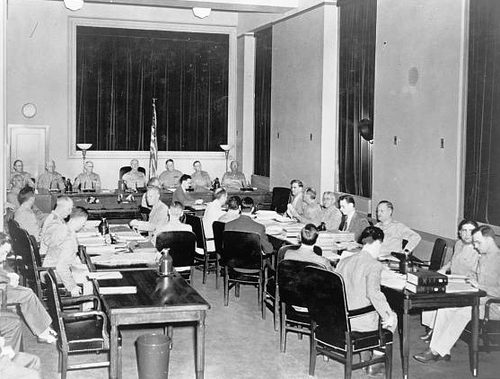

Operations against the Abwehr
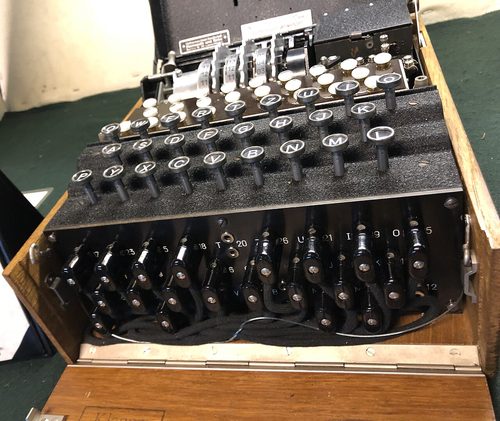 December 1932 – May 1945
Ultra and the breaking of Enigma
How Polish mathematicians first broke the German Enigma machine, and how Britain's codebreakers at Bletchley Park turned that start into Ultra, the most closely guarded intelligence source of the Second World War.
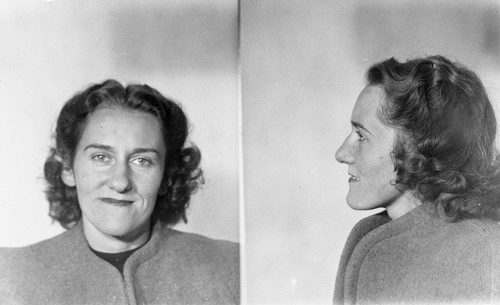 September 1939 – May 1945
The Double-Cross System
How MI5 caught or recruited Germany's wartime spies in Britain and ran them as double agents, steered by the Twenty Committee, until their reports could carry the D-Day deception.
 8 February 1940 – 2 January 1942
The Duquesne spy ring
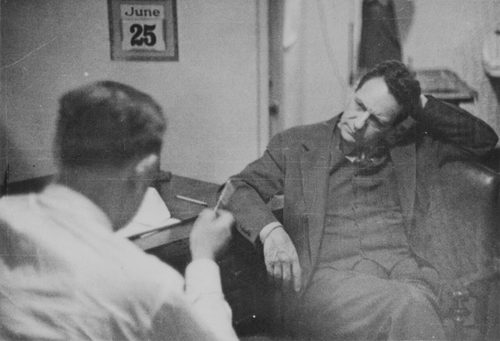
Thirty-three German agents convicted in 1941–42 after the FBI turned an Abwehr recruit, William Sebold, ran his radio link to Hamburg for 16 months and filmed spies in a wired Manhattan office.
July 1941 – August 1944
Operation Monastery
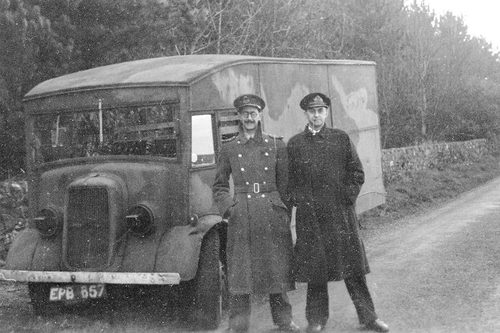
An NKVD radio game of 1941–1944 in which the agent Alexander Demyanov, 'Heine', posed as the Abwehr's man in Moscow, fed German intelligence disinformation and drew its couriers into arrest.
 4 February – 14 May 1943
Operation Mincemeat
In 1943 British intelligence floated a dead man dressed as a Royal Marines officer ashore in Spain with forged letters pointing at Greece and Sardinia, to hide the coming invasion of Sicily.
 January – September 1944
Operation Fortitude
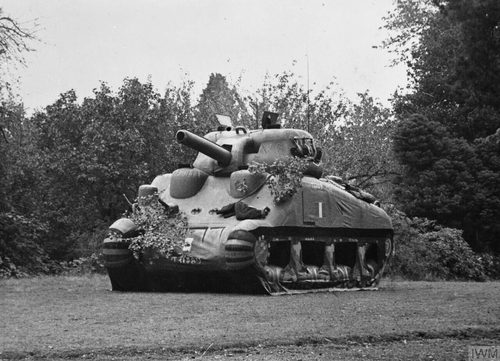
The Allied deception that invented armies in Scotland and southeast England in 1944 to make Germany expect landings in Norway and the Pas-de-Calais, and to see Normandy as a feint.
People
Sources
- Court record Trial of the Major War Criminals before the International Military Tribunal, Vol. 2, Proceedings of 30 November 1945 (testimony of Erwin Lahousen), International Military Tribunal, Nuremberg (Avalon Project, Yale Law School) (1945-11-30).
- FBI Duquesne Spy Ring, Federal Bureau of Investigation, History.
- CIA Review: Hitler's Nest of Vipers: The Rise of the Abwehr (Studies in Intelligence 67, no. 2), Central Intelligence Agency, Center for the Study of Intelligence (2023-06).
- CIA Alias George Wood, Central Intelligence Agency, Historical Review Program (approved for release 22 September 1993).
- Wikipedia Abwehr, Wikipedia.
- Wikipedia Wilhelm Canaris, Wikipedia.
- Wikipedia English Wikipedia article (used for cross-checking).
Elsewhere in the files
- Agency Gehlen Organization and BND
- Agency Special Operations Executive (SOE)
- Document Ex parte Quirin (1942): the Supreme Court and the Nazi saboteurs
- Document The FBI's case write-up on the Duquesne spy ring (1985)
- Document The OSS interrogation of Richard Kauder, alias Klatt (August 1945)
- Document The Rote Drei: CIA's study of the 'Lucy' radio traffic (c. 1969)
- Document What the Germans could read: the TICOM report, Volume 1, Synopsis (1946)
- Operation Operation Bernhard
- Operation Operation Fortitude
- Operation Operation Mincemeat
- Operation Operation Monastery
- Operation Operation Pastorius
- Operation The Cicero affair
- Operation The Double-Cross System
- Operation The Duquesne spy ring
- Operation The Lucy spy ring
- Operation The Red Orchestra (Rote Kapelle)
- Operation Ultra and the breaking of Enigma
- Person Duško Popov (TRICYCLE)
- Person Juan Pujol García (GARBO)
- Person Reinhard Gehlen
- Person Wilhelm Canaris
- Tradecraft Cipher machines
- Tradecraft Double agents
- Tradecraft Microdots
- Tradecraft Secret writing