
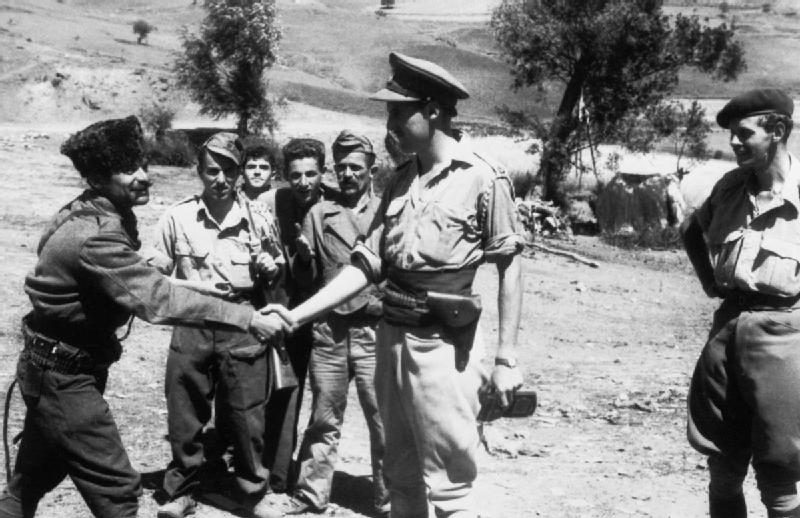

SOE was built for a war Britain could not yet fight in the open. After the fall of France in the summer of 1940 there was no British army on the continent, and the only ways to strike at German-occupied Europe were bombing, blockade, and whatever could be done from inside. SOE's charter was the inside: sabotage, subversion, and the arming of resistance.1,4
Three small departments merged
In 1938, as war approached, three separate bodies had been set up to study irregular warfare: Section D, the sabotage branch of the Secret Intelligence Service; MI(R), a research branch of the War Office; and Electra House, a semi-secret propaganda section of the Foreign Office. In 1940 Churchill's government merged them. SOE was formally created on 22 July 1940 and placed under the Minister of Economic Warfare, the Labour politician Hugh Dalton. Dalton recorded in his diary Churchill's instruction on taking the job: "And now go and set Europe ablaze."1,5
At first SOE had three branches: SO1 for propaganda, SO2 for active operations, and SO3 for planning. Rows with the Foreign Office and the Ministry of Information ended in August 1941 with most of SO1 moving to the new Political Warfare Executive, leaving SOE as a planning and operations organization for the rest of the war. From 31 October 1940 its headquarters was 64 Baker Street, which gave its staff the nickname "the Baker Street Irregulars." The first executive head was Sir Frank Nelson, followed in 1942 by the banker Sir Charles Hambro and, from September 1943, by Major-General Colin Gubbins, whose interest in irregular warfare dated from the Irish War of Independence.1,4,5
Agents and methods
SOE was organized by country sections. In France alone there were several, including F Section, under British control, and RF Section, which worked with de Gaulle's Free French. The first SOE agent parachuted into France, a wireless operator, landed on 5 May 1941. The American Virginia Hall arrived that August and became the first woman to work for SOE in France for an extended period. Women were commissioned into the First Aid Nursing Yeomanry or the Women's Auxiliary Air Force as cover, among them the wireless operator Noor Inayat Khan. SOE agents usually worked in civilian clothes, so capture meant interrogation, often torture, and execution as spies.4,5
Its research stations near Welwyn designed silenced pistols, explosive devices, disguised radios and forged papers. Examples are held by the National Army Museum, and the training syllabuses of the Canadian school known as Camp X, which also trained Americans of the OSS, are preserved in The National Archives in series HS 7.3,4
The best-known operations
SOE trained and equipped the Czechoslovak soldiers who mortally wounded Reinhard Heydrich in Prague in May 1942 (Operation Anthropoid), and the Norwegian team that wrecked the heavy-water plant at Vemork in February 1943 (Operation Gunnerside). In 1944 SOE and the OSS combined to drop three-man Jedburgh teams into France around D-Day; with the resistance, they helped delay German units moving to Normandy, among them the 2nd SS Panzer Division. In Yugoslavia, Britain shifted its support from Mihailović's Chetniks to Tito's Partisans in December 1943. In Asia, SOE operated as Force 136.4,5
Failures and penetration
SOE's worst disaster was in the Netherlands. From 1942 to 1944 the Abwehr and the SD captured SOE's agents there and played their radios back to London in what the Germans called the Englandspiel. London missed the warning that captured operators omitted their security checks and kept sending agents and supplies. Of fifty-four agents captured, only four survived the war. In France, agents continued to be sent to the PROSPER circuit for months after the Germans had broken it. Of the 41 women F Section sent into the field, more than a third did not come back.5,6
SOE also fought Whitehall. The SIS chief, Stewart Menzies, called its agents amateur, dangerous and bogus; SIS wanted quiet conditions for intelligence gathering, and SOE's explosions disturbed them. At one stage SIS actively hindered SOE's efforts to put agents into France.4,5
Disbandment and the records
The Ministry of Economic Warfare was wound up in May 1945, and SOE itself was disbanded in 1946; a small SOE Adviser's office at the Foreign Office then answered enquiries about its staff. Much of the archive was lost: files were destroyed in Singapore in 1942 and in Cairo before the German advance on Egypt, and many more were weeded or burned in a fire at headquarters in 1945. What survives is now open at The National Archives in series HS, including the section histories and war diaries written as the war ended (HS 7) and agents' personnel files (HS 9). The official history SOE in France was written by M. R. D. Foot, himself a wartime SOE officer.1,2,5
Key dates
- 22 July 1940 SOE formally created under the Minister of Economic Warfare, Hugh Dalton, from Section D, MI(R) and Electra House.
- 31 October 1940 Headquarters move to 64 Baker Street, London.
- 5 May 1941 First SOE agent parachuted into occupied France.
- August 1941 Propaganda branch SO1 transferred to the new Political Warfare Executive; SOE becomes purely an operations body.
- 27 May 1942 SOE-trained Czechoslovak soldiers attack Reinhard Heydrich in Prague.
- February 1943 SOE-trained Norwegians sabotage the heavy-water plant at Vemork.
- September 1943 Colin Gubbins becomes executive head of SOE.
- June 1944 Jedburgh teams parachute into France to support the Normandy landings.
- 1946 SOE disbanded; responsibility for its records passes to an SOE Adviser at the Foreign Office.
Operations in these files
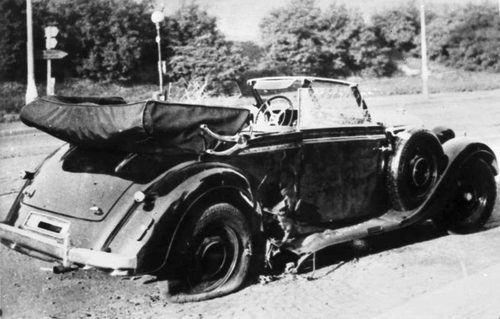 October 1941 – 18 June 1942
Operation Anthropoid
The 1942 assassination of Reinhard Heydrich in Prague by two Czechoslovak soldiers trained and dropped by SOE, and the German reprisals that destroyed Lidice and Ležáky.
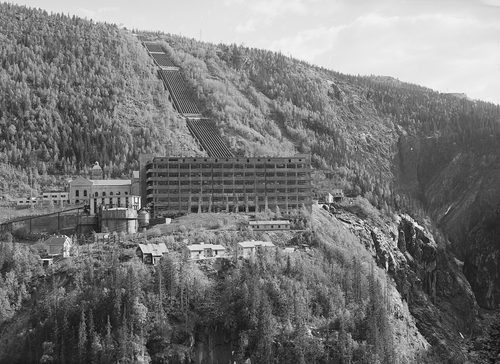 16–28 February 1943
Operation Gunnerside
In February 1943 nine Norwegian SOE commandos crossed a gorge in Telemark and blew up the heavy-water cells at Vemork without firing a shot, after a British glider raid had ended in disaster.
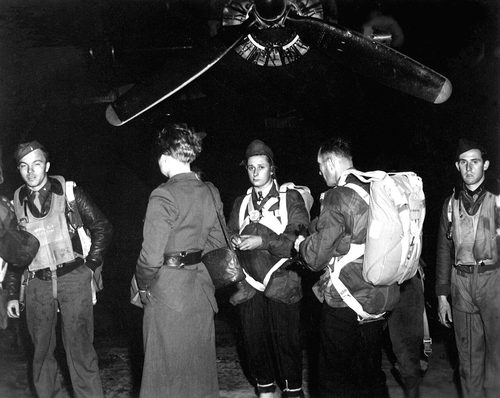 5 June 1944 – April 1945
Operation Jedburgh
From June 1944 Allied three-man teams in uniform, drawn from SOE, the OSS and the Free French, parachuted into France and the Low Countries to arm and lead resistance fighters behind German lines.
People
Sources
- National Archives Records of the Special Operations Executive (HS): administrative history, The National Archives (UK).
- National Archives Special Operations Executive: Histories and War Diaries (HS 7), The National Archives (UK).
- Official history Secrecy, sabotage and resistance: a Second World War 'special relationship', The National Archives blog (Neil Cobbett) (2018-03-29).
- Other Special Operations Executive, National Army Museum.
- Wikipedia Special Operations Executive, Wikipedia.
- Wikipedia Englandspiel, Wikipedia.
- Wikipedia English Wikipedia article (used for cross-checking).
Elsewhere in the files
- Agency Office of Strategic Services (OSS)
- Agency Secret Intelligence Service (MI6)
- Document Team Frederick in Brittany: the OSS London war diary, 1944
- Operation Operation Anthropoid
- Operation Operation Gladio
- Operation Operation Gunnerside
- Operation Operation Jedburgh
- Person Guy Burgess
- Person Noor Inayat Khan
- Person Virginia Hall