
Portrait: Virginia Hall receives the Distinguished Service Cross from General William Donovan, September 1945. Unknown photographer who worked for the CIA. Wikimedia Commons, Public domain.

Virginia Hall was turned down for the US Foreign Service because she had lost part of her left leg. Within a few years she was running clandestine networks in France for two Allied services. The CIA, which she later joined, lists among her field names "Marie Monin", "Germaine", "Diane", "Camille" and "Nicolas"1.
A diplomat refused
Hall was born in Baltimore on 6 April 1906 and studied at Radcliffe and Barnard before further study in Europe1,4. In 1931 she became a clerk at the US embassy in Warsaw, then moved to Izmir in Turkey. There a hunting accident cost her her left leg below the knee1. Fitted with a wooden leg she called Cuthbert, she went on to the consulate in Venice. When she asked to sit the oral examination for the Foreign Service, she was told the amputation disqualified her1. She resigned from the State Department in 19394.
When war came she was in France, where she joined an ambulance unit. After the French collapse she made her way through Spain to London and volunteered for the British Special Operations Executive1,4.
SOE in Lyon, 1941–1942
Hall reached Vichy France on 23 August 1941, the first woman of SOE's F Section to stay in the field for any length of time4. Her cover was as a correspondent for the New York Post. Based in Lyon, she built the network known as Heckler and became the fixed point for other agents: arranging safe houses, money and contacts, and passing reports to London through the American diplomatic pouch when there was no radio4. Downed Allied airmen were told to ask for "Olivier", and she helped many of them escape to Spain4.
In July 1942 she helped organize the escape of a dozen SOE agents held at Mauzac prison. After her network was penetrated by an Abwehr agent, the priest Robert Alesch, and the Germans moved to occupy southern France in November 1942, she left Lyon and crossed the Pyrenees on foot into Spain4. Spanish authorities held her for illegal entry until the US embassy secured her release4. The British made her an honorary MBE for her work in 1941–423.
OSS, 1944
SOE judged her too well known to send back. She learned wireless and joined the American Office of Strategic Services1,4. On 21 March 1944 she landed in Brittany from a motor gunboat, disguised as an elderly countrywoman. Her artificial leg ruled out parachuting4. Working first south of Paris and from July in the Haute-Loire, she found drop zones, received arms and money, and organized and financed Maquis groups. She radioed reports herself, among the most dangerous jobs in occupied France1,3. A three-man Jedburgh team, Jeremy, joined her area in late August 1944, by which time the Germans had left the department4.
In September 1945 William Donovan presented her with the Distinguished Service Cross, at her request privately4. She was the only civilian woman so honored in the war1. The citation read in part:
Miss Hall displayed rare courage, perseverance and ingenuity; her efforts contributed materially to the successful operations of the Resistance Forces in support of the Allied Expeditionary Forces in the liberation of France.
That passage is quoted on the CIA's page about her1.
CIA
After the war Hall joined the newly formed CIA. She served first in Italy, then worked for the National Committee for a Free Europe, a CIA front linked to Radio Free Europe. She spent about fifteen years on covert action, chiefly support for resistance groups in Eastern Europe1. She retired in 1966 at the mandatory age of 601. The agency has since acknowledged that colleagues sidelined her and that her experience was underused4.
She married her OSS comrade Paul Goillot in 1957 and died in Rockville, Maryland, on 8 July 19824. Her SOE personnel file, HS 9/647/4, is at The National Archives at Kew2.
Key dates
- 23 August 1941 Arrives in Vichy France for SOE under cover as a New York Post correspondent.
- 15 July 1942 Helps organize the escape of SOE agents from Mauzac prison.
- November 1942 Flees France on foot over the Pyrenees as the Germans occupy the southern zone.
- 21 March 1944 Lands in Brittany as an OSS radio operator, codename Diane.
- July 1944 Begins organizing and supplying Maquis groups in the Haute-Loire.
- September 1945 Receives the Distinguished Service Cross privately from William Donovan.
- 1966 Retires from the CIA at the mandatory age of 60.
Sources
- CIA Virginia Hall: The Courage and Daring of 'The Limping Lady', Central Intelligence Agency.
- Official history HS 9/647/4: Virginia HALL, aka Mary HALL, born 06.04.1906, The National Archives (UK), Discovery catalogue (2004).
- Other Virginia Hall MBE medal award, International Spy Museum.
- Wikipedia Virginia Hall, Wikipedia.
- Wikipedia English Wikipedia article (used for cross-checking).
Elsewhere in the files
Read next
 United Kingdom · 1940–1946
Special Operations Executive (SOE)
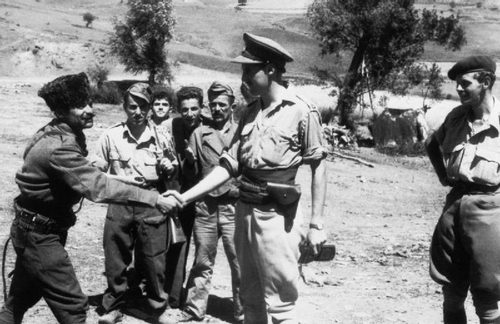
Britain's wartime sabotage and subversion service, created in July 1940 to arm resistance movements in occupied Europe and Asia. It ran Anthropoid and Gunnerside, suffered the Englandspiel, and was wound up in 1946.
 United States · 1942–1945
Office of Strategic Services (OSS)
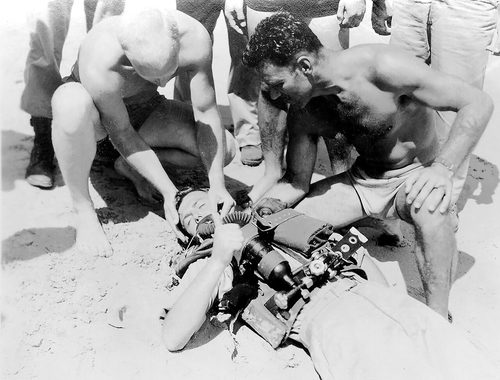
America's wartime intelligence service, 1942–1945: William Donovan's mix of scholars, spies, saboteurs and propagandists, abolished by Truman and reborn in parts as the CIA.
 5 June 1944 – April 1945
Operation Jedburgh
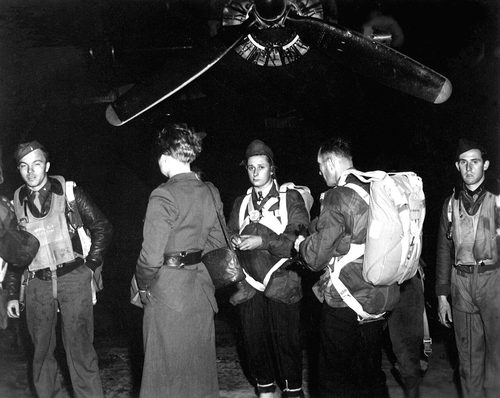
From June 1944 Allied three-man teams in uniform, drawn from SOE, the OSS and the Free French, parachuted into France and the Low Countries to arm and lead resistance fighters behind German lines.
 1883–1959
William J. Donovan
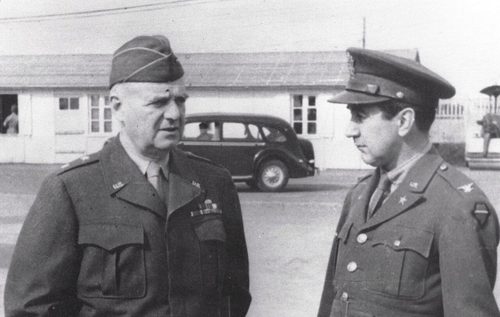
Buffalo lawyer, Medal of Honor soldier and founder of the OSS, who argued for a central US intelligence service and lost the fight to lead it when Truman abolished his agency in 1945.
 1914–1944
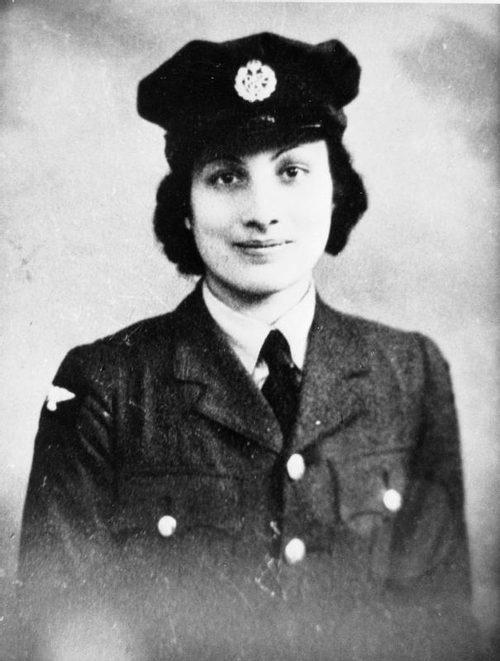
Noor Inayat Khan
SOE's first woman wireless operator sent into occupied France, she kept transmitting from Paris after her network collapsed in 1943, was betrayed, and was killed at Dachau in September 1944.