
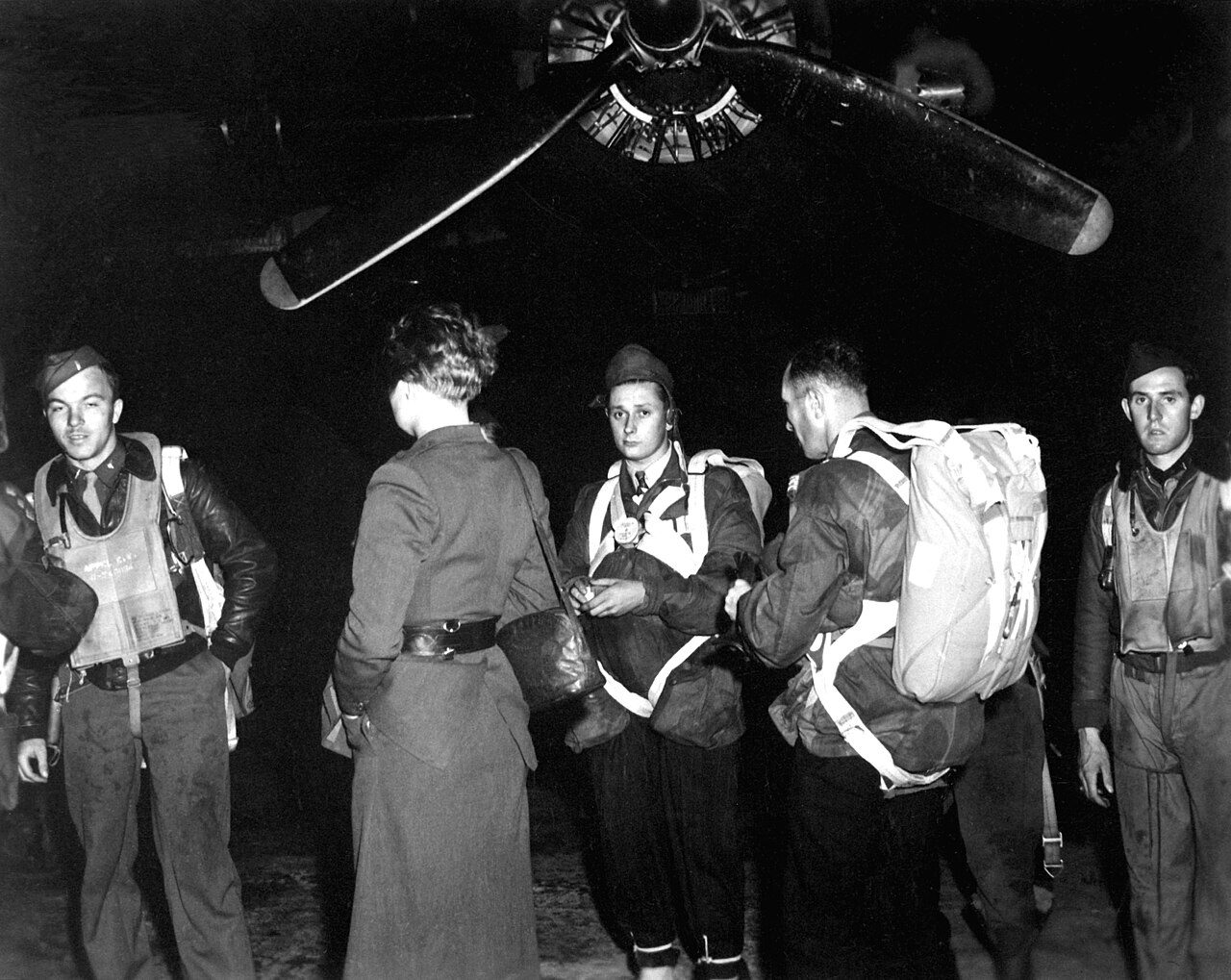
The recruiting pitch was read out over loudspeakers at American military bases. It asked for volunteers for immediate overseas duty who knew French or another European language, could qualify as parachutists, and would accept a mission whose danger was guaranteed1. Those accepted became Jedburghs: soldiers in uniform, dropped in small teams behind German lines in 1944 to turn scattered resistance groups into a force the Allied armies could use.
Origins
By 1943 the British Special Operations Executive had spent three years building clandestine networks in occupied Europe, but it lacked the aircraft and manpower to arm resistance on the scale an invasion would need5. In May 1943 SOE and the London office of the American Office of Strategic Services Special Operations branch agreed on the Jedburgh concept5. Instead of civilian agents living under cover, the teams would be military personnel in uniform. They would drop in around the time of the invasion, link up with resistance groups, and call in arms and supplies1,5. Wearing uniform was meant to give them the protection of the laws of war if captured. The CIA notes that the Americans deliberately fought in uniform with no visible OSS connection, to reduce the risk of being shot as spies1.
The project was the first large joint venture in Europe between SOE and OSS5. How it got its name is unknown. The CIA lists several theories, from the Scottish border town of Jedburgh to the possibility that the word was simply next on a list of codenames1.
Teams and training
A typical team had three men: two officers, one of them from the country where the team would operate, and a radio operator, who could be of any nationality5. The CIA describes teams of two to four drawn from American, British and Free French personnel, sometimes with Belgian, Dutch or Canadian members, and always with one radio operator1. About 300 were selected. After paramilitary training in the Scottish Highlands they were based at Milton Hall near Peterborough, close to the airfields5.
Each team carried a portable radio, known as the "Jed set", to talk to Special Force Headquarters in London. Messages were enciphered with one-time pads and shortened by printed code lists1,5. Officers carried large sums in French francs to pay and supply the Maquis5.
France, 1944
The first team, HUGH, parachuted into central France near Châteauroux on the night of 5–6 June 1944, hours before the Normandy landings1,5. Its report is among the SOE team files at Kew3. Ninety-three teams went into France between June and September. Counting radio operators, roughly 280 men served on the French teams, with the French the largest group, then the British, then the Americans5. They usually landed at night to a reception committee from a local resistance group. Their most valuable asset was the ability to call in parachute drops of weapons and ammunition1,5.
Results depended heavily on timing. Teams dropped early could help organize sabotage of railways and roads and attacks on German columns as the Allied armies broke out of Normandy and landed in the south1. Several teams sent in August and September found that the Allied advance had already liberated their area5. In the Haute-Loire, team JEREMY arrived on 25 August 1944 to support Maquis battalions that Virginia Hall had been arming for weeks. She noted dryly that the Germans had already gone5.
The danger was real. Germany treated many captured special forces men under Hitler's commando order. Three members of team AUGUSTUS, a French captain, an American major and an American radio operator, were executed by German troops on 30 August 1944 near Barenton-sur-Serre in the Aisne5. SOE's file on the team survives4.
The Netherlands and beyond
From September 1944 to April 1945 eight teams worked in the Netherlands. The first, DUDLEY, dropped a week before Operation Market Garden, and four more accompanied the airborne forces in that battle5. Jedburgh-style parties later served in Burma and French Indochina under South East Asia Command5.
Afterward
Many American Jedburghs went on to the CIA. The best known, William Colby, led a team into France in August 1944 at the age of 24. In 1945 he led an OSS ski-parachute operation in Norway, and he served as Director of Central Intelligence from 1973 to 19761. SOE's records of the teams, including individual team reports in series HS 6 and a 1947 roll of Jedburghs by codename and team, are at The National Archives2,3,4.
The documents
Declassified records of this operation, with the scans and their full text hosted here.

Checking the record
Dates and outcome compared in two independent sources: they agree.
- CIA
- First team deployed the night before D-Day (5/6 June 1944); more than 90 teams dropped into France in 1944. Teams coordinated airdrops, guided Maquis attacks and sabotage, and linked resistance groups to Allied command.
- Wikipedia
- Team HUGH dropped 5/6 June 1944; 93 teams in France June–September 1944; eight teams in the Netherlands September 1944–April 1945. Teams provided liaison, leadership and, above all, arms drops to resistance groups; several arrived in areas already liberated.
Dates and outcome agree. The CIA gives 'more than 90' teams for France and describes teams of two to four men; Wikipedia gives 93 three-man teams. This page uses about ninety-three.
Sources
- CIA Surprise, Kill, Vanish: The Legend of the Jedburghs, Central Intelligence Agency.
- Official history HS 8/997: France: list of Jedburghs by codename and team name, The National Archives (UK), Discovery catalogue (1947).
- Official history HS 6/526: Hugh team, The National Archives (UK), Discovery catalogue (1944).
- Official history HS 6/484: Augustus team, The National Archives (UK), Discovery catalogue (1944).
- Wikipedia Operation Jedburgh, Wikipedia.
- Wikipedia English Wikipedia article (used for cross-checking).
Elsewhere in the files
Read next
 United States · 1942–1945
Office of Strategic Services (OSS)
America's wartime intelligence service, 1942–1945: William Donovan's mix of scholars, spies, saboteurs and propagandists, abolished by Truman and reborn in parts as the CIA.
 United Kingdom · 1940–1946
Special Operations Executive (SOE)
Britain's wartime sabotage and subversion service, created in July 1940 to arm resistance movements in occupied Europe and Asia. It ran Anthropoid and Gunnerside, suffered the Englandspiel, and was wound up in 1946.
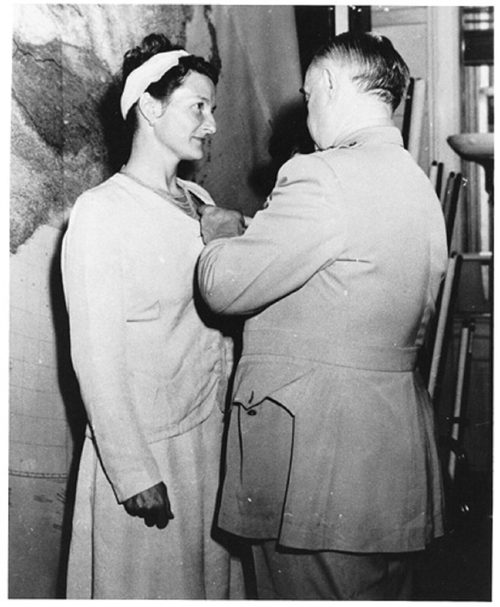 1906–1982
Virginia Hall
American who ran SOE's first lasting network in Vichy France, escaped over the Pyrenees, returned with the OSS in 1944, and was the only civilian woman awarded the Distinguished Service Cross in World War II.
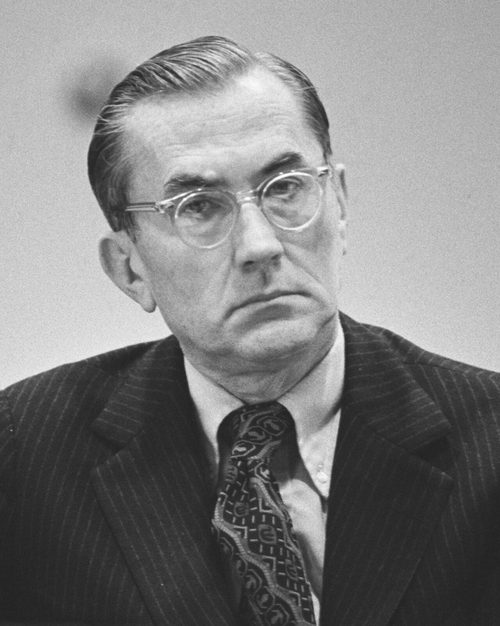 1920–1996
William Colby
OSS parachutist, CIA station chief in Saigon and head of the Phoenix program, Colby became Director of Central Intelligence in 1973 and chose to open the Agency's files to the investigations of 1975.
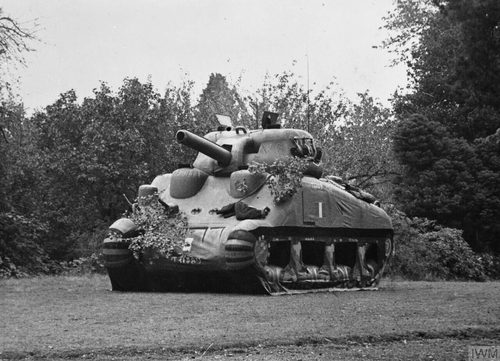 January – September 1944
Operation Fortitude
The Allied deception that invented armies in Scotland and southeast England in 1944 to make Germany expect landings in Norway and the Pas-de-Calais, and to see Normandy as a feint.