
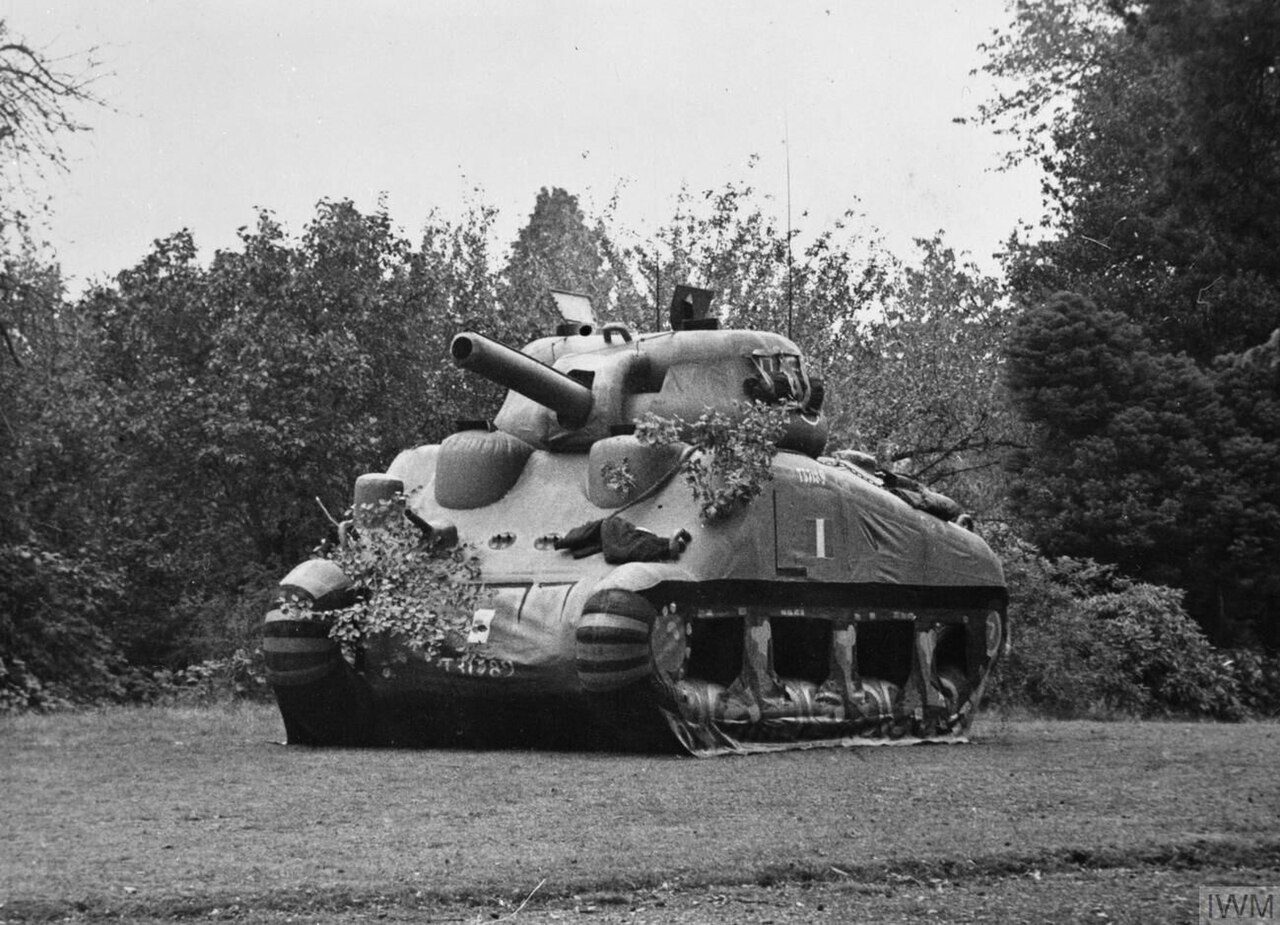

The Germans did not need to be told that an invasion was coming in 1944. They could see it. What the Allied deceivers set out to control was where the Germans thought it would land, when, and, once it had begun, whether they thought it was the real thing. That was the job of Operation Fortitude, the largest part of the overall deception plan for D-Day7,6.
Bodyguard and its two halves
The umbrella plan, first drafted in 1943 by the London Controlling Section under the name Jael, was renamed Bodyguard after Churchill's remark at the Tehran Conference that truth in wartime needed a "bodyguard of lies." It set out several false threats across Europe4,7. Fortitude covered the two that mattered most to Normandy.
Fortitude North threatened Norway from Scotland with a fictitious British Fourth Army headquartered in Edinburgh. Fortitude South threatened the Pas-de-Calais, the shortest crossing of the Channel and the most direct road to the Ruhr, with a large army group in Kent and the southeast of England6,4. Execution fell to the deception staff at Eisenhower's headquarters (SHAEF), known as Ops (B), and to Montgomery's 21st Army Group6.
Building "Army Group Patton"
The centerpiece was the First U.S. Army Group (FUSAG). It was a real headquarters, created to command American forces once they were established in France, but Fortitude gave it a second, imaginary life as the force that would make the "main" landing at Calais. General George S. Patton, whom the Germans rated highly, was named as its commander1,2,4. MI5's account describes the notional force as eleven divisions, some 150,000 men, apparently poised in Kent and Essex3.
The US Army's official history of the breakout from Normandy describes the result plainly:
"Army Group Patton" was in reality an Allied decoy, a gigantic hoax designed to convince the Germans that OVERLORD was only part of a larger invasion effort.
That passage is from1. The decoy was built from several kinds of evidence. Signals units broadcast radio traffic that imitated an army's headquarters at work. Dummy landing craft were moored in southeastern harbors. Bombing was heavier on the Calais coast than on Normandy4,6. On the night of the landings, aircraft dropping strips of radar-jamming foil (Window) imitated invasion fleets approaching the coast north of Normandy4,7.
The agents carry the story
The most trusted channel was human. By 1944 the Germans' agents in Britain were, without the Germans knowing it, run by MI5 through the Double-Cross System. The agents most used for Fortitude included Juan Pujol García (GARBO), the Polish officer Roman Czerniawski (BRUTUS) and Duško Popov (TRICYCLE)6,3.
They did not hand over "stolen plans," which would have looked too easy. They reported small things, such as unit insignia, vehicle markings and troop sightings, and left German analysts to assemble an order of battle that put the weight of the Allied armies opposite Calais6. MI5 counts more than 500 radio messages between GARBO and his German controllers in Madrid from January 1944 to D-Day3.
On 9 June, three days after the landings, GARBO sent a long message reporting that FUSAG had not moved and that Normandy was a diversion to draw German reserves away from the Pas-de-Calais. MI5 records that the Germans accepted it. On 29 July he was told he had been awarded the Iron Cross3.
Allied codebreakers (Bletchley Park) could check what the Germans believed. The Ultra decrypts showed the deceivers how their story was being received4,6.
What the Germans did
Hitler and his commanders kept the Fifteenth Army in place. According to the US Army history, at the start of July that army still held seven divisions under direct control plus four corps controlling eleven more. Fortitude "was effective throughout June and most of July," and German losses in Normandy were not promptly replaced while the Calais divisions waited, though the history adds that other problems also slowed replacements1.
The fiction was kept up after Patton himself went to France. When the real American headquarters moved to the continent, the theater command activated the 12th Army Group under General Omar Bradley and left FUSAG as a paper formation with a new commander until it was abolished in October 19442. Wikipedia's account dates the formal end of Fortitude to 28 September 19446.
The parts that worked, and the parts that may not have
Popular accounts dwell on the inflatable tanks and plywood landing craft. The record is less kind to them. Roger Hesketh, who served in Ops (B), wrote the in-house history of Fortitude in 1949. It is now at Kew and was published in 1999. He concluded that no evidence had been found that wireless deception or visual misdirection contributed anything, and that the agents carried the deception5,6.
Fortitude also depended on conditions it did not create. By 1944 the Luftwaffe could barely fly reconnaissance over England, and the Germans had no uncontrolled agents there. Nearly everything they learned about the invasion army therefore came through channels the Allies controlled6,4.
Checking the record
Dates and outcome compared in two independent sources: they agree.
- Official history
- Deception effective throughout June and most of July 1944. Belief in a second landing by 'Army Group Patton' immobilized the Fifteenth Army in the Pas-de-Calais.
- Wikipedia
- Planning from December 1943; plan approved February 1944; deception maintained after 6 June and formally ended 28 September 1944. German reserves held near Calais for weeks after D-Day, letting the Allies consolidate in Normandy.
The outcome agrees. The US Army history dates the deception's effect, while Wikipedia dates the plan's life; this page uses January–September 1944 for the operation and the Army's 'June and most of July' for its effect. MI5's own account says German divisions waited in the Pas-de-Calais through July and August, which is longer than the Army history allows.
Sources
- Official history Breakout and Pursuit, Chapter II: The Enemy (US Army in World War II), US Army Center of Military History (Blumenson), via HyperWar (1961).
- Official history Breakout and Pursuit, Chapter XI (US Army in World War II), US Army Center of Military History (Blumenson), via HyperWar (1961).
- Official history Agent GARBO (archived copy), Security Service (MI5) (2018).
- Other Fortitude South: D-Day Deception, Military Intelligence Professional Bulletin, US Army (via FAS) (1996).
- Other FORTITUDE, a history of strategic deception in North Western Europe Apr 1943–May 1945 (WO 208/4374), catalogue entry, The National Archives, Kew (1949).
- Wikipedia Operation Fortitude, Wikipedia.
- Wikipedia Operation Bodyguard, Wikipedia.
- Wikipedia English Wikipedia article (used for cross-checking).
Elsewhere in the files
Read next
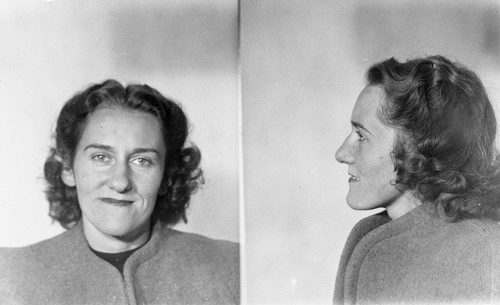 September 1939 – May 1945
The Double-Cross System
How MI5 caught or recruited Germany's wartime spies in Britain and ran them as double agents, steered by the Twenty Committee, until their reports could carry the D-Day deception.
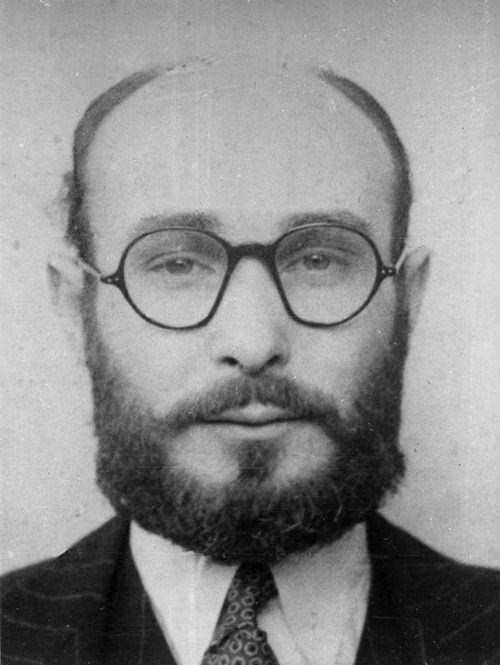 1912–1988
Juan Pujol García (GARBO)
A Catalan former poultry farmer who invented a spy network for the Abwehr, became MI5's double agent GARBO, and helped persuade Hitler that Normandy was a feint.
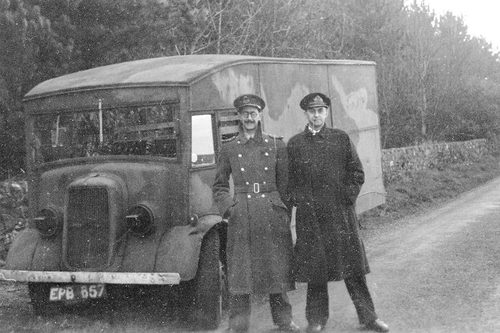 4 February – 14 May 1943
Operation Mincemeat
In 1943 British intelligence floated a dead man dressed as a Royal Marines officer ashore in Spain with forged letters pointing at Greece and Sardinia, to hide the coming invasion of Sicily.
 December 1932 – May 1945
Ultra and the breaking of Enigma
How Polish mathematicians first broke the German Enigma machine, and how Britain's codebreakers at Bletchley Park turned that start into Ultra, the most closely guarded intelligence source of the Second World War.
1920s–1990s
Double agents
Agents who seem to serve one service while controlled by another. From the OGPU's Trust to MI5's Double Cross system and the FBI's Duquesne case, the best of them turned an enemy network into a channel for deception.