
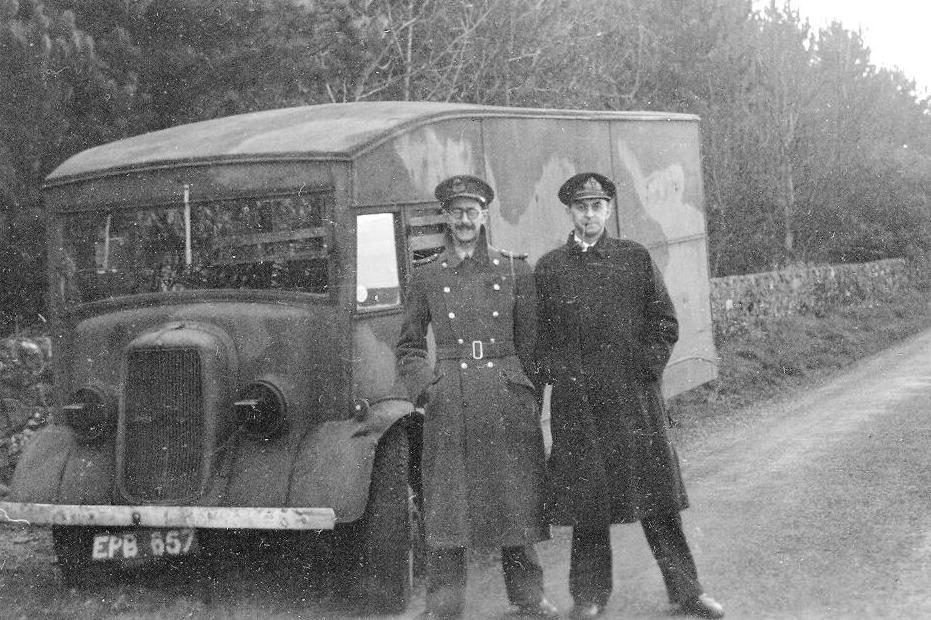

The idea was written down long before anyone tried it. On 29 September 1939 the Director of Naval Intelligence, Rear Admiral John Godfrey, circulated a paper of deception schemes, the "Trout memo," usually attributed in style to his assistant Ian Fleming. Item 28, which the memo itself called "not a very nice one," proposed letting the enemy find a corpse carrying false papers5,4.
Three years later the idea became an operation. Operation Mincemeat put a dead man ashore in Spain dressed as a Royal Marines officer, with forged letters suggesting the Allies would land in Greece and Sardinia. It was the best-known part of the cover plan for the invasion of Sicily1,5.
From a memo to a plan
In October 1942 Flight Lieutenant Charles Cholmondeley, an RAF officer working for MI5 as secretary of the Twenty Committee (the body that ran the Double-Cross System), revived the scheme under the name Trojan Horse. The committee thought it unworkable as drafted. Its chairman, John Masterman, paired Cholmondeley with Ewen Montagu, the Naval Intelligence Division's representative, to rework it. They filed the plan as Mincemeat on 4 February 19435,4.
At the Casablanca Conference in January 1943 the Allies chose Sicily as their next target, the obvious choice. A wider deception, Operation Barclay, aimed to persuade the Germans that the blow would fall in the Balkans. Mincemeat would put that story directly into German hands5,1.
Building "Major Martin"
The London coroner Bentley Purchase supplied the body of Glyndwr Michael, a homeless Welshman who had died in January 1943 after eating rat poison containing phosphorus. Purchase judged that the small amount of poison would not be detected in a body supposedly in the sea for days6,7.
Montagu and Cholmondeley gave the dead man a new identity: Captain (Acting Major) William Martin, Royal Marines, of Combined Operations Headquarters. His pockets held corroborating "pocket litter": love letters and a photograph from an invented fiancée called Pam, a receipt for an engagement ring, an overdraft demand and theater ticket stubs5,4.
The documents that mattered were in a briefcase chained to the body. The main one was a personal letter from Lieutenant General Sir Archibald Nye, Vice Chief of the Imperial General Staff, to General Sir Harold Alexander in North Africa. Nye wrote it himself. It discussed assaults on Greece and named Sicily as a cover target. A second letter, from Lord Louis Mountbatten to Admiral Sir Andrew Cunningham, introduced Martin and included a weak joke about sardines meant to point at Sardinia1,5,4.
The Chiefs of Staff agreed on 13 April 1943; Churchill approved and Eisenhower's headquarters confirmed on 17 April5.
Huelva, April to May 1943
Packed in dry ice in a steel canister, the body was driven to Scotland and loaded aboard HMS Seraph. Before dawn on 30 April 1943, Seraph surfaced off Huelva on Spain's Atlantic coast and her officers put the body in the water. Huelva was chosen for its currents and because an active Abwehr officer, Adolf Clauss, worked there5,4.
A local fisherman found the body that morning. Spanish doctors carried out a brief autopsy on 1 May and recorded death by drowning, and "Major Martin" was buried with military honors on 2 May. The Spanish navy kept the briefcase. Under pressure from the Abwehr, with Admiral Wilhelm Canaris reportedly asked to intervene, Spanish officers drew the letters out of their sealed envelopes, photographed them, and passed the contents to the Germans5,4.
The briefcase came back to the British on 11 May. London's examination found signs that the letters had been taken out and refolded1,5. Then came direct proof. On 14 May, codebreakers at Bletchley Park (GC&CS) decrypted a German message warning that the invasion would come in the Balkans. Brigadier Leslie Hollis cabled Churchill that Mincemeat had been swallowed "rod, line and sinker"5,4.
What the Germans did
The US Army's official history of the Sicily campaign summed up the German response in two sentences:
The information reached the Germans who accepted it as authentic. On 12 May the OKW directed that measures to be taken in Sardinia and the Peloponnesus were to have priority over any others.
That passage is from1. Hitler ordered the 1st Panzer Division from France to Greece, and Sardinia was reinforced, while Ultra decrypts let London follow the moves5,4. The War Office later compiled a file on the German reaction3.
The Allies landed in Sicily on the night of 9–10 July 1943, and the island fell on 17 August5.
The man in the uniform
For decades the public story came from Montagu, allowed to publish The Man Who Never Was in 1953 after a Duff Cooper novel came too close to the truth. He could not mention signals intelligence, and he wrote that the dead man had died of pneumonia and that relatives had agreed to the use of the body. The US Army's 1965 history repeats the pneumonia story5,1,6.
Both details were cover. In 1996 the amateur historian Roger Morgan found the name Glyndwr Michael in files at the Public Record Office. Michael's parents were dead, and later research found that no relative had agreed to the use of his body. The Commonwealth War Graves Commission later added a line to the Huelva headstone recording that Glyndwr Michael served as Major William Martin5,6,7. The core planning file, "Plan MINCEMEAT," is now open at Kew2.
Weighing the result
The chain of evidence was unusually complete: forensic signs that the letters had been read, then decrypts showing German action. How much it changed the battle is less clear. Ben Macintyre notes that the British had expected some 10,000 killed and wounded in the first week, and suffered about a seventh of that, but no one can say how much of the difference Mincemeat bought5.
Checking the record
Dates and outcome compared in two independent sources: they agree.
- Official history
- Body put into the sea by a British submarine off Spain (spring 1943); OKW priority order of 12 May 1943; invasion of Sicily July 1943. The Germans accepted the letter as authentic and on 12 May gave Sardinia and the Peloponnesus priority over other defensive measures.
- Wikipedia
- Body released from HMS Seraph early on 30 April 1943; documents reached the Germans on 8 May; Ultra confirmation on 14 May; Sicily invaded 9–10 July 1943. Germans fooled; reinforcements sent to Greece and Sardinia rather than Sicily.
Dates and outcome agree. The 1965 US Army history repeats Montagu's 1953 cover story that the body was a pneumonia victim; later-released files show Glyndwr Michael died of phosphorus poisoning, which this page follows.
Sources
- Official history Sicily and the Surrender of Italy, Chapter III: Preparations and Preliminaries (US Army in World War II), US Army Center of Military History (Garland and Smyth), via HyperWar (1965).
- Other Plan MINCEMEAT (CAB 154/67), catalogue entry, The National Archives, Kew (1943-04).
- Other Operation MINCEMEAT: German reaction to deception plan (WO 208/3163), catalogue entry, The National Archives, Kew (1945-10).
- Other Secret Agents, Secret Armies: Operation Mincemeat, The National WWII Museum (2022-06-20).
- Wikipedia Operation Mincemeat, Wikipedia.
- Wikipedia William Martin (Royal Marines officer), Wikipedia.
- Other Operation Mincemeat: The man who never was, BBC News Magazine (2010).
- Wikipedia English Wikipedia article (used for cross-checking).
Elsewhere in the files
Read next
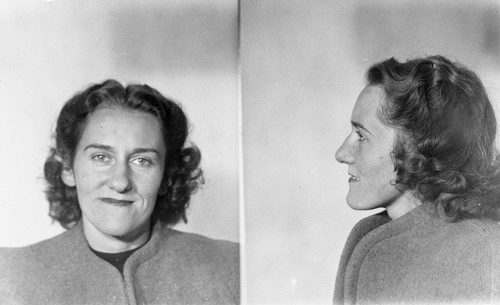 September 1939 – May 1945
The Double-Cross System
How MI5 caught or recruited Germany's wartime spies in Britain and ran them as double agents, steered by the Twenty Committee, until their reports could carry the D-Day deception.
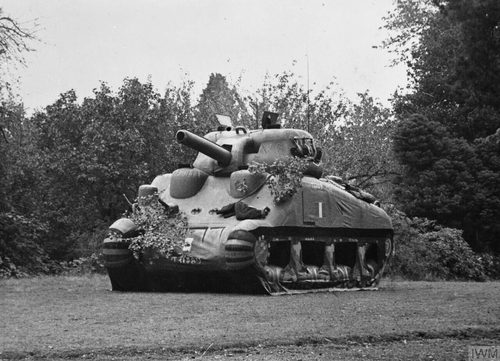 January – September 1944
Operation Fortitude
The Allied deception that invented armies in Scotland and southeast England in 1944 to make Germany expect landings in Norway and the Pas-de-Calais, and to see Normandy as a feint.
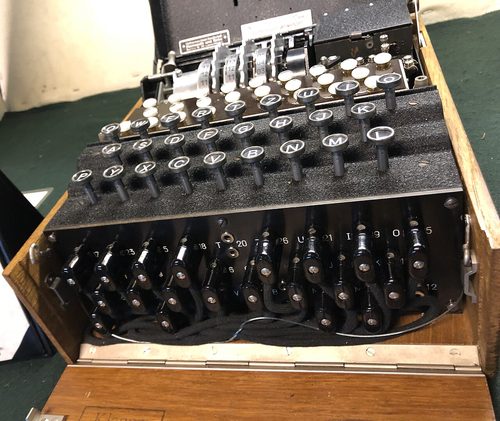 December 1932 – May 1945
Ultra and the breaking of Enigma
How Polish mathematicians first broke the German Enigma machine, and how Britain's codebreakers at Bletchley Park turned that start into Ultra, the most closely guarded intelligence source of the Second World War.
 Germany · 1920–1944
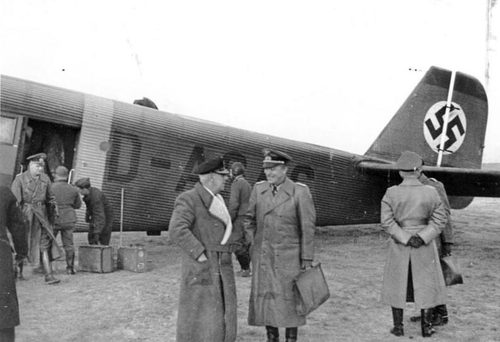
Abwehr
The German armed forces' intelligence service from 1920 to 1944: spies, saboteurs and counterintelligence under Admiral Canaris, outplayed by the FBI and MI5 and finally absorbed by the SS.
 1887–1945
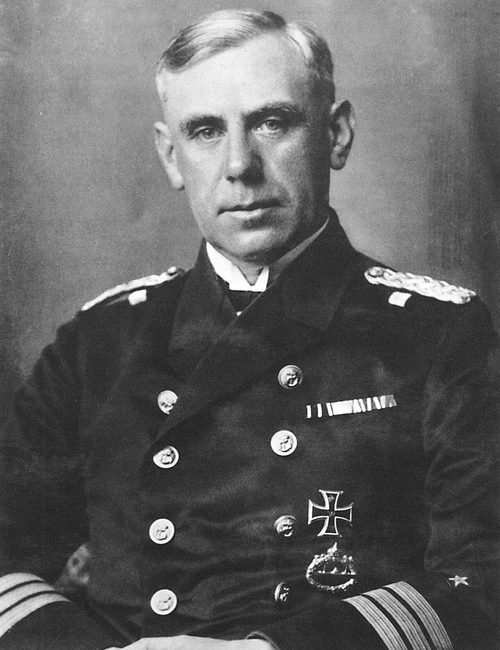
Wilhelm Canaris
Admiral who ran the Abwehr, Germany's military intelligence service, from 1935 to 1944. Early supporter of Hitler, later a protector of the military opposition, hanged at Flossenbürg in April 1945.